You’ll Regret Not Knowing How to Care for Recovery After Nose Surgery!
Director Jang Wook’s Tips
Hello, this is Obje Plastic Surgery Clinic.
Deciding to undergo nose surgery
must have involved a lot of 고민.
And once the surgery is finally over,
you probably feel relieved, thinking,
“Now I just have to get prettier.”
But from the moment you leave the operating room,
the truly important time begins.
That is the recovery period.
In fact, when talking with patients,
many people ask,
“Isn’t recovery just a matter of letting time pass?”
Unfortunately, that is not the case.
Even if you undergo the same nose surgery,
the result can differ depending on
how you manage your recovery.
So today,
I’d like to tell you the recovery care guidelines
that you must follow at home.
If you read until the end,
you’ll clearly understand
what to be careful about after nose surgery
and why you need to be careful.
Q1. They say you shouldn’t blow your nose. Is it really dangerous?
One of the most uncomfortable things right after nose surgery
is that your nose feels blocked and stuffy.
But if you blow your nose forcefully, that can be a big problem.
When you blow your nose, strong pressure is suddenly applied
inside the nose.
The problem is the condition inside the nose right after surgery.
During surgery, as incisions are made and tissue is handled,
small blood vessels are damaged and are only gradually healing.
If strong pressure is applied at this time,
the blood vessels that have only just begun to heal
can burst again.
Then bleeding occurs inside the nose,
and as the blood pools, swelling becomes worse.
The bigger problem is when an implant has been inserted.
An implant is in a state right after surgery
where it has not yet completely adhered to the surrounding tissue.
If you blow your nose forcefully in this state,
the pressure can push the implant out,
creating a risk that it may shift from
the position originally set during surgery.
So even if you have a runny nose,
do not blow it under any circumstances.
Only gently wipe it away.
Q2. They say you shouldn’t bend your head down. Why is that?
During recovery after surgery,
you also need to be careful about bending your head down.
For example, picking something up or
leaning your face over the sink to wash your hair.
Let me explain why.
Our blood starts from the heart and circulates throughout the body.
At this time, it is affected by gravity.
If you bend your head down,
your head ends up lower than your heart.
Then, due to gravity,
blood tends to rush toward the face.
Especially within 48 hours after surgery,
the nose is in its most sensitive state because the tissue has been damaged.
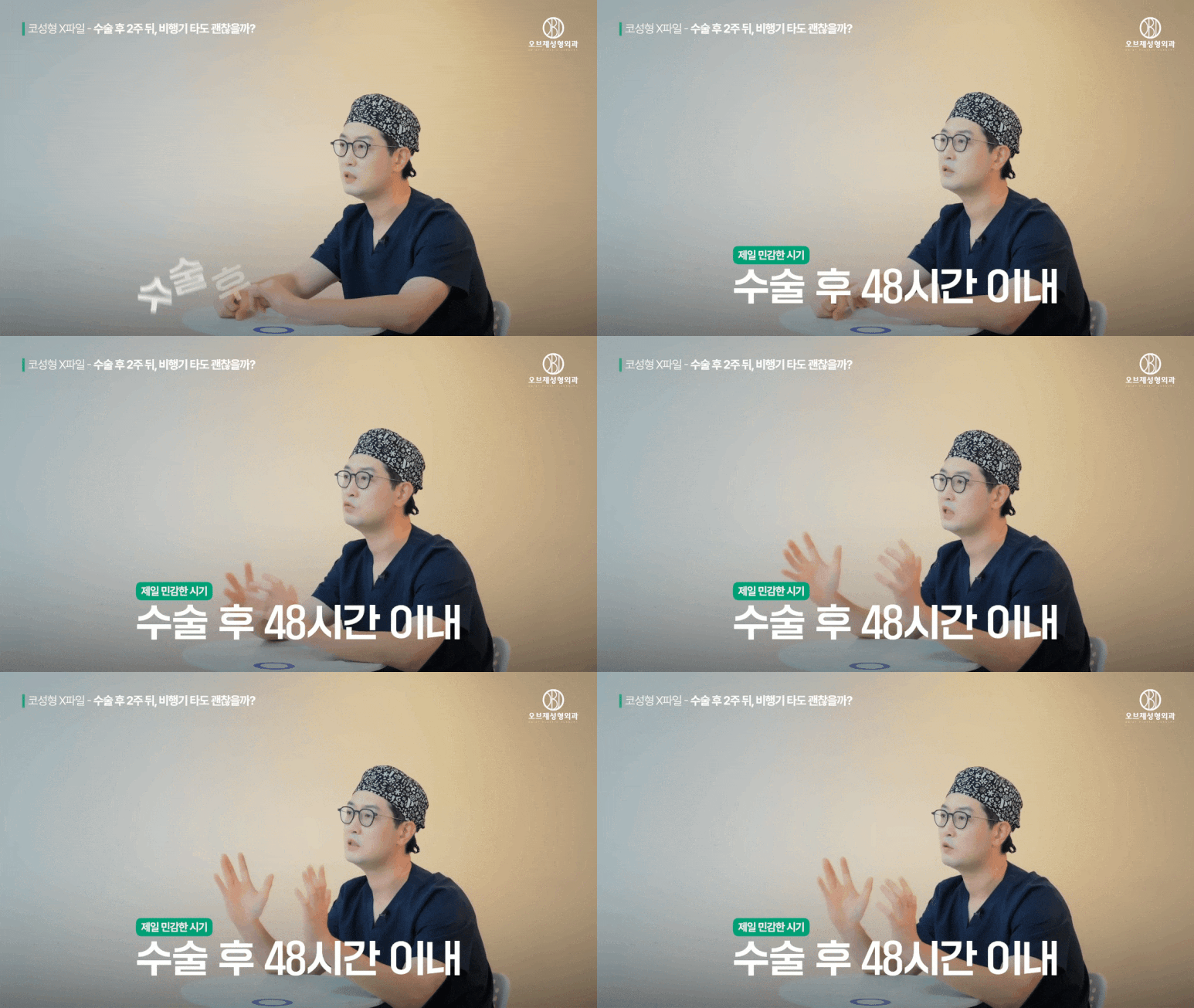
If blood collects in this state,
pressure is applied to the damaged blood vessels,
which can worsen swelling
and increase pain as well.
That’s why, even when sleeping,
it helps recovery to stack 2 to 3 pillows high
and keep your head above heart level.
Then the blood can flow downward,
which allows swelling to naturally subside.
Q3. Cold compress vs. warm compress — when should you use which?
“Should I use a compress, but make it cold
or warm?”
This is a question patients ask very often
right after nose surgery.
To give you the answer first:
it depends on the stage.
First, from right after surgery until day 3,
you should use a cold compress.
Why should it be cold?
Right after nose surgery is the period
when swelling builds up the fastest.
When tissue is damaged, our body sends
blood and fluid to that area to heal it.
This process creates swelling.
At this time, applying a cold compress causes blood vessels to constrict.
When blood vessels narrow, blood flow decreases accordingly,
which helps prevent swelling from getting worse.
In addition, cold temperature slows down nerves,
which also helps relieve pain.
It’s the same principle as why an ice pack feels cool
and makes pain feel less intense.
However, starting from day 4,
you should switch to a warm compress.
After 3 days, the sudden swelling
generally slows down to some extent.
Now it’s time to reduce the remaining residual swelling and bruising.
A warm compress expands blood vessels
and helps blood circulation.
When circulation improves,
the fluid that caused swelling is absorbed more quickly,
and the pooled blood in bruised areas
also fades more quickly.
One thing to keep in mind, though:
if the compress pack touches the nose directly,
it can apply pressure,
so it’s better to apply it gently,
mainly around the eye area or forehead.
Nose surgery is just as dependent on recovery care
as it is on the surgery itself.
At this stage, you need to keep checking
what to be careful about
and what is within the normal recovery process.
So even if it feels a little uncomfortable,
please take a little better care of your body during this period
by following the nose-surgery recovery care guidelines
I shared today.
Director Jang Wook of Obje Plastic Surgery Clinic,
based on years of nose surgery experience,
personally takes responsibility for the entire process
from consultation and diagnosis to surgery and aftercare.
Rather than saying unnecessary things,
we focus on explaining exactly what is needed
and what is appropriate for your current condition.
That is the basic principle of care:
providing accurate explanations that get to the point.
This approach to treatment focuses not on exaggerating results,
but on making the patient’s expectations and changes
match as closely as possible.
I hope today’s post was helpful for those who had questions
about recovery after nose surgery.
This has been Obje Plastic Surgery Clinic. Thank you.
<🔽🔽A video you may find helpful🔽🔽>
| Nose Surgery Consultation and Inquiries |
|---|
| Phone quick consultation |
| Kakao simple consultation |
-
This post is medical information prepared by Obje Plastic Surgery Clinic in compliance with the Medical Advertising Act.
-
Results of procedures may vary depending on the individual, and side effects may occur.
It is recommended that you thoroughly consult with medical staff in advance before deciding to undergo a procedure.