Three Key Points for Choosing a Facelift Clinic!
Organized by Director Shin Jong-in

Hello.
This is Obje Plastic Surgery.
Every time you look in the mirror,
those of you who clicked on this post probably feel
that your cheeks seem to have sagged lower than before,
and that your nasolabial folds are getting deeper.
For this reason,
even if you have already tried lifting procedures,
when the maintenance period gets shorter and shorter,
you may start thinking:
"Should I look into another method?"
"Why doesn't it last as long as it used to?"
In fact, as people move from their late 40s
into their 60s,
there are many cases where
non-invasive lifting alone reaches a point
where it becomes difficult to adequately correct sagging.

At this stage, more and more people
start considering a facelift.
However, when looking into facelift clinics,
concerns may come up before expectations do.
"Is it okay if the incision area is that large?"
"What about side effects like nerve damage?"
"Won't the recovery period be too long?"
So today, before deciding on facelift surgery,
I would like to calmly organize the three core points
that you must check.
If you read to the end,
you will get a clearer idea of
what really matters in a facelift,
and what you should check
to make a choice you won't regret.
Facelift Clinic Selection Guide
First, does it handle the deeper layer?
When people hear "facelift,"
many think,
"Isn't it a surgery that pulls the skin?"
Since the visible change appears in the skin,
that is a natural thought.
But in reality, skin is not a tissue with much support.

If only the skin is pulled, it may look tight at first,
but
it can easily loosen again over time.
You can think of it as similar to repeatedly stretching
and releasing a rubber band,
which reduces its elasticity.
So, to maintain the lifting effect for a long time,
the surgery should be performed based not on the skin,
but on a deeper layer.
That layer is the SMAS layer.
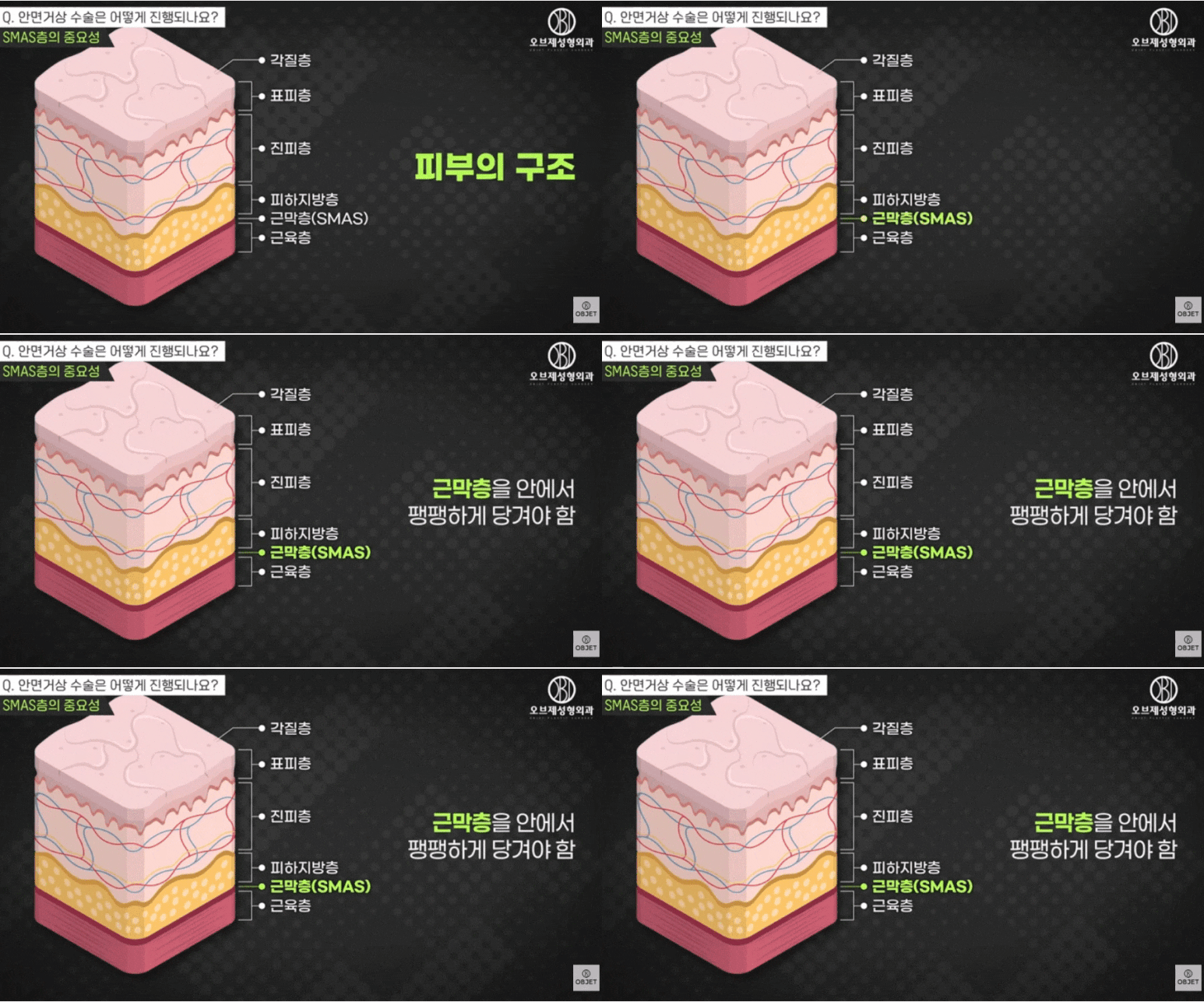
This layer is the tissue that supports
the central structure of the face,
so if the SMAS layer is lifted upward
and securely fixed,
the skin and fat above it will naturally move up with it.
In fact, this is where most of the difference in surgical results comes from.
If the pull is focused only on the skin,
you may feel sagging again within a few years,
but
if the deeper tissue layer is properly addressed,
a much more natural and stable contour
is often maintained.
So when you receive a consultation,
it is a good idea to first check
"Is this not just a skin-pulling method?"
and
"Is the surgery performed based on the deeper tissue?"
Facelift Clinic Selection Guide
Second, precision is everything.
Just because it is a surgery that pulls deep tissue,
does not mean that everyone will get the same result.
What matters is how accurately and delicately
the SMAS layer is handled.

The SMAS layer is the tissue surrounding the facial muscles,
and several structures related to facial expression
also pass around it.
So when working on this area,
rather than a forceful pulling approach,
it is necessary to carefully access the designated layer
with a full understanding of the facial structure.
In a facelift,
it is more important for the naturalness of the result to know
where and on what layer the procedure is performed,
and how stably it is done,
than to simply know how strongly it was pulled.
That is what keeps facial expressions from looking awkward,
and reduces the artificial feeling even after recovery.
Such precision becomes more stable
as anatomical understanding and surgical experience grow.

Facelift Clinic Selection Guide
Third, the surgery is not over when it ends.
Finally, one area that many people tend to overlook
is the early postoperative care.
It is easy to think,
"If the surgery goes well, that's the end of it,"
but
with a facelift, the care during the first two days after surgery
is especially important.
Because a facelift involves dissecting a wide area of the face,
even with meticulous hemostasis,
minor bleeding can occur.

If this blood collects inside,
a hematoma can form,
and as a result,
bruising and swelling last longer.
If a hematoma becomes severe,
a removal procedure may be needed,
so
it is important to continuously check for bleeding early on
and respond quickly.
So after surgery, it should not simply end with,
"Now go home and rest,"
but rather,
it is important to check whether the clinic provides careful monitoring
of the postoperative course until the day of surgery and the following day.
Today, I explained the three criteria
that you must check when choosing a facelift clinic.

Whether it is a surgery that properly lifts the deep tissue,
not just the skin,
whether the facial nerve can be protected while handling the SMAS layer,
and whether an early postoperative care system is in place.
These three can be seen as the key factors
that determine facelift results.
Director Shin Jong-in of Obje Plastic Surgery
performs surgery with these important criteria at the center
when carrying out facelift procedures.
Based on a deep understanding of facial anatomy,
the focus is on protecting the facial nerve as much as possible
while
safely handling the SMAS layer at the correct depth.
In addition, rather than simply pulling the skin,
we create a surgical plan so that the deep tissue layer is securely fixed
and a natural contour can be maintained over time.
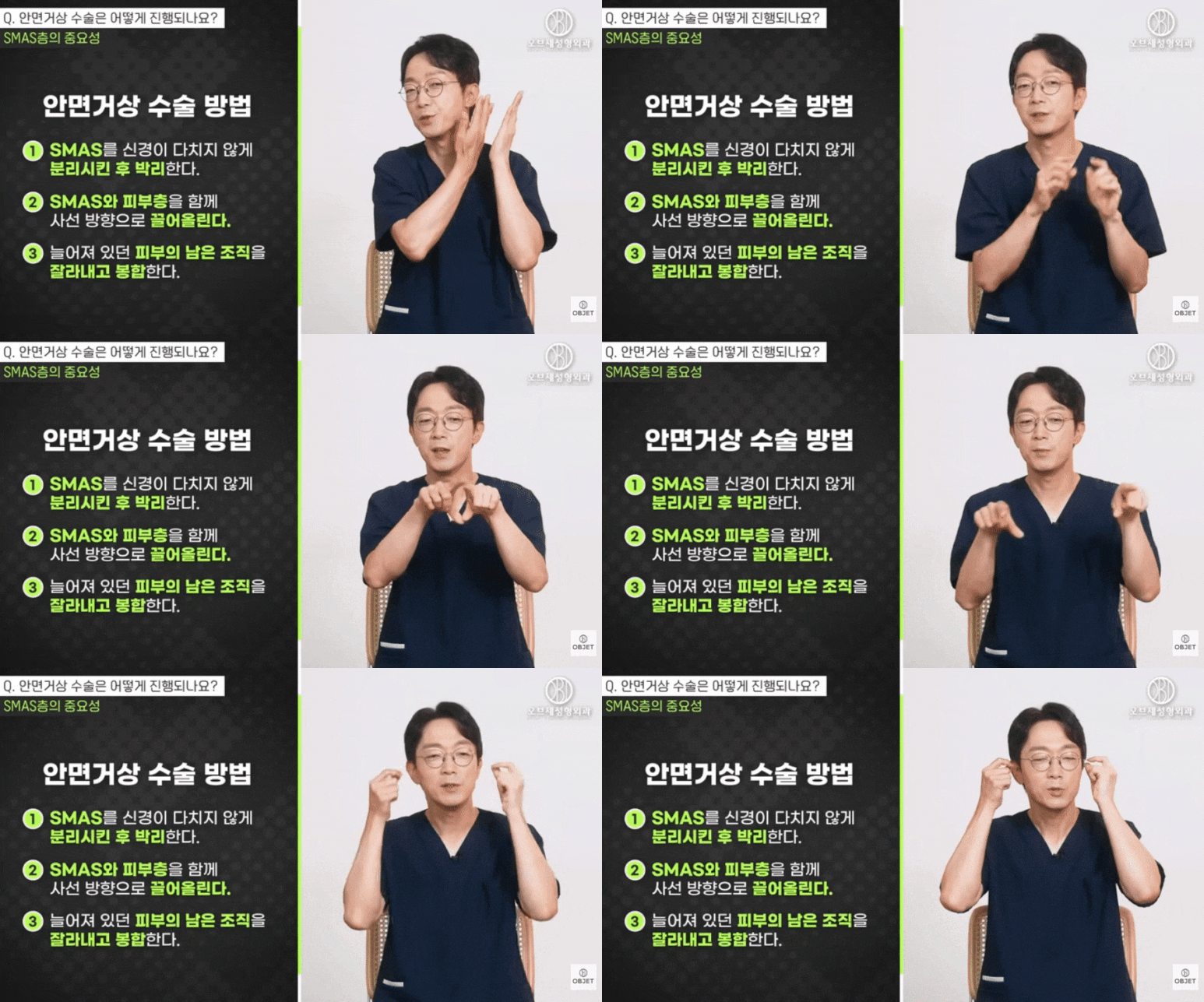
On top of that,
from immediately after surgery,
we closely monitor the recovery process through a systematic early care system
that helps prevent hematoma and swelling.
A facelift is a surgery in which one choice
can influence your appearance for a long time.
That is why it is most important to think carefully
and choose based on clear criteria.
This has been Obje Plastic Surgery.
Thank you.
<🔽🔽A helpful video to watch together🔽🔽>
| Facelift consultation and inquiries |
|---|
| Quick phone consultation |
| Kakao quick consultation |
-
This post is medical information written by Obje Plastic Surgery Clinic in compliance with the Medical Advertising Act.
-
The effect of the procedure may vary depending on the individual, and side effects may occur.
We recommend that you make a decision about the procedure only after sufficient consultation with a medical professional in advance.