Timing for Revision Rhinoplasty: Why Missing the 2-Week Window
Means Waiting 6 Months?
<Director Lee Kyung-mook’s TIP>
Hello.
This is Objet Plastic Surgery.
When consulting about revision rhinoplasty in the clinic,
there is one moment that feels most regrettable.
Patients who had surgery at another clinic
and come in looking anxious
before even a month has passed
often ask this:
"Doctor,
I really don’t like the shape of my nose.
Can’t you just do the surgery again right away?"
If you are reading this article,
you may also feel impatient,
wanting to correct what you see in the mirror
as quickly as possible because it does not match your expectations.
But there is one thing here
that patients misunderstand most often.
The nose is not a tissue
that can be touched again whenever you want,
simply because you feel rushed.
There is a clear "timing"
for revision rhinoplasty.
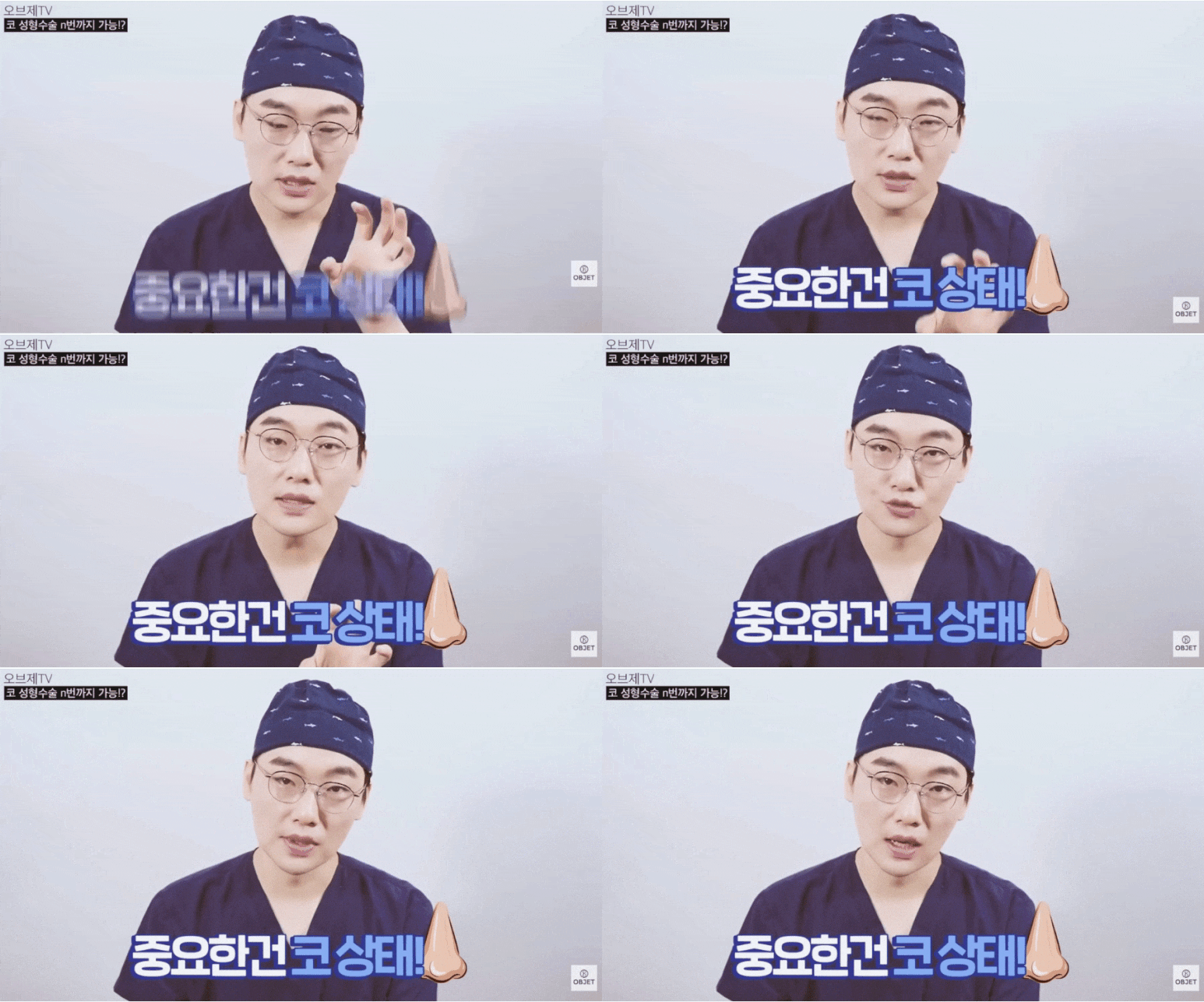
No matter how impatient the patient may be,
surgery may be difficult if it is not the time
that the body allows.
So today, when you decide on revision rhinoplasty,
I will explain step by step in an easy-to-understand way
about the
"critical timing for revision rhinoplasty"
that must be followed.
"Isn’t it wrong?"
Why the first 2 weeks after surgery matter
To answer this question,
you first need to understand
the body’s recovery stages after surgery.
In general, people think revision surgery should be done
after 6 months,
but there is exactly one exception.
That is the "golden time"
within 2 weeks (14 days) after surgery.
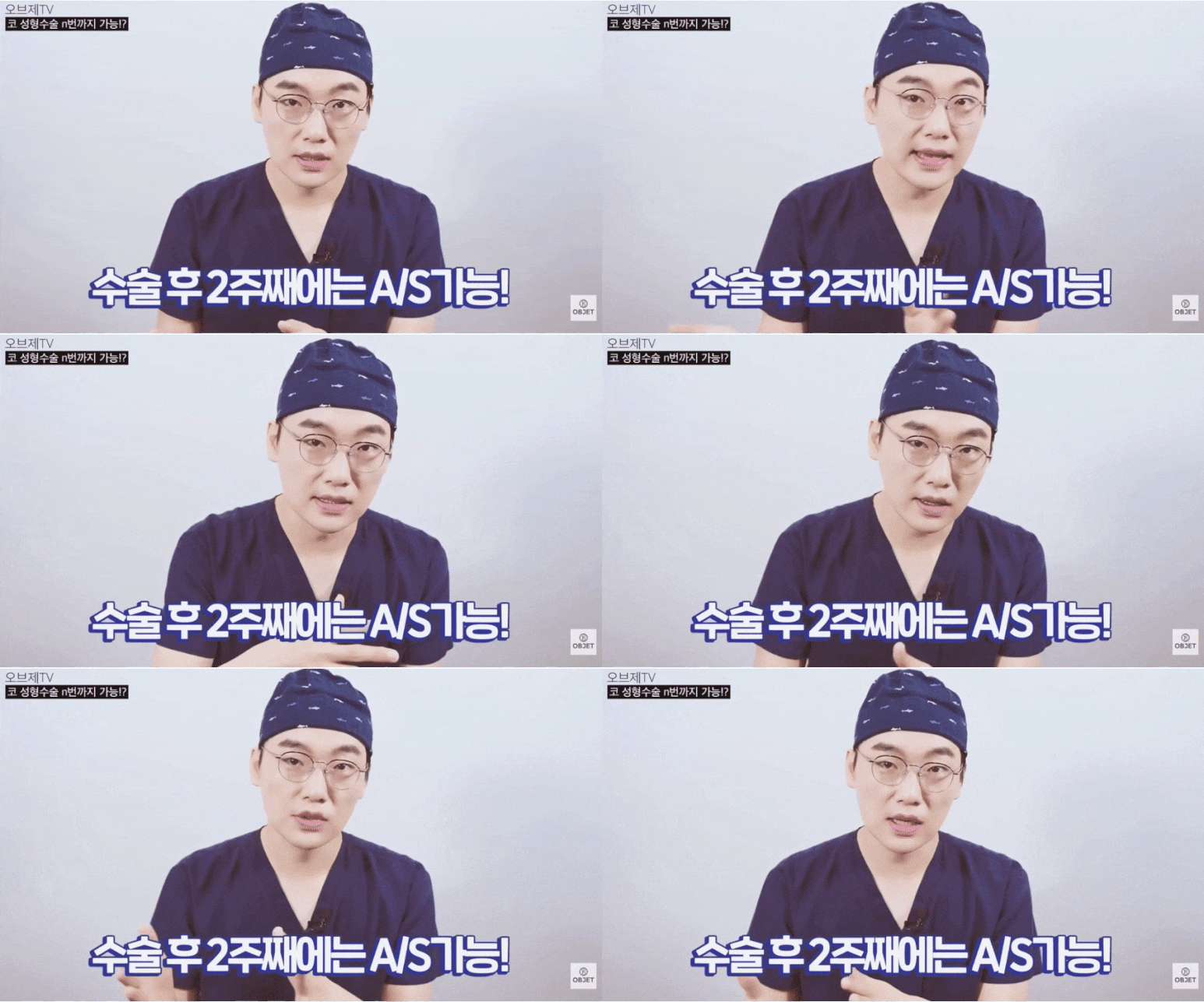
Usually, starting around 2 weeks after surgery,
the body begins to form scar tissue in earnest
to protect the wound site.
Therefore, during the first 2 weeks,
the tissue at the surgical site
has not fully adhered yet
and remains relatively soft.
If the nose looks excessively upturned
or the implant is severely bent,
and the problem is clearly visible to the naked eye,
it may be possible at this stage
to relatively simply adjust the implant position
or correct the shape.
Before the scar tissue fully builds up,
this is the only chance to quickly correct it
while the tissue is still flexible.
It can become risky if you intervene at this stage
– 3 weeks after surgery
Then what happens if 2 weeks have passed
and you enter the third week?
At that point, no matter how much you want to,
we recommend pausing for a while.
That is because of "scar tissue."
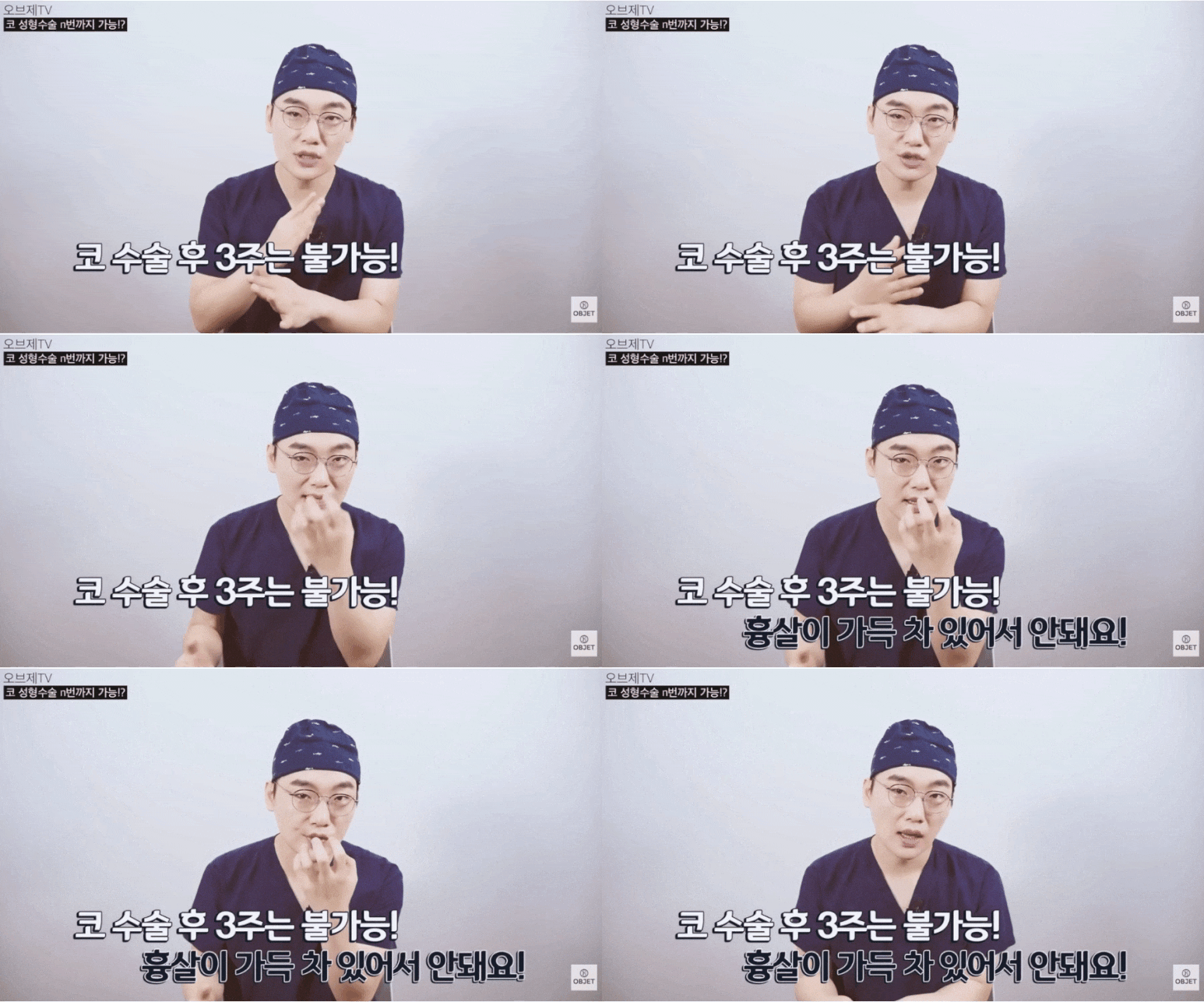
When our body is injured,
it creates firm scar tissue
to heal the area.
Starting 3 weeks after surgery,
this scar tissue becomes most active
in proliferating and hardening.
The internal nasal tissue becomes as hard as stone,
with the tissues strongly stuck together.
If scar tissue is forcibly cut at this point,
there is a risk of damaging normal tissue as well.
Because scar tissue is intertwined
in a way that makes it hard to distinguish from normal tissue,
while making incisions, there is a greater chance
that not only the problematic area but also normal tissue
may be damaged together.
Forced surgery at this stage
may require concern about side effects
such as inflammation or contracture.
The time that increases revision surgery success rates,
why 6 months?
In the end, for safe revision surgery,
"waiting" is necessary.
The textbook answer is
at least after 6 months.
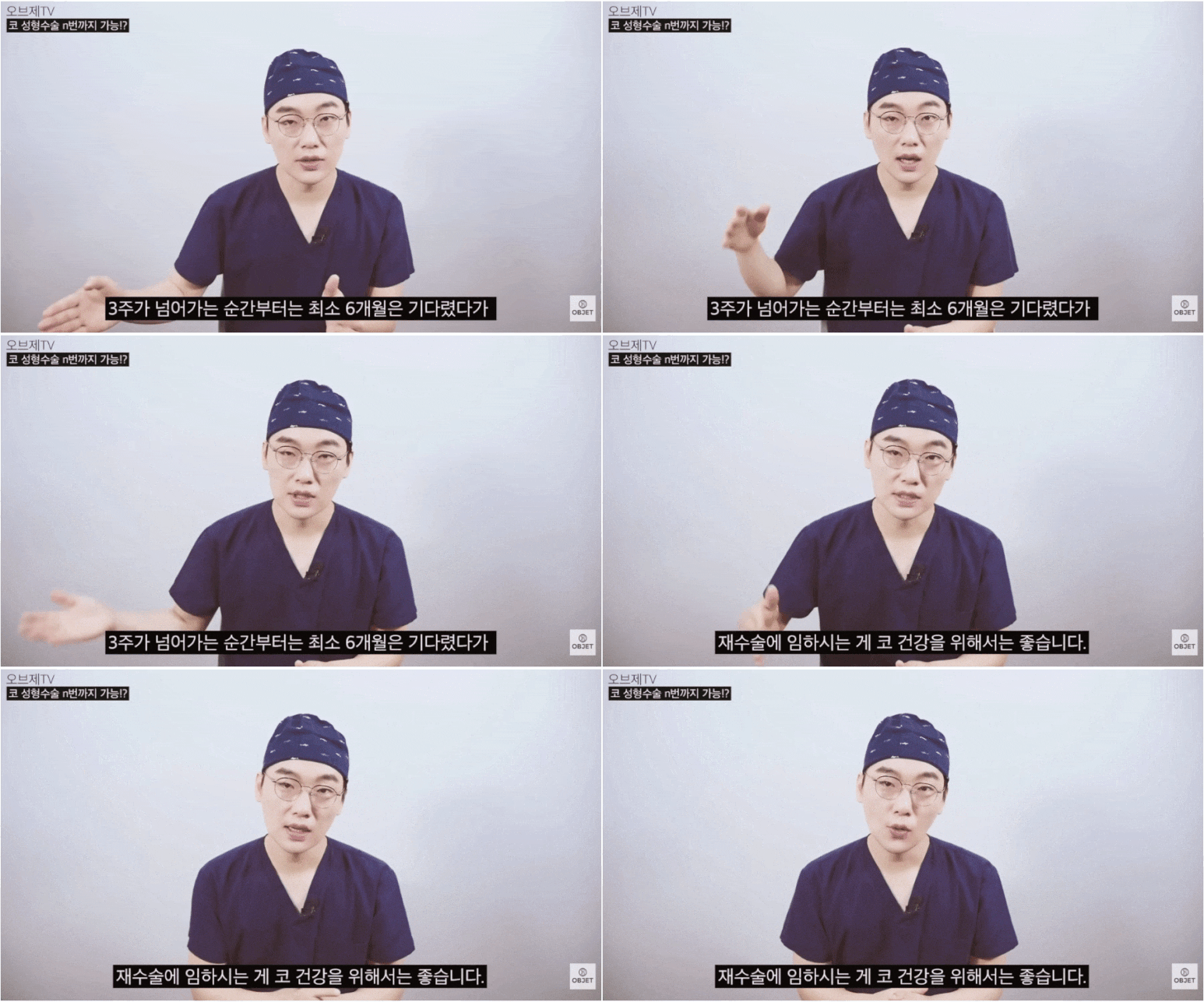
This 6-month period is the time when
the hardened scar tissue gradually softens
and
unstable cells return to normal,
that is, the period during which "tissue maturation" occurs.
In other words, the internal nasal tissue must become sufficiently soft
for the doctor to perform precise correction
as intended.
Then the surgical result can also be produced
relatively safely.
In particular, if there was previous inflammation
or severe contracture,
it is better to wait even more generously than 6 months.
Also, as much as timing,
there is another concern many people have.
They worry a lot about whether it is okay
even though they have already had surgery several times.
The answer to this is clear.
What matters in revision surgery is not the number of times,
but the "conditions" the nose can currently withstand.
Even after 5 or 6 revision surgeries,
people whose skin is thick and still elastic
can obtain good results.
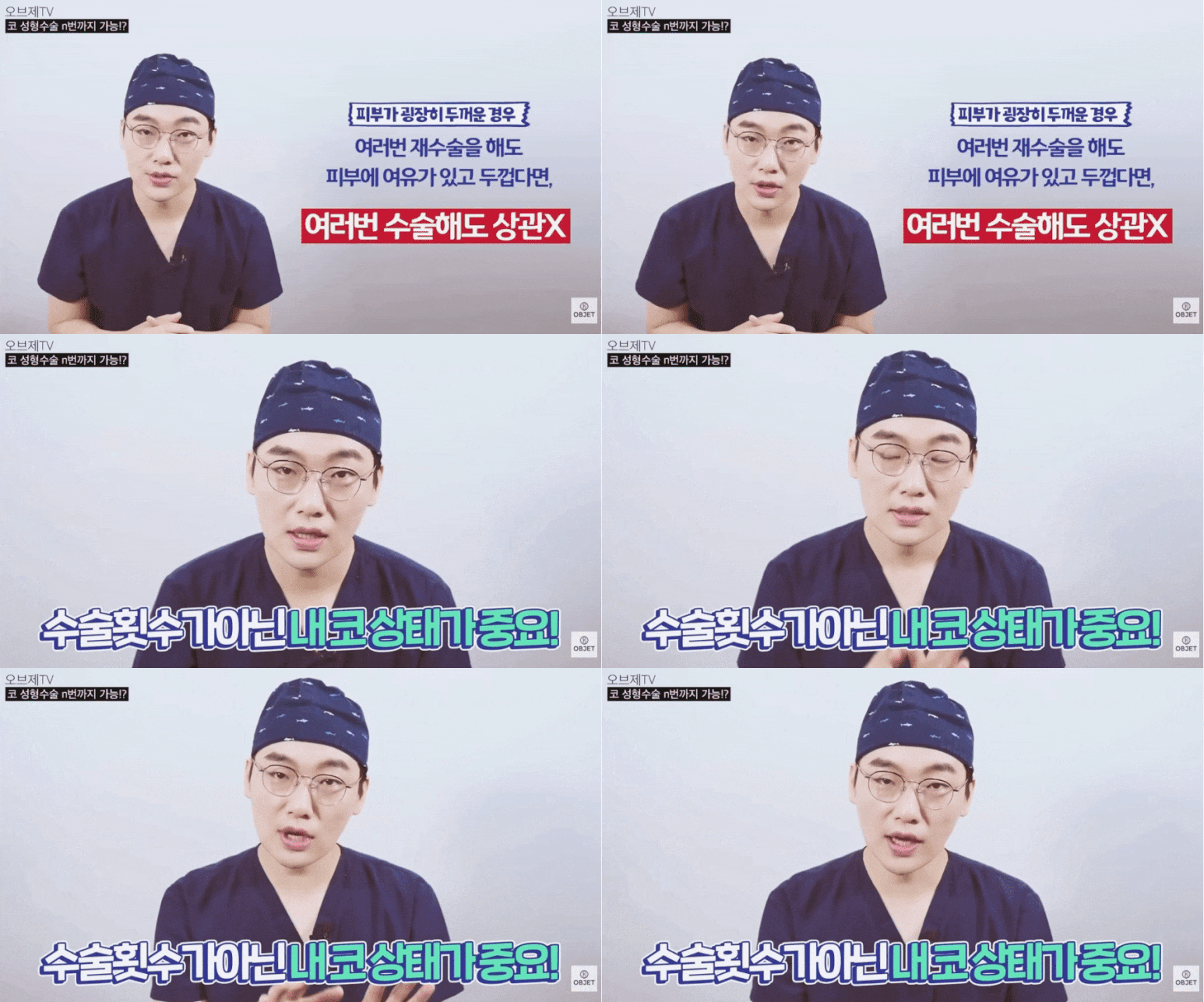
On the other hand, even with just one revision surgery,
if the skin has become as thin as paper
or there is no extra tissue,
surgery may be impossible or the results may be poor.
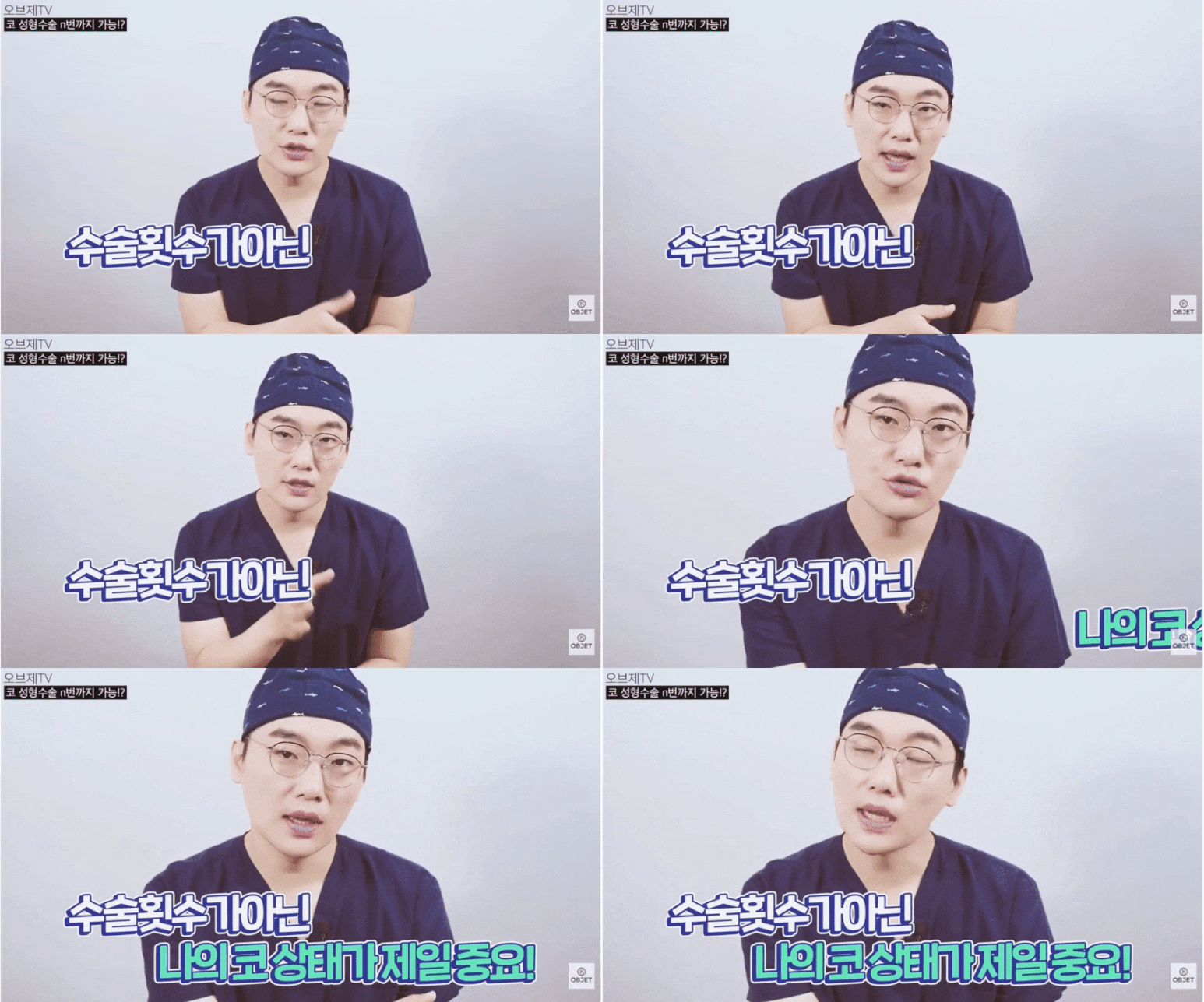
In other words, instead of counting how many surgeries you have had,
what matters is checking whether the skin of your current nose
can handle it.
Today, we looked at
the critical timing for revision rhinoplasty.
If the problem with the nose is clear, it is best to do revision surgery
within 2 weeks,
and if that window has passed, after 6 months.
Following this principle is not an exaggeration
even if we say it accounts for half of the success of revision surgery.
Rather than making a rushed decision
because of present anxiety,
giving your nose time to recover
may be the fastest way forward.
For this reason,
Director Lee Kyung-mook of Objet Plastic Surgery
places the highest priority on
the timing and skin condition
when deciding on revision surgery.
Rather than pushing surgery unconditionally,
he places the greatest value on performing surgery
at the safest and most effective time.
As much as you have thought carefully and waited,
I hope this time you can achieve a result
with no regrets.
This has been Objet Plastic Surgery.
Thank you.
<🔽🔽Videos that may be helpful to watch together🔽🔽>
| Consultation and inquiries for revision rhinoplasty |
|---|
| Quick phone consultation |
| Kakao easy consultation |
-
This post is medical information written by Objet Plastic Surgery Clinic in compliance with the Medical Advertising Act.
-
The effects of the procedure may vary depending on the individual, and side effects may occur.
We recommend having 충분한 consultation with the medical staff in advance before deciding on the procedure.