Still swollen after double eyelid surgery?
Tips to reduce it faster!
– Compiled by Director Kim Hyun-jo
Hello.
This is Objet Plastic Surgery.
If you are reading this post,
you may have searched for “double eyelid surgery swelling not going down”
because the swelling after your surgery seems to be going down more slowly
than it does for other people.
In fact, when you look at swelling after double eyelid surgery,
you can see that the degree varies quite a lot from person to person.
Even if the same surgery is performed,
the speed at which the eye shape settles
and the swelling changes will differ.
So during recovery,
it is natural to wonder,
“Why is this happening to me?”
In this post, we will calmly look at the reasons
swelling may not go down after double eyelid surgery,
and summarize how to understand the recovery process.
Please read to the end
and put your worries at ease.
When does swelling go down? Actually, there is no single correct answer
We will help solve the concern of swelling not going down after double eyelid surgery
"How many days does it take for the swelling to go down?"
It is really difficult to give a clear answer to this question.
That is because recovery speed is completely different for each person,
so it is hard to predict exactly when the swelling will go down.
For some people, two weeks may be the answer,
while for others, two months may be the answer.
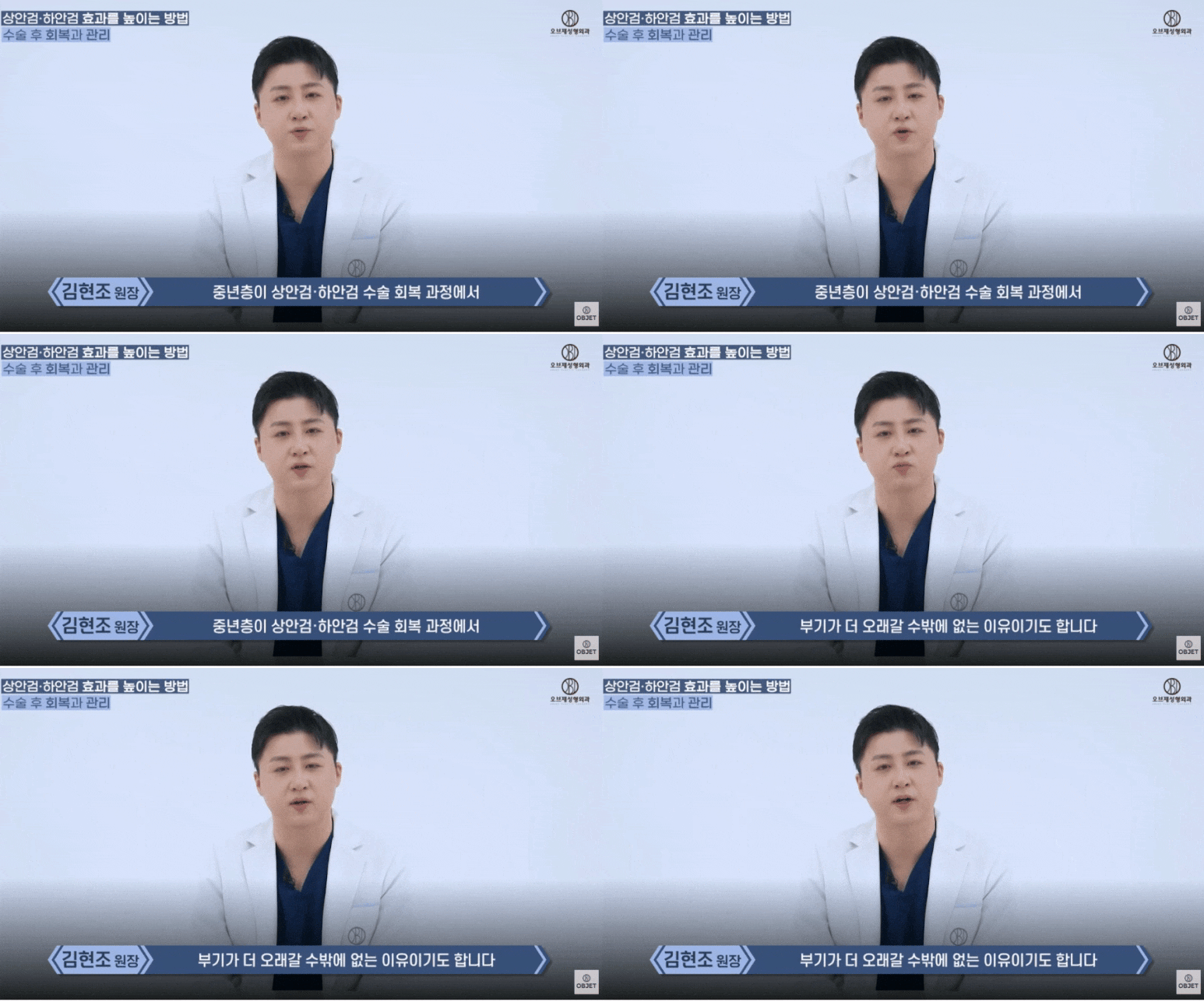
The speed at which swelling goes down
is influenced by a combination of many factors.
Age, skin elasticity, recovery ability,
the surgical method, and the extent of the procedure
all play a role,
and because all of these differ from person to person,
the recovery speed inevitably varies as well.
So does that mean there is no set standard at all?
No,
that is not the case.
However, that standard is less about a number of “days”
and more about “what kind of surgery was performed.”
Incisional vs. non-incisional,
which one makes swelling go down faster?
We will help solve the concern of swelling not going down after double eyelid surgery
Even with the same double eyelid surgery, the pattern of swelling changes completely depending on the method.
If you had a non-incisional procedure,
it is a method in which a few small holes are made,
and thread is passed through them.
The biggest advantage of this method is that
it minimizes stimulation to the inner tissue.
Think about it.
Making just a few small dots on the skin surface,
versus opening the skin lengthwise and touching the inner layers.
Naturally, the former will recover faster, right?
In fact, for most people who undergo a non-incisional procedure,
the noticeable swelling tends to subside quite a bit within a few weeks.
That is because there is almost no tissue damage.
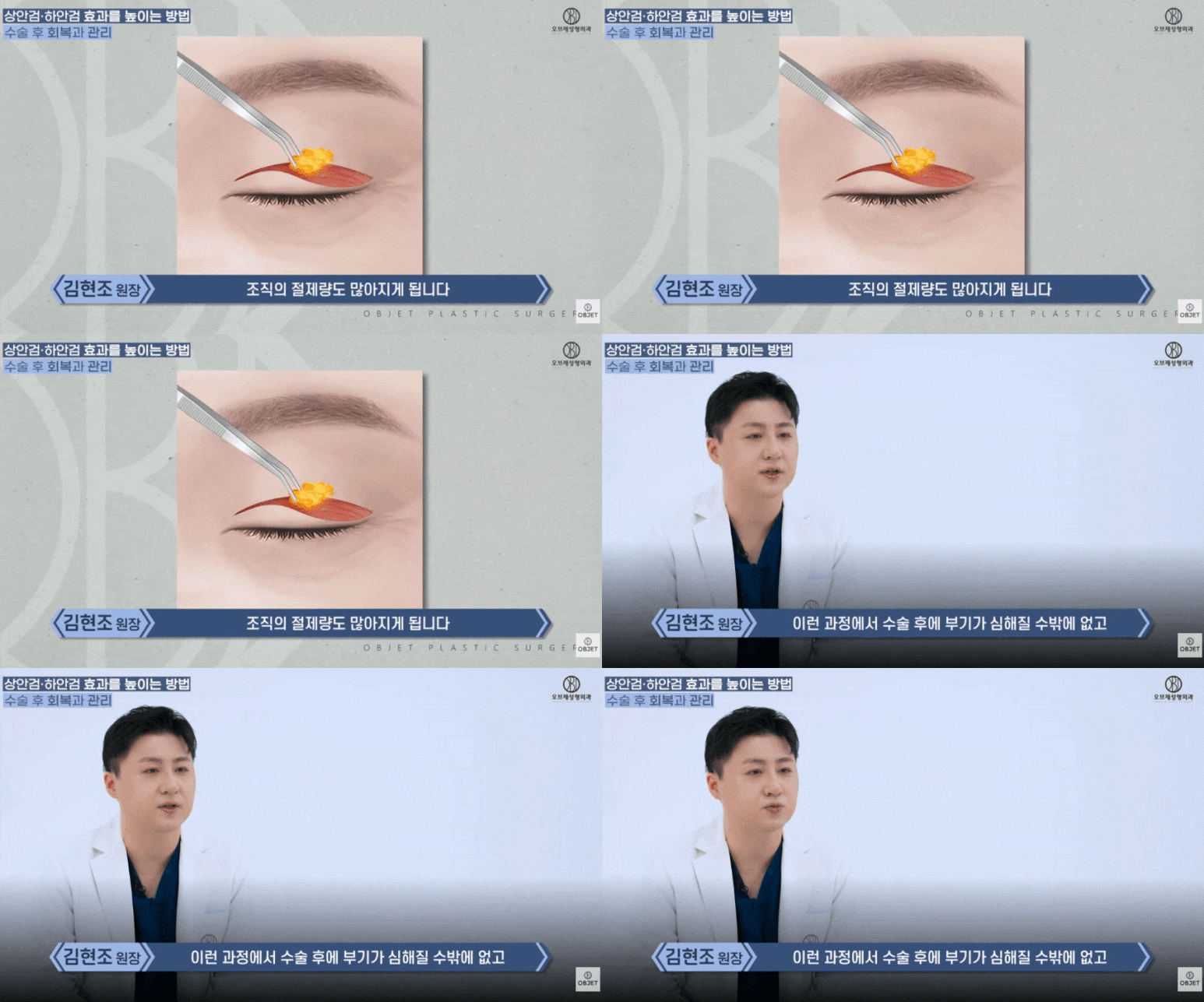
If you had an incisional procedure,
the process includes making an incision in the skin
and tidying the necessary areas.
No matter how precisely and carefully it is done,
the inner tissues are still inevitably stimulated to some extent.
Here is the important point.
When tissue is stimulated, our body does not just stay still.
It actively responds, thinking,
"Oh? Something has been touched here.
I need to restore it to its original state!"
So the body triggers various reactions
to recover the damaged area.
More blood flows in,
immune cells become activated,
and inflammatory substances are released,
starting the repair work.
And what appears on the outside from all of these reactions
is swelling.
So ongoing swelling is not a bad sign.
Rather, it is evidence that the body is working hard to recover.
However, for those who had an incisional procedure,
there is more tissue to repair than with a non-incisional procedure,
so the recovery process naturally takes longer.
<TIP> to reduce swelling faster
We will help solve the concern of swelling not going down after double eyelid surgery
If you have been reading carefully so far,
you may have realized that helping the body recover is important
if you want to reduce swelling faster.
From here, let’s talk about how to do that
in more concrete terms.
First, the key is to help circulation
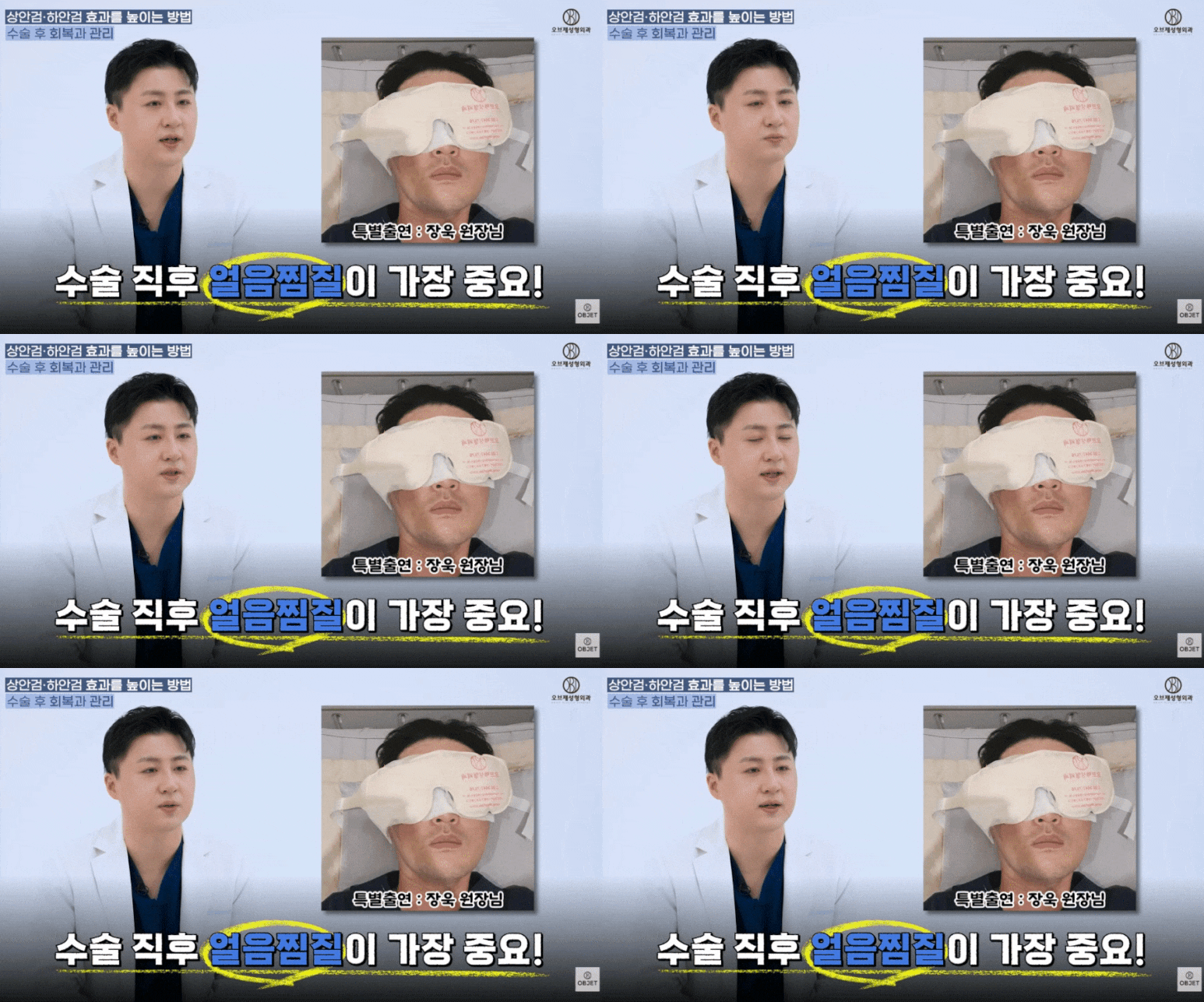
Please move your body moderately with light walking or stretching.
There is no need to do anything intense.
It is enough if your body feels slightly loosened up.
Moving your body improves circulation
and helps reduce accumulated swelling.
Soaking your body in warm water is also good.
A half-body bath raises your body temperature,
which expands blood vessels
and helps waste products be expelled more smoothly.
However, right after surgery,
the wound area should not be exposed to water,
so it is better to start after it has healed to some extent.
Usually, we recommend doing this after the stitches are removed
or once the surgical site has stabilized.
There may also be people who feel that daily care alone is not enough,
and who want a more effective way to reduce swelling.
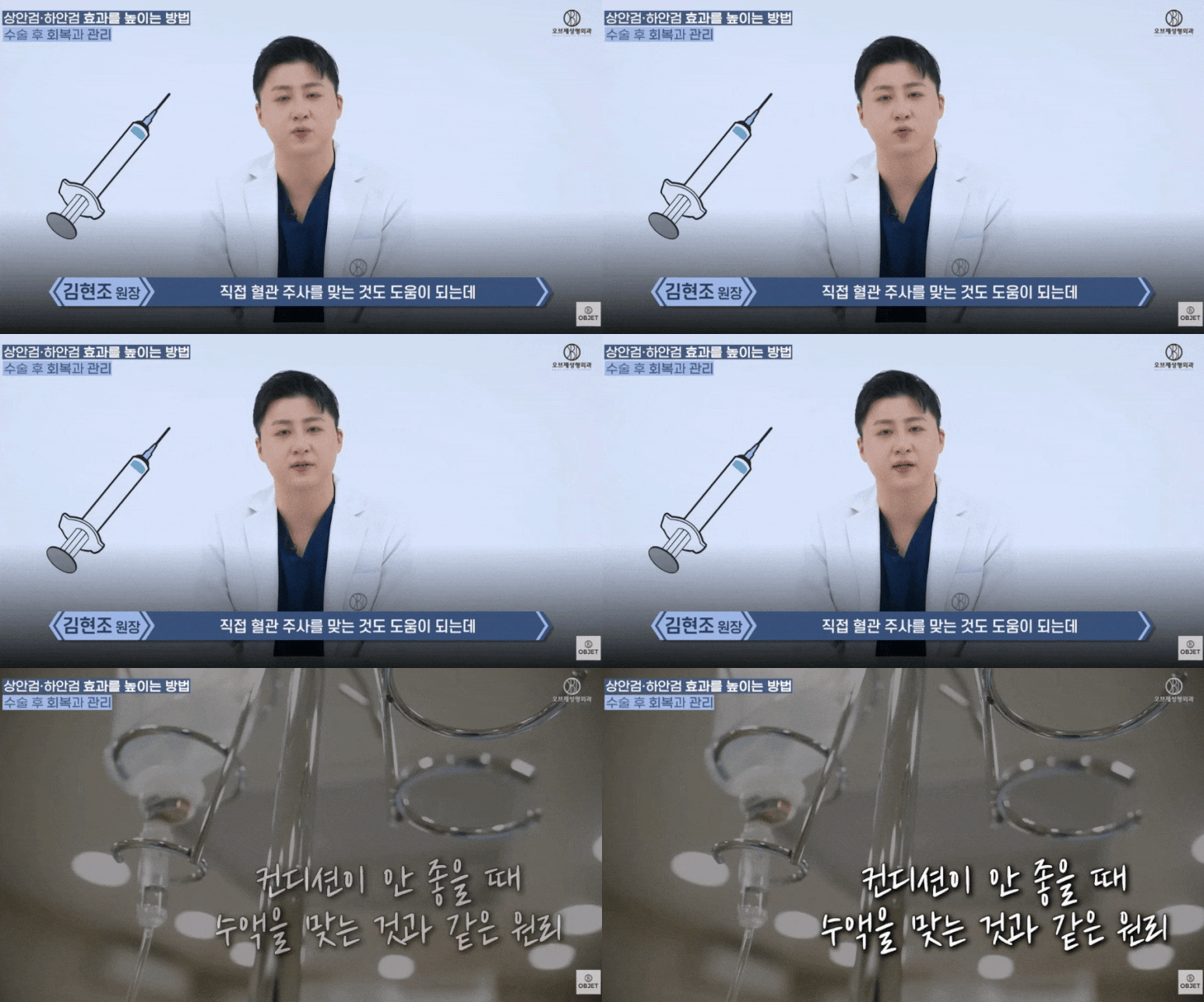
In such cases, you may consider IV therapy,
which directly helps improve recovery.
When you receive an IV drip while you are feeling unwell,
you probably have experienced feeling better quickly.
The same principle applies after surgery.
If nutrients needed for recovery are administered directly into the bloodstream,
your overall condition improves more quickly,
which can also help with swelling management.
Because it contains ingredients that strengthen immunity
and help the body eliminate toxins,
it may help the body recover more quickly after surgery.
Also, after surgery, the skin often becomes sensitive
and dry.
At such times, if you receive a skin booster with skin-repair benefits,
it may help soothe sensitive skin
and restore elasticity.
In particular, the skin around the eyes is naturally thin and sensitive,
so taking care of it this way may make recovery a little easier.
By strengthening the skin barrier
and improving dryness,
you can expect an overall improvement in the weakened skin condition
after surgery.
However, these kinds of care are optional,
not essential.
There is absolutely no problem if you wait for natural recovery.
That said, if you need to return to daily life quickly
or want more active care,
it may be helpful to keep these options in mind.
Today, we talked about why there is no single correct answer
for how quickly swelling goes down after double eyelid surgery,
the differences depending on the surgical method,
and practical ways to reduce swelling faster.
If you are standing in front of the mirror right now
and letting out a sigh,
please remember this.
Swelling will eventually go down.
It may just be a little slower than for others,
but your body is recovering even now.
Director Kim Hyun-jo of Objet Plastic Surgery
carefully observes changes in swelling and the recovery process
after double eyelid surgery,
and aims to provide care that sees you through to the end
so you can recover steadily without unnecessary anxiety.
This has been Objet Plastic Surgery.
Thank you.
<🔽🔽A video worth watching together🔽🔽>
| Eye surgery consultation and inquiries |
|---|
| Fast phone consultation |
| Kakao quick consultation |
-
This post is medical information written by Objet Plastic Surgery Clinic in compliance with the Medical Advertising Act.
-
Depending on the individual, the effects of the procedure may vary, and side effects may occur.
We recommend that you thoroughly consult with medical staff in advance before deciding on a procedure.