Thread Lifting Clinic?
Director Kim Hyun-jo
Has Organized Only the <Key Points>

Hello.
This is Objet Plastic Surgery.
When you look in the mirror,
there are times when your face seems
slightly different from before.
It may feel a little more saggy than before,
the nasolabial folds seem deeper,
and even your facial contours no longer look as sharp.
However, deciding on surgery
can feel like too much of a burden,
and since these changes are hard to ignore,
it is natural that you may have started considering
thread lifting.
When you look for information, there are many options,
but concerns about whether it is actually the right procedure for you
and what the recovery process will be like
can become even greater.
Especially if you are working
or need to meet people often,
you will likely be even more worried
about the recovery period.
Today, for those considering thread lifting,
are going to go over what conditions lead to good results,
how swelling and recovery progress after the procedure,
and how to manage things for a faster recovery,
one by one.
If you read to the end,
what to check when choosing a thread lifting clinic
will also become clear.
What are the effects of thread lifting?
<Criteria> for checking whether it suits you well
Thread lifting is a method in which a medical thread
is inserted into the skin
to support sagging areas upward.

Because it is a way to tidy the facial line
without making large incisions in loose skin,
recovery is faster than with surgery,
and many people choose it
because it feels less burdensome.
After thread lifting,
lines that looked collapsed,
such as around the mouth or along the jawline,
are refined,
and overall facial contours
can look much sharper.
However, these effects
do not appear the same for everyone.
Thread lifting is especially suited to
certain types of faces.
First, it is suitable when skin elasticity has decreased compared with before,
but the sagging is not very severe.

If the skin has not yet become
significantly loose,
then when it is supported with threads,
the line is immediately organized in the direction it is pulled,
helping the facial contour look neat.
On the other hand, if a lot of fat has accumulated
and sagging and decreased elasticity
have both progressed significantly,
there may be limits to how much can be lifted
with threads alone.
Another case is when the skin thickness is moderate.

Skin that is neither too thin
nor too thick is
in the layer where the thread is fixed,
making it easier for the thread to settle stably
and helping the lifting effect last.
If the skin is too thin,
it may lack the strength
to support the thread,
and if it is too thick,
the pulling force of the thread may not be
fully transmitted.
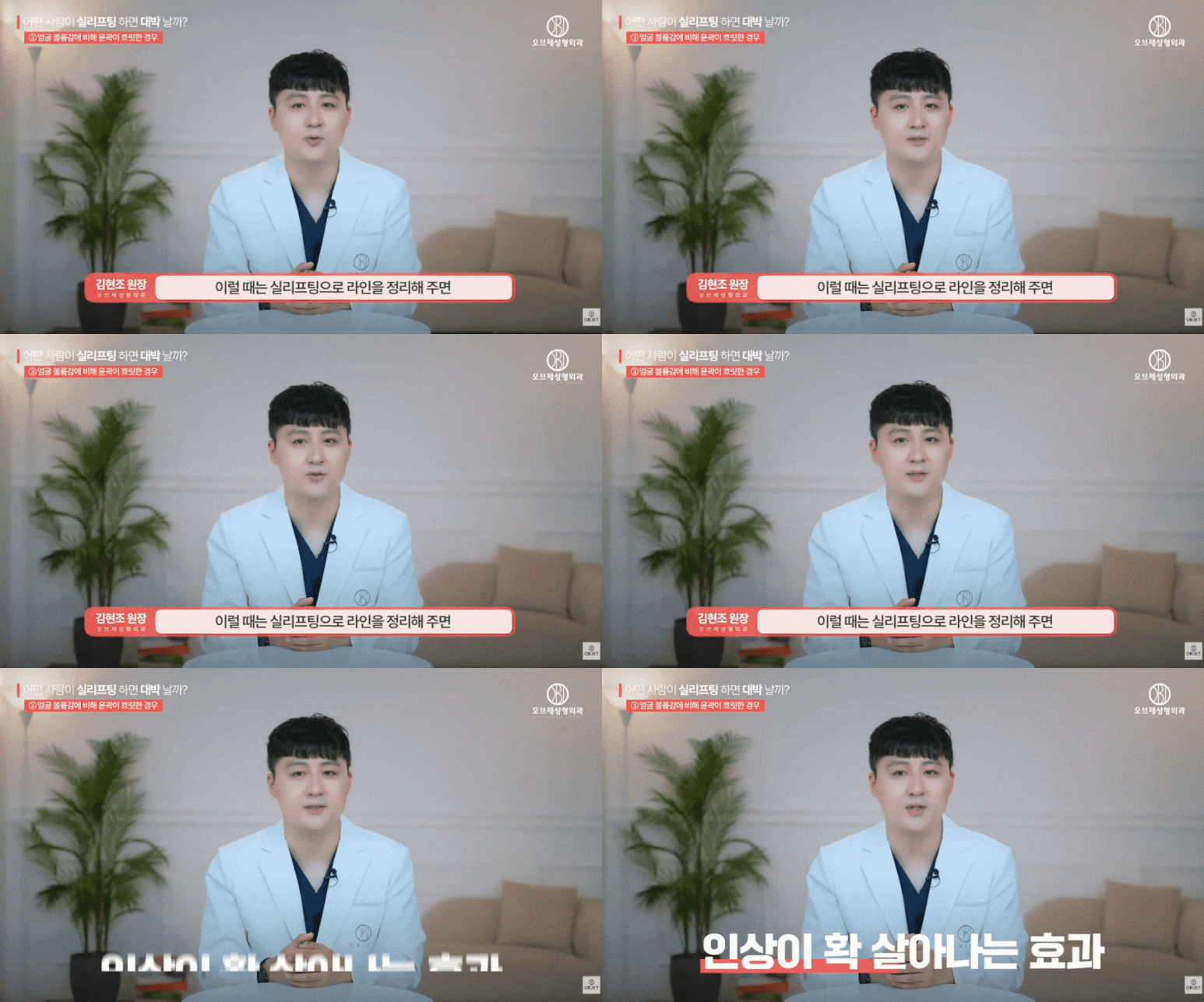
Thread lifting also works well for faces that still have volume
but have blurred contours.
If there is still fullness in the cheekbones or cheeks
but the line around the mouth looks collapsed,
or if the face has overall volume
but the boundaries look unclear,
then refining the line with threads
can make many people feel
that their impression has changed.
In the end, if you are considering thread lifting,
it is important to carefully check
whether your face matches the conditions
that make thread lifting a good fit.
Worried about swelling and bruising?
<Tips> from a thread lifting clinic
The part most people are curious about
when considering thread lifting
is the recovery process.
Swelling and bruising may appear immediately after the procedure.
If you want to reduce swelling quickly,
it is good to apply cold compresses
for about two days after the procedure.
Cold compresses constrict blood vessels
and help prevent the swelling from getting worse.
After about 3 to 4 days,
you can switch to warm compresses.
At that point,
it is more effective to promote blood circulation
and reduce any remaining swelling.
If you have bruising,
using a bruise cream can help with faster recovery.
Also, for a few days after the procedure,
you may feel a pulling sensation in the face.
This is a natural phenomenon that occurs because
the thread is settling inside the skin
and pulling the tissue.
Since it gradually improves over time,
you do not need to worry.
What you should be careful about is that
rubbing the treated area too hard
or irritating it excessively
can damage the thread.
Gentle cleansing and makeup are possible starting the day after the procedure,
but at that time, you should be careful not to let the regenerative tape
placed on the treatment area come off.
If the regenerative tape becomes dirty
or falls off because of discharge,
it is best to replace it immediately
with a clean new one.
To recover quickly,
you must avoid these <3 things>
If you want to shorten the recovery period as much as possible,
there are 3 things you should be especially careful about.
The first is exercise.
After the procedure,
many people ask, “When can I exercise again?”
A light walk that does not make you sweat
is fine.
A light walk also helps with blood circulation
and can help reduce swelling.
However, intense exercise that makes you sweat a lot
should be avoided for at least one week.
Strenuous exercise can worsen swelling or bruising.
The second is alcohol and smoking.
You should avoid alcohol and smoking
for at least one week after the procedure.
Alcohol and nicotine affect blood circulation
and can make inflammation worse.
Since both interfere with recovery,
if you want a quick recovery,
you must be careful.
The third is saunas and steam rooms.
It is safest to avoid these high-temperature environments
for about one week.
If you are exposed to high heat and irritation
before the skin has fully healed,
there is a risk of bacteria entering.
If that happens,
inflammation may worsen
or an infection may occur,
so it is better to be careful
until recovery is complete.
If you follow these care instructions well,
you can shorten the recovery period,
and the results you want
can also last longer.
Today, we looked at the effects of thread lifting
and the recovery process.
When choosing a thread lifting clinic,
be sure to check these points.
Whether they accurately diagnose
whether your face is suitable for thread lifting,
and whether they provide enough explanation
about the recovery process and care methods.
If a thread lifting clinic answers these three things properly,
it seems like a place you can trust
and proceed with the procedure.
Director Kim Hyun-jo of Objet Plastic Surgery explains that
when considering thread lifting,
the first thing to check is
one’s own facial condition.

That is why, before the procedure,
we carefully assess skin elasticity and the direction of sagging,
fat distribution, and facial contours.
Even with the same thread lifting procedure,
the approach should change depending on facial conditions
in order to expect natural and satisfying results.
I hope this article has resolved all your questions
about thread lifting.
This has been Objet Plastic Surgery.
Thank you.
<🔽🔽A video you may find helpful to watch together🔽🔽>
| Thread Lifting Consultation and Inquiries |
|---|
| Quick phone consultation |
| Kakao easy consultation |
-
This post is medical information written by Objet Plastic Surgery Clinic in compliance with the Medical Advertising Act.
-
The effects of the procedure may vary depending on the individual, and side effects may occur.
We recommend that you fully consult with medical staff in advance before deciding on the procedure.