Lower eyelid fat repositioning swelling?
What Dr. Shin Jong-in says
The real <concern points>

Hello.
This is Obje Plastic Surgery.
For people considering lower eyelid fat repositioning,
the first thing they worry about is
swelling.
Even during consultations for lower eyelid fat repositioning,
many people ask how long the swelling lasts
and how much time recovery takes.
Of course, the temporary swelling that appears
right after surgery is a natural reaction
that happens to everyone,
and since it usually subsides over time,
there is no need to worry too much.
But the truly important issue
is something else.
If you look at people who feel disappointed
after lower eyelid fat repositioning surgery,
it is much more often not because of swelling,
but for a completely different reason.
"The surgery went well,
but it is not what I expected."
"The swelling went down,
but something seems off."
These are typical reactions.

So today, along with the swelling
that many people worry about,
I want to talk about what you really need to consider
before lower eyelid fat repositioning surgery.
If you read to the end,
you will be able to judge more clearly
what should be checked before surgery.

Worried about lower eyelid swelling?
Set that aside for now
First, let me talk about the swelling
that worries so many people the most.
Right after surgery,
the area under the eyes can become very swollen
and bruised,
and you may think,
"Did I make a mistake getting surgery?"
But this is
a natural recovery response to tissue damage.
Tiny blood vessels are damaged during surgery,
and as fluid seeps into the surrounding area
during that process,
swelling occurs.
Usually, swelling peaks on day 2 to 3 after surgery,
by one week,
about half of it has gone down,
and by two weeks,
most of the acute swelling has subsided.
Of course, it takes about three months
for everything to return fully to normal,
but since it eventually resolves with time,
swelling itself is rarely
a major problem.
The problem lies elsewhere.
Real concern point ①
"Won't the under-eye area look hollow?"
If you look for posts about lower eyelid fat repositioning,
you can often find comments saying
the under-eye area looks hollow.
Originally, lower eyelid fat repositioning
is a surgery that naturally smooths
the under-eye area
by moving the protruding fat downward
and making the area flatter.
However, in the past,
there was a tendency to remove a lot of fat
to eliminate this bulge.
As the fat decreased,
the bony contours that were originally hidden
by the fat became visible,
and in some cases,
the under-eye area looked excessively hollow.
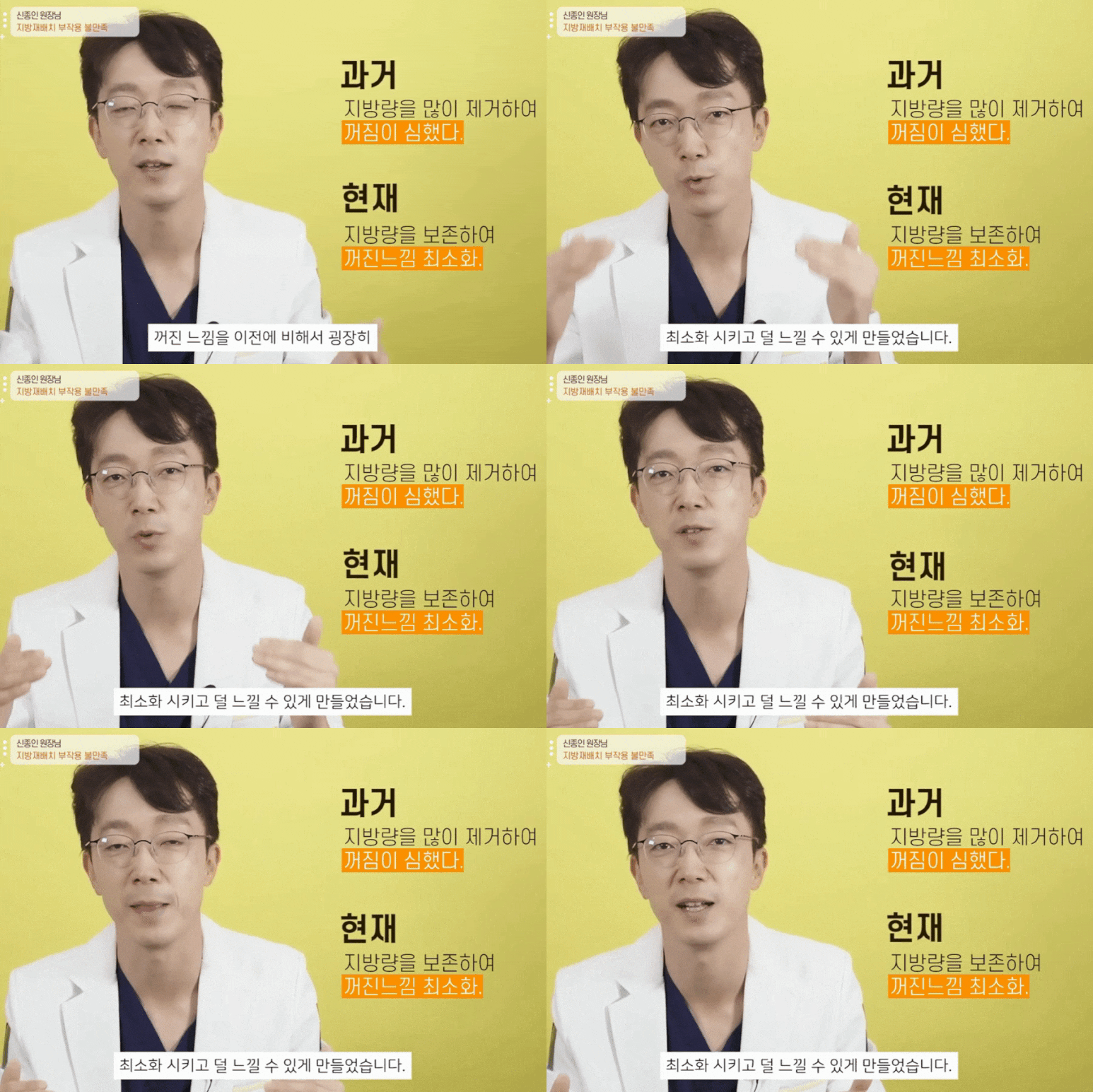
These days, the method has improved a lot
by preserving as much fat as possible
while repositioning it,
but there are still cases where people say
"It looks more hollow than I expected."
This usually happens when people who naturally have
very little fat under the eyes
undergo lower eyelid fat repositioning.
In such cases, it is best to get an accurate diagnosis
and 충분히 상담을 받으시어 before surgery
whether fat grafting may be needed.

Real concern point ②
"Won't fine wrinkles appear around the eyes?"
Many people also say
that fine wrinkles have appeared.
When the under-eye fat is originally protruding,
the skin is in a tightly stretched state.
But after the fat is repositioned,
the skin itself remains the same,
while the volume underneath decreases,
so the skin may look slightly wrinkled.
This can become more noticeable,
especially in people whose skin elasticity
was already reduced
or who are older.

To address these fine wrinkles,
the skin would need to be incised,
but that can leave a scar
and
may also extend the recovery period a little,
so it is something that requires careful judgment.
Real concern point ③
"Won't the boundary line remain?"
You can also find reactions saying
"The tear trough did not disappear completely."
In fact, the tear trough is caused by
a combination of several factors.
The biggest cause is the under-eye fat bending downward,
but
other factors also play a role,
such as
the difference in fat layers between the eyelid and the bone,
differences in skin texture and color,
and the degree of sagging.

So even if repositioning the fat improves the contour,
some people still feel that the boundary line remains
because of differences in skin color or texture.
Expecting the boundary line to disappear completely
is realistically difficult,
and to reduce these differences,
additional treatment may be needed,
such as fat grafting to match skin thickness
or laser treatment to improve color differences.
Real concern point ④
"Won't I look older?"
Lastly,
this is about the "Indian wrinkle."
The Indian wrinkle refers to a long groove
running just below the cheekbone.
Anatomically, it is
a completely different structure from the tear trough.
The tear trough is the boundary line
right below the eye,
while the Indian wrinkle is a groove
caused by fullness in the cheekbone area.
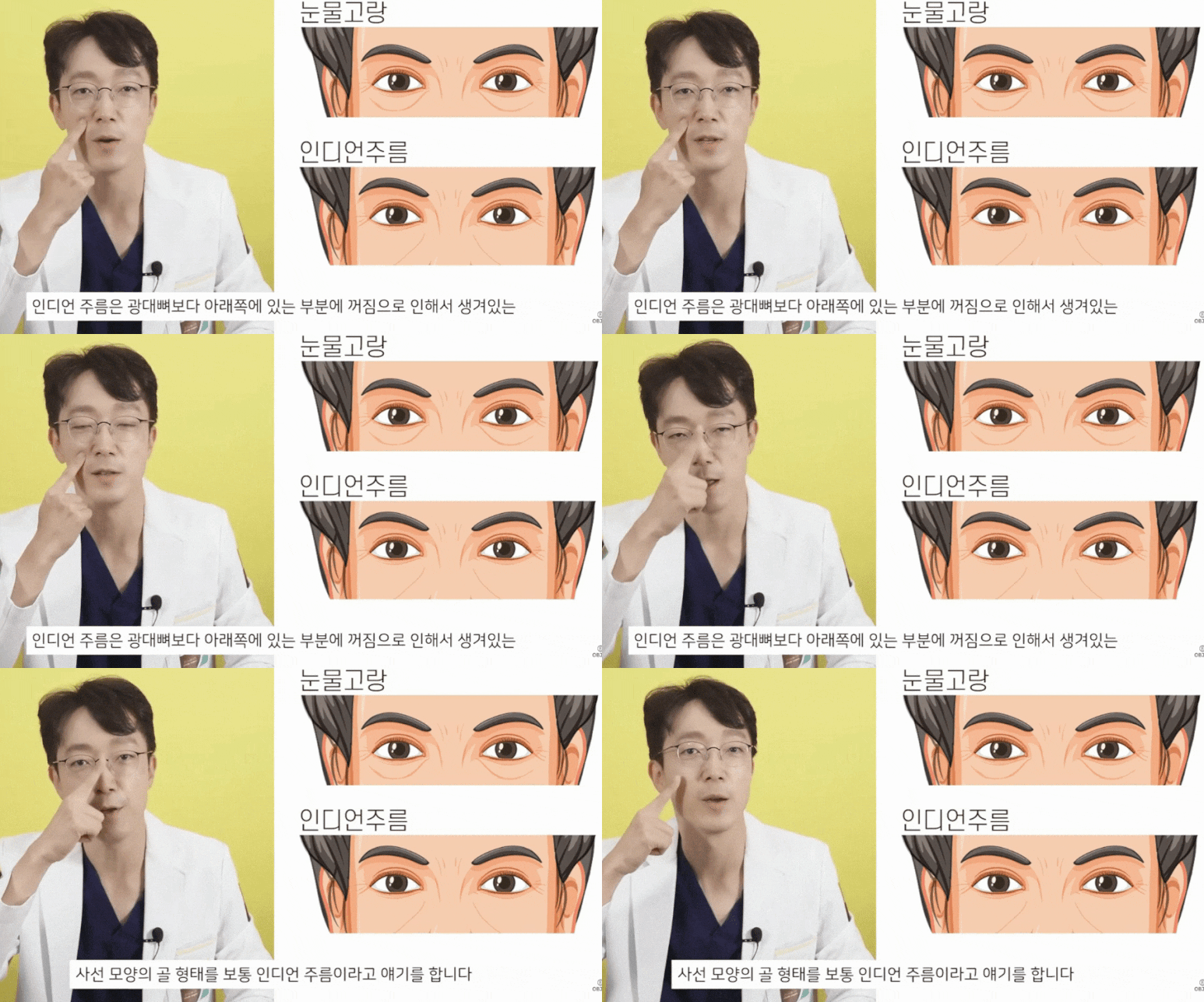
However, if someone has an Indian wrinkle
and undergoes lower eyelid fat repositioning,
the tear trough may improve,
which can make the Indian wrinkle
stand out more relatively.
Because the Indian wrinkle is structurally
a different issue,
it cannot be solved by lower eyelid fat repositioning alone,
and if necessary,
additional procedures such as fat grafting
should be considered.
Today, I talked about the swelling
that many people worry about,
as well as what you really need to consider.
The swelling after lower eyelid fat repositioning
will naturally subside over time,
but under-eye hollowness, fine wrinkles,
a still-visible tear trough, or a more pronounced
Indian wrinkle are issues that depend on
the surgical method,
the individual’s skin condition,
and expectations before surgery.
In the end, what matters is
to have a thorough consultation before surgery,
understand exactly what your current under-eye condition is,
what results can realistically be expected,
and start from there.

It is not a matter of
"Once the swelling goes down,
it will be perfect," but rather,
you need to know in advance
"This level of improvement is possible,
and this part has limits"
so that you can still achieve a satisfying result
after lower eyelid fat repositioning.
Dr. Shin Jong-in of Obje Plastic Surgery
standardized the surgical method for lower eyelid fat repositioning
and is a board-certified plastic surgeon
who has published two SCI-level papers
on dark circle treatment.
Through sufficient consultation before surgery,
he clearly explains the patient’s current condition
and the results that can be expected,
and to minimize dissatisfaction after surgery,
he considers careful diagnosis and planning
as the foundation of treatment.
I hope today’s article was helpful
to those considering lower eyelid fat repositioning.
This has been Obje Plastic Surgery.
Thank you.
<🔽🔽Videos you may find helpful🔽🔽>
| Consultation and inquiries for lower eyelid fat repositioning |
|---|
| Fast phone consultation |
| Kakao simple consultation |
-
This post is medical information written by Obje Plastic Surgery Clinic in compliance with the Medical Advertising Act.
-
Treatment effects may vary depending on the individual, and side effects may occur.
We recommend that you have sufficient consultation with a medical professional in advance before deciding on treatment.