Nose surgery swelling
Is this supposed to be okay?
Dr. Jang Wook’s <Q&A>
Hello.
This is Objet Plastic Surgery.
It probably took you a very long time to decide on nose surgery.
And once the surgery is over,
you probably let out a sigh of relief, thinking,
"Now I just have to get prettier."
But from the moment you leave the operating room,
new worries begin to emerge,
one by one.
You start wondering when the swelling after nose surgery will go down,
when you can return to daily life,
and whether the tip of your nose might droop later.
These worries keep running through your mind.
So today,
for patients after rhinoplasty,
we’re going to answer the three questions
people ask most often,
one by one, step by step.
If you read to the end,
your worries about rhinoplasty may feel a little lighter.

Q1. Is it normal for the nose to swell this much?
When you look in the mirror right after nose surgery,
the first thing you may think is,
"Huh? It’s swollen so much more than I expected."
Often it’s not just the nose that is swollen;
the area around the eyes or even the cheeks may be swollen too,
so you might wonder,
"Is this amount of swelling normal?"
That reaction is completely natural.
Surgery is a process that
applies physical stress to the tissue,
so
our body increases blood flow
and triggers an inflammatory response to recover.
During this process, fluid moves out of the blood vessels,
accumulates between tissues,
and swelling appears.
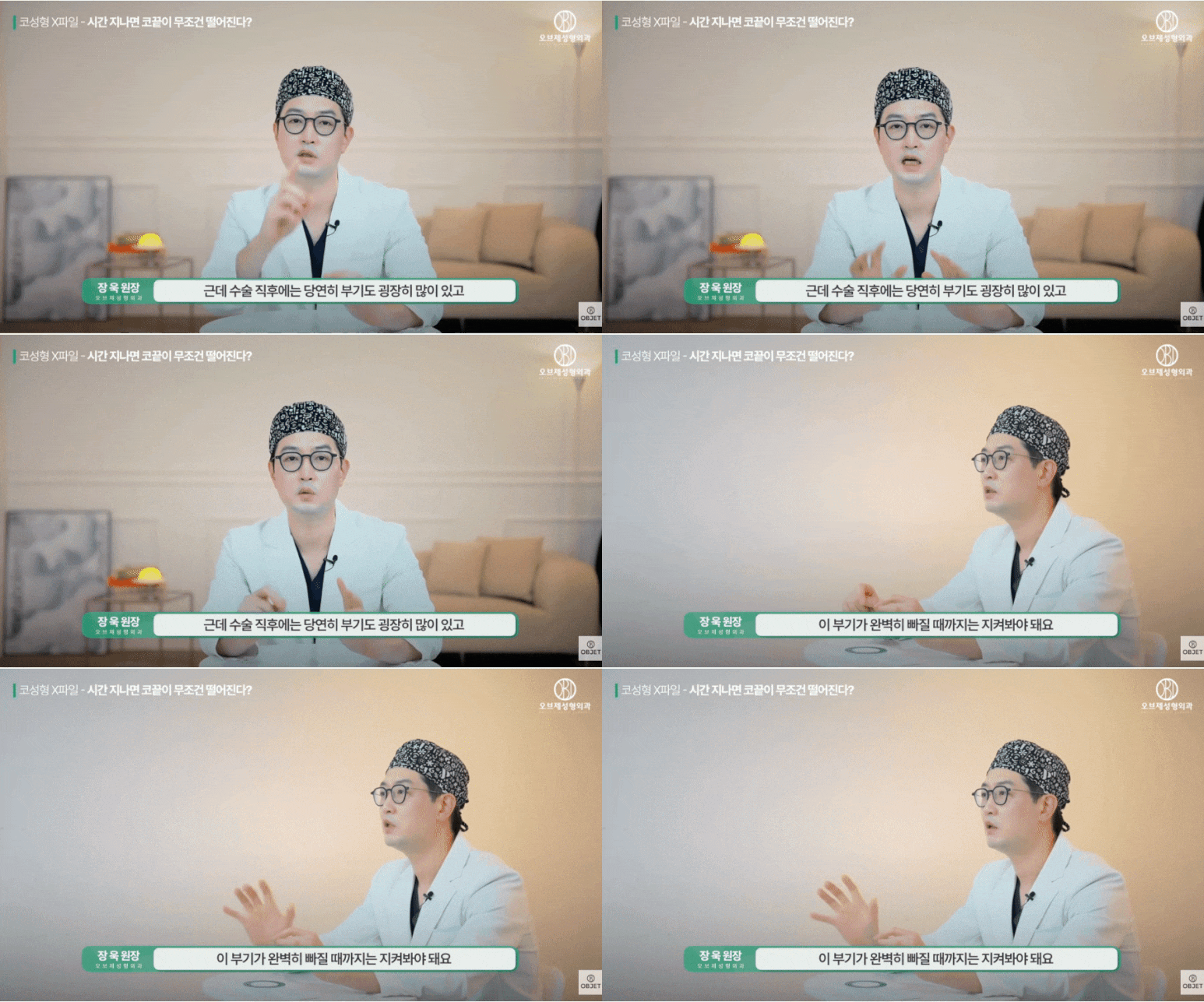
Especially within the first 48 hours after surgery,
swelling after nose surgery is at its worst.
At this time, the body’s response to tissue damage
is at its most active,
so
moving too much or bending your head down
can cause the swelling to last longer.
So when does this swelling start to go down?
About a week after nose surgery,
the major visible swelling usually subsides quite a bit.
But what’s important here is that
just because it looks much better on the outside
doesn’t mean all of the swelling after nose surgery has completely disappeared.
The swelling you can see
and the swelling that remains inside the tissue
are slightly different concepts.
In particular, the tip of the nose has relatively slow blood circulation
and the tissue tends to be thicker,
so even after about a month,
many people still feel,
"The tip of my nose still looks blunt,"
"It still feels stiff."
That is not abnormal;
it is part of the natural recovery process.
It usually takes about 3 to 6 months
to judge the final result.
Over that period,
the tissue gradually stabilizes,
and the tiny bits of swelling
slowly go down,
allowing the line and shape of the nose
to settle naturally.
Q2. Isn’t it true that the tip droops later?
"I heard that after rhinoplasty,
the tip of the nose droops later. Is that true?"
We get this question a lot.
To answer right away,
it does not necessarily droop.
However, compared with right after surgery,
it may look slightly lower.
Right after nose surgery,
there is quite a lot of swelling,
and you need to keep watching it for quite some time
until all of the swelling goes down.
During the recovery process over about six months after surgery,
as the soft tissue changes,
you may feel that it has become a little lower.
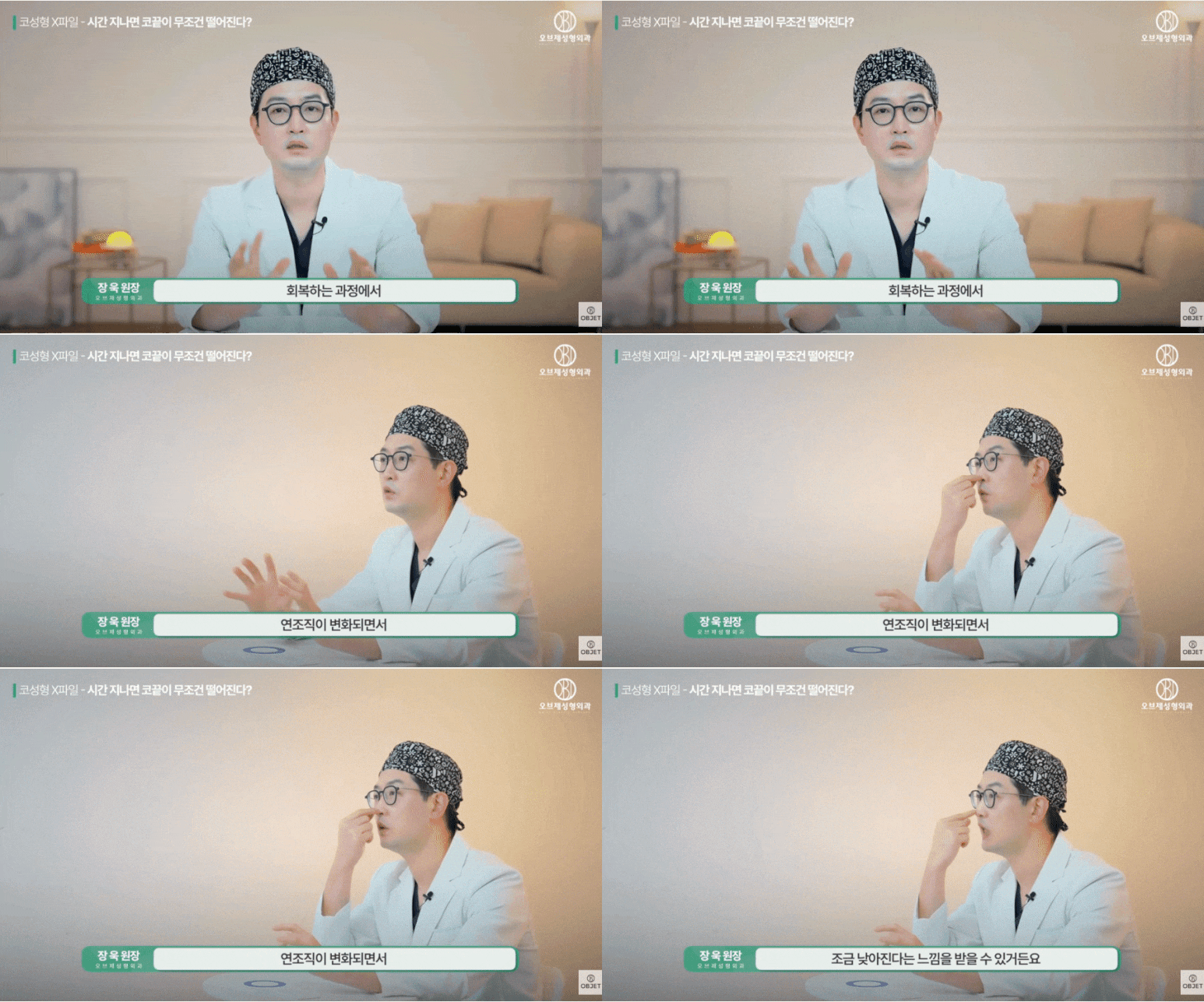
So experienced medical staff
plan for this in advance
and set the height of the nose tip accordingly.
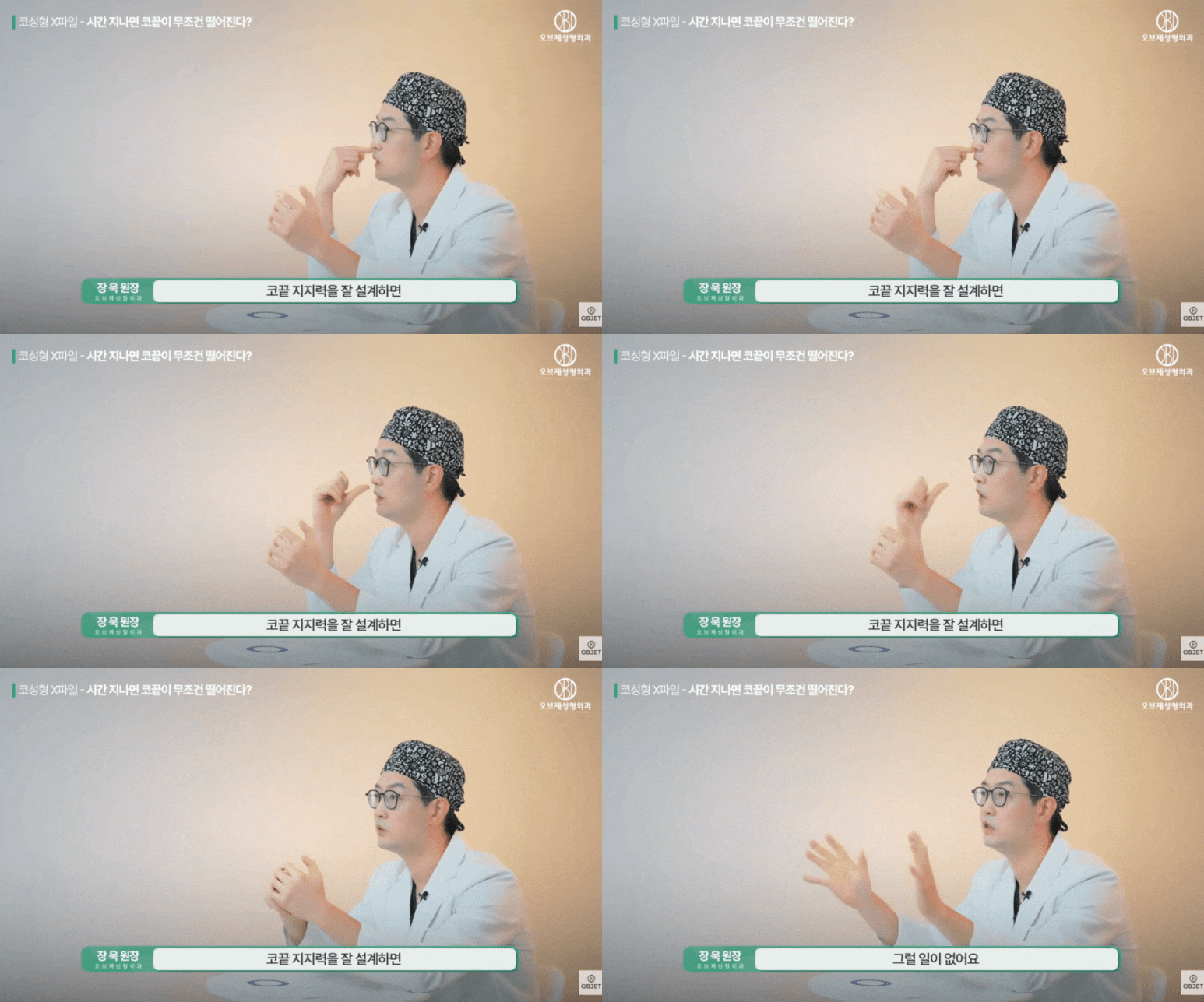
It’s just like building a structure.
If it is structurally well designed,
there is little chance of the tip drooping easily
under ordinary circumstances.
To raise the tip of the nose,
properly supporting the pillar is extremely important.
The materials used here include
septal cartilage, donated cartilage,
and autologous rib cartilage—
relatively firm types of cartilage.
But if the pillar was built weakly from the start,
or if the cartilage material itself is somewhat weak,
you may feel that the tip of the nose gradually droops.
So you can think of it this way:
if the support at the tip is kept firm enough so it doesn’t collapse easily,
it won’t droop.
Q3. Can I rest only a few days and go back to work?
"Can I rest only a few days after surgery
and go straight back to work?"
The answer to this question
is not as simple as you might think.
That’s because daily life
differs from person to person.
It depends on whether you mean simply going to the office,
or whether you’re including active schedules
such as exercise or travel.
First, the first few days right after nose surgery
are the most sensitive part of the recovery process.
As mentioned earlier,
up to 48 hours is when tissue damage is most severe,
and
bleeding and swelling after nose surgery
really begin to appear,
so it is important to rest as much as possible during this period.
You should avoid bending your head down
or lifting heavy objects whenever possible.
That’s because when you bend your head down,
your head is positioned lower than your heart,
and
blood flows toward the face due to gravity.
Pressure is then placed on the damaged blood vessels,
which can worsen swelling
and increase pain.
So when sleeping,
it helps to stack pillows high
and sleep with your upper body elevated,
so that gravity can help reduce
the movement of fluid toward the face.
About a week later,
the stitches are removed,
and the visible swelling tends to decrease significantly.
Around then,
we most often hear the question,
"Isn’t everything okay now?"
But unlike the visible changes,
the tissue inside the nose is still in the process of settling.
Returning to work or school may be possible,
but strenuous activity or
jobs that require long periods of bending your head down
still need to be handled carefully.
For airplane travel or trips,
it is much safer to use
about two weeks after surgery
as the benchmark,
when tissue stability is higher.
That’s because from that point onward,
the burden from pressure changes is lower,
and recovery also continues more stably.
After about a month,
most daily activities become possible,
but please remember that
it still takes a long time—about 3 to 6 months—
for the tissue inside the nose to fully settle
and for the implant to firmly adhere and stabilize.
Today we talked about the swelling after nose surgery and recovery period
that patients most often ask about after rhinoplasty,
as well as tip drooping
and when to return to daily life.
In the end, what matters is
understanding what stage your body is in now
and
rather than rushing,
watching the recovery process step by step.
Please remember that recovery management is just as important as the surgery itself,
and
even if it feels a little uncomfortable,
you should let your body rest sufficiently during this period.
Dr. Jang Wook of Objet Plastic Surgery
personally takes responsibility for every step,
from consultation and diagnosis to surgery and aftercare,
based on years of experience in rhinoplasty.
Rather than simply saying, "It’s fine,"
we make it a basic principle of care to clearly guide you on
what is possible at your current stage of recovery
and what is safe.
We hope this article has answered all of your questions
about recovery after rhinoplasty.
This has been Objet Plastic Surgery.
Thank you.
<🔽🔽A helpful video to watch together🔽🔽>
| Rhinoplasty consultation and inquiries |
|---|
| Phone quick consultation |
| Kakao easy consultation |
-
This post is medical information prepared by Objet Plastic Surgery Clinic in compliance with the Medical Advertising Act.
-
The effectiveness of the procedure may vary depending on the individual, and side effects may occur.
It is recommended that you consult thoroughly with medical staff in advance before deciding on the procedure.