Upper Eyelid Fat Grafting,
Dr. Kim Hyun-jo’s
<Key Information> Explained
Hello.
This is Obje Plastic Surgery.
If you are considering upper eyelid fat grafting,
you may often hear that the area above the double eyelid
looks sunken and makes you appear tired.
At first, you may think, “Was it always like this?”
but when you compare old photos,
you can clearly tell something has changed.
After losing weight,
the upper eyelid may seem especially hollow,
or after having double eyelid surgery in the past,
it may have gradually become deeper.
When you are dealing with these concerns,
you often hear people around you say,
“Why not try adding fat?”
But when you actually look into it,
it is not easy to know exactly what kind of procedure it is,
or whether it is the right method for your situation.
In some posts, it says
“it has to be done in several sessions,”
and in others, it says
“there are many precautions to keep in mind,”
so it is natural to become even more curious.
So today,
I will explain one by one what the method of
adding fat to the upper eyelid actually is,
and what you should know when considering upper eyelid fat grafting.
If you read until the end,
you will be able to judge a little more clearly
whether it is the right method for your situation.
Why does the upper eyelid become hollow?
You need to know ‘this’ to solve it
Upper eyelid fat grafting,
as the name suggests,
involves harvesting fat and transplanting it with a syringe
into the areas that lack volume.
Fat is collected from your own abdomen, thighs,
flanks, or other areas,
then refined and transplanted into the upper eyelid.
When the skin between the double eyelid crease and the bone
is sunken in,
that area is filled in.
So why does the upper eyelid
become hollow in the first place?
The causes are more varied than you might think.
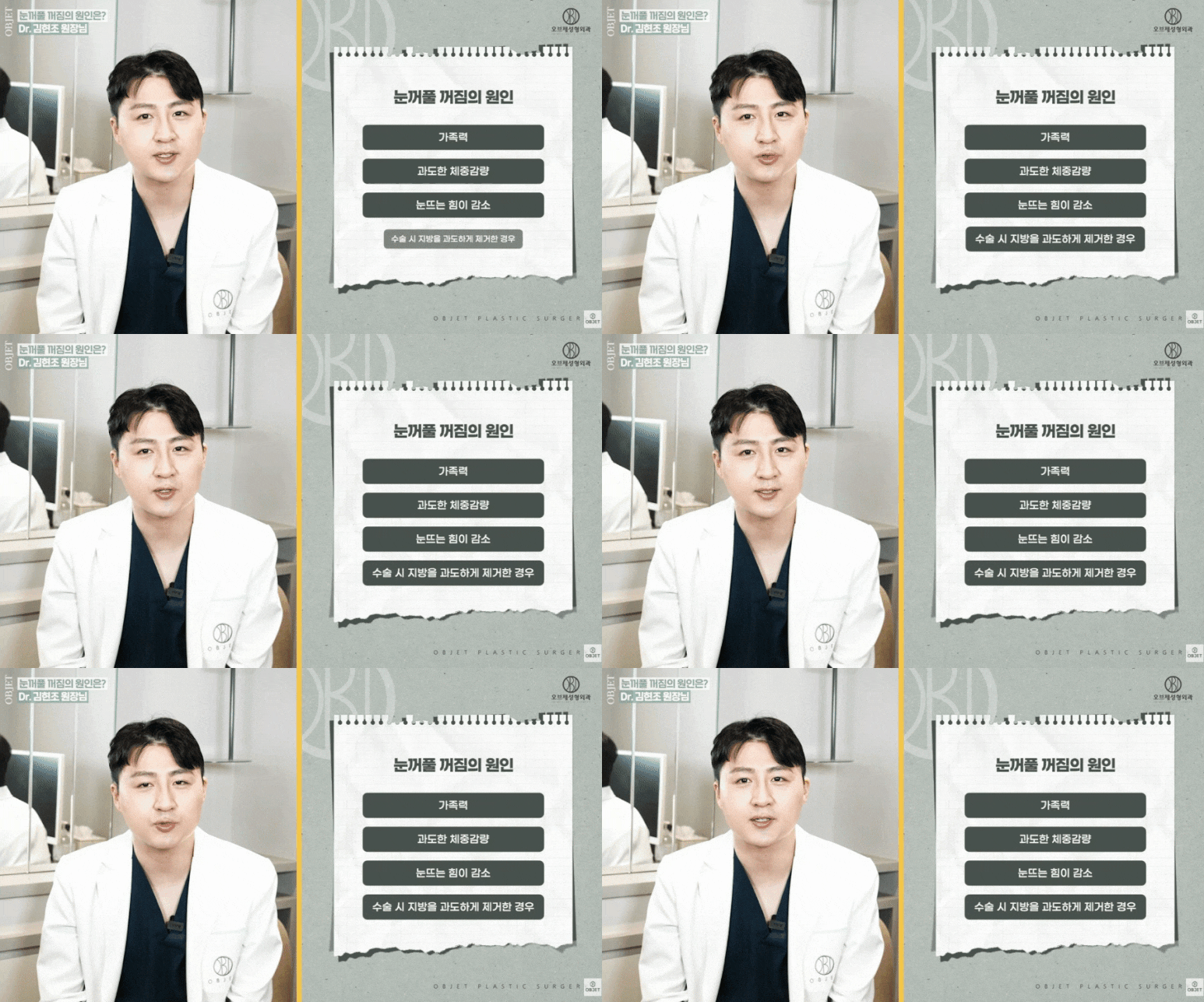
It may be due to genetics,
or because fat has been lost after excessive weight loss.
It can also happen when the force used to open the eyes weakens,
causing the fat to be pulled upward.
If too much fat was removed during a previous double eyelid surgery
or upper blepharoplasty,
that can also be a cause.
Because the causes are so diverse,
the treatment method must also differ.
The method of adding fat is mainly considered when
the strength to open the eyes is normal
and only the upper eyelid is hollow.
On the other hand, if the force used to open the eyes is weak
and you end up opening your eyes with your eyebrows,
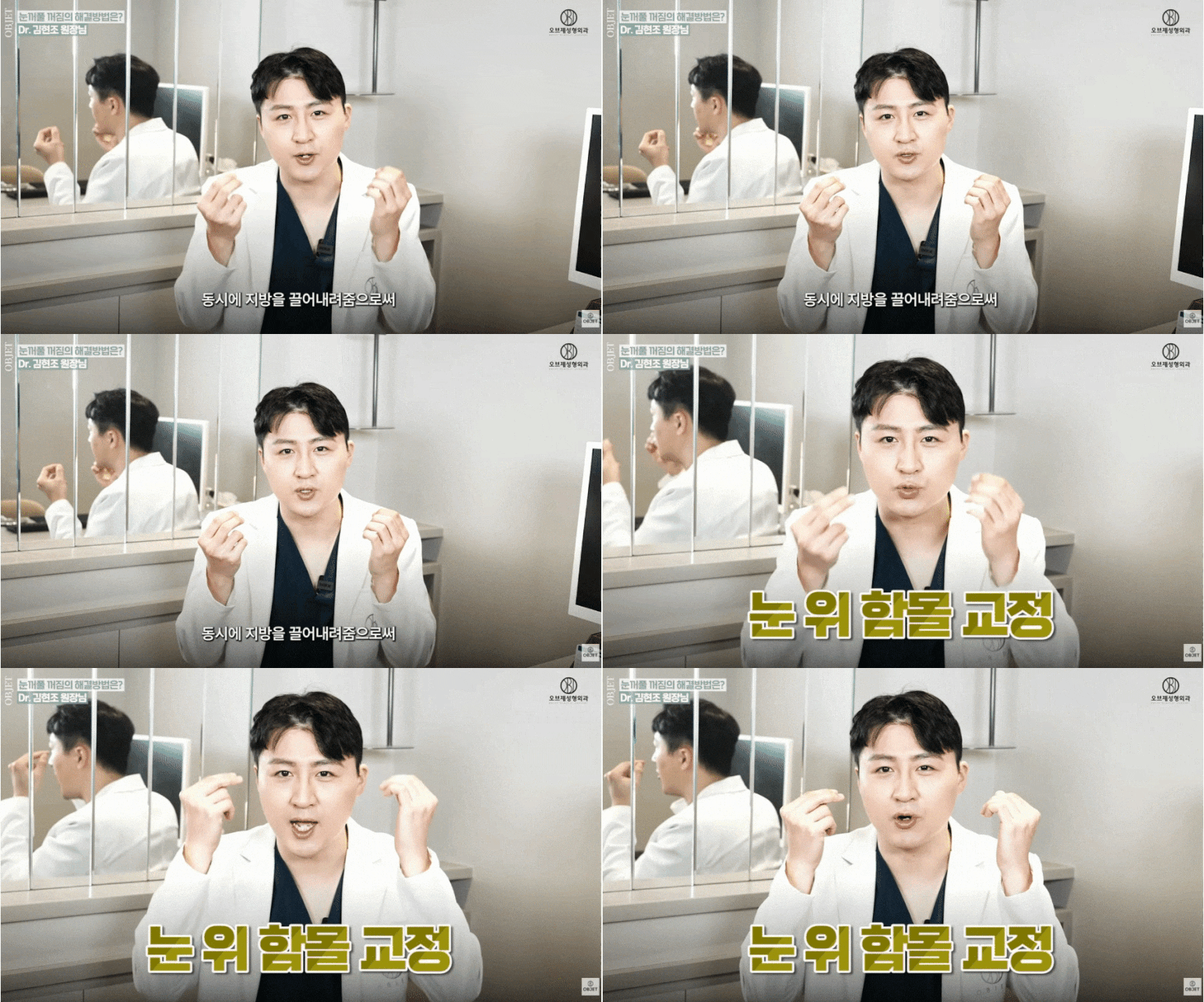
rather than adding fat,
a method that brings the fat downward together with
eyelid correction may be more appropriate.
In the end, the right approach depends on
the condition of your own eyes.
The key to reducing side effects! It is 00
Upper eyelid fat grafting
requires a more cautious approach than other procedures.
Why is that?
Because the upper eyelid is a very delicate area
compared to other parts of the body.
If the graft is placed incorrectly,
bumps may form or the fat may clump together,
causing problems.
What is even more important is when the fat
goes deep into the muscle used to open the eyes.
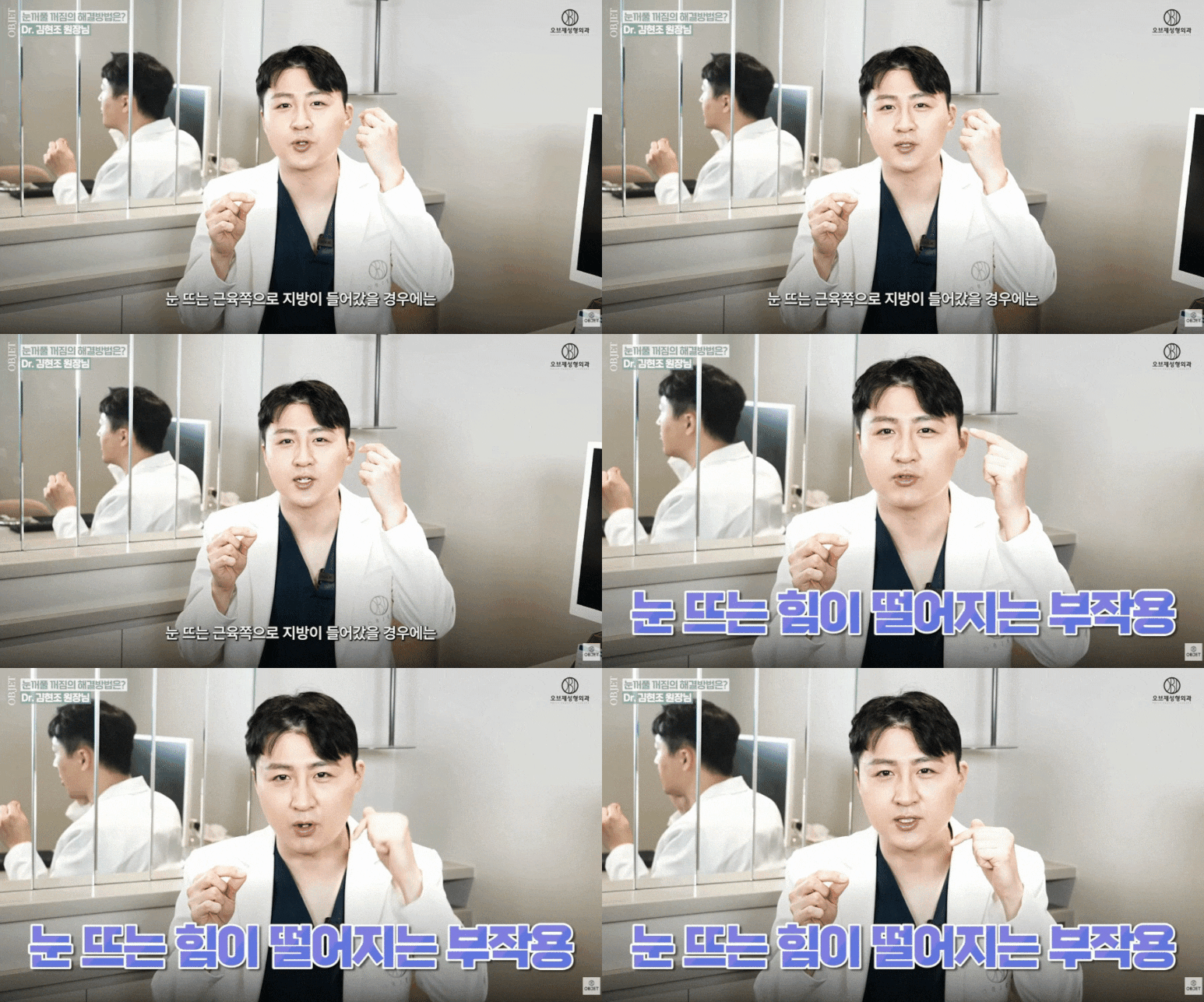
If that happens,
it can cause a side effect of reduced eye-opening strength.
That is why this procedure does not involve
putting in a large amount all at once;
instead, an appropriate amount of fat is grafted over multiple sessions.
Little by little,
the hollow area is filled in
and corrected naturally.
For those hearing this for the first time,
you may wonder,
“Why not finish it all at once,
and why do it in several sessions?”
This should be understood as a method
to minimize side effects and achieve a natural result.
A hollow eyelid,
have you only been looking into ‘fat grafting’?
The way to address a hollow upper eyelid
is not limited to adding fat.
Depending on the situation,
a method that brings the fat downward
may also be considered.
Fat repositioning downward
is a method used while performing upper blepharoplasty
or incision-based double eyelid surgery,
in which orbital fat that has been pulled upward
is brought downward.
However, if there is not much orbital fat to begin with,
the effect may be minimal.
Also, if the force used to open the eyes is weak,
eyelid correction may be performed together with
fat repositioning downward.
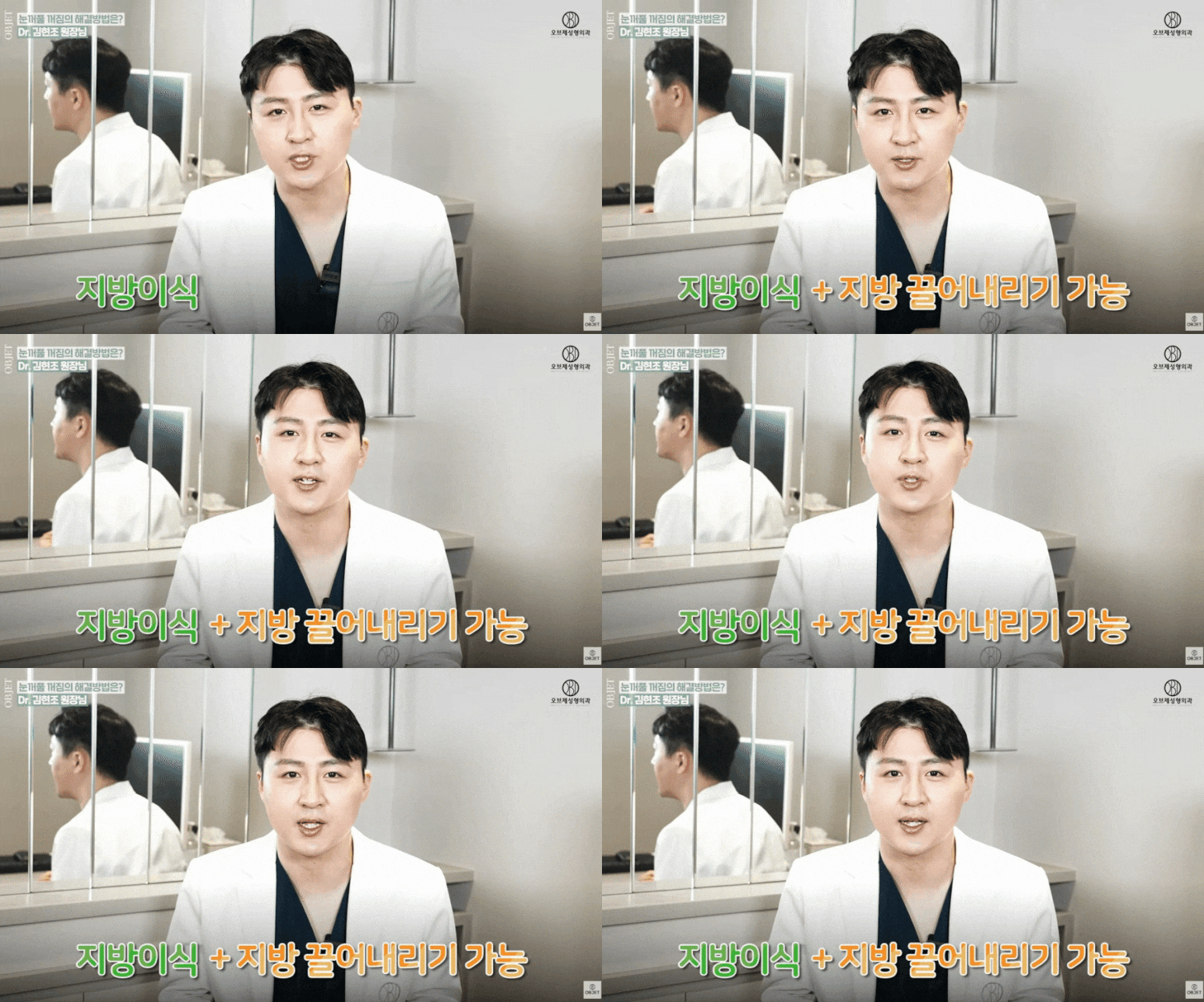
When eyelid correction helps you open your eyes more clearly,
the habit of lifting the eyebrows with the forehead disappears,
and at the same time,
by bringing down the fat that has been pulled upward,
upper eyelid hollowing can be corrected to some extent.
If some upper eyelid hollowing remains even after surgery,
additional upper eyelid fat grafting may also be performed.
Looking at it this way,
you can see that the appropriate method differs
depending on the cause of the hollow upper eyelid
and the condition of the eyelid-opening strength.
Today, I organized the topic of upper eyelid fat grafting in detail.
The causes of a hollow upper eyelid are truly varied.
It may be due to genetics,
weight loss,
or the effects of previous surgery.
That is why it is important to plan the procedure
according to each individual cause.
For some people,
the method of adding fat may be appropriate,
but for others,
fat repositioning downward or eyelid correction
may be the better choice.
Dr. Kim Hyun-jo of Obje Plastic Surgery
does not approach the issue simply by saying,
‘The upper eyelid is hollow, so let’s fill it.’
He first identifies why the upper eyelid has become hollow,
and based on that cause,
carefully examines which approach is needed,
step by step.
If you are worried about a hollow upper eyelid,
I hope that, after careful consideration,
you will also have a satisfying result.
That is all from Obje Plastic Surgery.
Thank you.
<🔽🔽Videos that may be helpful to watch together🔽🔽>
| Consultation and inquiries for middle-aged eye surgery |
|---|
| Quick phone consultation |
| Simple Kakao consultation |
-
This post is medical information written by Obje Plastic Surgery Clinic in compliance with the Medical Advertising Act.
-
The effects of the procedure may vary by individual, and side effects may occur.
It is recommended that you consult thoroughly with a medical professional in advance before deciding on the procedure.