The most common question asked at a revision rhinoplasty clinic!
Hello.
This is Obje Plastic Surgery.
When you look into rhinoplasty,
you may have heard something like this at least once.
"Rhinoplasty will inevitably need revision after 10 years."
"You usually need it done 2 to 3 times to get the shape you want."
"There are almost no noses that are finished in one surgery."
It is not easy to even decide on your first rhinoplasty,
so hearing things like this
can naturally make you hesitate.
It is already a big decision once,
and having to do it again feels burdensome.
It can even feel frightening to think that
eventually, as time passes,
you may have to get back on the operating table.
But is revision surgery really
necessary after rhinoplasty?
Today, at a revision rhinoplasty clinic,
we will clearly address
a major misconception,
which is also the question we hear most often.
If you read to the end,
you will feel much more confident
when deciding on rhinoplasty.
“Rhinoplasty must be revised after 10 years.”
Is this true?
To get straight to the point,
this is not true.
Getting rhinoplasty does not mean
that revision surgery is definitely needed.
Then why did people start saying this?
In fact, this misconception
came from certain materials
that were commonly used in the past.
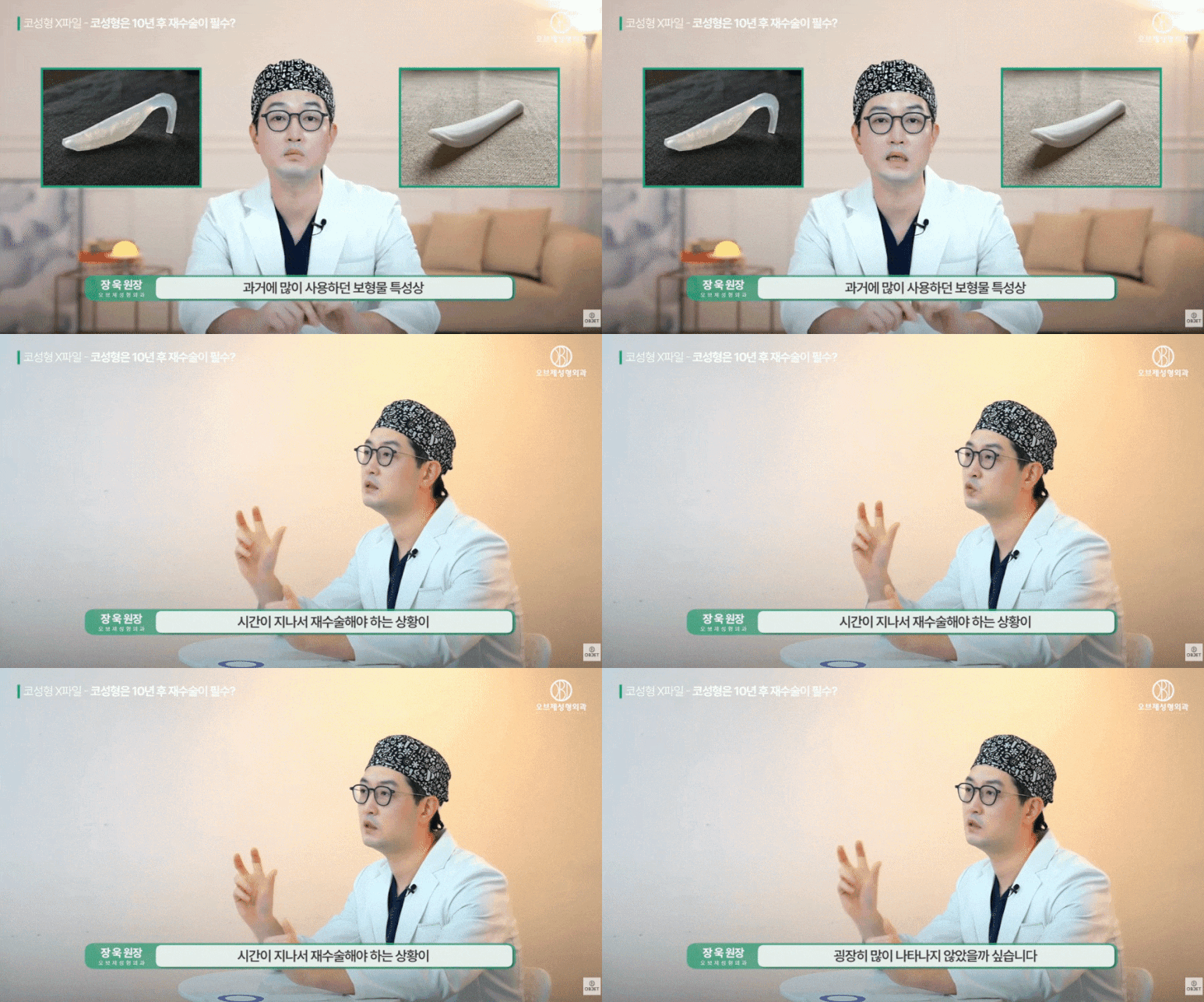
In the past, materials such as L-shaped silicone
and Gore-Tex were widely used.
In particular, L-shaped silicone
was a method in which silicone was inserted all the way to the nasal tip.
The problem was that it continuously irritated the skin at the tip of the nose.

Over time,
the skin at the nasal tip became thinner and thinner,
and in severe cases,
the silicone even poked through the skin.
When that happens,
of course you need to visit a revision rhinoplasty clinic.
It is dangerous to leave it alone,
and because it is noticeable,
it does not look good.
Gore-Tex also had the characteristic
of bonding too strongly with the tissue.
So it could look as if it were showing through the skin,
and this also often ended up needing to be corrected again.
So the statement, "Rhinoplasty must be revised,"
is a misconception that arose because of
the materials used in the past.
What is different about rhinoplasty today?
It lies in the use of OO tissue.
Things are completely different now.
Today, autologous tissue
is used much more often.
Autologous tissue means using cartilage or tissue
taken from your own body.
In particular, the nasal tip is usually made
with autologous tissue such as ear cartilage or septal cartilage.
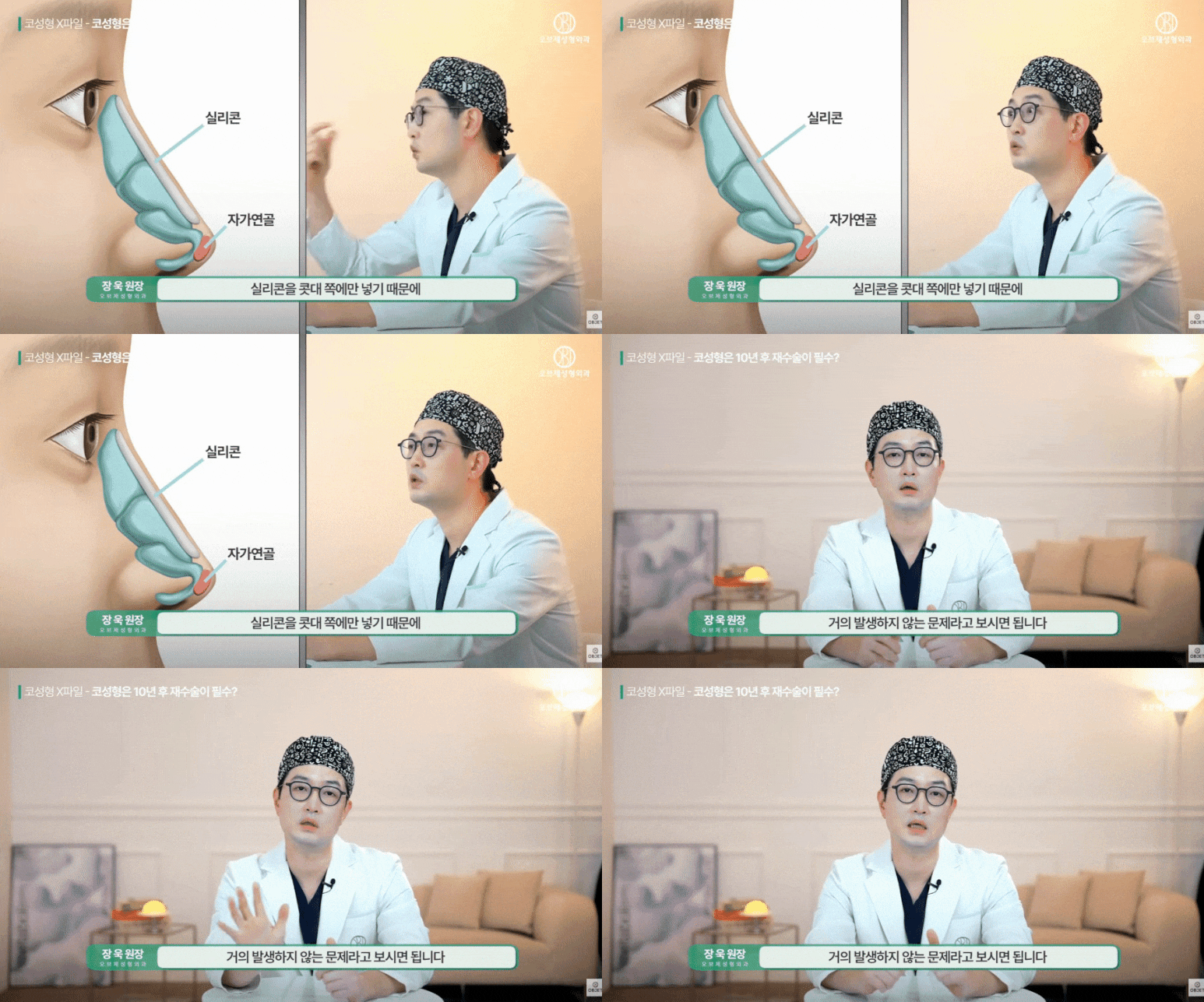
Even when silicone is used,
it is not inserted all the way to the tip like before.
It is used only in a limited way
for the upper bridge area,
that is, only in the safe area.
This way,
there is no risk of irritating the nasal tip skin,
and even as time passes,
the likelihood of problems occurring
is much lower.
In the end, what matters is not
'what material is used,' but
'how it is used.'
If the surgery is done in a way that suits your face well
and is performed safely,
there is absolutely no reason
for it to have to be redone every few years.
A checklist for successful rhinoplasty
in one surgery, revealed!
The biggest reason people end up visiting a revision rhinoplasty clinic
is that something went wrong during the first surgery.
So it is important to do it right
from the very beginning.
The first thing to check is whether they
propose a design that suits your face.
These days, many people bring photos of popular celebrities
and ask, "Please make it like this."
But everyone has a different face shape,
facial feature ratio,
skin thickness,
and condition of the nasal bone and cartilage.
Even if the shape is the same,
it may suit one person well,
but it may not suit another person at all.
So rather than simply doing whatever the patient wants,
you should look for a place that suggests,
"For your face, this level of height would look the most natural
and last the longest."
The second thing is to check whether they
properly build the internal structure of the nose.
It is not enough to simply make the outside look pretty.
They need to create a strong internal structure
so the shape can be maintained over time,
which helps prevent problems later.
For example, if the nasal tip cartilage is weak,
it is not enough to simply place an implant on top.
They need to create a framework
that can stably support the implant.
If this part is overlooked,
the tip may droop later,
or the shape may change.
The third is to find a place
that does not perform surgery excessively.
Rather than a place that does everything just because the patient asks,
a place that honestly says,
"This is safe up to this point,"
or "This is realistically difficult"
is actually more trustworthy.
Excessive desire is the biggest cause
of problems later on.
Today, we explained the truth behind the statement
that rhinoplasty must be revised.

This is only a story that arose because of
the materials used in the past,
and these days, with safe materials and methods,
it is perfectly possible to create a nose that lasts a long time from one surgery.
What matters is doing it right from the start.
Whether the design suits your face,
whether the internal structure is made strong,
and whether the procedure is carried out safely without overdoing it.
If you check just these three things,
you will probably have almost no reason
to visit a revision rhinoplasty clinic again.
Dr. Jang Wook of Obje Plastic Surgery
carefully designs the cartilage structure that supports the nasal tip,
and thoroughly assesses each patient’s different skin thickness
and tissue condition
to perform surgery in the most stable way.
In particular, rather than excessive treatment,
he prioritizes natural proportions that suit the patient’s face,
and considers it most important to build a strong internal structure
from the beginning so the shape does not collapse over time.
We hope today’s post was helpful
for those considering rhinoplasty.
This has been Obje Plastic Surgery.
Thank you.
<🔽🔽Recommended video to watch together🔽🔽>
| Consultation and inquiries about rhinoplasty |
|---|
| Quick phone consultation |
| Kakao convenient consultation |
-
This post is medical information written by Obje Plastic Surgery Clinic in compliance with the Medical Advertising Act.
-
The effects of the procedure may vary depending on the individual, and side effects may occur.
We recommend having 충분한 consultation with the medical staff beforehand and then deciding on the procedure.