How Is Eyelid Surgery for Middle-Aged Patients Different?
Dr. Kim Hyun-jo’s <Key Summary>

Hello.
This is Objet Plastic Surgery.
Lately, while looking in the mirror,
you may have thought that
your eyelids have become
much more droopy than before.
So you start looking into double eyelid surgery,
but then you see terms like
“middle-aged eyelid surgery” and
“upper blepharoplasty,”
which can be confusing.
You may have also heard that it is somehow different
from the double eyelid surgery
young people undergo.
It might seem like all you need to do is
make a double eyelid line,
so it may be hard to understand why
the procedure changes depending on age.
Today, we’ll go over those differences
one by one.
We’ll explain how upper blepharoplasty,
which is referred to as middle-aged eyelid surgery,
differs from regular double eyelid surgery,
and which method may be right for you.
If you read to the end,
your vague concerns should become
much clearer.
Middle-aged eyelid surgery VS regular eyelid surgery,
they differ from the very first step
To start with the conclusion,
the two surgeries have different goals.

For younger patients,
double eyelid surgery
primarily aims to create
a double eyelid crease.
Many East Asian eyes do not have
a double eyelid crease and often have
thicker orbital fat,
so the procedure removes some of that fat
and creates a clear crease.
At this stage, the skin still has elasticity
and has not sagged much,
so there is usually no need to remove skin.
By contrast, upper blepharoplasty
is not just about creating a crease.
As people age,
the eyelid skin loosens,
fat begins to protrude forward,
and even the strength to open the eyes weakens.
The key purpose of upper blepharoplasty
is to correct each of these changes
one by one.
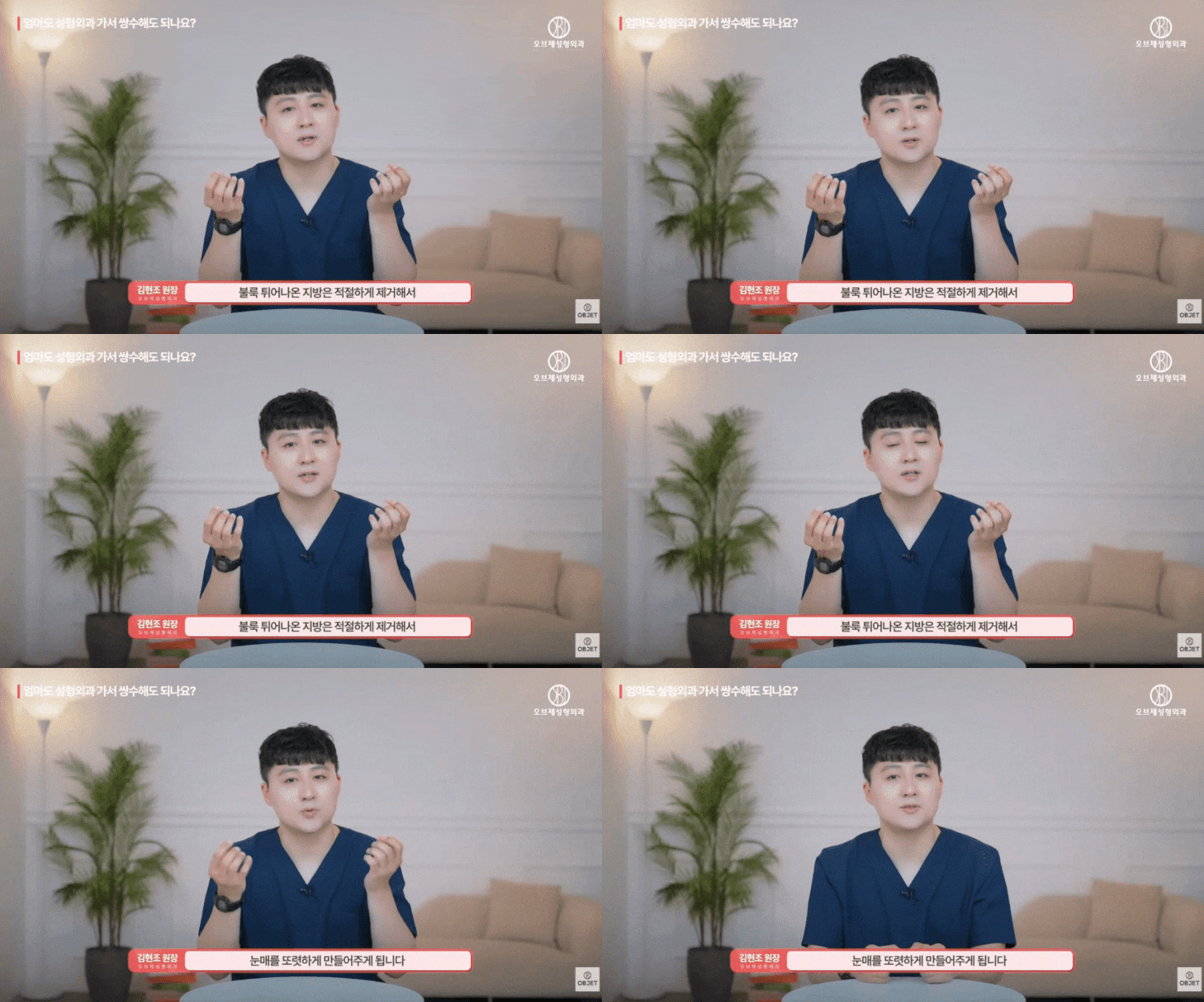
That is why, medically,
it is called upper blepharoplasty,
and you can think of it as a procedure
that corrects age-related changes,
not just one that creates a crease.
The biggest difference is whether skin is removed.
In double eyelid surgery for younger patients,
the skin is not sagging,
so there is no need to remove it.
But with upper blepharoplasty,
the excess skin must be removed.
That is because the drooping skin often
hangs down and covers the field of vision,
or makes the eyelids look heavy.
If you simply create a crease
while leaving the drooping skin in place,
the eyes will soon look heavy again.
And there is one more issue:
the strength to open the eyes.

As we age,
the strength of the muscles that lift the eyelids
gradually weakens.
When that happens,
you may look sleepy even when you are relaxed,
and you end up straining your forehead to open your eyes,
which deepens forehead wrinkles.
So in upper blepharoplasty,
if needed, eye-opening correction may also be performed
to improve the strength of eye opening.
In short,
double eyelid surgery for younger patients
aims to “create a crease,”
while upper blepharoplasty also includes
“correcting aging,”
which is the biggest difference.

Will middle-aged eyelid surgery alone solve the problem?
Not always, and here’s why
There is one more important point here.
Everyone’s eye structure
and degree of aging are different.
For some people,
it is not only the eyelids that sag,
but also the eyebrows.
For others,
the fat above the eyes may have decreased too much,
leaving a hollow appearance.
In such cases,
upper blepharoplasty alone may not be enough
to achieve the desired result.
For example,
if the eyebrows have dropped significantly,
eyebrow lift surgery or a sub-brow lift
may need to be considered as well.

If the eyebrows are drooping,
and only the eyelid skin is removed,
the eyes may again appear heavy
a short time later.
Also, if the strength to open the eyes is
significantly weak,
eye-opening correction may be needed.
And if the area above the eyes is sunken,
fat repositioning may need to be combined
in order to create a natural and youthful impression.
That is why,
if you are considering upper blepharoplasty,
rather than simply wondering whether
you should have surgery or not,

it is more important to first understand
your current eye condition accurately.
After comprehensively evaluating
the degree of skin sagging,
the position of the eyebrows,
the strength to open the eyes,
and the condition of the fat above the eyes,
a customized plan suited to you
is what matters most.
Today, we looked at the differences between
middle-aged eyelid surgery and
regular double eyelid surgery,
and also when additional procedures may be needed.
If your eyes are drooping now
and you are worried about it,
your feelings are completely understandable.
The eyes are one of the most important features
that determine facial impression,
and they are also the part you notice
every time you look in the mirror.
Still, we recommend approaching this a bit more carefully.

Through enough consultation with the medical team,
it is best to accurately understand your eye condition
and choose the most suitable method.
Dr. Kim Hyun-jo of Objet Plastic Surgery
does not simply look at aging in middle-aged eyes as drooping alone,
but considers the skin, muscles, fat,
and eyebrow position together,
focusing on a direction that improves both function
and appearance without going overboard.
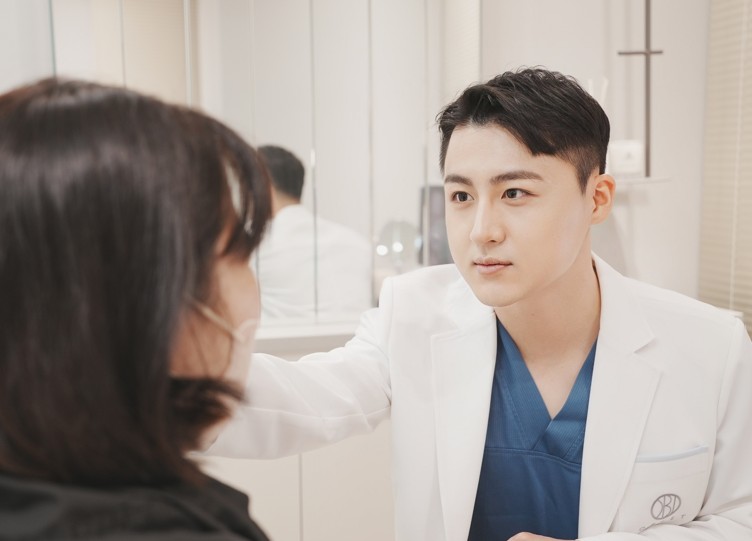
Especially for older patients,
this approach is based on stable judgment
and a detailed surgical plan,
and it has also earned steady trust
in terms of postoperative satisfaction.
We hope today’s summary helps you
make the right choice for yourself.
This has been Objet Plastic Surgery.
Thank you.
<🔽🔽Video recommended for you🔽🔽>
| Consultation and inquiries about middle-aged eye plastic surgery |
|---|
| Quick phone consultation |
| Kakao simple consultation |
-
This post is medical information prepared by Objet Plastic Surgery Clinic in compliance with the Medical Advertising Act.
-
The effects of treatment may vary depending on the individual, and side effects may occur.
We recommend making your decision only after sufficient consultation with the medical staff in advance.