Will the nasal tip droop after ear cartilage rhinoplasty?
Director Lee Kyung-muk shares his know-how!
Hello.
This is Objet Plastic Surgery.
When looking into rhinoplasty,
you will come across this saying at least once.
"Ear cartilage is weak,
so the tip of the nose quickly collapses."
Because of that, many people have already
discarded the idea of using ear cartilage
from their list of options.
But using ear cartilage does not
necessarily mean the nasal tip will droop.
The result changes depending on the method.
Today, we want to share Director Lee Kyung-muk’s own know-how for keeping the nasal tip from drooping
even when ear cartilage is used,
and for maintaining a natural look for a long time.
If you read to the end,
your perspective on ear cartilage rhinoplasty
will change.
Ear cartilage rhinoplasty
is different when done like this
When performing rhinoplasty,
using ear cartilage as the material itself
is not a problem.
The result is not determined by the material,
but by how that material is used.

In general, cartilage harvested from the ear
is a soft material,
so it is said to lack the strength needed
to support the nasal column.
This is also why it is said to be weaker in support
than septal cartilage,
which divides the center of the nose.
That is why Director Lee Kyung-muk uses ear cartilage
in a special way.
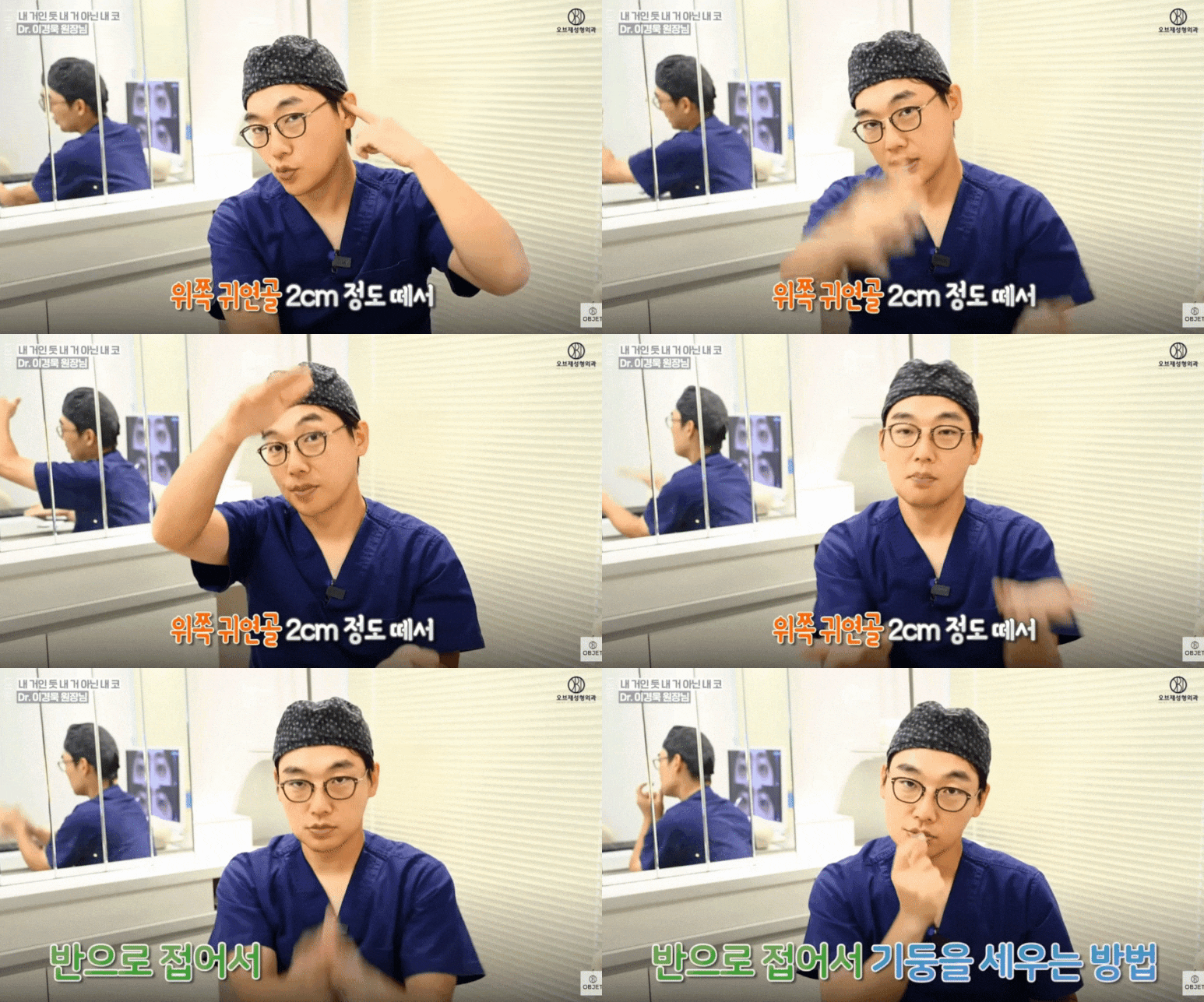
He harvests cartilage from the upper ear
with a length of at least 2 cm.
He then shapes it into a rugby ball form,
and splits the center in half.
After that, he folds it in half
to make it firmly double-layered.
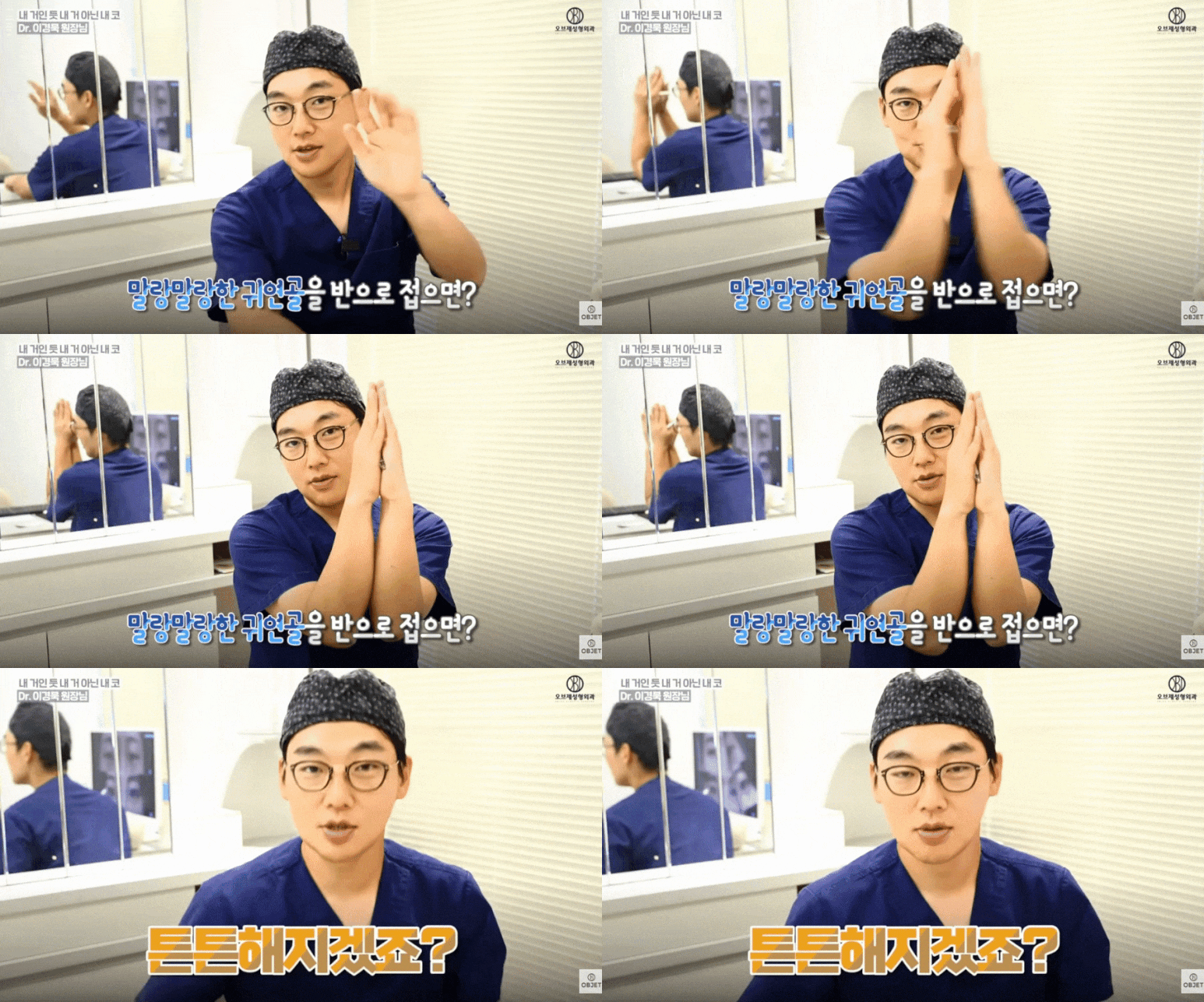
This provides enough length,
and also gives the support needed
to build the nasal column.
Placing this custom-made cartilage column
at the nasal tip
is Director Lee Kyung-muk’s method.
But why is this approach
not used elsewhere?
The reason is simple.
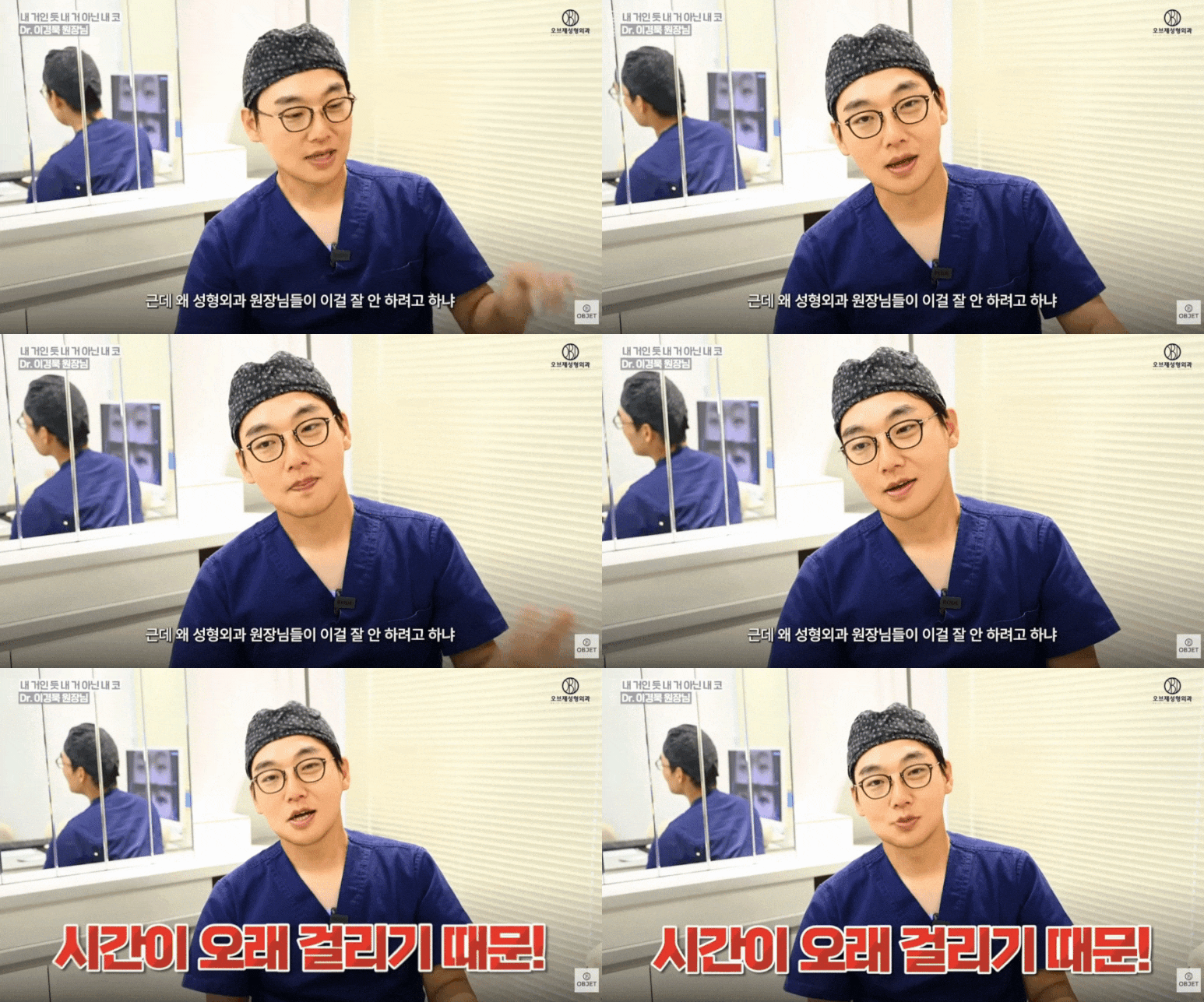
It takes more than 30 minutes longer.
That is because the work of harvesting cartilage from the ear,
shaping it manually,
and folding it to create the column
is added on.
Compared with taking out a ready-made material and using it,
it is a more cumbersome process,
so many clinics do not choose it.
Even so, the reason Director Lee Kyung-muk
sticks to this method
is the result.
A nasal tip made using ear cartilage
moves naturally even after surgery.
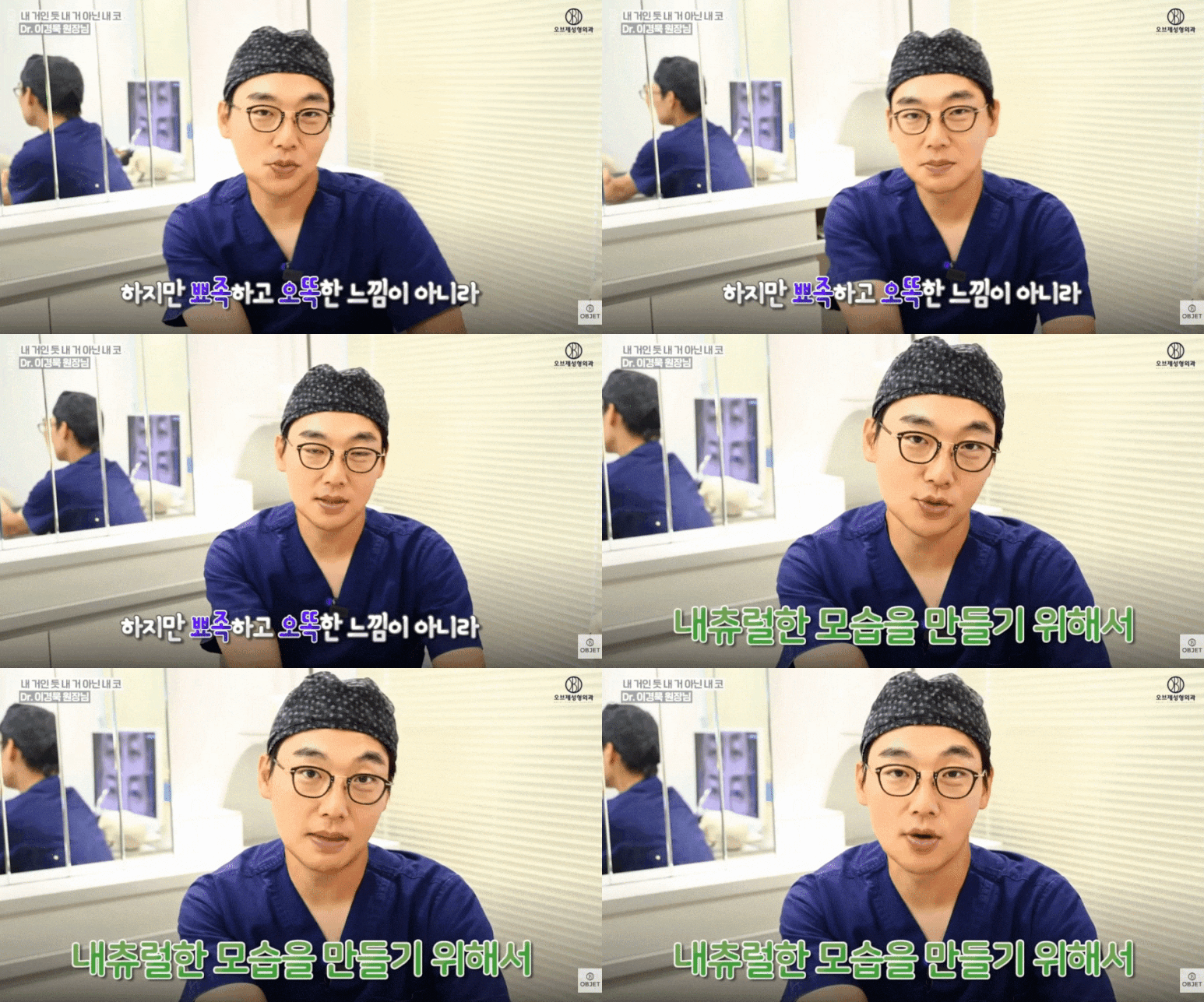
You can still freely do the pig nose motion,
and when you smile,
the nasal tip does not feel rigidly fixed.
It has a clear naturalness that is very different
from a nose built with a harder material.
"These people" are a perfect match
for ear cartilage rhinoplasty
The cases in which Director Lee Kyung-muk recommends using ear cartilage during rhinoplasty
can be broadly divided into three.

First, when there is not enough material to raise the nasal tip
Septal cartilage is the most commonly used material
in nasal tip surgery.
However, if the septum is originally small,
or if some of it was already used
during a previous rhinitis surgery,
there may not be enough.
In that case, ear cartilage becomes a practical alternative.
Second, when you want to avoid rib cartilage
Rib cartilage leaves a mark at the harvest site
and the recovery period is relatively longer.
For those who do not want that,
ear cartilage is a much less burdensome option.
Third, when you want a natural-looking nasal tip
Rather than a pointed, dramatic change,
for those who want a natural nasal tip
that suits their original face,
ear cartilage rhinoplasty can actually be an advantage.
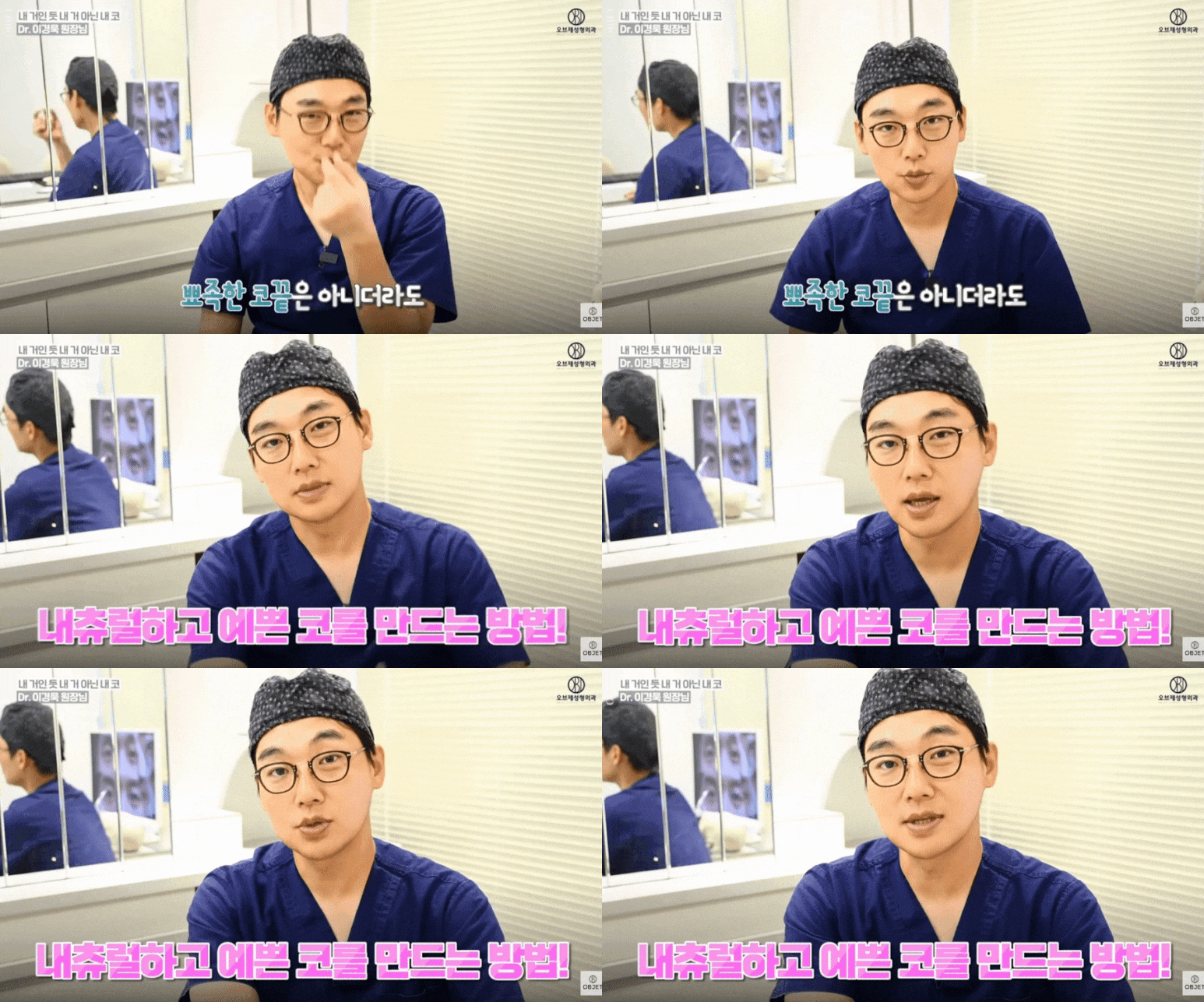
Ear cartilage rhinoplasty
is not simply a matter of material.
The result changes completely depending on
how the ear cartilage is shaped
and how it is positioned.
To summarize what we discussed today:
If ear cartilage is folded in half
to create a double layer,
it gains sufficient support.
For those who have difficulty harvesting other cartilage
or want a natural-looking nasal tip,
ear cartilage rhinoplasty is a good option.
Even after surgery,
the nasal tip moving naturally
is a unique advantage of ear cartilage.
When considering rhinoplasty,
we recommend looking not only at
which material is used,
but also at how that material is used,
and whether that judgment comes from sufficient experience.
Director Lee Kyung-muk of Objet Plastic Surgery
believes that the most important thing is to create a highly refined result in one operation,
right from the first surgery,
and he accurately identifies each patient’s different anatomical structure
and chooses the method that fits it.
Ear cartilage rhinoplasty is also
an approach that comes from
Director Lee Kyung-muk’s philosophy.
We hope today’s post was helpful.
This has been Objet Plastic Surgery.
Thank you.
<🔽🔽A helpful video to watch together🔽🔽>
| Rhinoplasty consultation and inquiries |
|---|
| Quick phone consultation |
| Kakao convenient consultation |
-
This post is medical information written by Objet Plastic Surgery Clinic in compliance with the Medical Advertising Act.
-
Results may vary depending on the individual, and side effects may occur.
We recommend that you make a decision about the procedure only after having sufficient consultation with the medical staff in advance.