Is tip drooping inevitable?
Director Jang Wook clears up the misconception!

Hello.
This is Obje Plastic Surgery.
If you are looking into rhinoplasty,
you may have heard something like this at least once.
"Either way, after some time,
the tip will drop,
so revision surgery is a must."
When you hear something like that, it can shake your confidence.
You may start to worry about whether
the tip really does droop over time,
and whether it is impossible for a single nose surgery
to last a lifetime.
If you came to this post because of concerns about tip drooping,
today I want to tell you the truth behind these stories.

I’ll go over why this kind of statement came about,
and whether it is actually true,
one by one.
By the time you finish reading,
you may be able to set aside
the anxiety you feel right now.
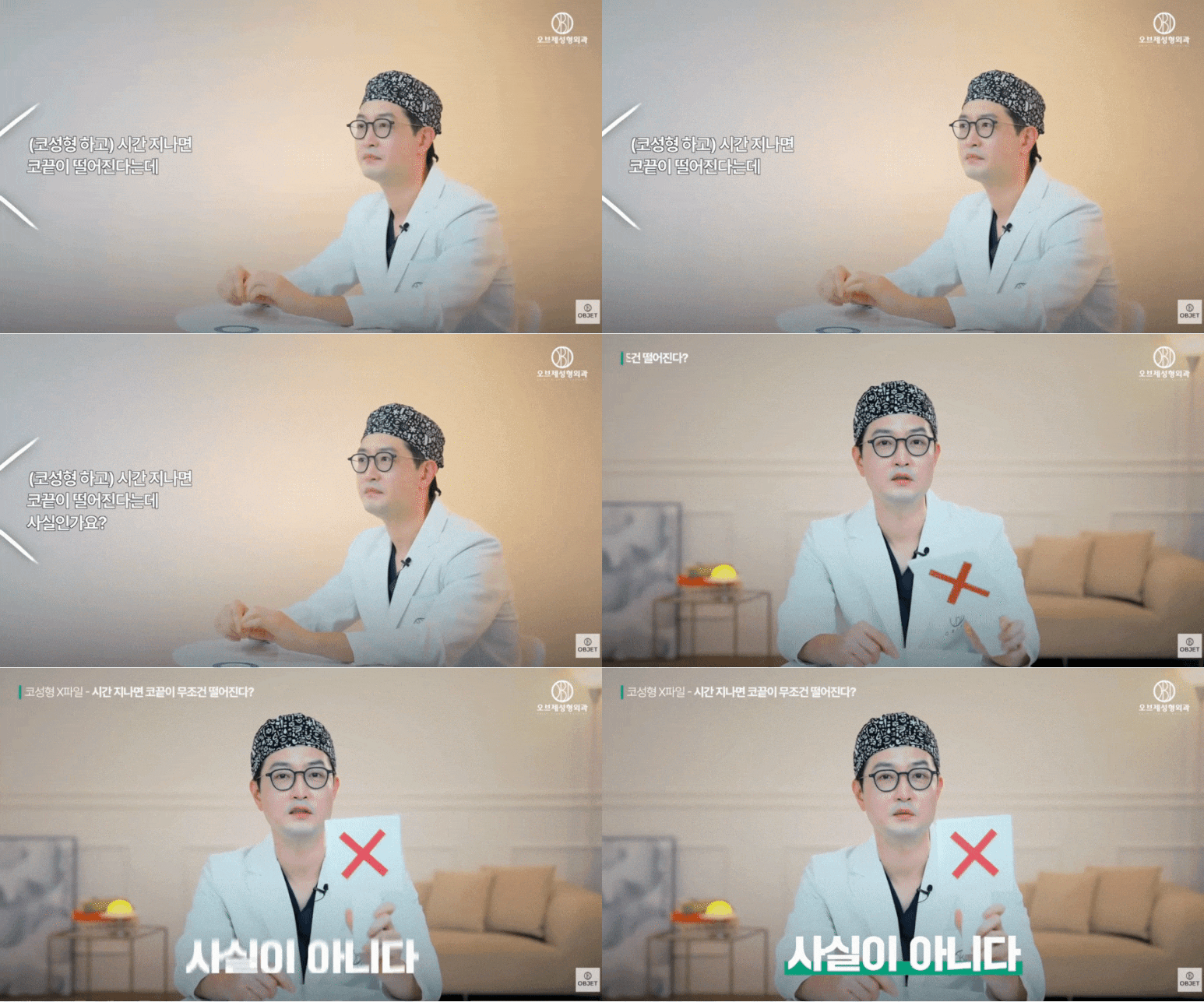
Is tip drooping inevitable?
The truth is “X”
Just because you had rhinoplasty
does not mean the tip will necessarily droop.
However, compared to right after surgery,
you may feel that the height has gone down a little
as time passes.
Immediately after surgery, swelling is unavoidable
and can be quite severe.
It usually takes about 6 months
for the swelling to fully go down
and for recovery to complete.
During this process, as the skin and tissue
covering the nose naturally settle into place,
the tip may feel slightly lower than it did
right after surgery.

This is a natural change that occurs during recovery.
What if the tip drooped after a few years?
It could be a problem with the “pillar”
Then why do some people
maintain their tip well even after years,
while others feel that it sinks over time?

Here, there is a structural difference
between the bridge and the tip of the nose.
When raising the bridge,
silicone is used on the bone
to create the desired height.
Because these are firm materials,
they have considerable strength.
On the other hand, when raising the tip,
a pillar is built with cartilage.
Compared with the bridge,
cartilage is a relatively softer tissue.
That is why the tip requires
more careful construction than the bridge.

If this pillar was built weakly from the start,
or if the cartilage used was itself not strong,
the tip may gradually feel like it is sinking
over time.
Conversely, if this pillar is
structurally built solidly,
the shape will remain stable even after years.
Just as a building with a properly constructed pillar
does not easily collapse
from ordinary things.
Of course, when building this pillar,
relatively firm cartilage such as septal cartilage,
donor cartilage,
or autologous rib cartilage is used.
However, some people have weaker cartilage strength,
so there are cases where the tip lowers
even though it cannot be helped.
Even if the cartilage is firm,
if the fixation was not done securely,
the ability to maintain shape can vary greatly.

In the end, whether tip drooping occurs
depends on how the tip’s support was designed
from the beginning.
If you want a high tip to last for a long time,
remember this
For the tip to remain stable over time,
it is not enough to simply make the visible shape look nice.
The internal structure must be built solidly
so it can support that shape for a long time.
If your cartilage strength is weak,
it is not enough to simply raise the tip height;
first, a pillar must be created
that can stably support that height.
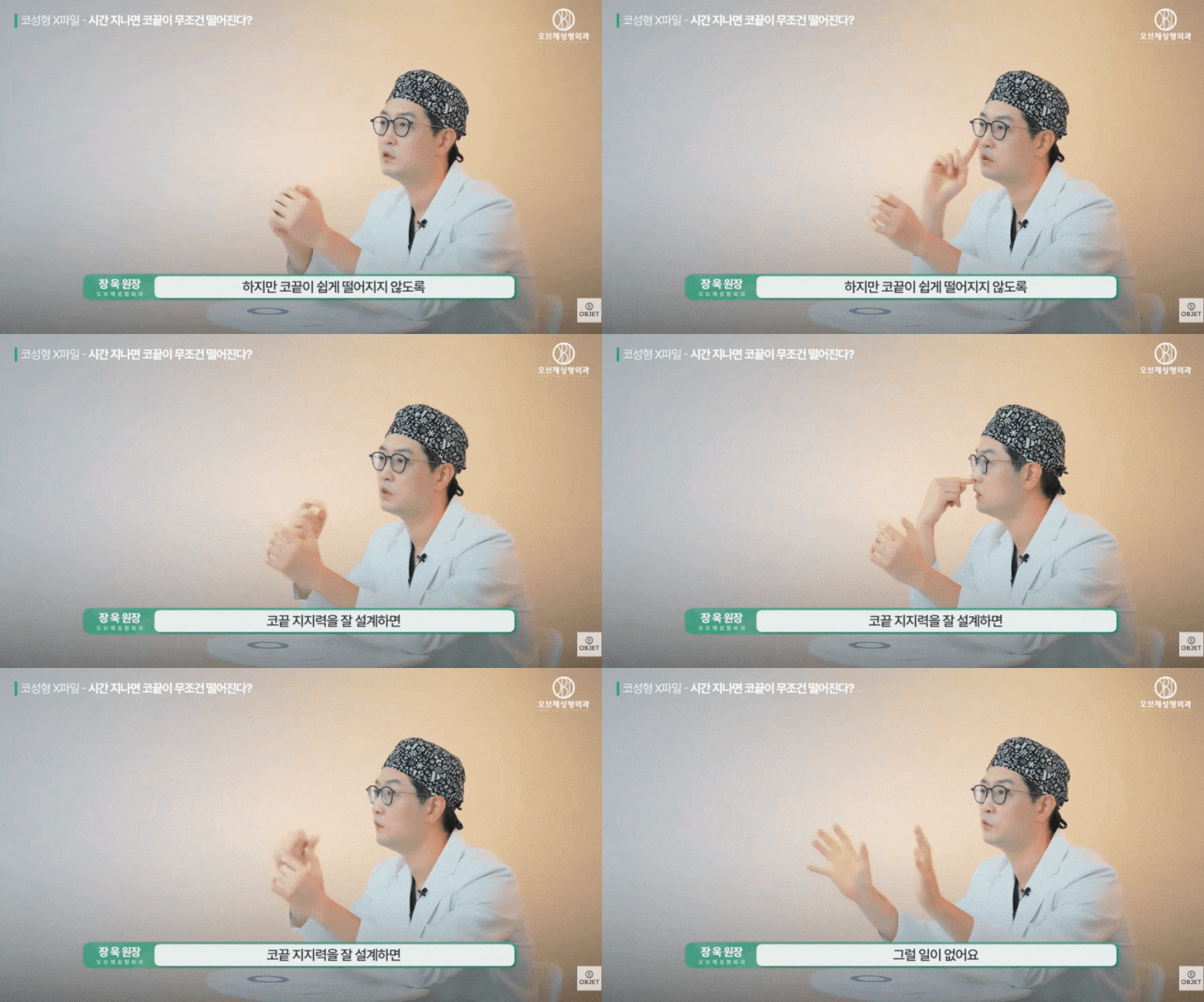
If this step is skipped,
the tip may collapse or droop later on.
Another important point is not to overdo it.
Even if you have a desired shape,
it should be made within a range
that can be stably maintained on your face.
If the tip is lifted higher than necessary,
or if it is forced beyond what the cartilage can handle,
that burden can gradually cause the tip
to sink over time.
Pursuing more height out of greed
and raising it without limit
is a common cause of tip drooping.
Today, we looked at whether
tip drooping is inevitable after nose surgery,
and what causes the tip to droop.
A slight change right after surgery is a natural part of recovery,
and collapse over time is a problem with the initial structural design.
The support structure of the tip should be established first,
rather than focusing only on the outward appearance,
and surgery should be performed within a range
that suits your face without forcing it.
If you receive surgery at a place
that has these parts properly in place,
there is no reason to worry about tip drooping.
Director Jang Wook of Obje Plastic Surgery
carefully assesses each patient’s cartilage strength at the tip
and skin condition,
and considers it most important to build a solid support structure
from the start so that the shape remains stable over time.

I hope today’s content
was helpful for those considering nose surgery.
This has been Obje Plastic Surgery.
Thank you.
<🔽🔽A video worth watching together🔽🔽>
| Consultation and inquiries for rhinoplasty |
|---|
| Quick phone consultation |
| Easy Kakao consultation |
-
This post is medical information written by Obje Plastic Surgery Clinic in compliance with the Medical Advertising Act.
-
Treatment effects may vary from person to person, and side effects may occur.
We recommend that you make a treatment decision only after sufficient consultation with medical staff in advance.