What does lower eyelid mean?
Director Kim Hyun-jo will help solve your under-eye concerns!

Hello.
This is Objet Plastic Surgery.
When the under-eye area becomes puffy
or dark circles start to bother you,
most people first think of
under-eye fat repositioning.
In fact, under-eye fat repositioning
has become a procedure
many people seek out,
just like double eyelid surgery.
But while looking up information
to solve under-eye concerns,
you may come across a term
you are not familiar with.
That term is 'lower eyelid.'
Today, starting with what lower eyelid means,
we will explain one by one
which cases are well suited to under-eye fat repositioning,
and in which cases lower eyelid surgery is more appropriate.
If you read to the end,
you’ll be able to better judge
which method is a better fit for you.
Lower eyelid meaning,
just remember <3 things>
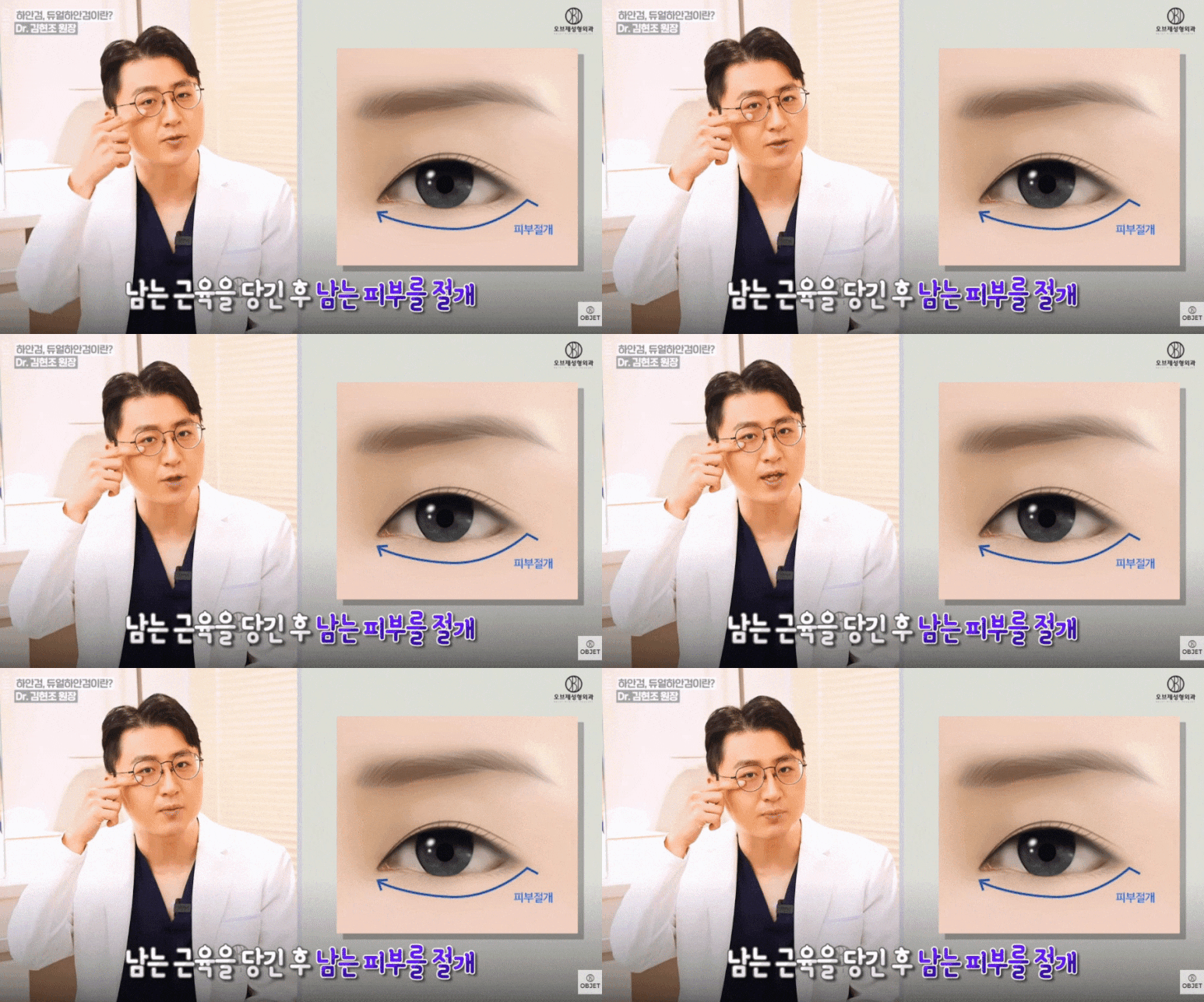
Lower eyelid surgery, put simply,
is a procedure that addresses
three things under the eyes at once.
The first is protruding under-eye fat,
the second is sagging skin,
and the third is drooping muscle.
Addressing these three at the same time
is the key point of lower eyelid surgery.
If under-eye fat repositioning is a surgery
that moves the fat to a different position,
lower eyelid surgery is a procedure
that addresses not only the fat but also
the skin and muscle together.
As we age, skin elasticity decreases
and the muscles under the eyes gradually sag,
and at this time, fat protrusion
often appears at the same time.
For these people,
approaching the issue with under-eye fat repositioning alone
may make it difficult to achieve the desired result.
Under-eye fat repositioning,
the condition that fits it well is exactly 'one'
The case in which under-eye fat repositioning is a good fit
can be summarized by just one condition.

It is when the skin is barely sagging
and only the fat is protruding.
If skin elasticity is still good
and there are not many wrinkles,
but only the under-eye fat is bulging out,
then simply repositioning the fat
can make a noticeable difference.
These cases are mostly seen in people in their 20s and 30s.
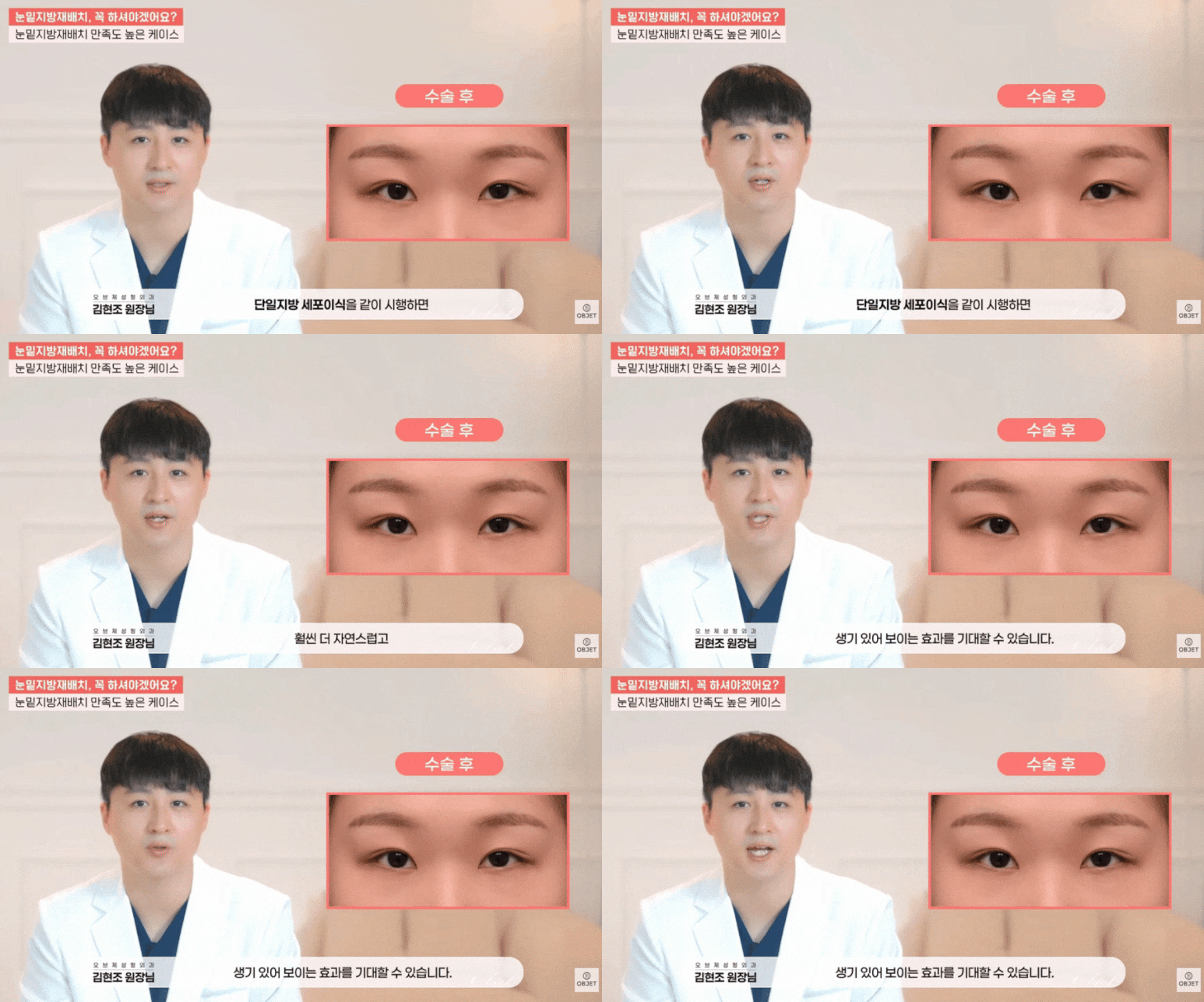
Also, if needed,
doing fat grafting at the same time
can make the under-eye area finish
more naturally and softly.
On the other hand, if under-eye fat protrusion,
a sagging skin, and drooping muscle
are all present at the same time, or if
the tear trough has become deep,
under-eye fat repositioning alone
may not be enough.
These cases are mostly seen in people
in their 40s and 50s or older.
This is because as age increases,
the condition of the skin and muscles
changes together.

In such cases, if you only address the under-eye fat,
the puffiness may decrease,
but the sagging skin remains,
and the thick wrinkles can end up
looking even more noticeable.
Like a balloon that has deflated,
the fat has decreased,
but the skin remains,
creating a droopy appearance.

To avoid this result,
the skin and muscle need to be addressed together.
That is why we recommend lower eyelid surgery
to people in this situation.
What if lower eyelid surgery is appropriate, but you do not want an incision?
Recommended: <OO lower eyelid surgery>!
This is one of the things we often hear during consultations.
Since lower eyelid surgery involves an incision,
many people say they would prefer under-eye fat repositioning
because they are worried about recovery time or scarring.
That feeling is completely understandable.
Looking for a less burdensome option
is only natural.
However, if lower eyelid surgery is needed
but under-eye fat repositioning is chosen instead,
the result may actually be less satisfying.

That is because the surgery is being performed
without properly addressing the cause.
In cases like this, where under-eye fat repositioning alone feels insufficient
and lower eyelid surgery feels too burdensome,
Objet Plastic Surgery sometimes considers
dual lower eyelid surgery.

Dual lower eyelid surgery
repositions the under-eye fat while
partially addressing the sagging skin and muscle.
Because the incision area is about half
that of lower eyelid surgery,
you can expect improvement in the sagging area
while recovery is relatively faster.
It is not suitable for everyone,
but it can be a useful option
for people whose skin has just started to sag.
In the end, what matters is
finding the surgery that matches your eye condition.

Today, starting with what lower eyelid means,
we explained how it differs from under-eye fat repositioning,
and which cases each option is better suited for.
When you have under-eye concerns,
rather than assuming that under-eye fat repositioning
is always the answer,
it is important to first check
what stage your under-eye area is in now.
Whether the skin is sagging,
whether the muscle is sagging too,
or whether only the fat is protruding
will determine which surgical method is appropriate.
Before deciding on surgery,
we recommend first receiving an accurate diagnosis.

Director Kim Hyun-jo of Objet Plastic Surgery
based on a sufficient understanding of
the under-eye structure and age-related changes,
provides guidance on surgical methods
that fit the under-eye condition.
Through calm and attentive care,
he carefully examines each patient’s eye condition,
which also leads to high satisfaction with the surgical results.
If you are still unsure which method is right
for your under-eye area,
we recommend getting enough consultation
to help determine the direction.
We hope today’s post was helpful
for solving your under-eye concerns.
This has been Objet Plastic Surgery.
Thank you.
<🔽🔽A helpful video to watch together🔽🔽>
| Consultation and inquiries for lower eyelid surgery |
|---|
| Quick phone consultation |
| Kakao easy consultation |
-
This post is medical information written by Objet Plastic Surgery Clinic in compliance with the Medical Advertising Act.
-
Depending on the individual, the treatment effect may vary, and side effects may occur.
Please be sure to have sufficient consultation with medical staff in advance before deciding on the procedure.