쌍수 절개 매몰
Which Is Right for Me?
Dr. Park Si-hyun’s Answer!

Hello.
This is Objet Plastic Surgery.
When you start looking into double eyelid surgery,
there is always one point where people get stuck.
Whether to choose the non-incisional method or the incisional method.
If you search online,
some posts say, “The non-incisional method looks more natural,”
while others say,
“Incisional surgery lasts longer.”
Even if you ask friends who have had the surgery,
everyone says something different,
and when you go for a consultation,
each clinic often recommends a different method,
so it can become even more confusing.
In the end, you start wondering
which method is right for you
between non-incisional and incisional surgery.
Today, we’ll clearly organize the 기준 for that.

We’ll go over which type of eye is suited to each method,
and what to check before a consultation,
step by step,
so if you read to the end,
it should help you figure out the best direction for your eyes.
What suits my eyes?
<Non-incisional vs. incisional> criteria
When choosing between non-incisional and incisional double eyelid surgery,
which method is right for you
depends on three aspects of the eyes.
How thick the eyelid skin is,
how much fat is in the eyelid area,
and whether the eyelid is sagging.
Based on these three factors,
the non-incisional and incisional methods are divided.
The non-incisional method does not
cut the eyelid skin.
Instead, it uses sutures to secure the double eyelid line.
A very small opening is made in the eyelid,
and the sutures connect the skin and the muscle that opens the eye,
forming the line.
Because the skin is not greatly disturbed,
the swelling tends to go down relatively quickly,
and there is less concern about visible marks left on the outside.
It is well suited for eyes with thin eyelid skin,
not much fat,
and little to no sagging.
For eyes like these,
the non-incisional method can maintain a beautiful line for a long time.
On the other hand, the incisional method
involves directly cutting the eyelid skin,
and, if necessary, removing some fat or tissue
before creating the line.
Many people worry that
“incisional surgery is noticeable”
or that “incisional surgery leaves scars.”
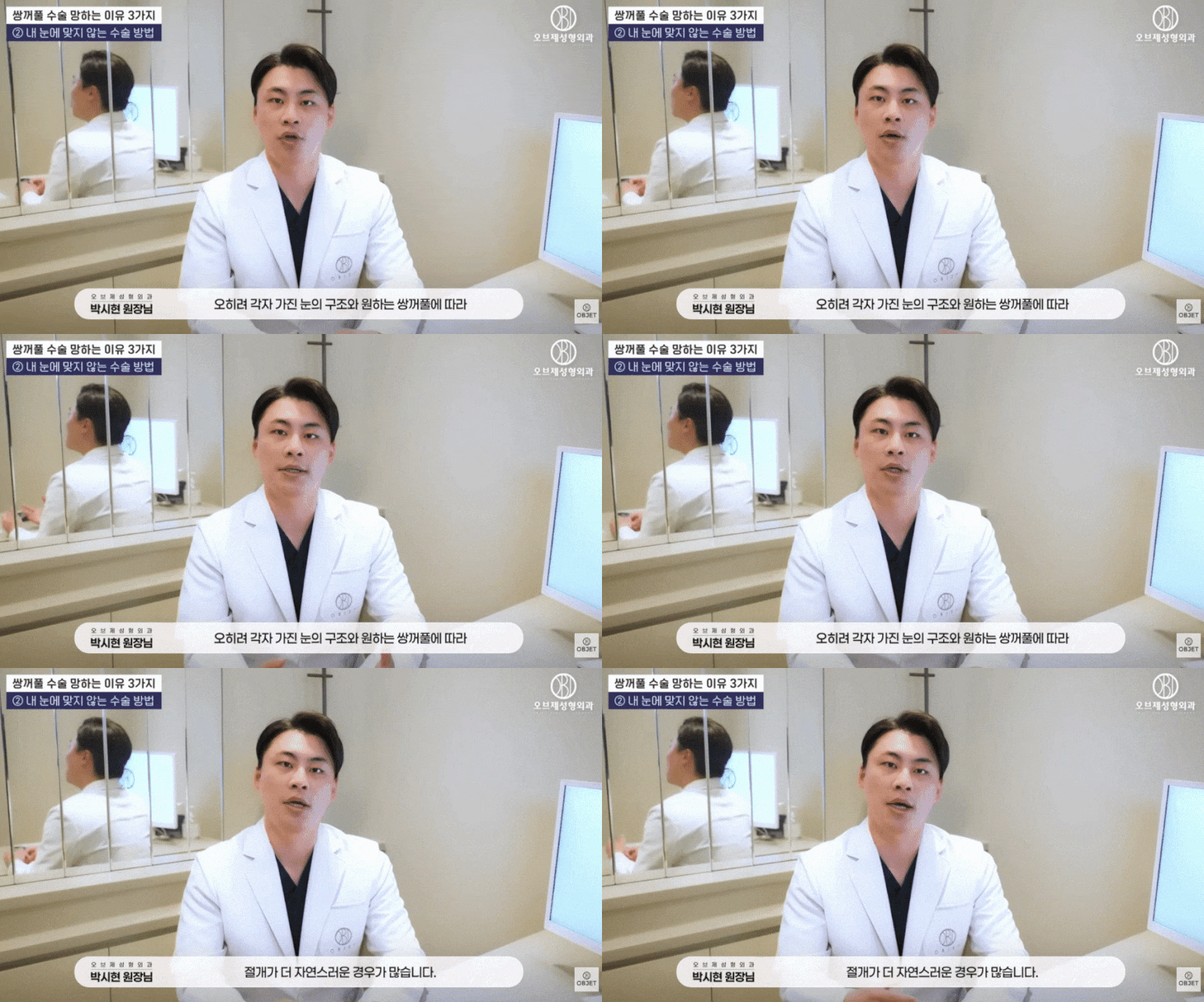
Depending on the condition of the eyes,
the incisional method can actually produce a more natural
and refined result.
This applies to eyes with thick eyelid skin,
more fat in the upper eyelid area,
or sagging eyelids.
If the non-incisional method is used on these eyes,
the sutures may not hold the tissue properly,
so the line can become unclear
or there is a chance it may loosen over time.
By removing unnecessary tissue through an incision,
the line can be shaped more clearly
and naturally.
It is true that recovery takes a little longer than with the non-incisional method,
but if the incisional method suits your eyes better,
choosing it often leads to a more natural result
and higher satisfaction.
Double eyelid surgery: incisional vs. non-incisional,
Why deciding in advance can be risky
There are people who come to a consultation
having already decided on the method
for double eyelid surgery.
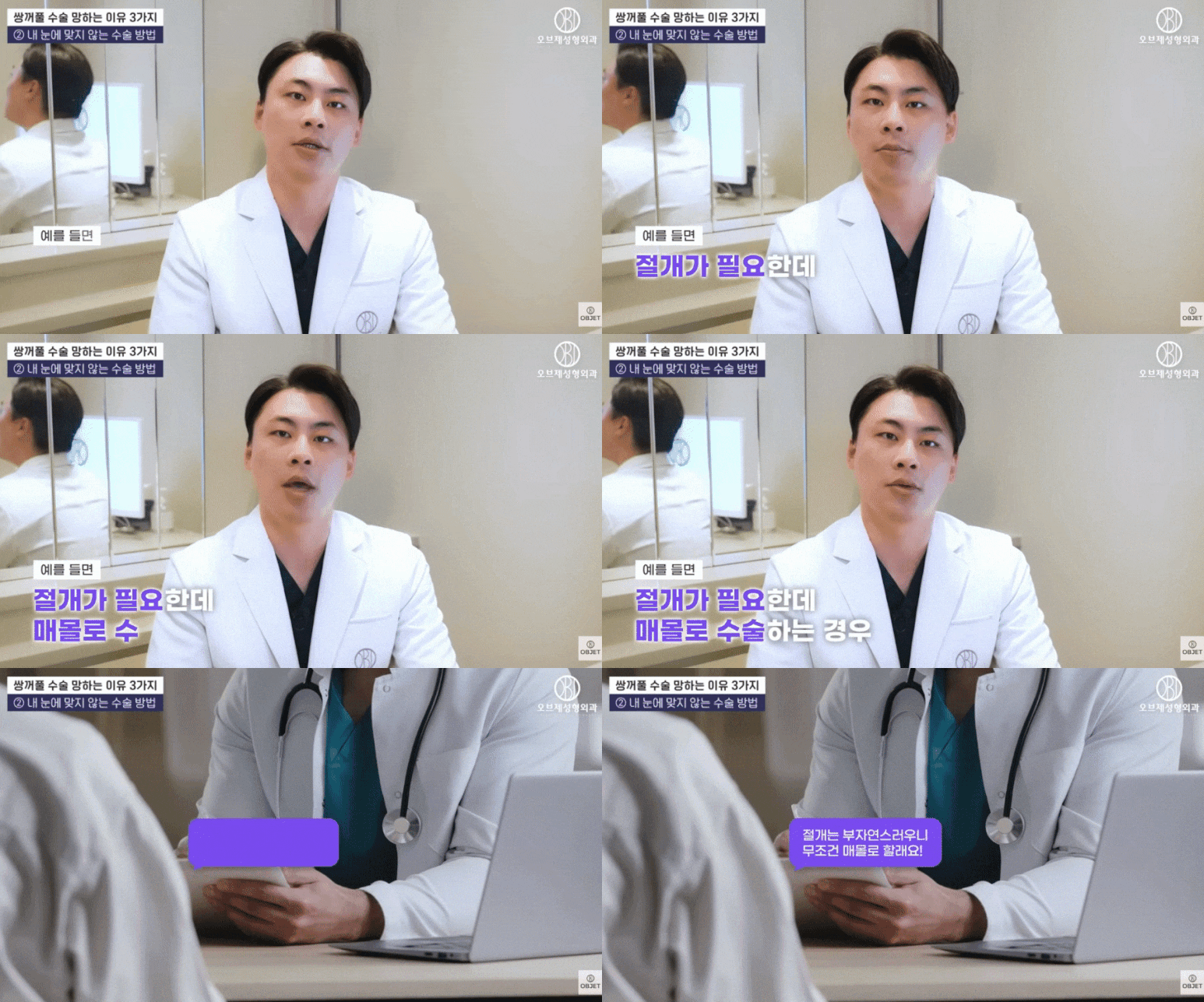
Like saying, “I’m only going to get the non-incisional method,”
or “Incisional surgery is absolutely not an option.”
But if you insist on a method that does not match your eye structure,
it can directly affect the surgical outcome,
so caution is needed.
Rather than deciding the method first,
understanding your eye condition first
is the right order.
So there are some things that help to check in advance before a consultation.
First,
check how thick the eyelids are and whether they are not too thick.
When your eyes are open, look in the mirror to see whether the skin above the eyelid line comes down over the line,
and whether you need to use your forehead muscles to open your eyes.

If these two things apply,
the incisional method may be the better choice.
Second,
organize the eye image you want in specific terms.
It is fine to use celebrity photos as references,
but rather than simply saying, “Please make my eyes look like this!”
it is much better to clearly organize which elements you want.
That allows the consultation to be much more specific.

It’s better to be specific, such as
“an in-out line at the front,”
or “not too high of a line.”
Third,
think in advance about your recovery schedule.
If you have an important event,
you can work backward from that date
and adjust the surgery timing.
If you check just a few of these criteria in advance,
it becomes much easier to find the surgery method that fits your eye condition.

Today, we organized what criteria are needed
when choosing between incisional and non-incisional double eyelid surgery,
and which eye types each method suits.
To summarize the key points:
Thin eyelids, little fat,
and no sagging
→ the non-incisional method is suitable
Thick eyelids, more fat,
or sagging eyes
→ the incisional method is suitable
What matters more than the method
is finding the one that fits your eye condition.

That judgment should be made
after 충분히 consulting with medical staff
who can accurately examine the eye structure.
Dr. Park Si-hyun of Objet Plastic Surgery,
based on extensive surgical experience in double eyelid surgery,

carefully examines eyelid thickness, the amount of fat,
and whether there is sagging,
and guides each patient to the method
that best suits their individual eye structure.
With a gentle and attentive consultation style,
he explains everything in detail,
and works with patients in a patient-centered way,
from choosing between incisional and non-incisional double eyelid surgery
through recovery after the procedure.
Since you are thinking carefully about this,
we hope you find the method that truly fits your eyes
and achieve a result you won’t regret.
This has been Objet Plastic Surgery.
Thank you.
<🔽🔽A helpful video to watch together🔽🔽>
| Eye plastic surgery consultation and inquiries |
|---|
| Phone quick consultation |
| Kakao simple consultation |
-
This post contains medical information written by Objet Plastic Surgery Clinic in compliance with the Medical Advertising Act.
-
Results may vary from person to person, and side effects may occur.
We strongly recommend having sufficient consultation with medical staff in advance before deciding on a procedure.