Ptosis correction surgery before and after?
The sleepy-eye surgery
recommended by Dr. Park Si-hyun!
Hello,
this is Objet Plastic Surgery.
While looking into double eyelid surgery,
you may have come across the term
ptosis correction and found your way to this post.
You may have heard both
“double eyelid surgery alone can change sleepy eyes”
and
“sometimes double eyelid surgery alone is not enough,”
so it may have been hard to tell
which case applies to your eyes.
If you came here wondering about
the before-and-after changes from ptosis correction surgery,
this post will answer exactly that question.
From the causes of sleepy-looking eyes,
to the features of eyes that can be improved with double eyelid surgery alone,
and the cases that require ptosis correction,
I’ll organize everything step by step.
If you read to the end,
you’ll have a much clearer understanding
of which approach is right for your eyes.
Do your eyes look sleepy?
Know these <3> common causes first
Sleepy-looking eyes are often
not caused simply by the absence of a double eyelid.
Because the surgical method changes depending on the cause,
it’s important to first figure out
what condition your eyes are in.
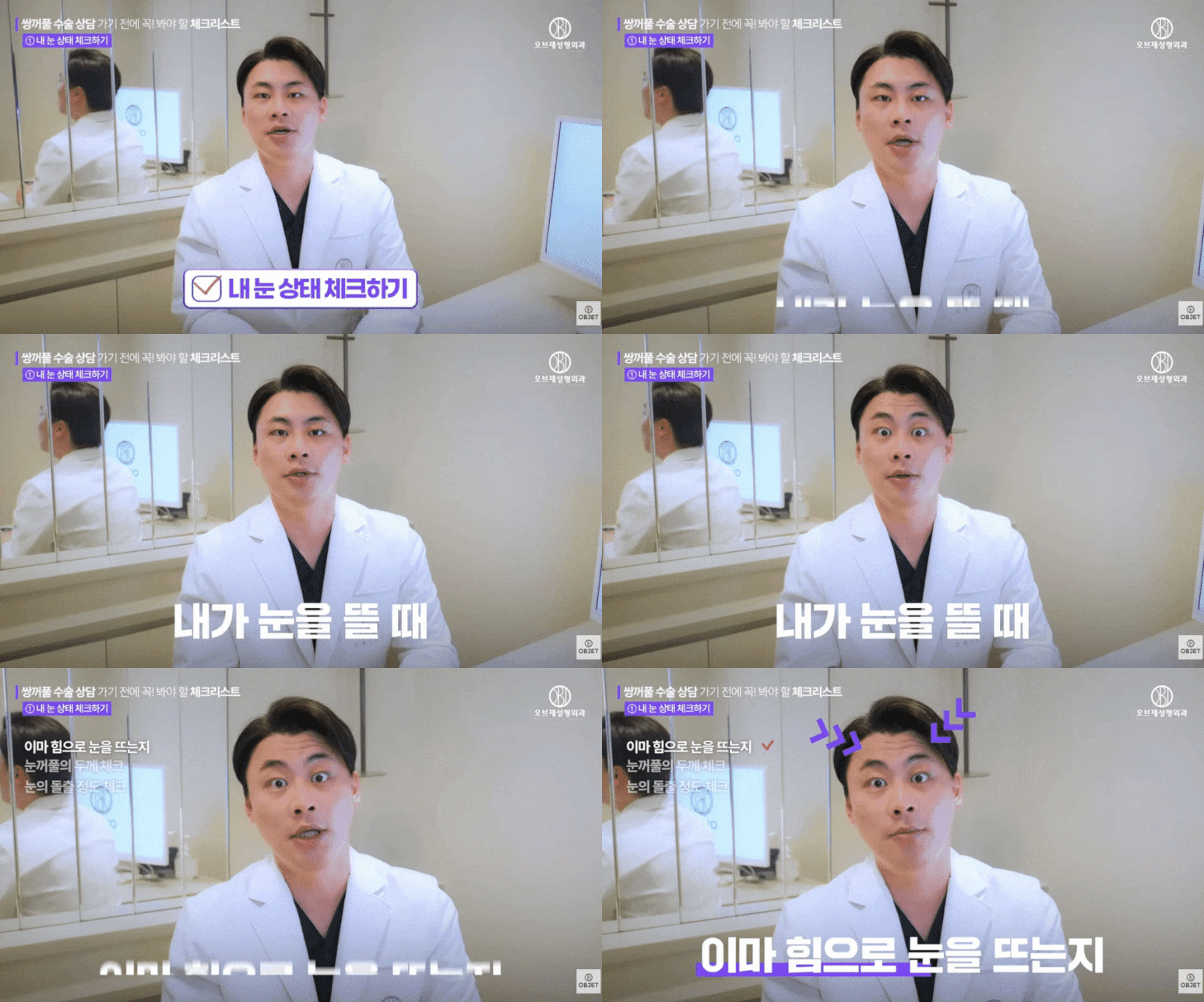
- Weak eye-opening strength
If the muscle that lifts the eyelid
does not have enough strength,
the eyelid will still droop down even when you open your eyes,
partially covering the pupil.
If you keep straining your forehead
or feel like only your eyebrows go up
even when you try to open your eyes wide,
the muscle is likely in a weakened state.
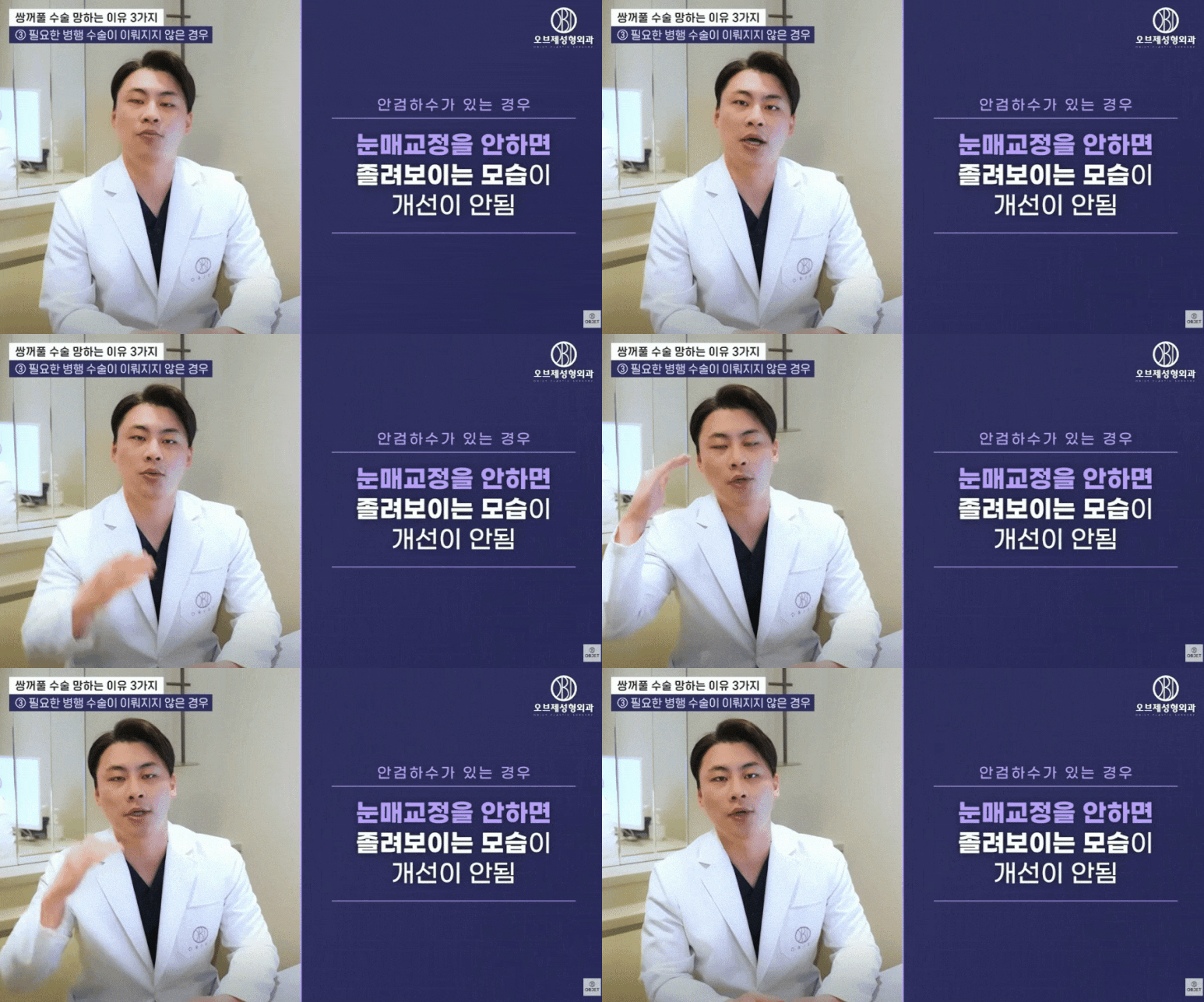
This is called ptosis,
and even if a double eyelid line is created through surgery,
the eye-opening strength itself does not change,
so the sleepy impression may remain
even after surgery.
If the skin on the upper eyelid
drops down toward the eyeball,
it creates the impression that the eyes are covered.
In this case, because the sagging skin itself
is blocking the eyes,
you may consider improvement through
double eyelid surgery or upper blepharoplasty.
- Excess fat in the upper eyelid area
If a thick layer of fat has built up above the eyes,
the double eyelid line may become hidden,
or the eyes may look heavy and uncomfortable.
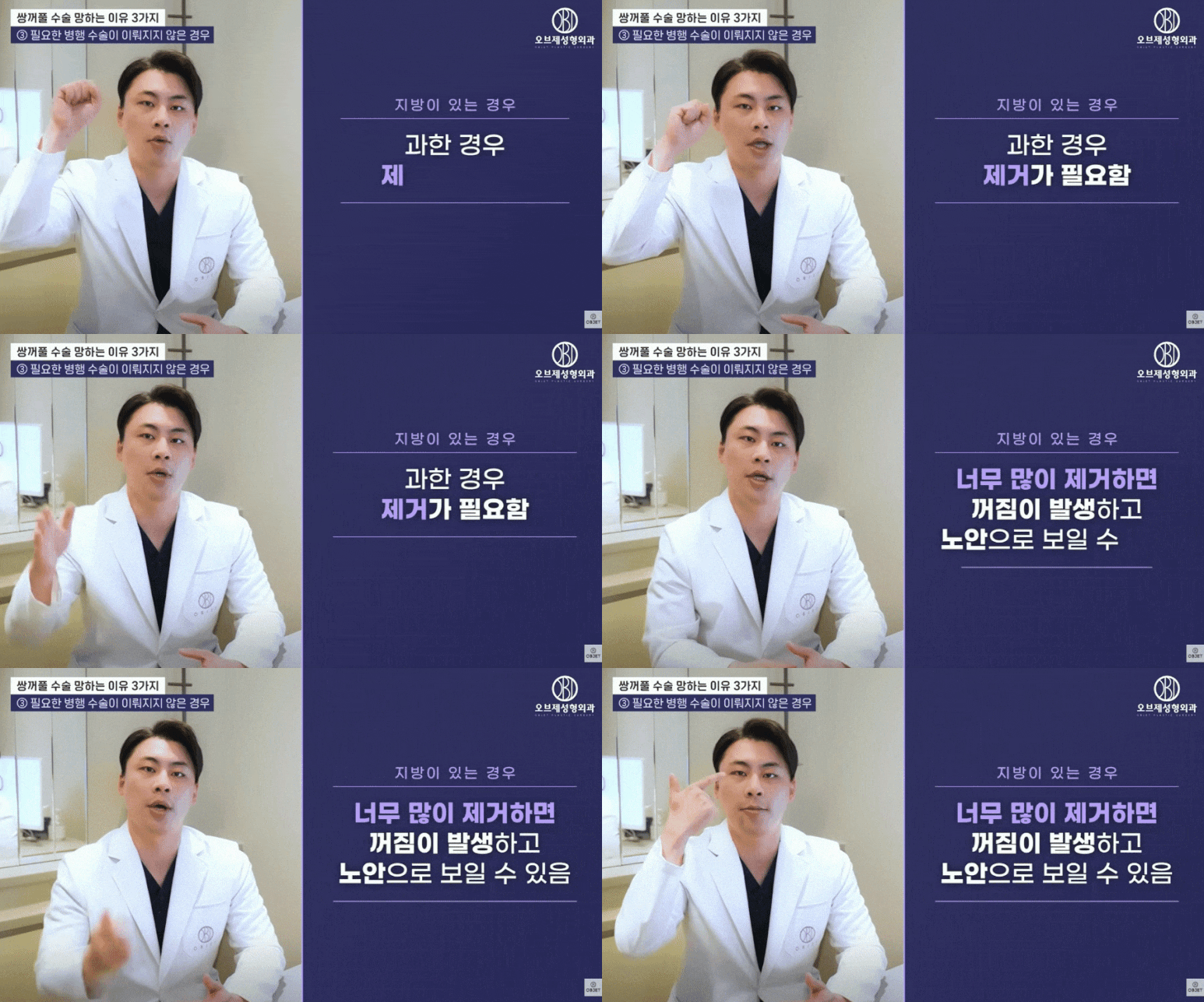
In this case, combining fat removal
with double eyelid surgery
can help the eyes look lighter
and more defined.
Eyes that only need double eyelid surgery
vs. eyes that need ptosis correction
This is why, even when two people undergo the same double eyelid surgery,
one person’s impression may change dramatically
while another feels like they only got a line.
- Cases where double eyelid surgery alone is enough
If the eye length is relatively ample,
the eyelid skin is thin,
and the eye-opening strength is normal,
double eyelid surgery alone can create
a clearer eye shape.
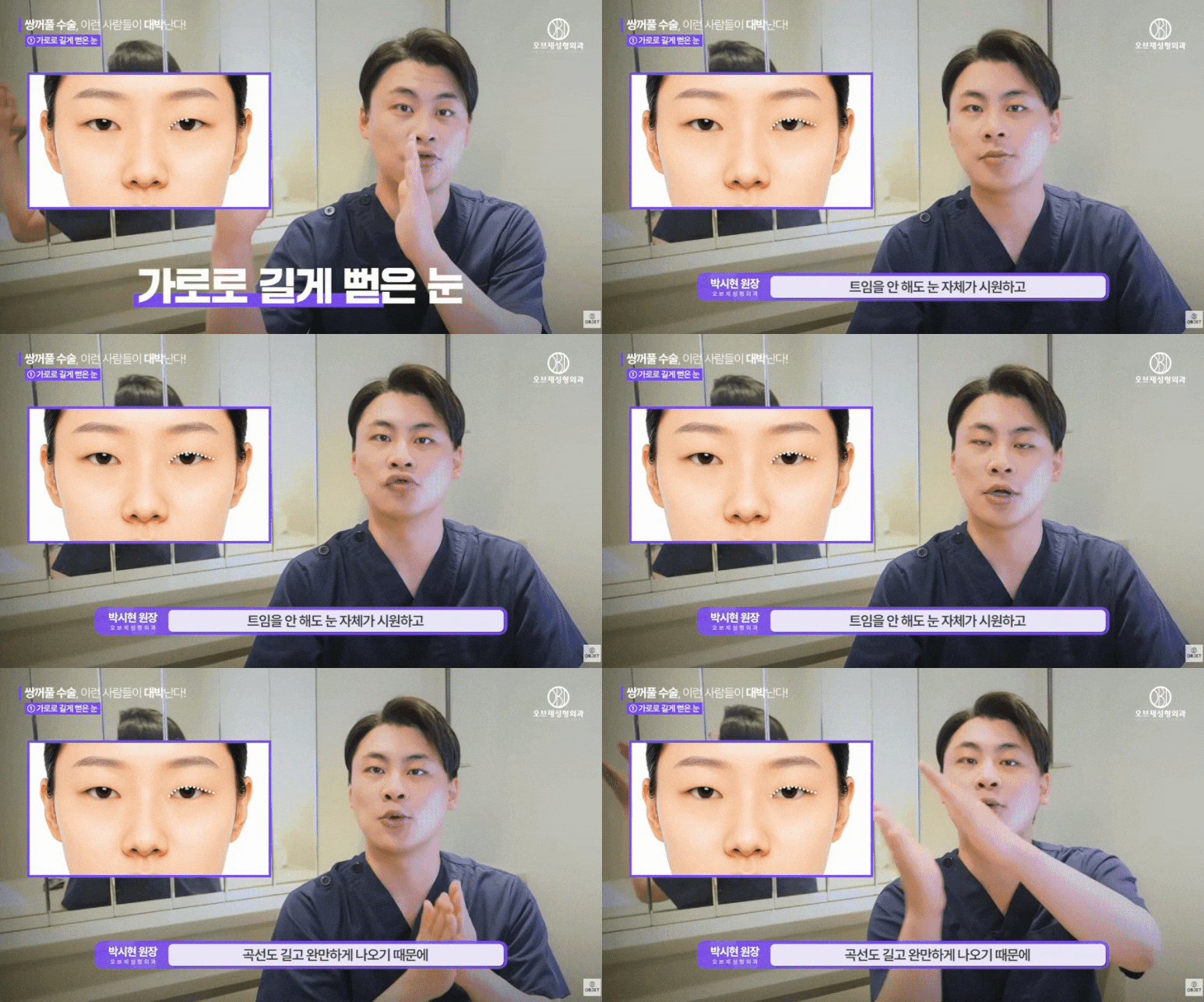
As the line is created,
the balance of the eyes improves,
and the overall impression becomes
naturally brighter.
- Cases where ptosis correction is also needed
Even if ptosis is present,
ptosis correction is not always necessary.
If the condition is mild,
there are cases where double eyelid surgery alone
can improve it.
However, if the eye-opening strength
has become significantly weak,
it may be difficult to expect the desired change
with double eyelid surgery alone.
Looking at before-and-after ptosis correction surgery results,
you can see cases where there is a difference
in the amount of pupil exposure
between double eyelid surgery alone
and double eyelid surgery combined with ptosis correction.
Because ptosis correction is a surgery that adjusts
the muscle that lifts the eyelid itself,
its approach is different from simply creating a line.
After this surgery,
the eyes often appear more open,
resulting in a clearer and more lively eye shape.
The double eyelid surgery method
also varies depending on the eyes
Double eyelid surgery includes
incisional and non-incisional methods,
and which method is appropriate
can only be determined by directly checking
the condition of the eyes.
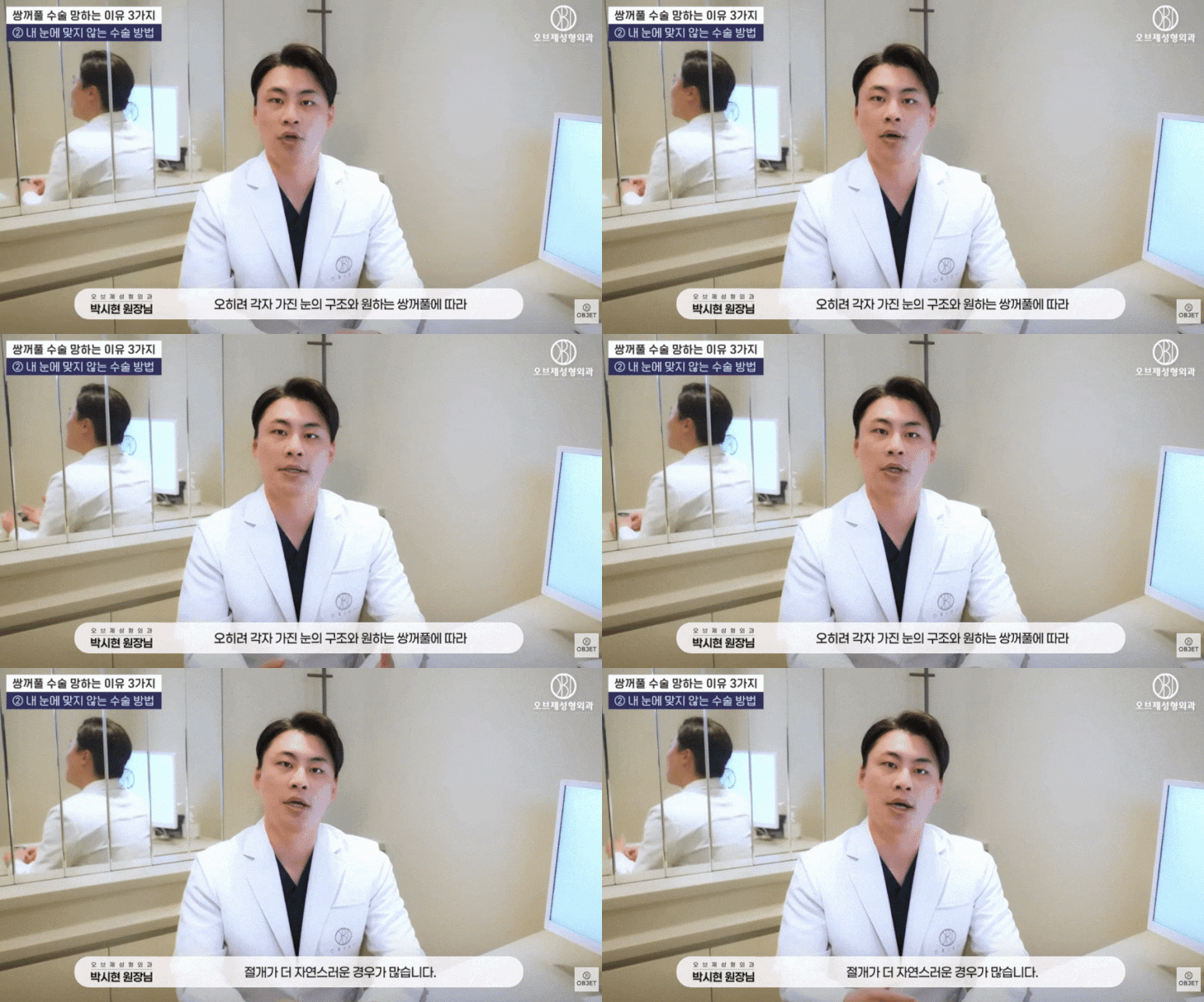
If the eyelids are thick
or there is a lot of fat,
the incisional method may produce a more natural result,
whereas if the skin is thin
and there is little fat,
a non-incisional method can often still create
a very attractive eye shape.
Before and after ptosis correction surgery,
it changes like this
In before-and-after ptosis correction surgery,
the most noticeable change is
the amount of the eyeball that is visible.
Because the surgery directly addresses
the muscle that opens the eyes,
after surgery the pupil exposure improves,
making the eyes appear clearer.
For people who have often been told
that they look tired
or seem unmotivated,
this is also why they often feel
the greatest satisfaction from the changes
seen before and after ptosis correction surgery.
However, ptosis correction
should begin with accurately understanding
the condition of your own eyes.
You need to carefully check first
how severe the ptosis is,
whether it should be performed together with double eyelid surgery,
and how the surgical method should be set,
before you can establish a plan
that fits your eyes.
In the end, not all sleepy-looking eyes
improve in the same way.
That’s because the approach differs depending on whether
the issue is weak eye-opening strength
or a problem with the skin or fat.
When Dr. Park Si-hyun at Objet Plastic Surgery
works to improve sleepy-looking eyes,
he makes it a basic principle of diagnosis
to first determine
how strong the eye-opening function is,
whether double eyelid surgery alone is enough,
and whether ptosis correction is needed as well.
Creating a line
and improving the eye-opening strength itself
are topics that start from different points,
so it is most important to know exactly
which method is right for your eyes.
I hope this post helped, even a little,
with that decision.
This has been Objet Plastic Surgery.
Thank you.
<🔽🔽Video recommended to watch together🔽🔽>
| Consultation and inquiries for eye surgery |
|---|
| Quick phone consultation |
| Kakao convenient consultation |
-
This post contains medical information written by Objet Plastic Surgery Clinic in compliance with the Medical Advertising Act.
-
Treatment effects may vary depending on the individual, and side effects may occur.
We recommend that you fully consult with medical staff in advance before deciding on the procedure.