Blepharoplasty for Under-Eye Fat Repositioning
Will the Results Last a Lifetime?
Summary by Director Kim Hyun-jo

Hello.
This is Obje Plastic Surgery.
Many people take quite a long time
before deciding to undergo under-eye fat repositioning.
It is not only because of the cost,
but also because they are unsure
how long the results will last after surgery,
and whether they will have to do it again later.
Once they make the decision,
they do not want to repeat the same worry
again a few years later.
That is what most people who look into
blepharoplasty for under-eye fat repositioning think.
Today, we will explain that part clearly.
We have organized, in order,
how the results are maintained after under-eye fat repositioning,
what changes occur over time,
and what options are available when that time comes.

Please read to the end,
and I hope it helps resolve the concerns you have now.
If you have under-eye fat repositioning once,
can you avoid under-eye concerns for the rest of your life?
This is one of the questions we often hear
at a blepharoplasty clinic for under-eye fat repositioning.
Let me give you the conclusion first.
Under-eye fat repositioning does not stop
aging under the eyes.

Even after under-eye fat repositioning,
as time passes, skin elasticity gradually decreases,
and the tissues around the eyes also change little by little.
This is not a limitation of the surgery,
but a natural part of skin aging.
So you should let go of the idea that
"one procedure means OK for life."
You may think,
"Then isn’t under-eye fat repositioning not that meaningful?"
But that is not the case.
Aging:
If you can’t avoid it, conceal it!
Under-eye fat repositioning is a procedure that moves
bulging fat under the eyes into the sunken area beneath,
creating a smoother fill.

When the position of the fat is organized,
the contours created by the bulge and hollow under the eyes
are softened,
and the area appears more balanced.
As a result, after under-eye fat repositioning,
aging under the eyes often appears less noticeable.

Let me explain it a bit more simply.
If you do not undergo under-eye fat repositioning,
the contrast between protruding fat under the eyes
and the depth of the tear trough can make
the contours under the eyes look more pronounced.

The tear trough here refers to the line
that appears like a boundary between the area where
fat under the eyes bulges out and the slightly sunken area below it.

The more the fat under the eyes protrudes,
the deeper this boundary appears.
On the other hand, if under-eye fat repositioning has already been completed,
the fat has already settled more evenly,
so even as aging progresses later,
changes under the eyes are less noticeable from the outside.

In other words,
for people who have had surgery at a clinic specializing in under-eye fat repositioning,
the corrected contour under the eyes is maintained for a relatively long time,
creating favorable conditions for maintaining a youthful eye area.
What if under-eye concerns return?
This is how we address them.
If you have had under-eye fat repositioning but,
as time passes, skin sagging becomes noticeable or
the tissues under the eyes begin to loosen,
then at that point you may consider a procedure
one step above under-eye fat repositioning.

The procedures that come up as options at this stage
are dual lower blepharoplasty or lower blepharoplasty.

First, dual lower blepharoplasty is a procedure
that falls between under-eye fat repositioning and lower blepharoplasty.
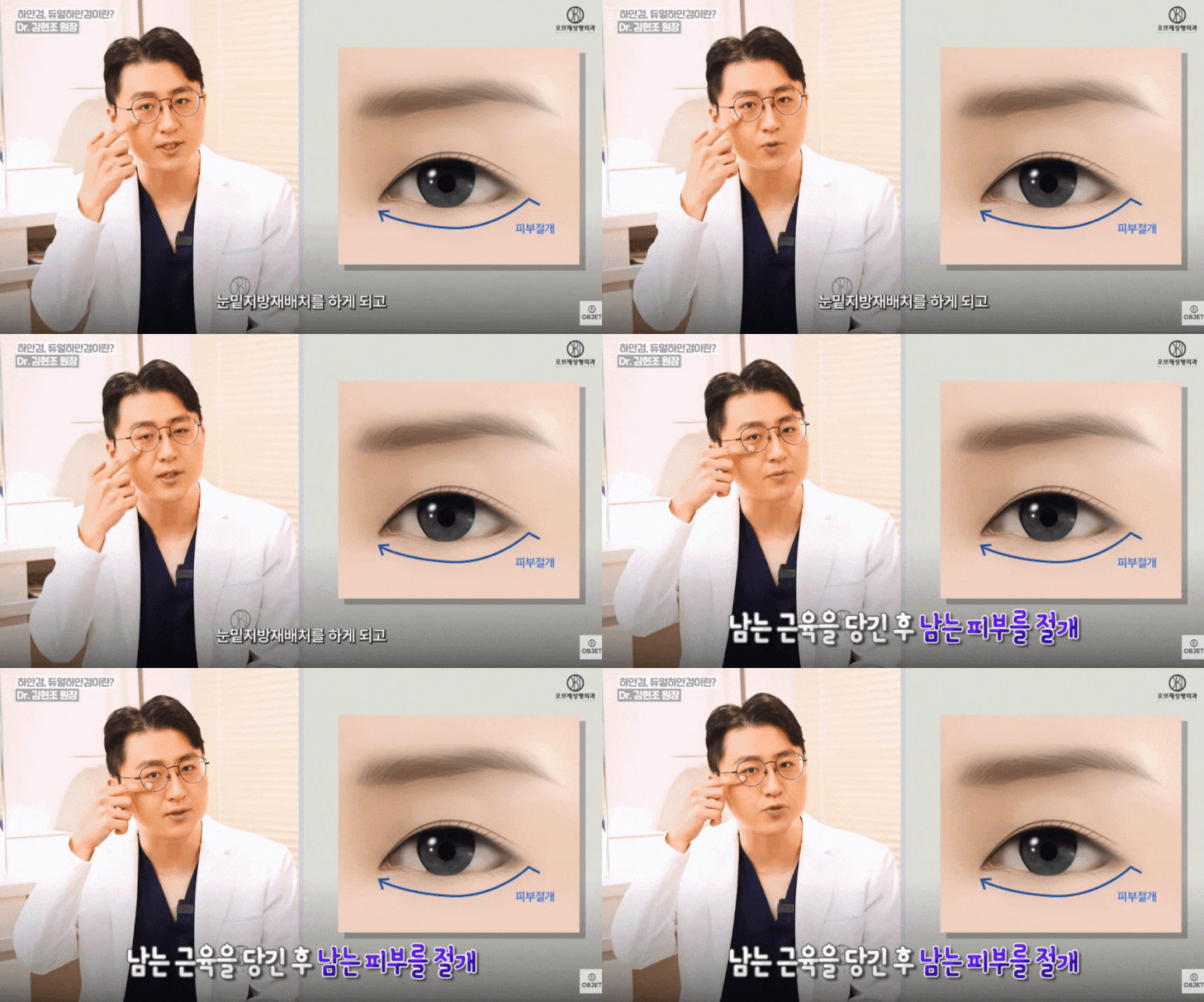
Through the inner mucosa of the eye (the conjunctiva),
the fat is repositioned,
while a partial incision is made below the eyelashes,
so that fat repositioning and skin correction
are performed together.
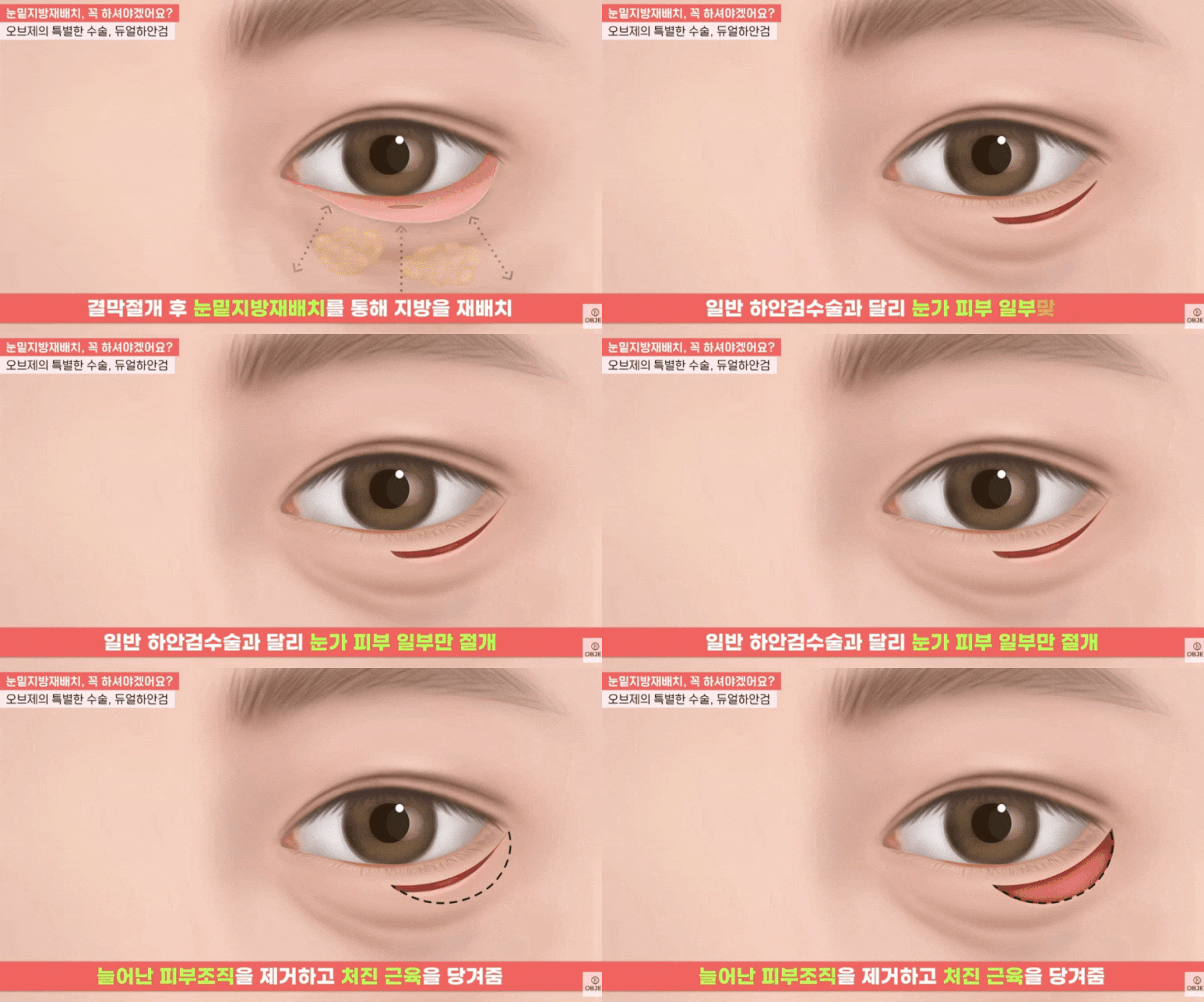
Recovery is faster than with lower blepharoplasty,
and the incision area is smaller,
so it is sometimes chosen by people who feel
that lower blepharoplasty is still too early for them.
Lower blepharoplasty is a procedure that broadly corrects
multiple concerns at once when skin sagging and tissue laxity
are more clearly visible.
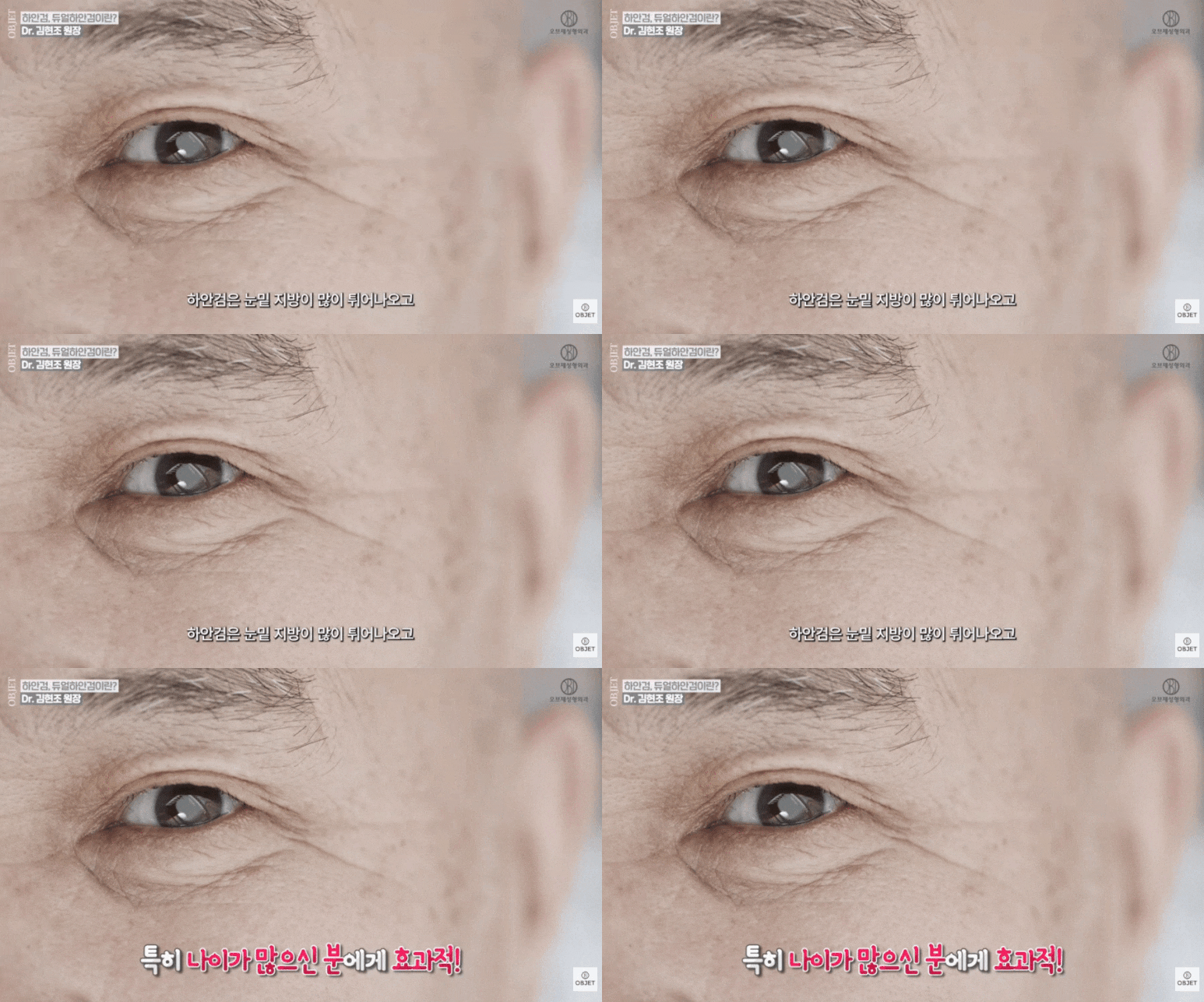
As the correction area becomes wider,
more tissue is involved,
and swelling and recovery time
also tend to be longer.

However, even if aging becomes noticeable again after under-eye fat repositioning,
it does not necessarily lead to additional surgery.
In many cases, additional surgery is not needed,
and the options vary depending on the degree of skin sagging.

In other words, under-eye surgery should be understood as a process in which,
depending on age and the condition under the eyes,
the next step is considered if necessary.

Today, we summarized how the results are maintained
and how they change after one under-eye fat repositioning procedure.
Let me summarize the key points again.
Under-eye fat repositioning is not a procedure
that completely prevents aging.

However, after surgery, aging progresses
from a more even under-eye contour,
so changes are less noticeable,
which is advantageous for maintaining a youthful eye area.
If skin sagging becomes more obvious over time,
you may consider dual lower blepharoplasty
or lower blepharoplasty,

but until then,
you can maintain a relatively stable condition under the eyes.
If you are considering a clinic for under-eye fat repositioning,
it is important to first determine what stage your current condition is in.

Director Kim Hyun-jo of Obje Plastic Surgery
carefully diagnoses the degree of fat protrusion under the eyes,
skin elasticity, and the condition of tissue sagging,
to clearly explain which surgical direction is appropriate
for your current eye condition,
and whether surgery is needed right away.

Whether under-eye fat repositioning is the right choice for you now,
and what changes you should expect over time,
please check directly at a clinic specializing in under-eye fat repositioning.
This has been Obje Plastic Surgery.
Thank you.
<🔽🔽Video recommended to watch together🔽🔽>
| Consultation and inquiries for under-eye fat repositioning |
|---|
| Fast phone consultation |
| Kakao simple consultation |
-
This post is medical information written by Obje Plastic Surgery Clinic in compliance with the Medical Advertising Act.
-
Results may vary depending on the individual, and side effects may occur.
We recommend that you have sufficient consultation with medical staff in advance before deciding on the procedure.