Thinking about lower eyelid sagging surgery?
Director Jang Wook shares
self-tests!

Hello.
This is Obje Plastic Surgery.
When you start looking into lower eyelid sagging surgery,
it is not easy to figure out
which method is right for your condition.
Lower eyelid fat repositioning,
lower blepharoplasty,
dual lower blepharoplasty, and more.
There are many different surgeries,
and even if you have heard the names,
it is hard to know what the differences are,
so it can be difficult to tell
which method is right for you.

So today,
before visiting a clinic,
we will introduce two self-tests
that you can try at home.
Depending on the test results,
you can get a rough idea of which lower eyelid sagging surgery may be more suitable,
so reading to the end may be helpful.
If you are curious about your lower eyelid type,
self-tests <2 types>
When identifying your lower eyelid type,
there are two simple tests
you can do at home.
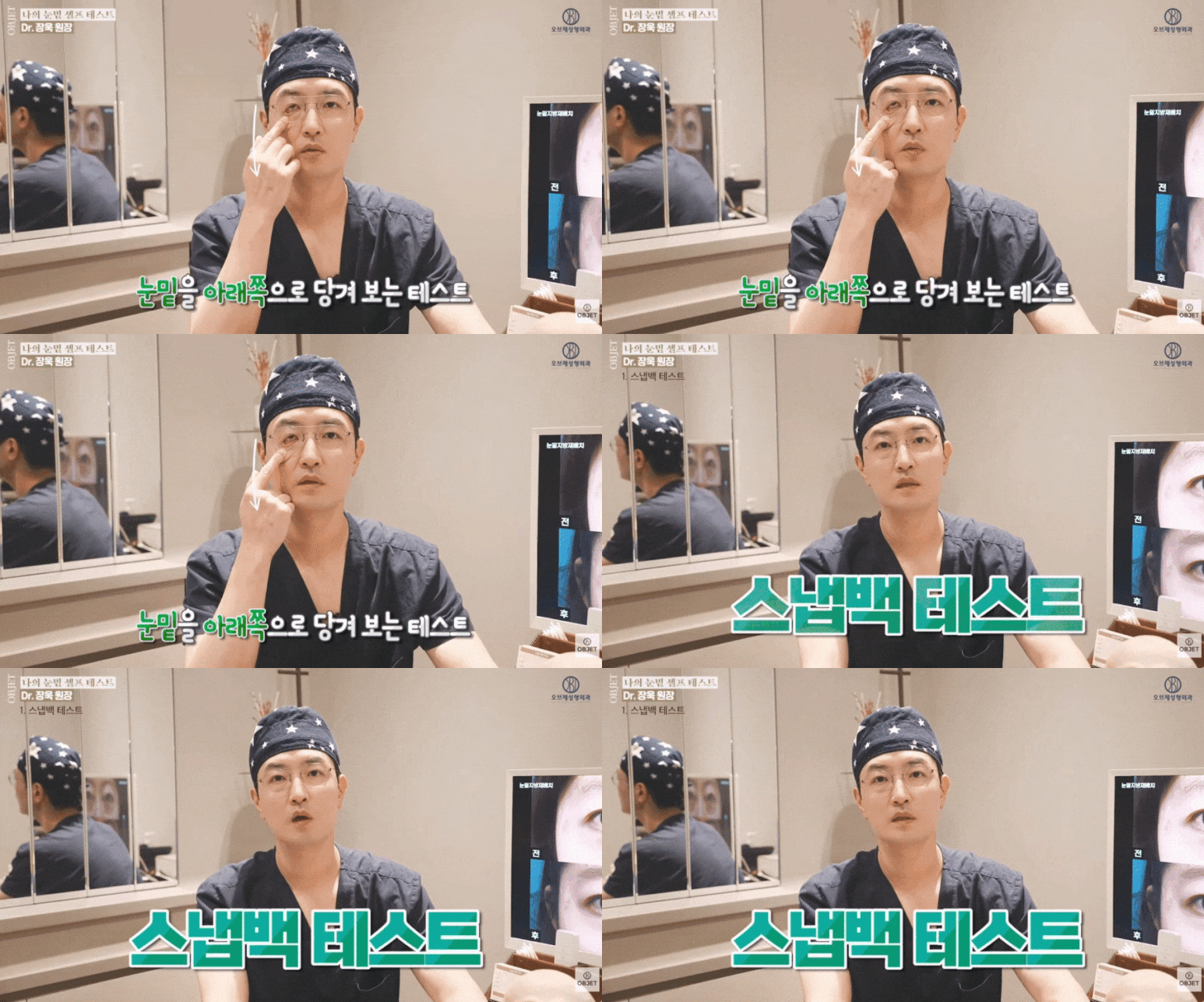
The first is the snapback test.
Gently pull the lower eyelid skin downward
with your finger,
then let it go.
If the skin returns to its original position immediately,
its elasticity is being well maintained.
On the other hand, if it takes 1 to 2 seconds or more,
or if it feels like it returns slowly,
you can consider the lower eyelid skin to be
losing elasticity.

The second is the distraction test.
Pull the lower eyelid skin forward
to check how much it stretches.
When measured with a ruler,
if the skin stretches less than 6 to 8 mm,
its elasticity is being well maintained.
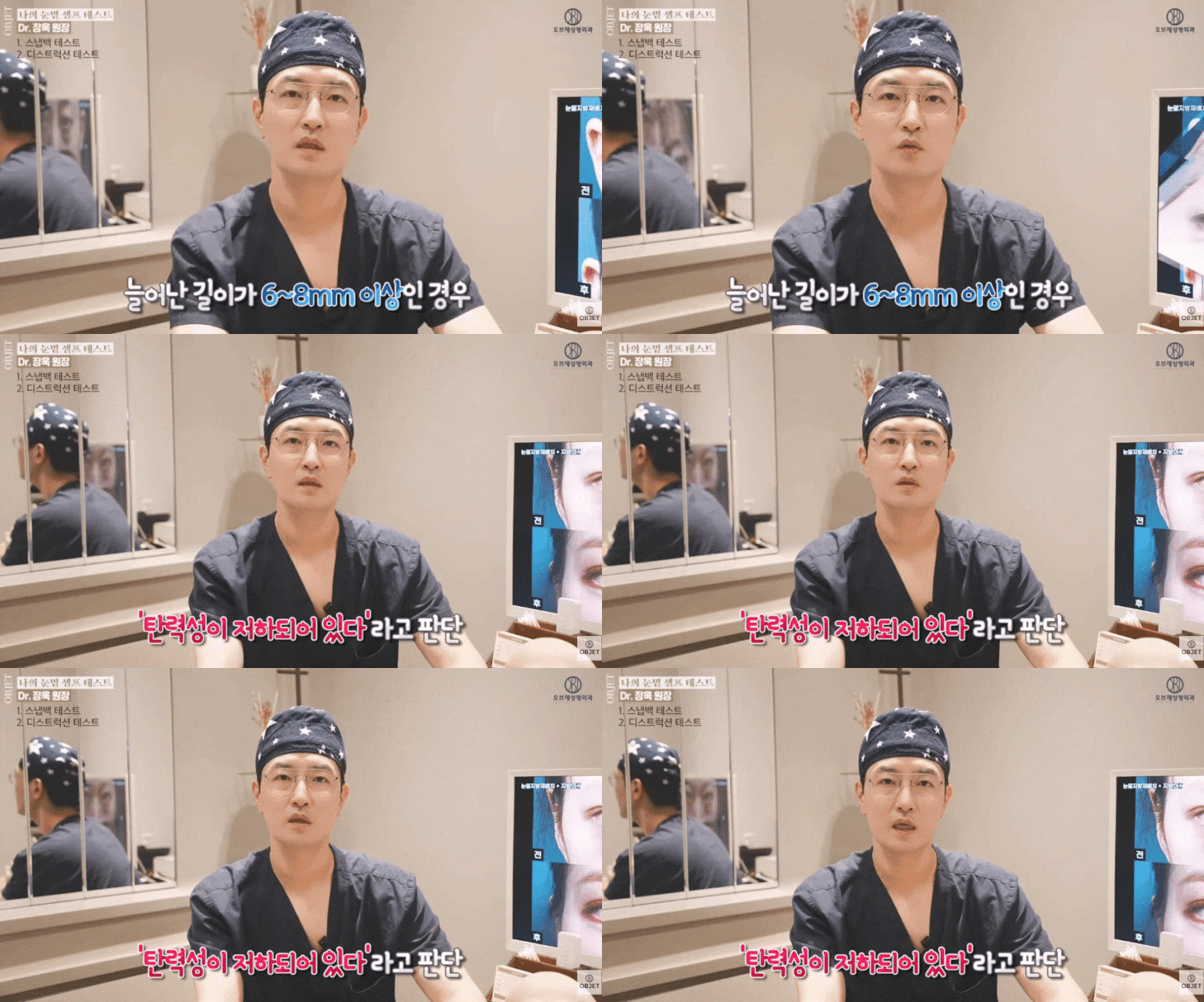
On the other hand, if it stretches 6 to 8 mm or more,
the lower eyelid skin can be considered
to be significantly loosened.
The higher the number,
the more stretched the skin is.
Both tests can be done simply within 30 seconds,
so try them right away and check the results.
If you have your results,
let's now look at how they connect to choosing a surgery.
Lower eyelid fat repositioning? Lower blepharoplasty?
Choose <like this>
If both test results show
that elasticity is sufficient,
lower eyelid fat repositioning is often appropriate.
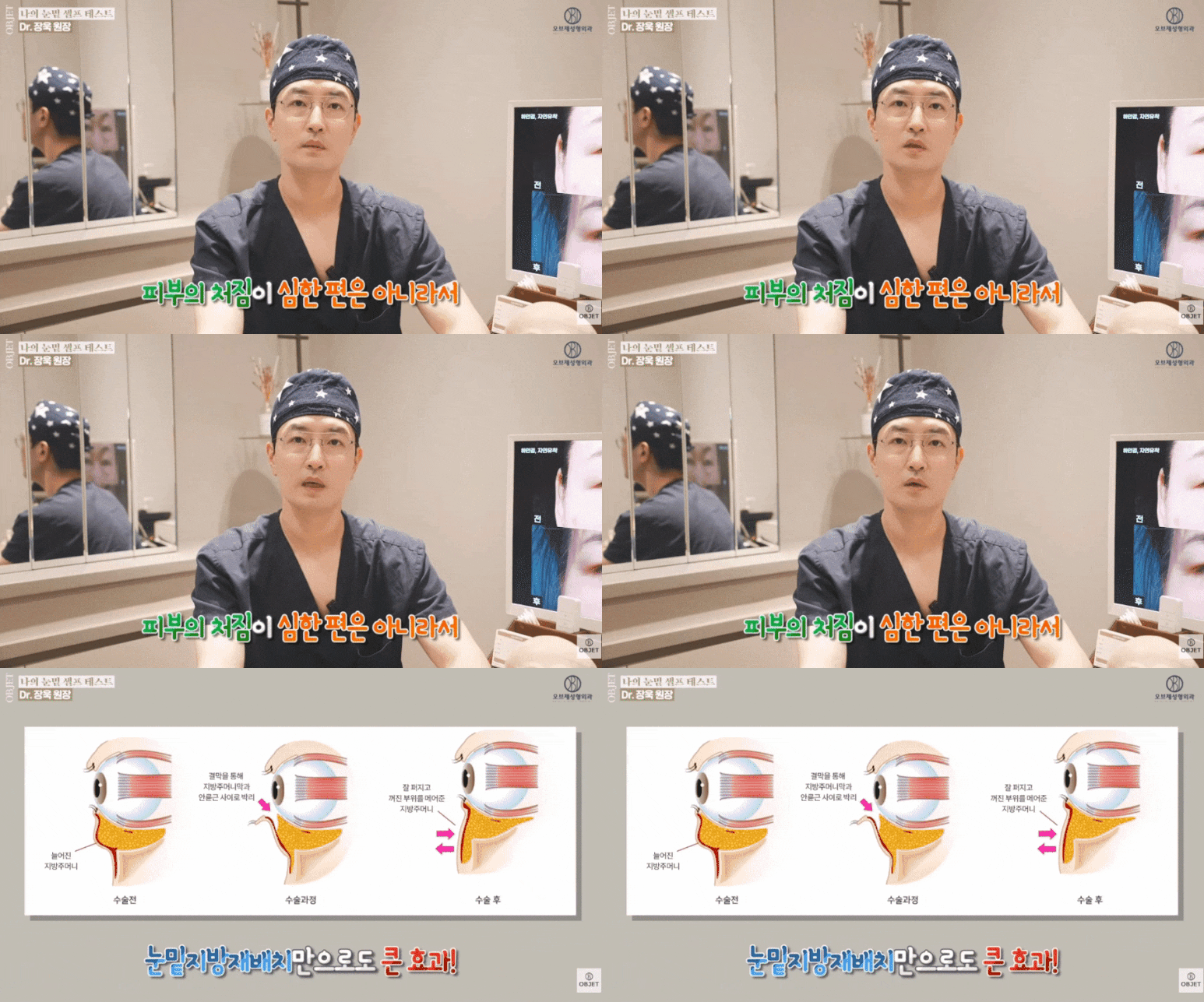
Lower eyelid fat repositioning
moves the bulging fat under the eyes
to the hollowed area.
If the skin and muscles are firmly supporting the area,
simply organizing the fat position can make the under-eye area
smooth and neat enough,
and recovery is relatively quick.
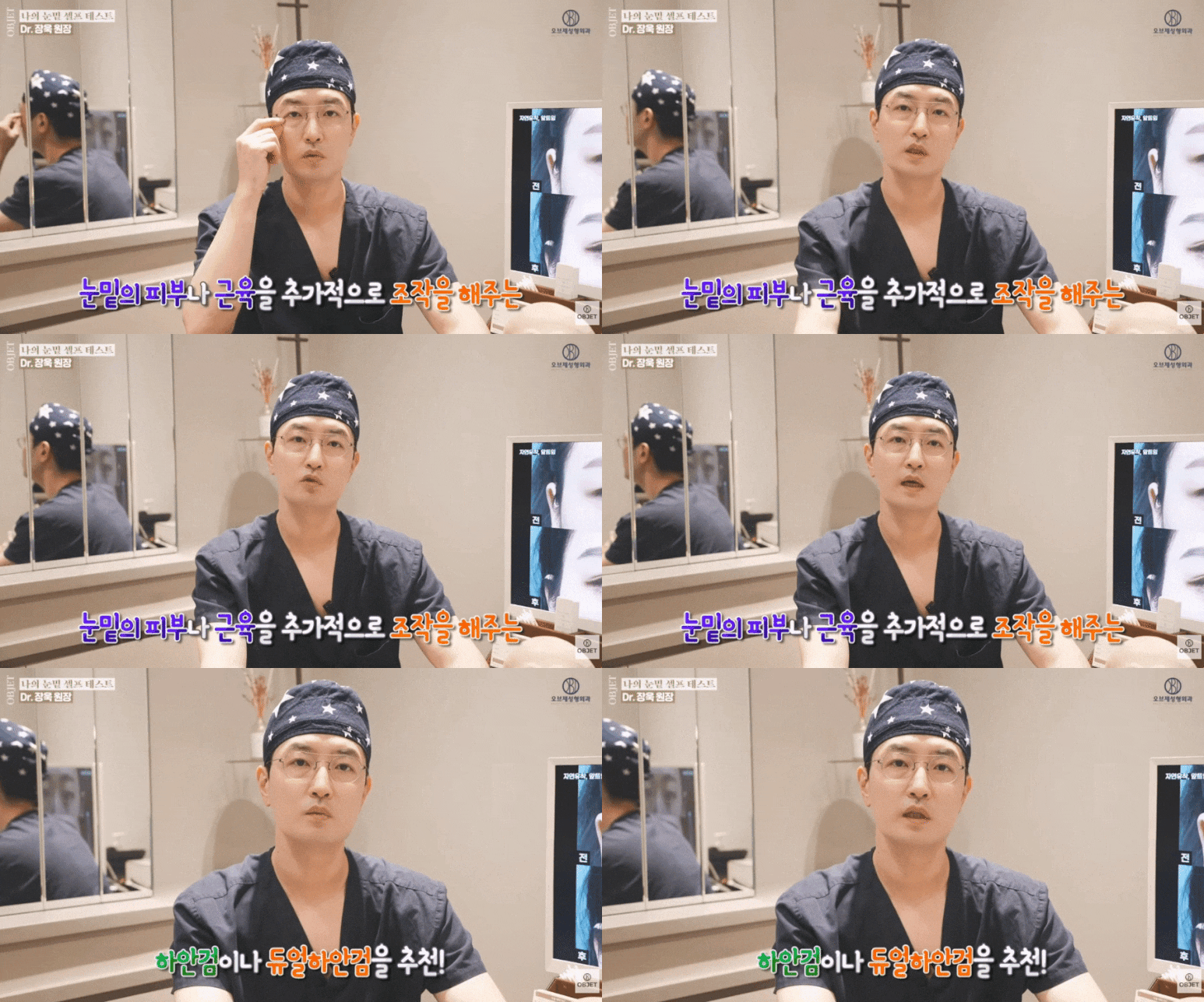
On the other hand, if even one result shows
that elasticity is declining,
it may be necessary to consider
lower blepharoplasty or dual lower blepharoplasty as well.
Decreased skin elasticity means that the muscles supporting the skin underneath
may also have started to loosen.
In that case, simply adjusting the fat position
may not tighten the under-eye area enough.
Lower blepharoplasty
treats the skin, muscles, and fat together,
so depending on how much the under-eye area has sagged,
it can provide a more definite lift.
Beyond simply moving fat,
it also trims loose skin
and helps structure the area so the muscles can support the under-eye area properly again.
If under-eye aging has progressed in a complex way,
dual lower blepharoplasty can be a more active approach.
If you are still undecided,
please also refer to <this criterion>
In addition to the test results,
age can also be one criterion for choosing a surgical method.

In your 20s and 30s, the lower eyelid skin is often
well maintained,
so there are many cases where lower eyelid fat repositioning alone is sufficient,
and
in people in their 50s and older, the skin and muscles
often loosen together,
so
combining lower blepharoplasty
or dual lower blepharoplasty
tends to increase satisfaction.
People in their 40s vary greatly from person to person,
so it is more accurate to choose the surgery based on
the current condition of the under-eye area rather than age.
In the end, age itself
is not an absolute standard for deciding surgery.
Even at the same age,
the appropriate method can differ depending on
how much the lower eyelid skin pulls back
and how well the muscles are supporting it.
Self-tests are only a reference,
and an accurate judgment is made through a consultation
that directly examines the under-eye structure.

Today, when considering lower eyelid sagging surgery,
we looked at two self-tests you can try at home first.
With the snapback test,
you can check how firm the lower eyelid skin is,
and with the distraction test,
you can check how much the skin stretches,
then based on the results,
you can estimate which method may be more suitable
among lower eyelid fat repositioning, lower blepharoplasty,
and dual lower blepharoplasty.

Before choosing a surgery,
it is important to first understand
the current condition of your under-eye area.
Director Jang Wook of Obje Plastic Surgery examines
how much the lower eyelid skin pulls back,
how well the muscles are supporting it,
and how the fat is distributed,
then suggests a lower eyelid sagging surgery
that fits each condition.
If you are wondering which surgery to choose,
we recommend starting with a consultation
that accurately assesses your current condition.
This has been Obje Plastic Surgery.
Thank you.
<🔽🔽Videos you may find helpful🔽🔽>
| Eye plastic surgery consultation and inquiries |
|---|
| Quick phone consultation |
| Kakao easy consultation |
-
This post is medical information written by Obje Plastic Surgery Clinic in compliance with the Medical Advertising Act.
-
Treatment effects may vary depending on the individual, and side effects may occur.
We recommend that you make your treatment decision only after sufficient consultation with medical staff in advance.