A Nose That Cannot Be Corrected with Crooked Nose Surgery?
Director Lee Kyung-mook’s <Criteria Summary>
Hello.
This is Objet Plastic Surgery.
One day, suddenly
when you realize
that your nose is bent to one side,
it starts to bother you.
Every time you look in the mirror,
your eyes go to the center line of your nose,
and when taking photos,
you become conscious of the angle as well.
So you probably started looking into
crooked nose correction surgery.
But as you search,
you may come across the statement that
"not every crooked nose can be corrected."
From that moment on,
rather than the surgical method,
what type your nose falls into becomes
more important.
Today, we will organize
those criteria for you.
We’ll go through
which noses are easier to correct
and which noses require a different approach,
focusing on structural differences,
one by one.
If you read until the end,
you will have a set of judgment criteria
you can check in advance before a consultation.
Noses that are easy to correct,
check these 'two' things
Crooked nose correction surgery
can have very different results depending on
the cause and structure of the crooked nose.
Among them, cases that are easier to correct
can largely be divided into two types.
The first is
when the nose becomes crooked due to trauma.
This refers to a state in which the nasal bone or cartilage
has been displaced by external impact,
such as falling down or hitting something.
In this case, because the premise is that
the original structure of the nose was normal,
the approach can be to restore it
back to its original position.
Simply put,
it is relatively easier because
a nose that was originally straight
was pushed out of place by impact,
so restoring it to its original position
is comparatively straightforward.
The second is
when the facial central axis is normal,
but only the nose is bent in a C shape.
When viewed from the front,
the center line running from the glabella to the chin tip
is vertically straight,
but only the nose is bent left and right.
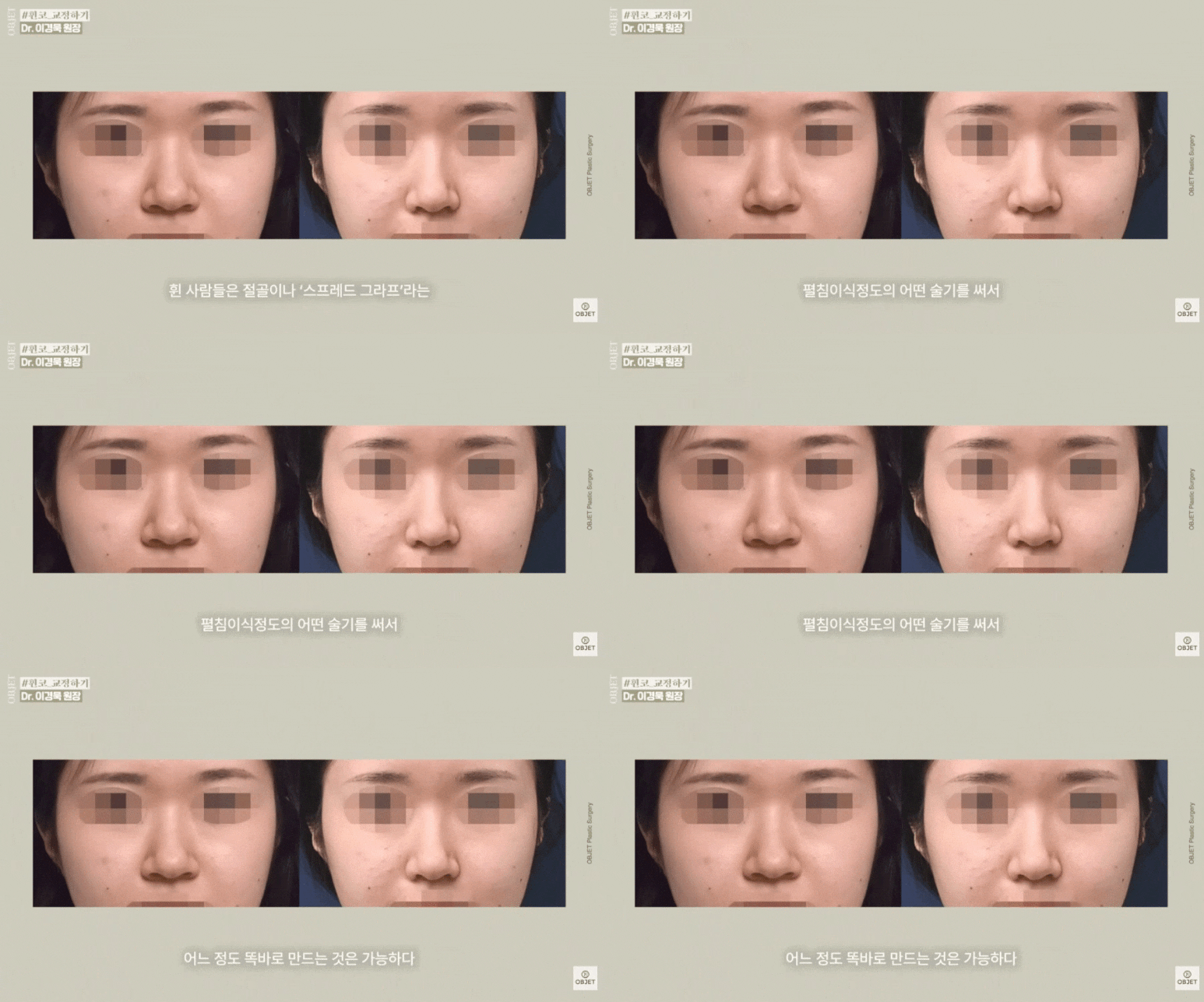
In this structure,
a method called osteotomy is used,
which precisely cuts and repositions the nasal bone,
or a method called spreader graft is used,
which expands the internal structure of the nose
to perform the correction.
Osteotomy physically moves the position
of the nasal bone,
and a spreader graft can be thought of as
placing a supporting structure inside the nose
to reinforce the side opposite the direction of the bend.
Because the problem is with the nasal bone itself,
surgery centered on the nose
often leads to satisfactory results.
I was told mine cannot be corrected?
The cause is 'outside the nose'
Cases in which crooked nose correction surgery
is difficult to apply in a simple way
are those where the cause lies in another structure,
not the nose itself.
There are two representative cases.
First,
when the facial axis itself is tilted.
When viewed from the front,
if you draw a straight line from the center of the glabella
to the chin tip,
it is not vertical but tilted
to one side.
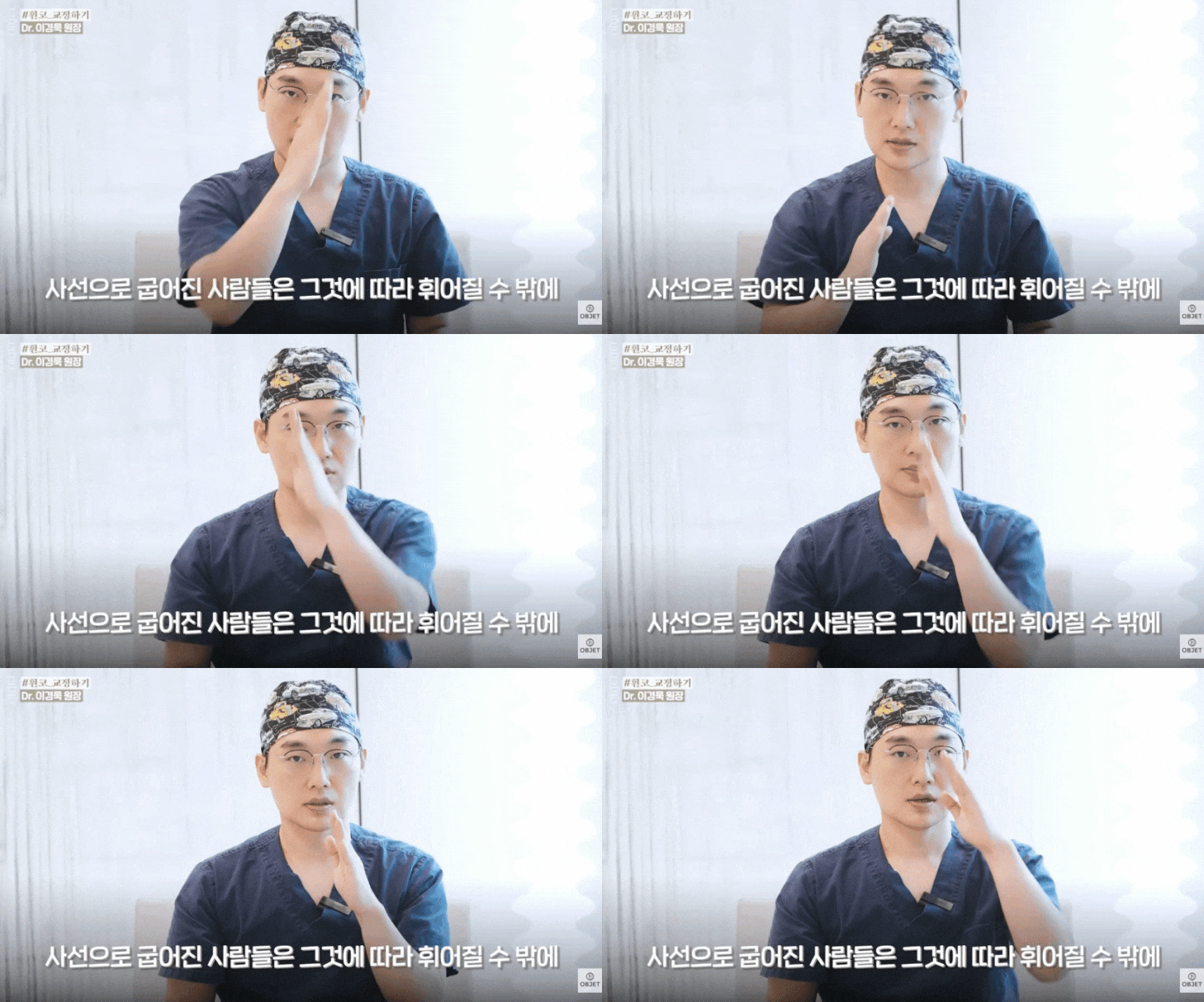
In such cases,
the nose also appears bent along
the facial axis.
But if, in this situation,
only the nose is aligned to the center,
it can actually look awkward because
it deviates from the facial midline.
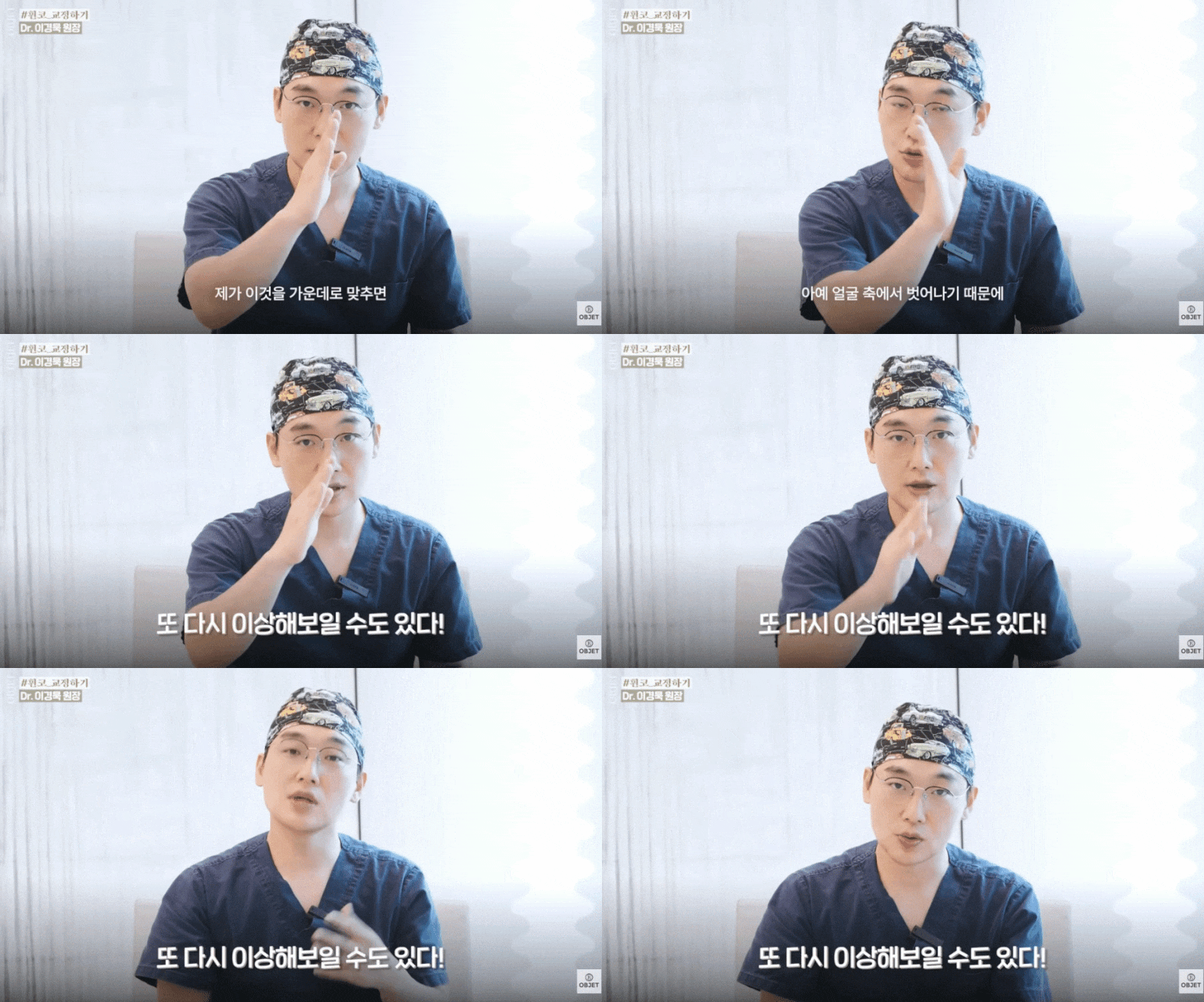
To use an analogy,
it is similar to straightening only the picture
inside a tilted frame.
If the frame itself is tilted,
straightening only the picture’s angle
will actually make it look even more crooked.
The same goes for the nose.
When the frame of the face itself
is tilted,
correcting only the nose
can disrupt the overall harmony
and lead to results different from what was expected.
So in this case,
rather than approaching it with nose surgery alone,
a different plan is needed
that also considers the relationship with the facial axis.
Second,
when the nostril base position is asymmetric.
The facial axis is normal,
but the nostril base itself is偏向ed to one side
left or right.
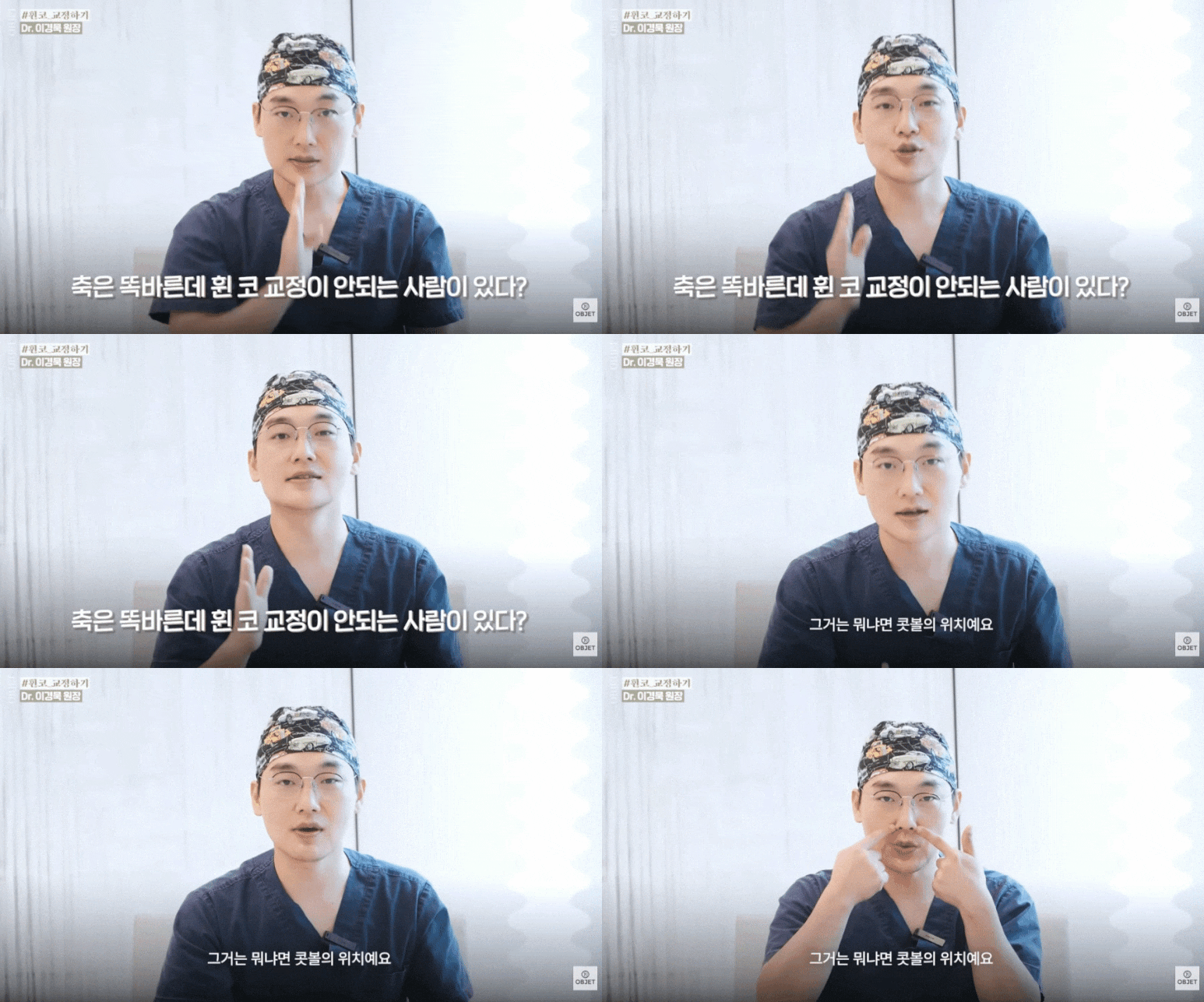
Because the bridge of the nose
is a structure that descends downward
using the nostril base as its reference point,
if the nostril base is shifted to one side,
the bridge of the nose will also appear bent.
To explain it simply,
it is like a building whose foundation is tilted to one side:
even if you stand the columns perfectly straight,
the entire building will still look tilted.
The nostril base is the foundation,
and the bridge of the nose is the column.
In this case, if you move only the nose to the center,
the nostril base remains the same,
but only the bridge of the nose moves,
which may make the left and right sizes of the nostrils different
and actually make the balance look off.
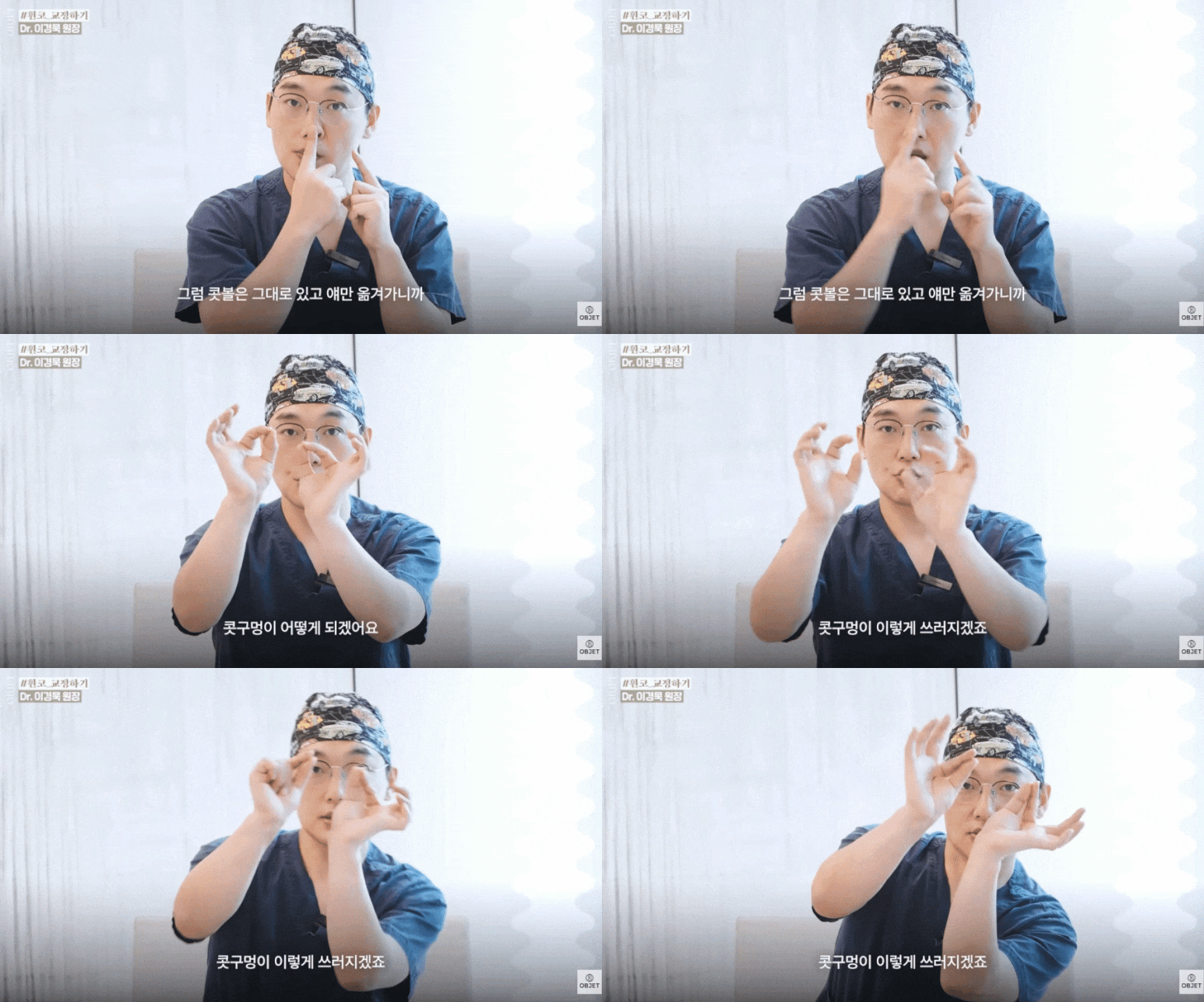
Because nostril base position
is an area that is not easy to adjust
with ordinary crooked nose correction surgery alone,
in such structures,
the correction range and direction need to be set differently,
or a different approach that also considers
elements other than the nose is needed.
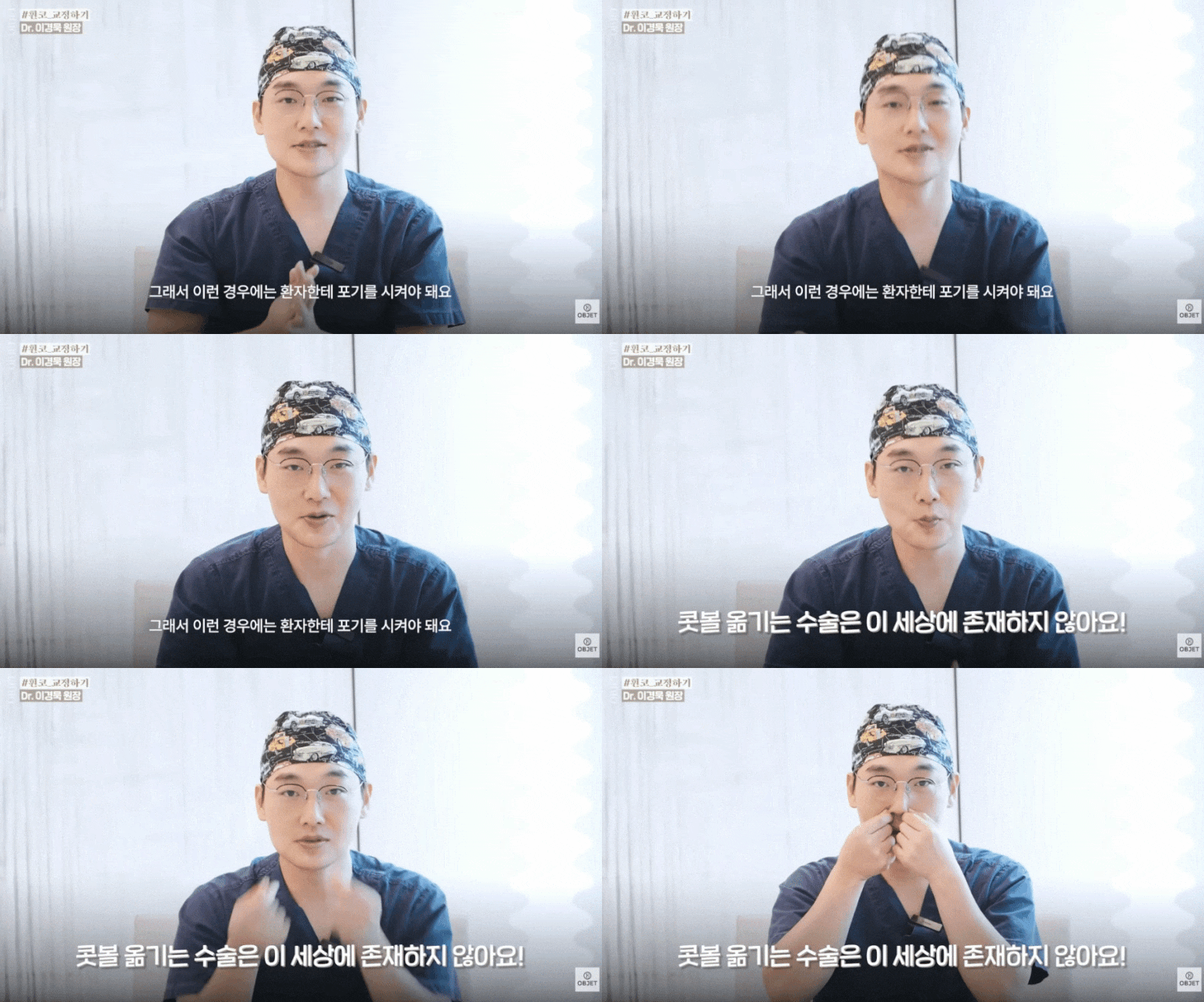
As you can see,
noses that require a different approach
are often cases in which the cause is not the nose itself,
but the structures surrounding the nose,
such as the facial axis or nostril base position.
Today, we looked at
cases where crooked nose correction surgery
works well and cases where the approach differs,
divided by structural criteria.
To summarize,
cases where the nose is bent due to trauma,
or cases where the facial axis is normal but only the nose is bent in a C shape,
tend to have good correction results,
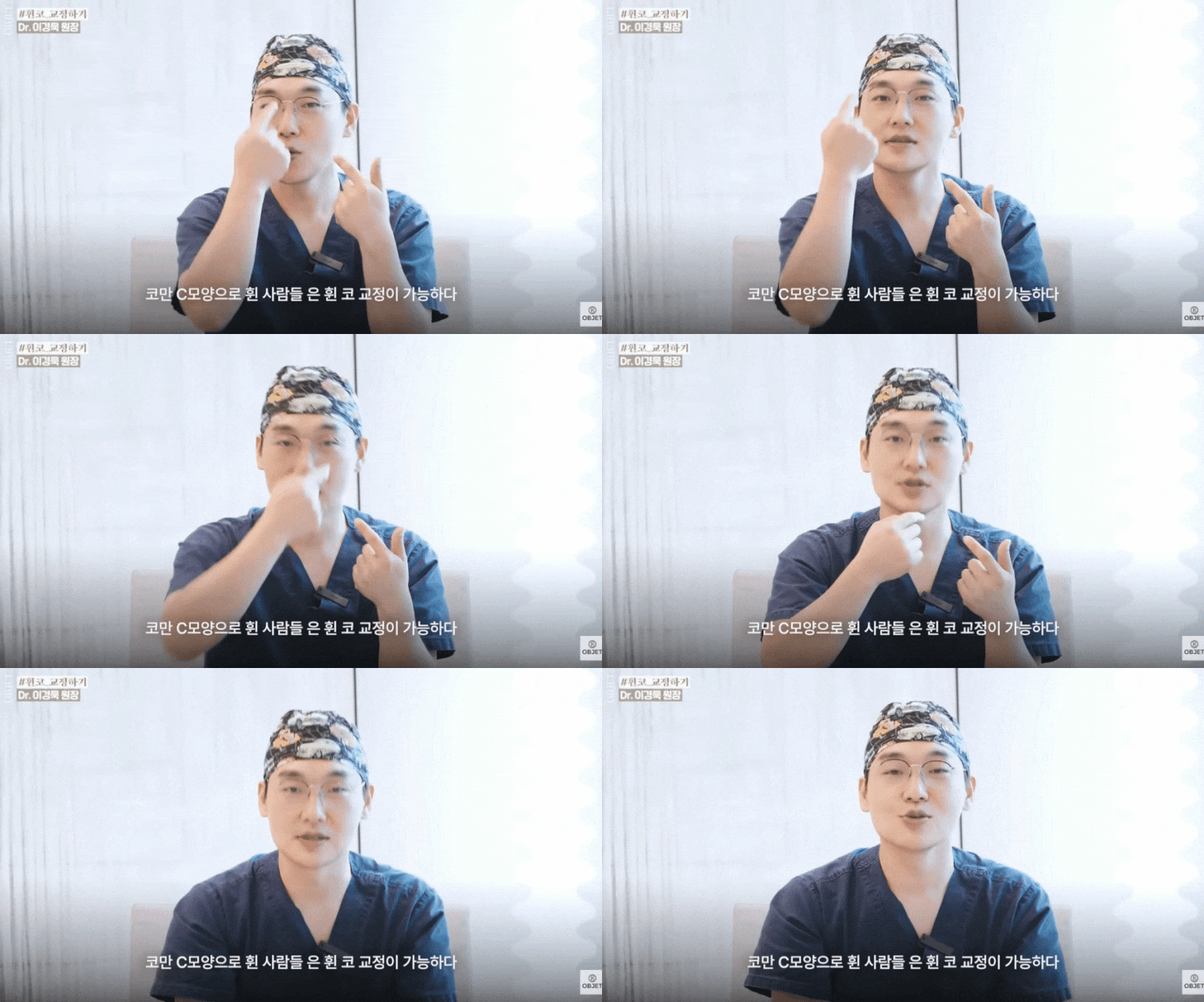
whereas cases where the facial axis itself is tilted
or the nostril base position is asymmetric
require a different approach
from the method of correcting only the nose.
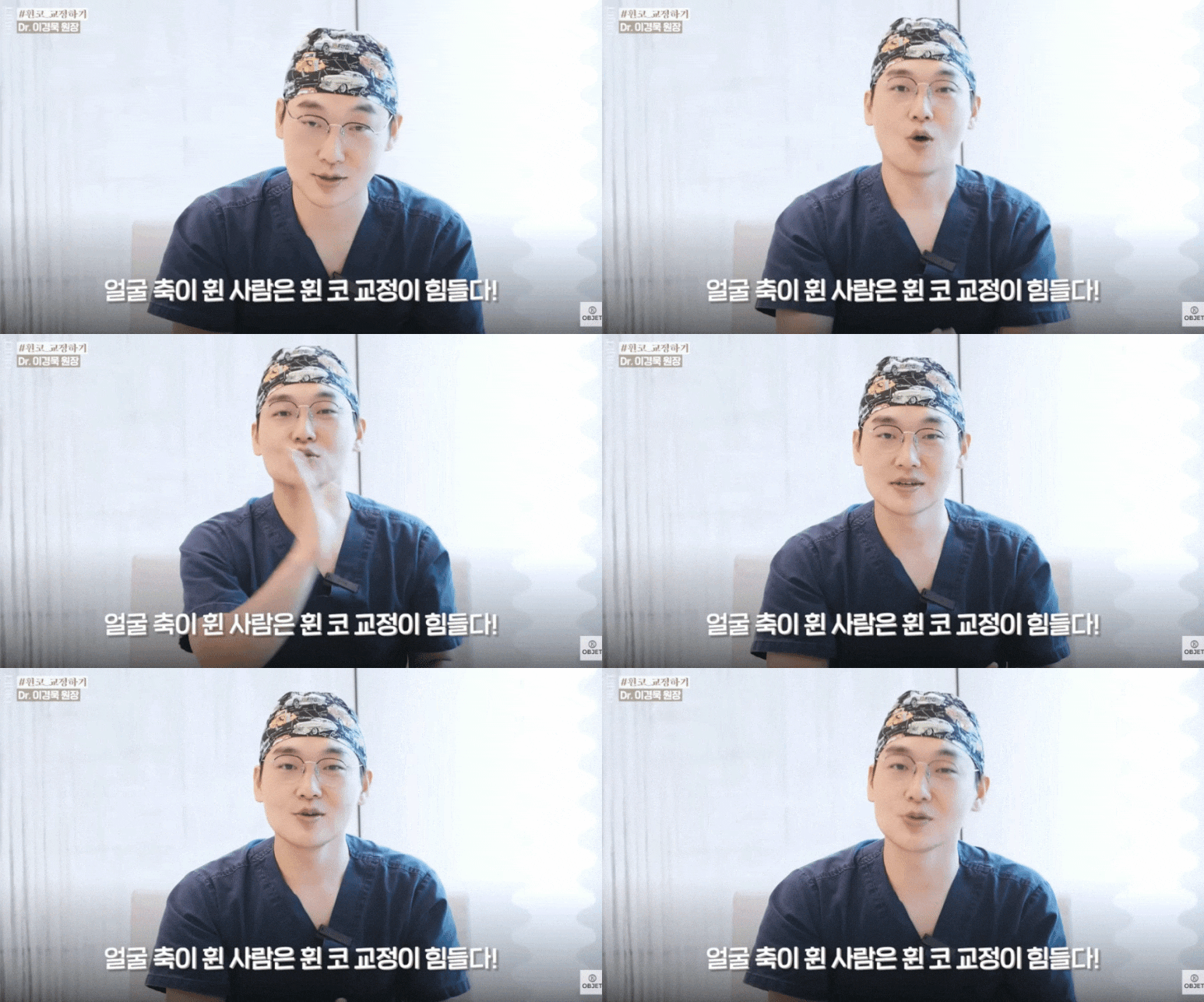
In the end, what matters is
not looking at the nose separately,
but examining the facial axis, nostril base position,
and nose structure together as one flow.
Director Lee Kyung-mook of Objet Plastic Surgery
analyzes not only the direction in which the nasal bone and cartilage are bent,
but also the left-right balance of the facial central axis
and the position of the nostril base
to determine the correction criteria.
Even for the same crooked nose,
the surgical plan changes completely depending on
whether the facial axis is normal and whether the nostrils are symmetrical,
so first distinguishing these structural differences
becomes the most essential starting point
that determines satisfaction with the surgical result.
If you are worried about a crooked nose,
we recommend starting by identifying
which type your nose falls into.
This has been Objet Plastic Surgery.
Thank you.
<🔽🔽Recommended video to watch together🔽🔽>
| Nose surgery consultation and inquiries |
|---|
| Quick phone consultation |
| Kakao easy consultation |
-
This post contains medical information written by Objet Plastic Surgery Clinic in compliance with the Medical Advertising Act.
-
The effects of procedures may vary from person to person, and side effects may occur.
We recommend that you have sufficient consultation with a medical professional in advance before deciding on a procedure.