Why a lower eye bag revision surgery is needed — this is the reason?
Director Kim Hyun-jo organizes it for you!

Hello.
This is Object Plastic Surgery.
After lower eyelid fat repositioning,
things were fine for a while,
but after a few months,
the under-eye area starts to look puffy again.
Or right after surgery,
the under-eye area looks sunken,
or wrinkles appear more prominent,
so the result looks different from what you expected.
When you go through situations like these,
it is natural to think,
"Was the surgery done wrong?"
"Am I the only one?"
But in reality,
there are quite a few people looking into
lower eye bag revision surgery.
And in many cases,
it is not a problem with the surgery itself,
but rather something that was missed
before deciding on the first surgery.

Today,
I will explain one by one
what the most common causes are
that lead to lower eye bag revision surgery,
and what should be considered important
if you want to maintain the results
without recurrence.
If you read until the end,
it may help you make decisions going forward.

I had surgery, but it looks worse...
The reason is this difference
The biggest cause
that leads to lower eye bag revision surgery
is cases where the person was not actually a suitable candidate.
Lower eyelid fat repositioning
is not a surgery that applies to every under-eye concern.
For lower eyelid fat repositioning
to be effective,
one condition must be met.

The skin elasticity is still sufficiently preserved,
and only the fat has moved forward.
This is a type that tends to appear
relatively often in people in their 20s and 30s.

On the other hand, if the skin is sagging
or the muscles are also loosened,
or if the tear trough is deeply set,
the situation is different.
If only lower eyelid fat repositioning
is performed in this condition,
the fat is repositioned,
but the stretched skin and muscles remain as they are.

So even after surgery,
wrinkles may look more prominent,
or the under-eye area may appear sunken,
which leads to lower satisfaction.
In the end, choosing a surgery
that does not match the under-eye condition
becomes the starting point of revision surgery.
If it came back after some time?
This is usually where the difference lies
There are also cases where things were fine right after surgery,
but as time passes,
the under-eye area becomes puffy again.

In this case,
it is likely because the structural part
of the under-eye area was not addressed together.
The under-eye fat is surrounded by
a thin membrane called the orbital septum.
Put simply,
it is a kind of supporting structure
that holds the fat in place like a net.
As you get older,
or for various other reasons,
if this septum becomes loose,
the fat that was inside can be pushed forward.
But during surgery,
if the fat is simply moved while leaving
this septum as it is,
the septum remains loose.
Over time,
the fat can be pushed forward again.
The cause of recurrence is not the fat itself,
but rather that the structure holding the fat
was not reinforced.
To prevent revision surgery
Be sure to check these <2 things>
So when considering lower eye bag revision surgery,
or even before your first surgery,
what should you check?

The first is whether septal reinforcement
and double fixation are used.
For the repositioned fat
to stay in place for a long time,
simply tightening the loosened septum
may not be enough.
After reinforcing the septum,
it needs to be fixed once more to the periosteum,
a tough membrane that surrounds the bone under the eye.
This method of fixing it in two layers,
to the septum and the periosteum,
is called double fixation.
Rather than simply changing the position of the fat,
what helps reduce recurrence is
also securing the supporting structure
so the fat can remain there.
The second is choosing a surgical method
that matches your own under-eye condition.
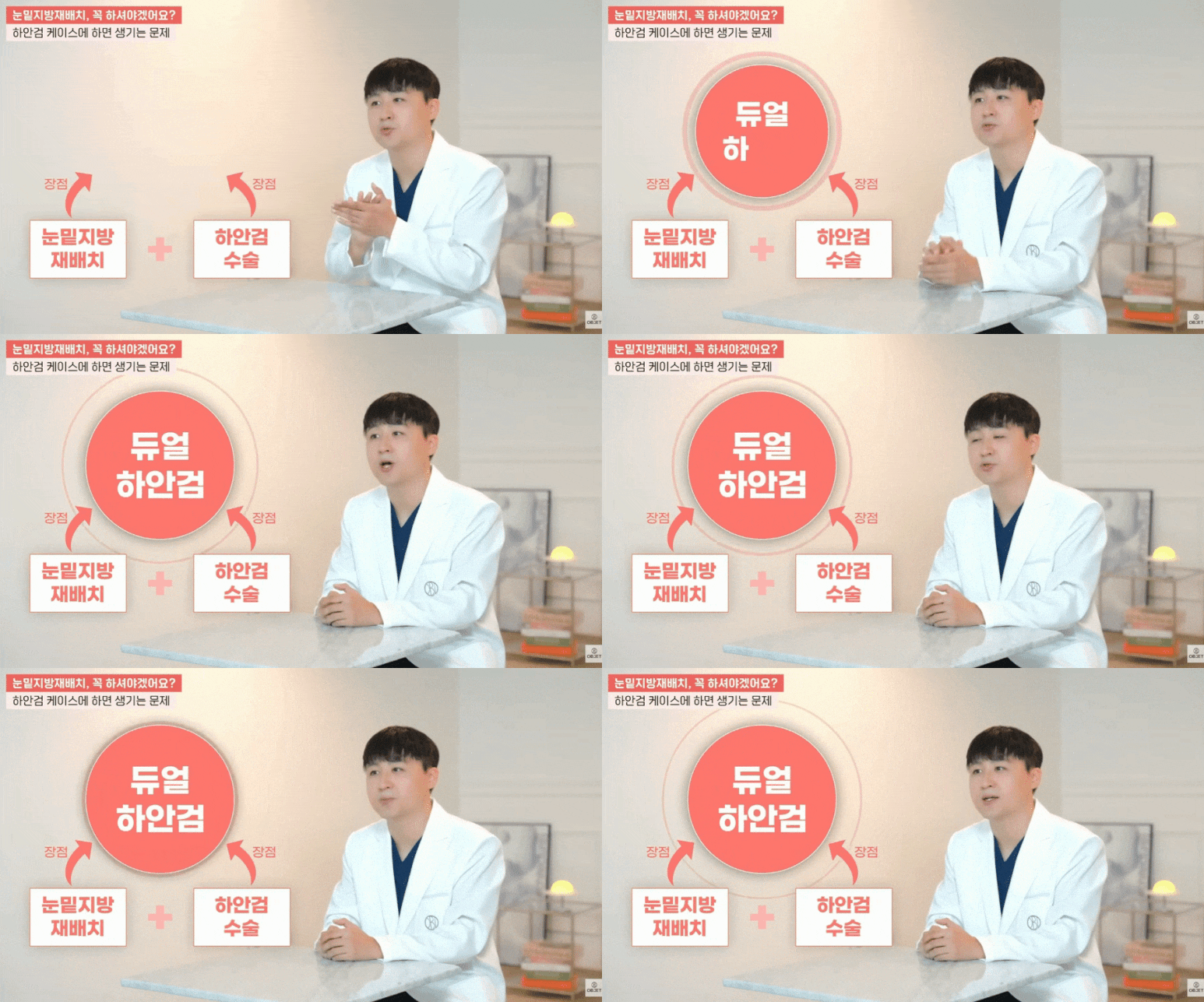
If only the fat is protruding,
lower eyelid fat repositioning is appropriate,
but if skin sagging is also present,
lower blepharoplasty may be needed,
and if both are present together,
a method that improves both at the same time,
such as a dual lower blepharoplasty,
may be more suitable.
Rather than saying,
"My under-eye area is puffy, so I must get lower eyelid fat repositioning,"
it is important first to determine
which category your current under-eye condition belongs to.
That is the part you should carefully consider.

Today, we talked about
why lower eye bag revision surgery is needed,
and what should be checked
to prevent recurrence.
To summarize,
a surgical choice that does not match
the under-eye condition,
and a surgical method that does not reinforce the septum,
these two are the most common causes
that lead to revision surgery.
Director Kim Hyun-jo of Object Plastic Surgery,
to reduce lower eye bag revision surgery,
performs lower eyelid fat repositioning
using a double fixation method
that reinforces the septum
and secures it to the periosteum at the same time.
In addition to the amount and position of the under-eye fat,
he also looks comprehensively at skin elasticity,
muscle condition, and tear trough depth,
and then begins by distinguishing whether
lower eyelid fat repositioning is appropriate,
or whether lower blepharoplasty
or dual lower blepharoplasty is needed.

Since surgery is difficult to reverse,
the first choice is the most important.
Please get consultations from multiple places,
and be sure to check whether double fixation is performed,
and whether it is the right surgery
for your under-eye condition.
This has been Object Plastic Surgery.
Thank you.
<🔽🔽A helpful video to watch together🔽🔽>
| Lower eyelid fat repositioning consultation and inquiries |
|---|
| Quick phone consultation |
| Kakao simple consultation |
-
This post is medical information written by Object Plastic Surgery Clinic in compliance with the Medical Advertising Act.
-
The effectiveness of treatment may vary depending on the individual, and side effects may occur.
We recommend that you fully consult with medical staff in advance before deciding on any procedure.