How Can You Avoid Redness at the Tip After Nose Surgery?
Director Lee Kyung-mook’s <Answer>
Hello.
This is Objet Plastic Surgery.
Many of you likely came across this post because you were concerned about the change in which the tip of the nose appears red after nose surgery.
Some of you may already have had surgery and felt startled by the reddened tip in the mirror,
while others may be looking into information in advance because they want to prevent this kind of change before surgery.
If you search online, you may find only fragmentary claims such as “the tip of the nose turns red after nose surgery,” which can actually make things more confusing.
Today, I’ll help clear up that confusion and walk you through how to avoid redness at the tip after nose surgery.
From the real reason the tip turns red to the key points for preventing it,
and even the process by which a reddened tip recovers,
I’ll go through each point one by one,
so if you read to the end, it should be very helpful when making your decision.
How Can You Avoid Redness at the Tip After Nose Surgery?
Let’s start with the <key criteria>
I’ll begin with the most important point.
The most important criterion for avoiding redness at the tip after nose surgery is
to reshape the nose within the range that your own skin and tissue can handle.
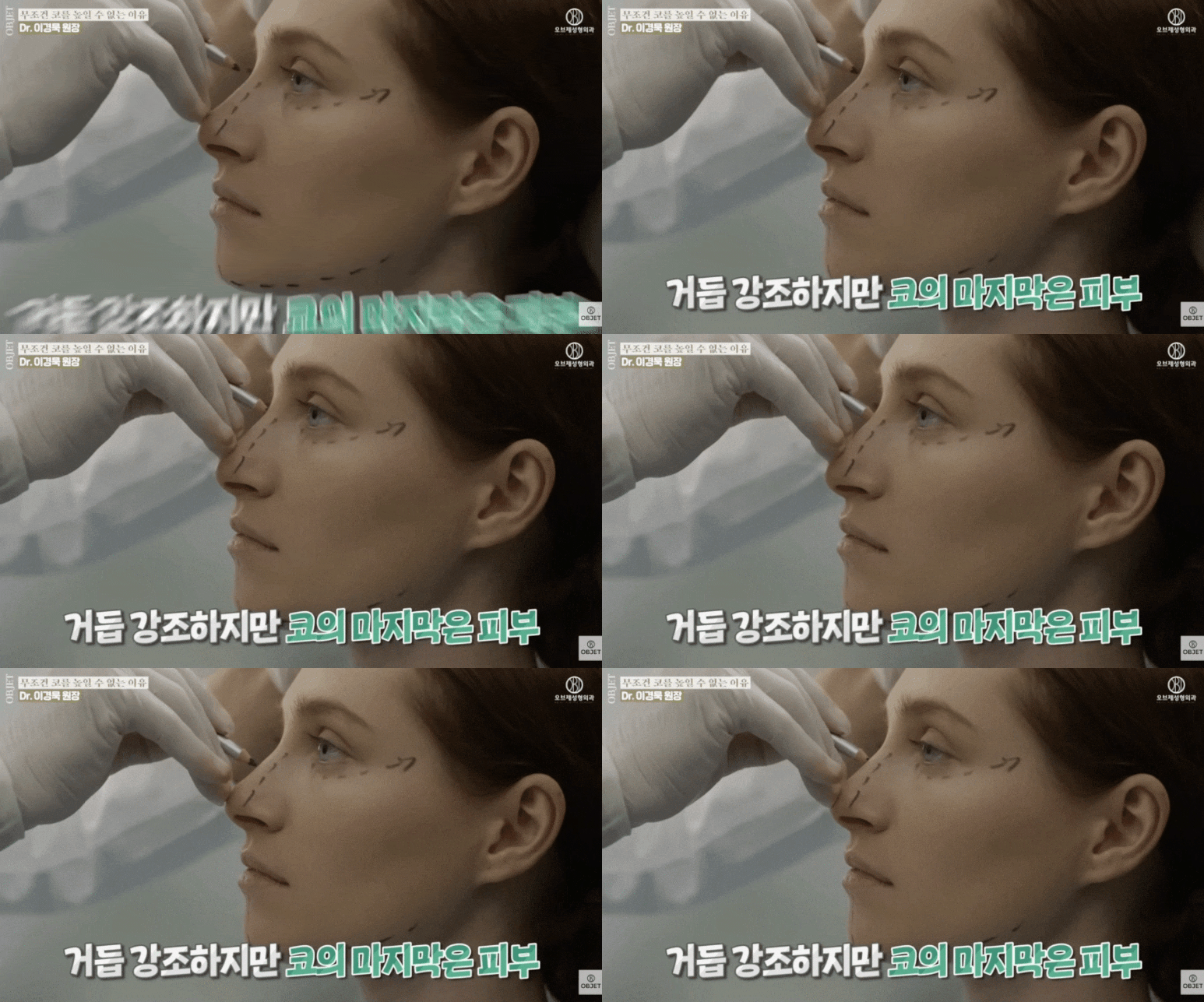
To explain a bit more clearly, this means it is important not to try to raise or heighten the tip too aggressively.
If the nose is reshaped while there is still enough room in the skin,
the burden on the skin is smaller,
so changes such as redness at the tip are less likely to occur.
On the other hand, if the skin is thin or there is not enough tissue and the nose is raised too forcefully,
the burden on the skin increases, and a reddish tone can remain at the tip for a long time.

In other words, the key to preventing redness at the tip is not a flashy or sharply pointed shape,
but rather a “natural design suited to your skin and tissue.”
Why do some people turn red,
while others don’t?
Even though they had the same nose surgery,
why does one person’s tip show redness while another’s looks fine?
Let’s look a little deeper here.
First, it’s important to know that the nose is the part that protrudes the farthest from the face.
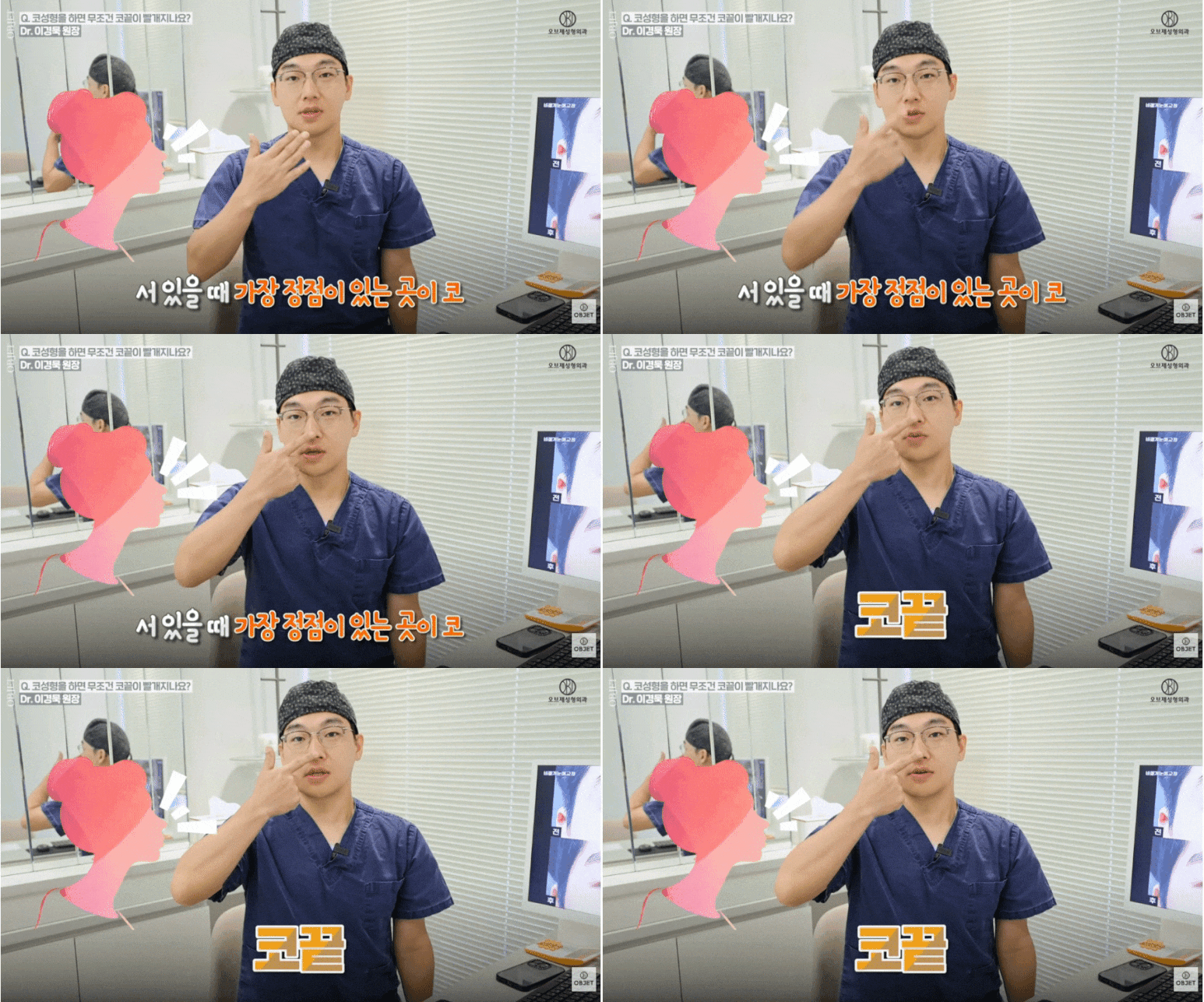
To put it simply, you can think of it as being similar to the very top of a mountain peak.
In a location like this,
blood has to travel a relatively long distance to reach it,
and even small changes can have a big effect on blood flow.
This may sound a bit difficult, but blood vessels are the pathways that carry nutrients and oxygen throughout the skin and tissue.
However, if the skin and tissue at the tip of the nose are pulled upward from their original position,
the blood vessels can be stretched or compressed.
At that time, the blood vessels themselves are irritated,
and a minor inflammatory reaction in the surrounding tissue is added,
which causes the skin surface to appear reddish.
In particular, redness at the tip after nose surgery can easily occur in cases such as the following.
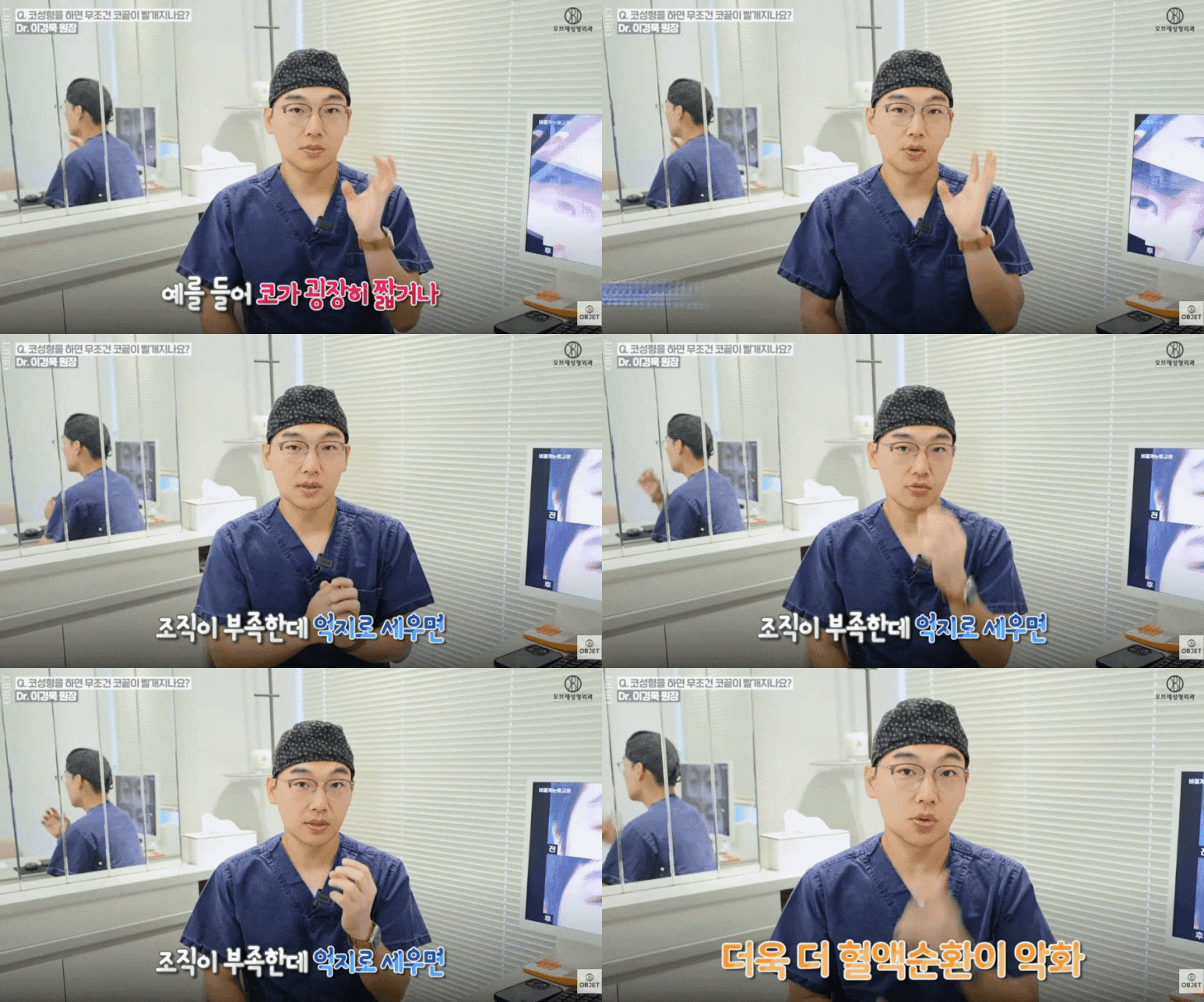
When the nose is short but the height is forced to be raised too much,
or when the skin is thin and there is not enough tissue but the shape is forced to be built up.
In such cases,
the skin is stretched beyond its limit,
and the burden accumulates,
so the reddish change naturally continues for a long time.
Going a step further, this can sometimes lead to changes in skin thickness,
or, in rare cases, a slightly visible outline of the implant inside.
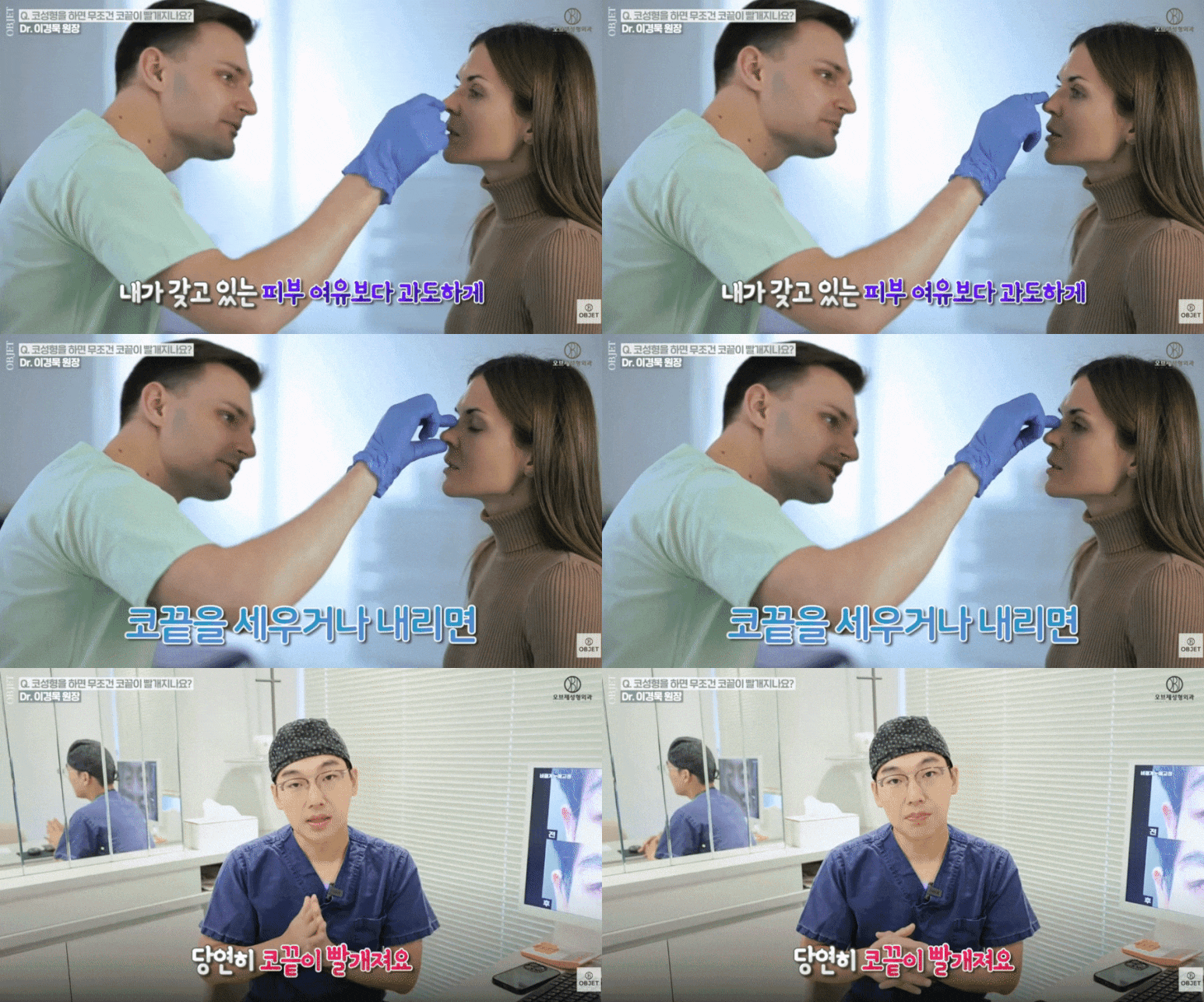
That is why, when reshaping the nose, the more important criterion is not “how high it is,”
but rather “whether the tissue can accept it.”
On the other hand, people with thicker skin
and enough tissue tend to have little to no redness showing,
even after the same degree of reshaping.
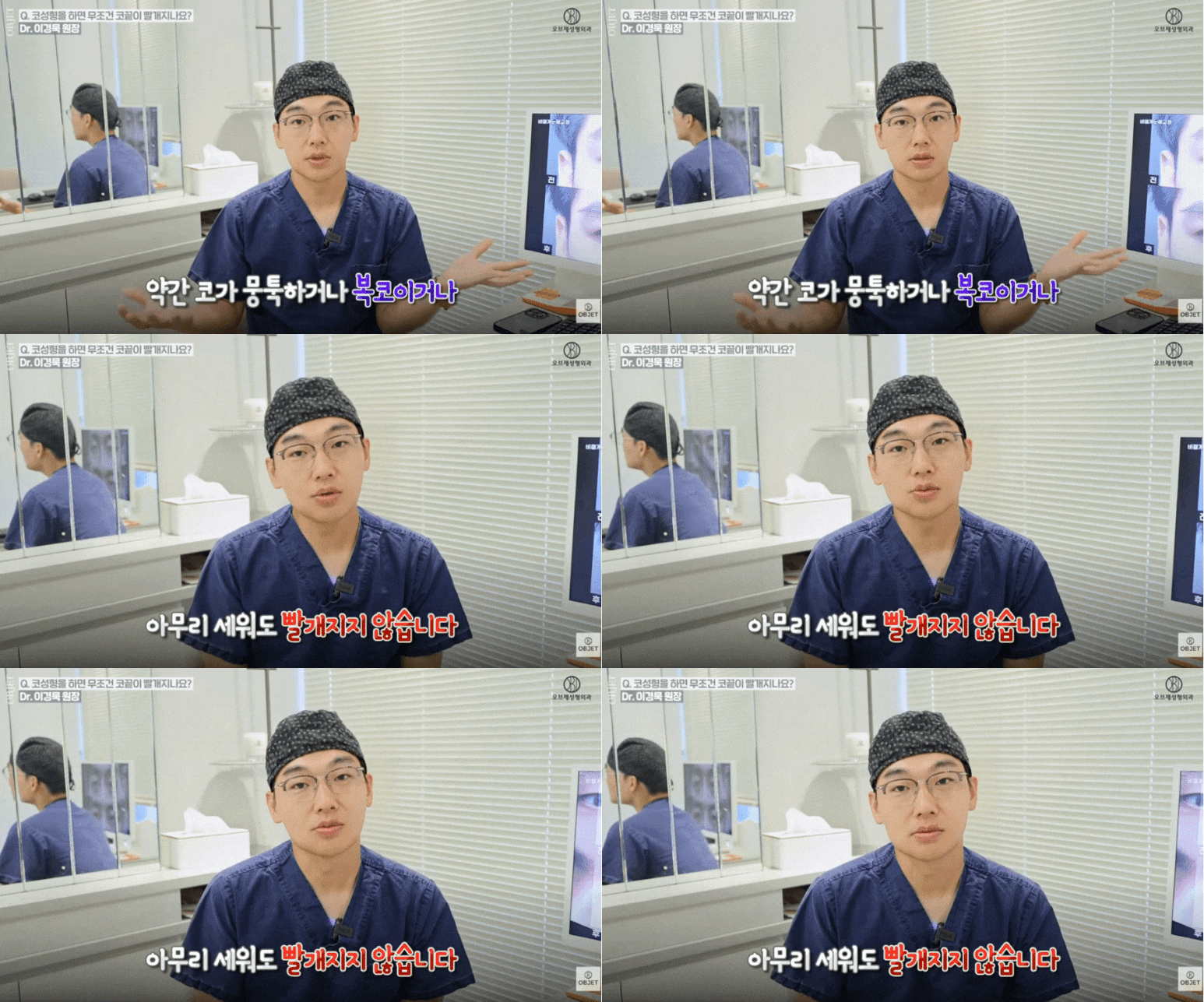
This often applies to people with a blunt or slightly larger nose type.
In the end, even with the same surgery, the reason some people turn red and others do not is determined by
“how much correction was performed relative to the available skin.”
A reddened tip after surgery will calm down after “this period” passes
Some people have already had nose surgery
and are likely feeling alarmed because the tip has turned red.
But there is no need to worry too much.
Redness at the tip caused by temporary blood circulation changes after surgery usually fades naturally over time.
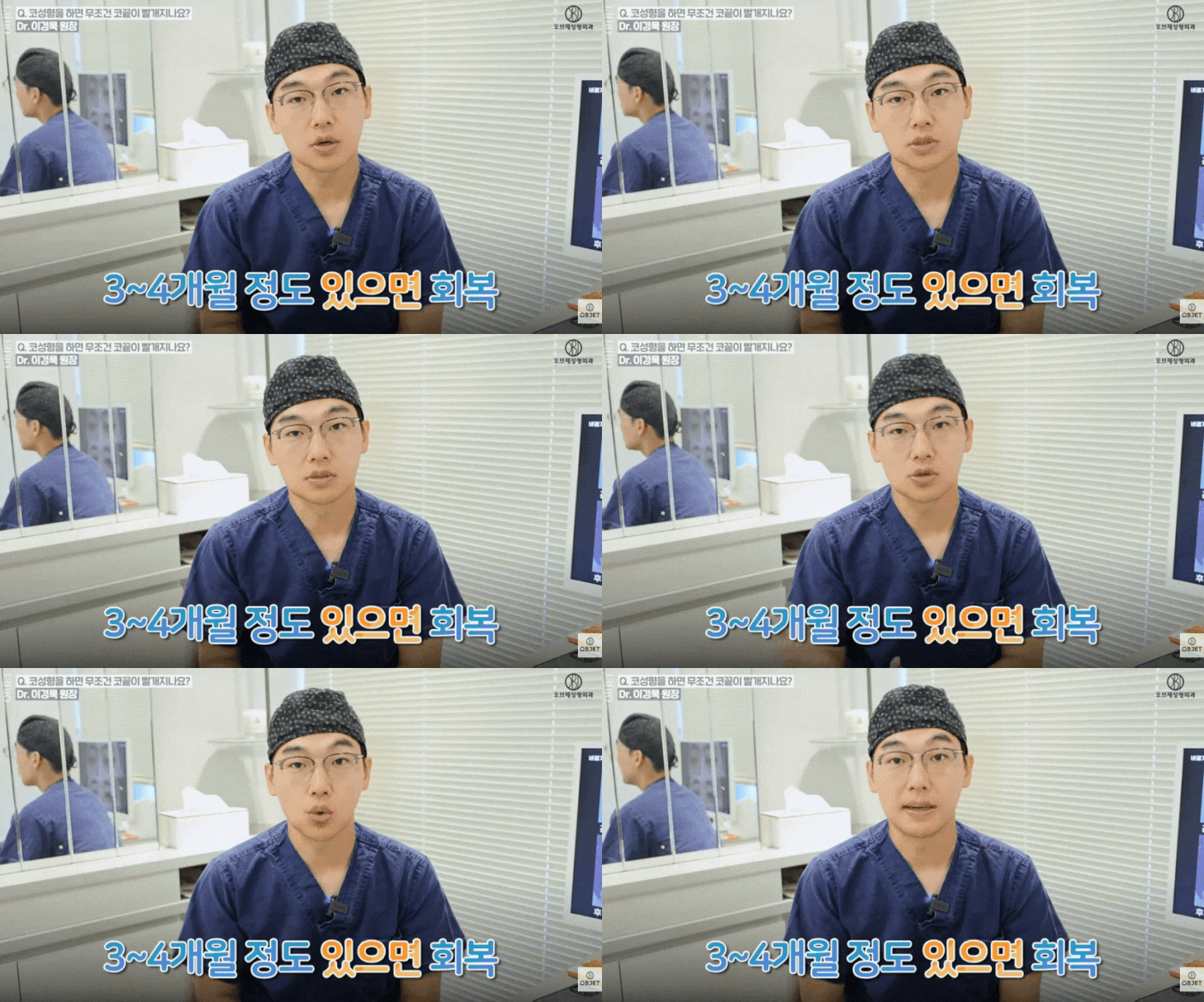
On average,
after about 3 to 4 months,
many cases return to a state close to the original skin tone.
This period is when the swollen tissue settles into place,
and blood vessels regain stable flow.
However, if 4 months have passed and the reddish tone has not faded,
or if it becomes even deeper,
the burden on the tissue and skin may have gone beyond the range of normal recovery.
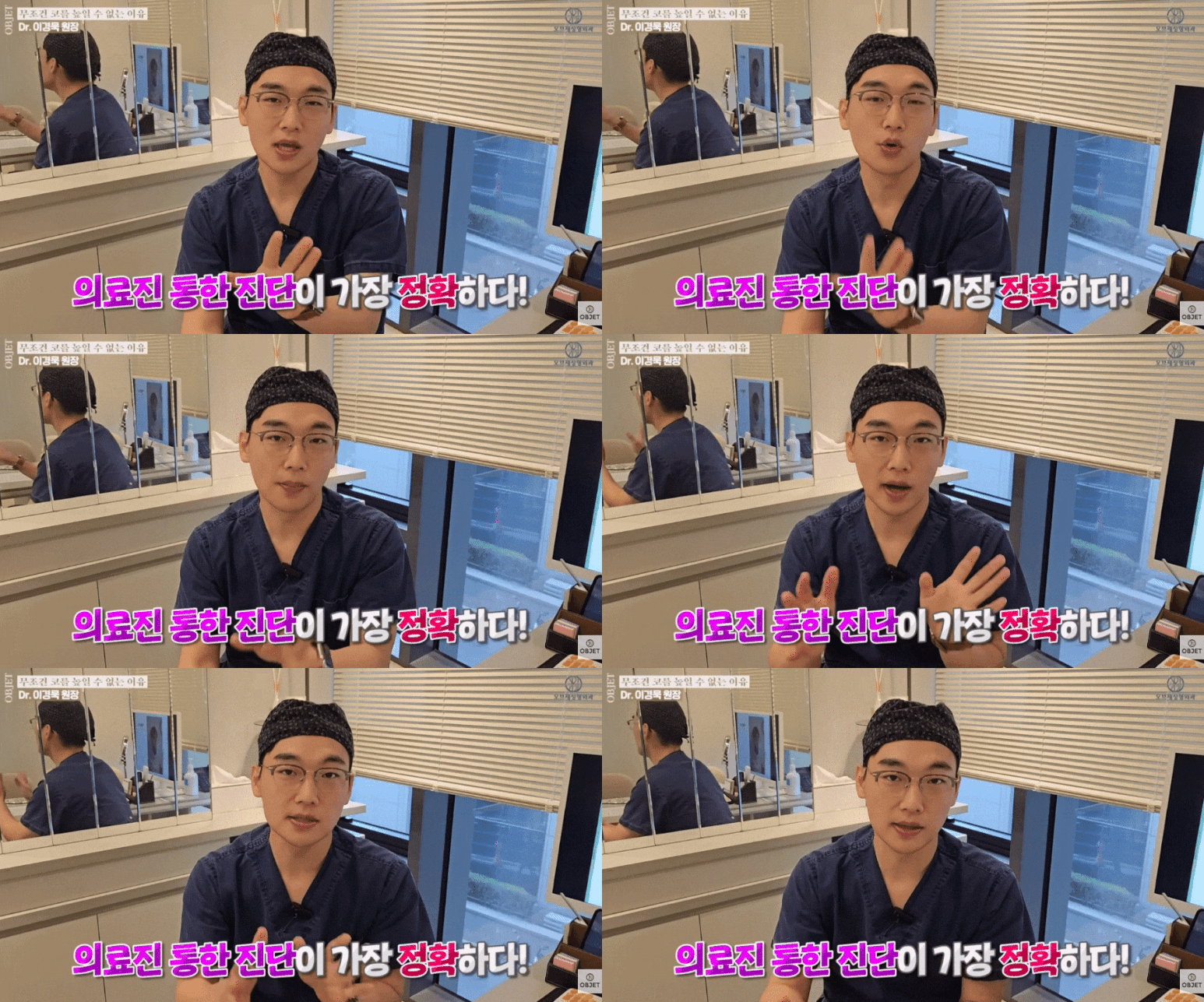
In that case, do not judge on your own;
it is advisable to consult again with the medical team that performed the surgery.
Today, we looked at why redness at the tip after nose surgery happens,
the key principle for avoiding it,
and the recovery process.
To summarize the three things worth remembering:
First, redness at the tip is not a change that occurs in everyone who has had nose surgery.
Second, the main cause is overly aggressive correction that goes beyond what the skin and tissue can handle.
Third, if the change is temporary, it usually settles naturally within 3 to 4 months.
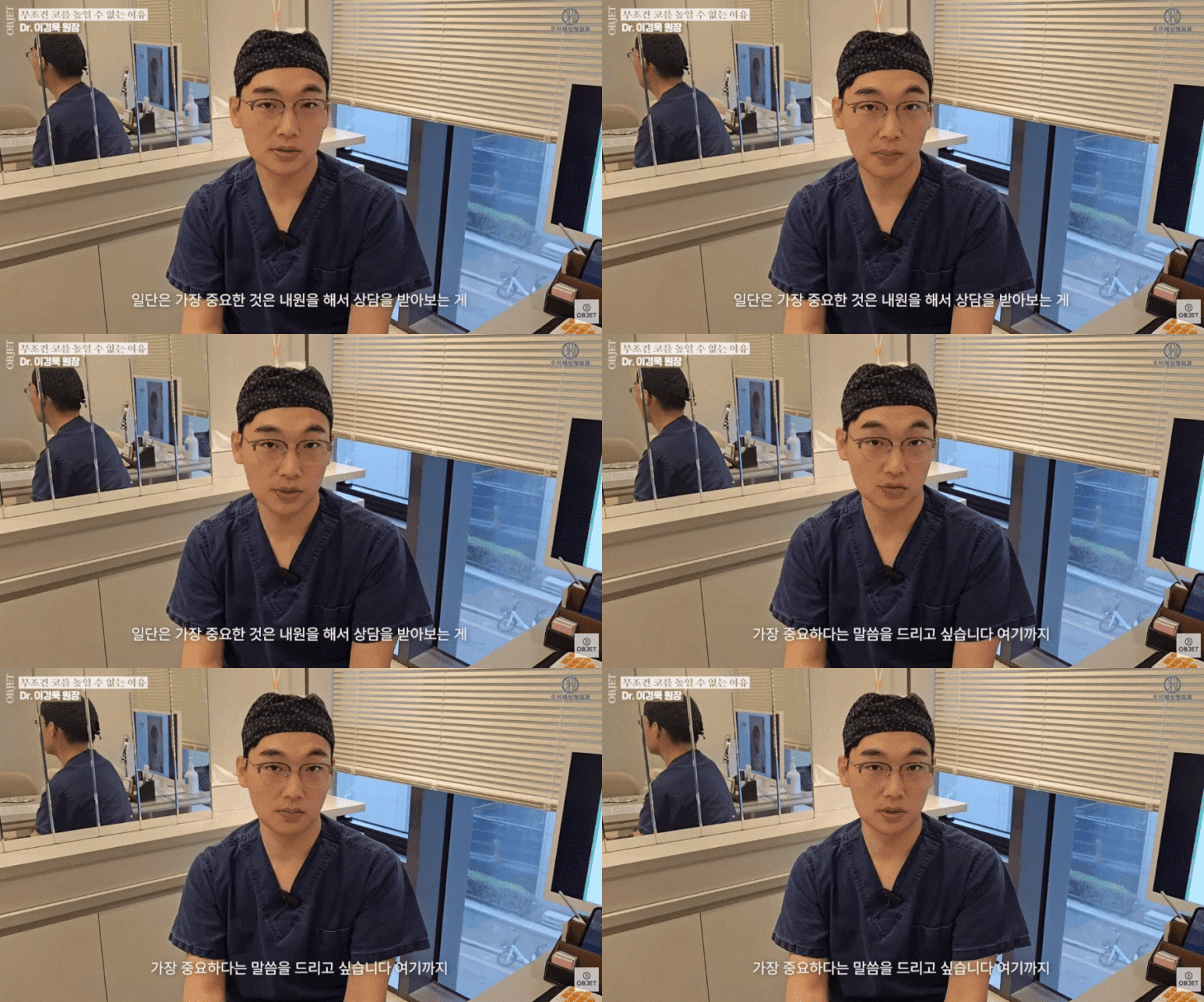
Director Lee Kyung-mook of Objet Plastic Surgery carefully examines the length of the nose, skin thickness, and the condition of the cartilage in a three-dimensional way,
and first calculates the height and angle that your tissue can naturally accept,
so the burden on the skin after recovery is reduced,
and the direction is set so that a comfortable result can be achieved.
The most important standard when reshaping the nose is not “higher and sharper,”
but “natural to my face and skin.”
This has been Objet Plastic Surgery.
Thank you.
<🔽🔽Video that may be helpful to watch together🔽🔽>
| Consultation and Inquiries for Rhinoplasty |
|---|
| Quick phone consultation |
| Kakao easy consultation |
-
This post is medical information written by Objet Plastic Surgery Clinic in compliance with the Medical Advertising Act.
-
The effects of the procedure may vary depending on the individual, and side effects may occur.
We recommend that you make your decision only after receiving sufficient consultation with the medical staff in advance.