Worried about choosing midlife eye surgery?
Director Kim Hyun-jo will set it straight!
Hello.
This is Objet Plastic Surgery.
Every time you look in the mirror,
there comes a period when you notice that your eyes are drooping
and people often say your impression has become darker.
The double eyelid line becomes faint,
and the under-eye area starts to bulge outward.
On top of that, even your eyebrows
seem to have dropped together.
Your reflection in the mirror has clearly changed,
but it can feel like there are too many possible places
to fix and too many directions to take.
Upper blepharoplasty, lower blepharoplasty,
brow lift, forehead lift,
and under-eye fat repositioning.
Just hearing the names makes them seem similar,
and the more you search, the more complicated it becomes.
That is also a characteristic of midlife eye surgery.
So today, we’re going to organize which method
fits which type of change in a way that is easy to understand.
If you read to the end,
it should help you find a direction
that matches your current eye condition.
Midlife eye surgery: the answer becomes clear
when you separate what’s “above” and “below”
Where to begin is, surprisingly, simple.
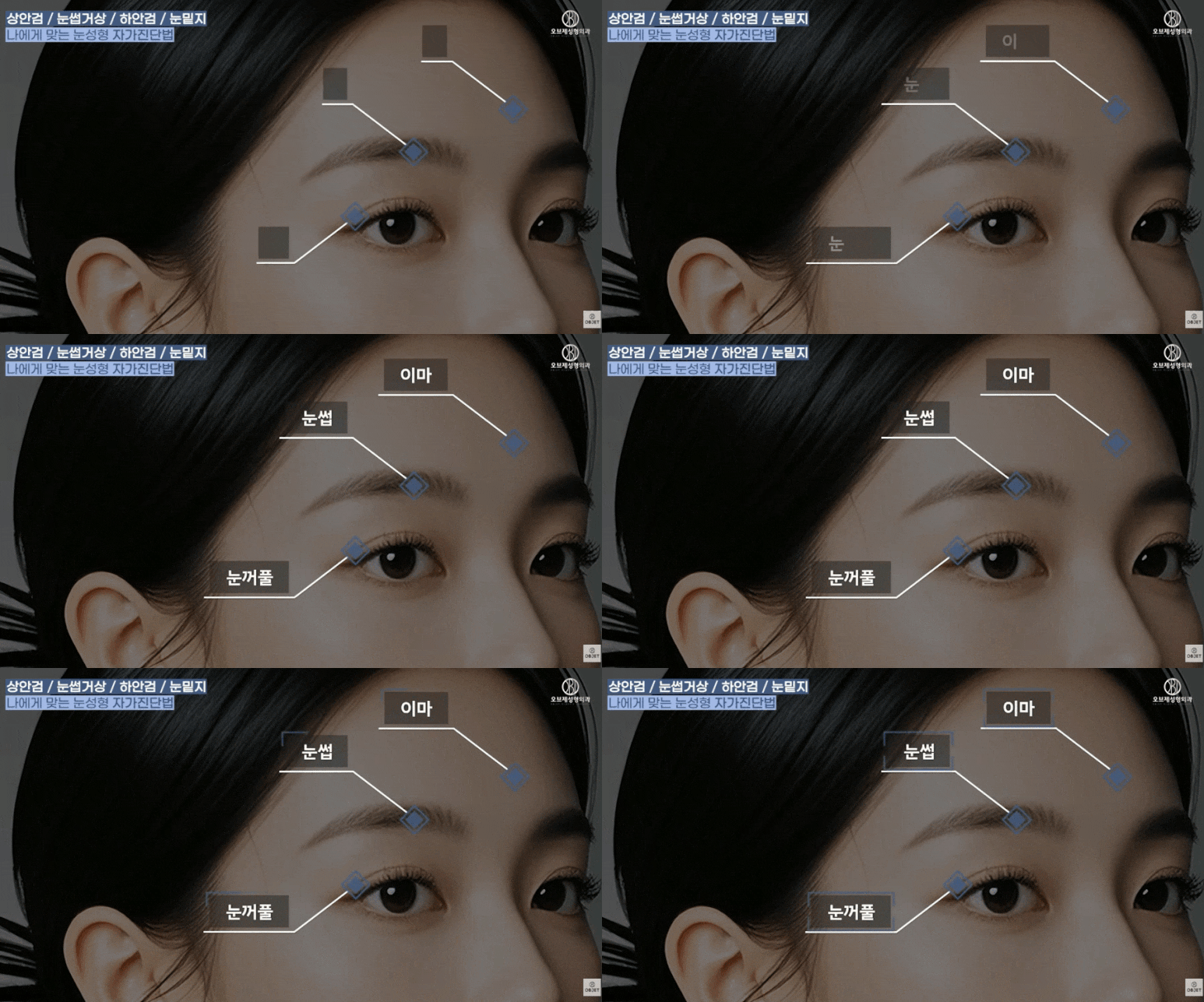
Look at the area around the eyes by dividing it
into two regions: upper and lower.
As we age, the changes around the eyes
typically flow in two main directions.
In the upper area, the double eyelid loosens
and the upper eyelid skin stretches,
making the force needed to open the eyes gradually weaker.
It is the stage when, unless you tense your forehead,
your eyes do not open easily
and people say you look sleepy.
Depending on how much the upper area has sagged
and where it is drooping, there are three possible paths.

First, a forehead lift
lifts the entire forehead upward
and adjusts the eyebrows and eyelids together.
If the eyebrows themselves have dropped below the bone
and you tend to rely heavily on your forehead muscles,
a forehead lift is often appropriate.
If the eyebrows are in the right position
but only the outer eyelid skin is sagging,
a brow lift may be the better choice.
It involves making an incision in the skin just below the eyebrow
and naturally lifting the sagging area.

Lastly, upper blepharoplasty
is the most familiar method in midlife eye surgery.
It redefines the double eyelid line
while tidying the stretched upper eyelid skin.
If needed, it can also adjust the strength of the muscle
that opens the eyes,
helping restore a clearer impression.
It is often recommended for people whose upper eye area
looks heavy and whose field of vision feels cramped.

When the under-eye area starts to change,
the path splits into two
If the upper eye area has been addressed,
it is now time for the under-eye area.
Changes in the lower eye area are a bit more three-dimensional
than those in the upper area.
Fat pushes forward,
making the under-eye area bulge,
and a deep groove forms below it.
When fine wrinkles are added as well,
the impression becomes tired
and older-looking.
The methods suited to this appearance
are largely divided into two.
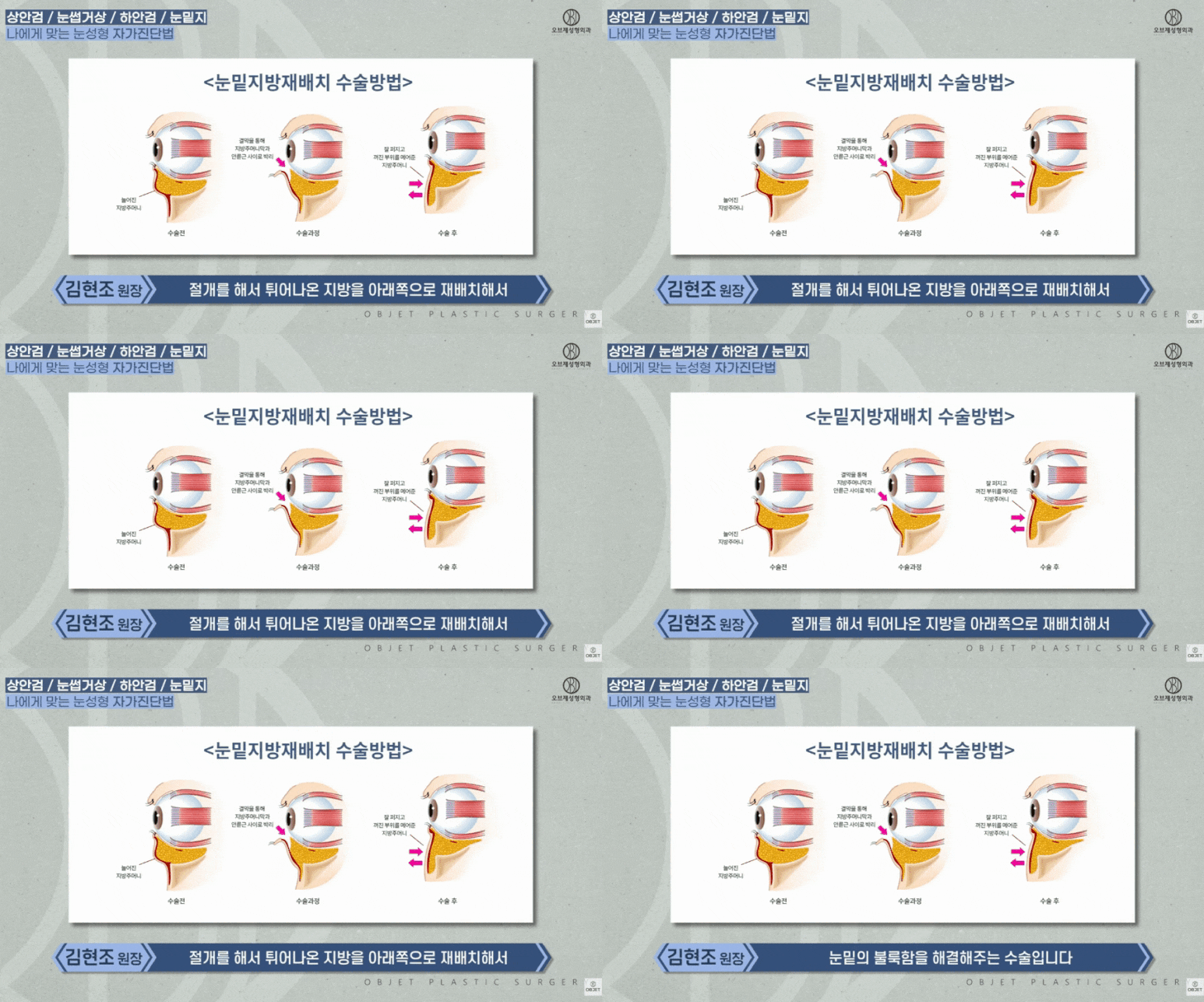
First, under-eye fat repositioning
is performed through the inner conjunctiva.
Without making an incision on the outer skin,
the protruding fat is moved to the area where the groove is deep,
flattening the uneven surface.
If the skin still has some elasticity
and the main issues are protruding fat
and a pronounced groove rather than sagging,
under-eye fat repositioning is a natural fit.
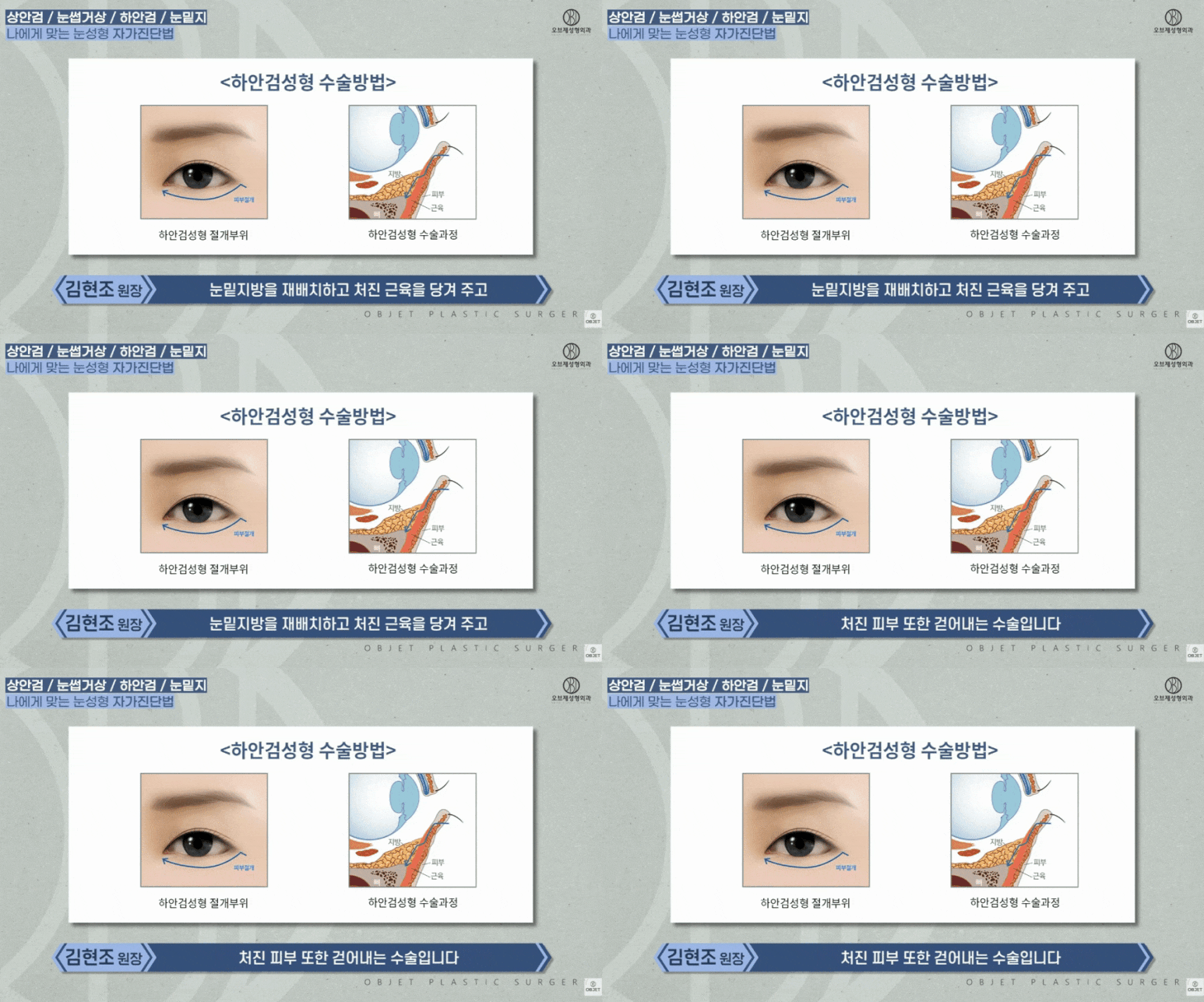
On the other hand, lower blepharoplasty
requires a more comprehensive approach.
An incision is made along the line just below the eyelashes,
and while the fat is repositioned,
the sagging muscle and stretched skin
are also addressed together.
When the skin under the eyes becomes thin and loose
and wrinkles become deeply set,
lower blepharoplasty becomes the more suitable option.
Even if the under-eye area appears similarly saggy,
the appropriate direction changes completely
depending on skin thickness, elasticity, and fat volume.
This is also why midlife eye surgery can feel difficult.
Self-diagnosis is only the starting point;
the destination is separate
If you’ve read this far,
you probably have a rough idea
of which side your eye condition is closer to.
However, self-diagnosis has clear limits
when it comes to reaching a full answer.
Even among people in their 50s,
skin thickness, fat distribution, muscle condition,
and bone structure
are all different.
The appearance in the mirror may look similar,
but when examined in the clinic,
the underlying cause is often completely different.
For example,
someone who feels their double eyelids have loosened
may actually look that way because the eyebrows have dropped,
and someone whose under-eye groove looks deep
may actually appear that way because the volume in the cheekbone area has decreased.
When the cause is different,
the appropriate method is different as well,
so please think of self-diagnosis as only the starting point.
Another important point is that
midlife eye surgery is often performed in a combined way.
If only the upper area is addressed,
the lower area may stand out more,
and if only the lower area is addressed,
the upper impression may remain unchanged,
creating an awkward balance across the face.
That is why, in the clinic,
it is necessary to look at the whole face
rather than separating the upper and lower areas,
and examine them together within the overall flow of the face.
The five methods explained today
are broadly divided into two groups.
For when the upper eye area has become heavy:
forehead lift, brow lift, and upper blepharoplasty,
and for when the under-eye area starts to change:
under-eye fat repositioning and lower blepharoplasty.
Even though the names seem similar,
the right option differs from person to person,
and because the face is such a three-dimensional area,
a decision cannot be made based on the method alone.
Director Kim Hyun-jo of Objet Plastic Surgery
carefully examines details such as eyebrow position,
the direction of forehead muscle movement,
eyelid elasticity, under-eye skin thickness and fat volume,
and cheekbone volume
before determining the direction of treatment.
Even if the drooping looks similar,
the approach must change when the cause is different,
so the first step in the consultation process
is to accurately identify the cause.
If you are now deep in 고민 in front of the mirror,
after narrowing down the direction through self-diagnosis,
we recommend confirming the path that suits your eyes
through an actual consultation.
This has been Objet Plastic Surgery.
Thank you.
<🔽🔽A helpful video to watch together🔽🔽>
| Consultation and inquiries for midlife eye surgery |
|---|
| Quick phone consultation |
| Convenient Kakao consultation |
-
This post is medical information written by Objet Plastic Surgery Clinic in compliance with the Medical Advertisement Act.
-
Treatment effects may vary by individual, and side effects may occur.
We recommend that you have sufficient consultation with medical staff in advance before deciding on any procedure.