Three Eyelid Drooping Surgeries
Explained by Director Kim Hyun-jo!
Hello.
This is 오브제성형외과.
As you get older, there comes a time when
your eyes start to look a little heavier
every time you look in the mirror,
and you become concerned that
you look somewhat sleepy.
Eyes that once opened easily
may begin to feel
a little heavier
at some point,
and the upper eyelids may
slightly cover the upper part of your vision,
creating a different appearance
from before.
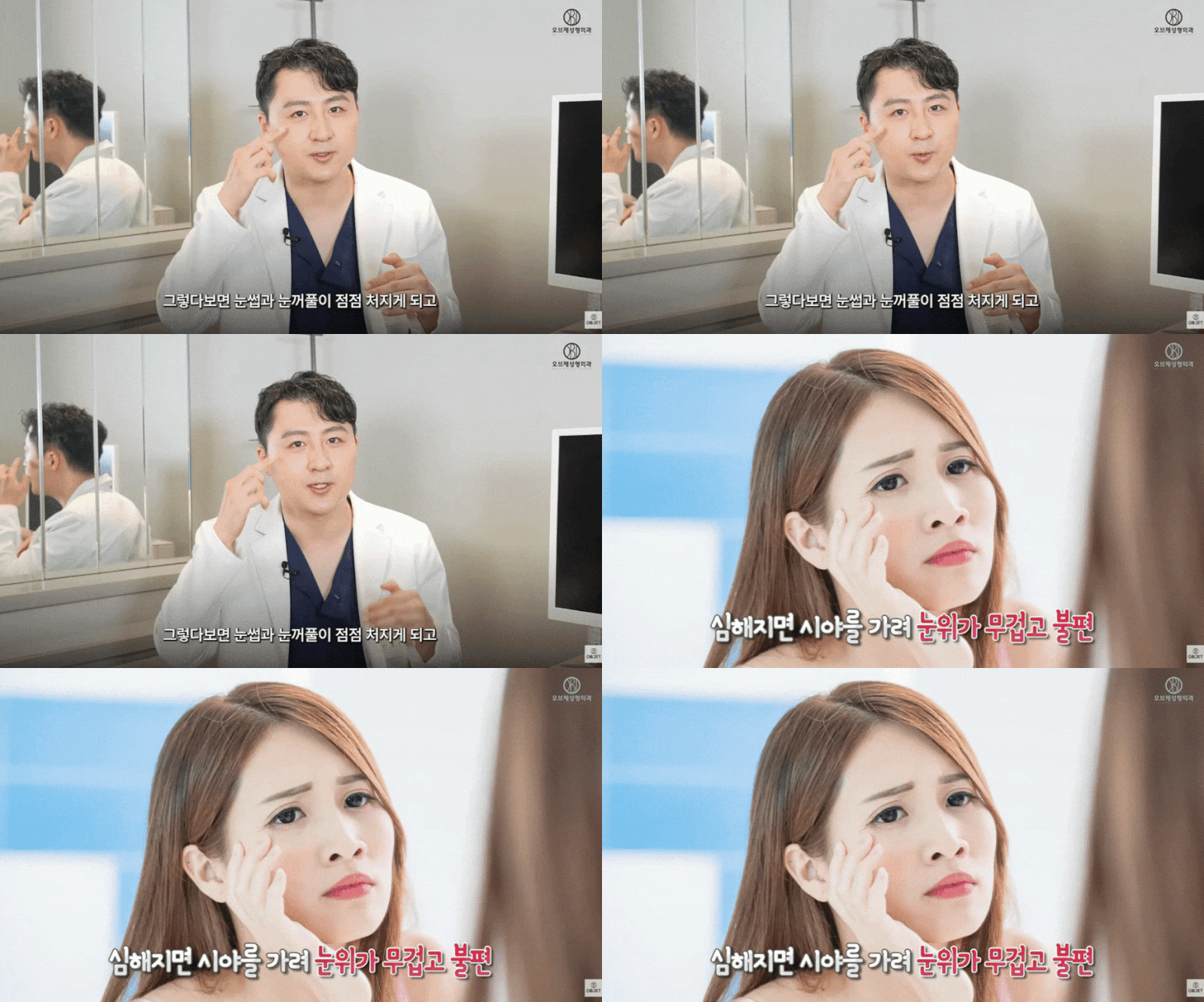
Especially after your 40s,
many people naturally develop
the habit of using their forehead
to open their eyes more clearly
or raising their eyebrows.
When these changes
lead to discomfort in daily life,
it can be helpful to take a look
at what improvement options are available.
Today, I will explain in detail
the three eyelid drooping surgeries
that are commonly considered
when the eyelids begin to sag.
I will also explain
which areas each of the three methods addresses
and who each may be suitable for,
so if you read to the end,
you may be able to get an idea
of which direction may suit your condition.
If your eyes are gradually looking heavier,
check out “upper blepharoplasty”
The first of the three eyelid drooping surgeries
to consider is upper blepharoplasty.
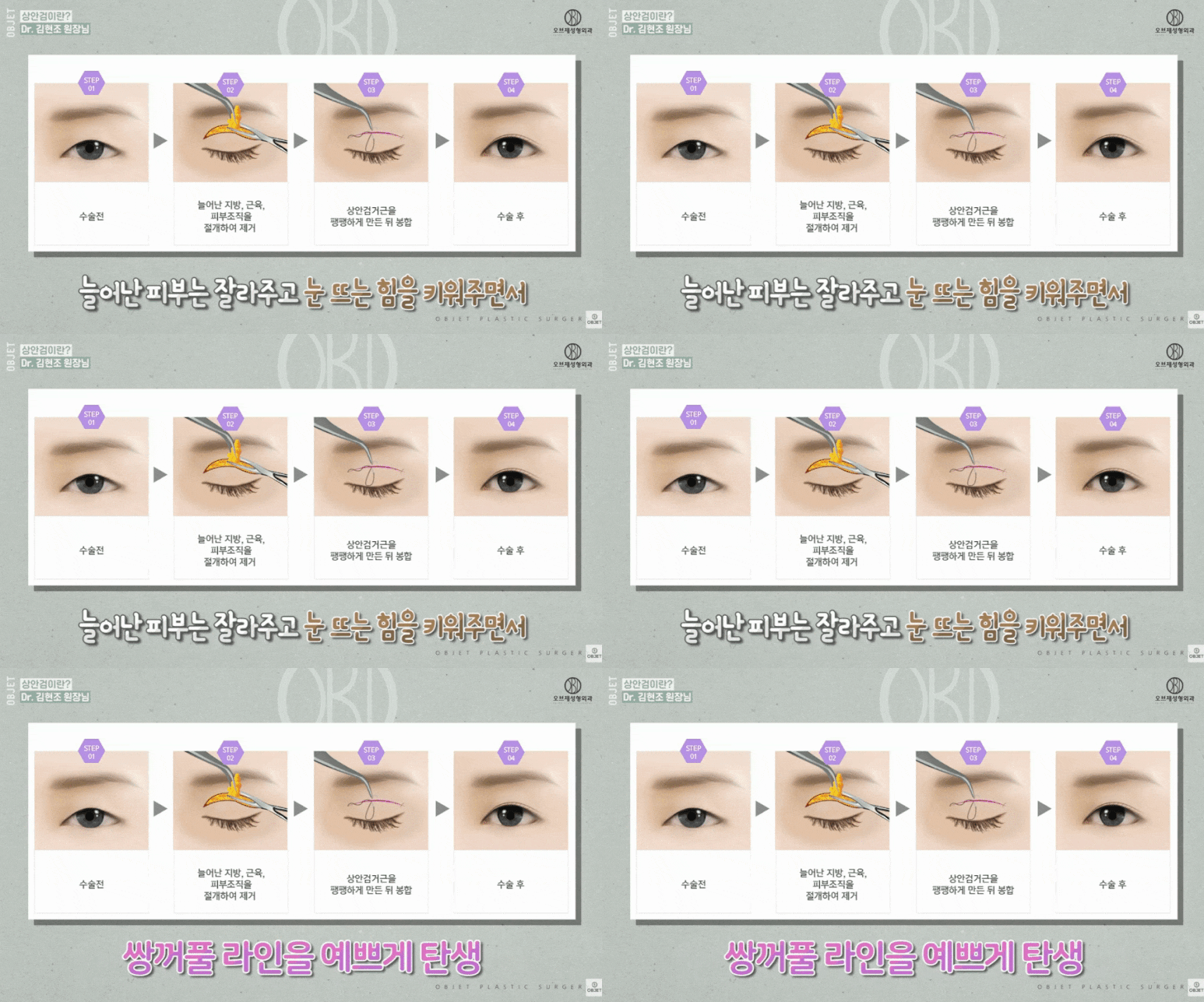
Upper blepharoplasty is a surgery
that addresses both the loose skin
of the upper eyelids after middle age
and weakened eye-opening strength.
Because it is performed on the upper eyelids,
it is easy to confuse it with double-eyelid surgery.
However, while double-eyelid surgery
focuses on creating a new eyelid crease,
upper blepharoplasty
focuses on tightening loose skin
caused by age-related changes
and restoring a lighter-looking eye area.
As we age,
the skin of the upper eyelids
gradually becomes loose.
As this loose skin descends,
it may cover the existing double-eyelid crease,
and in more advanced cases,
it may reach the area above the pupil
and narrow the field of vision.
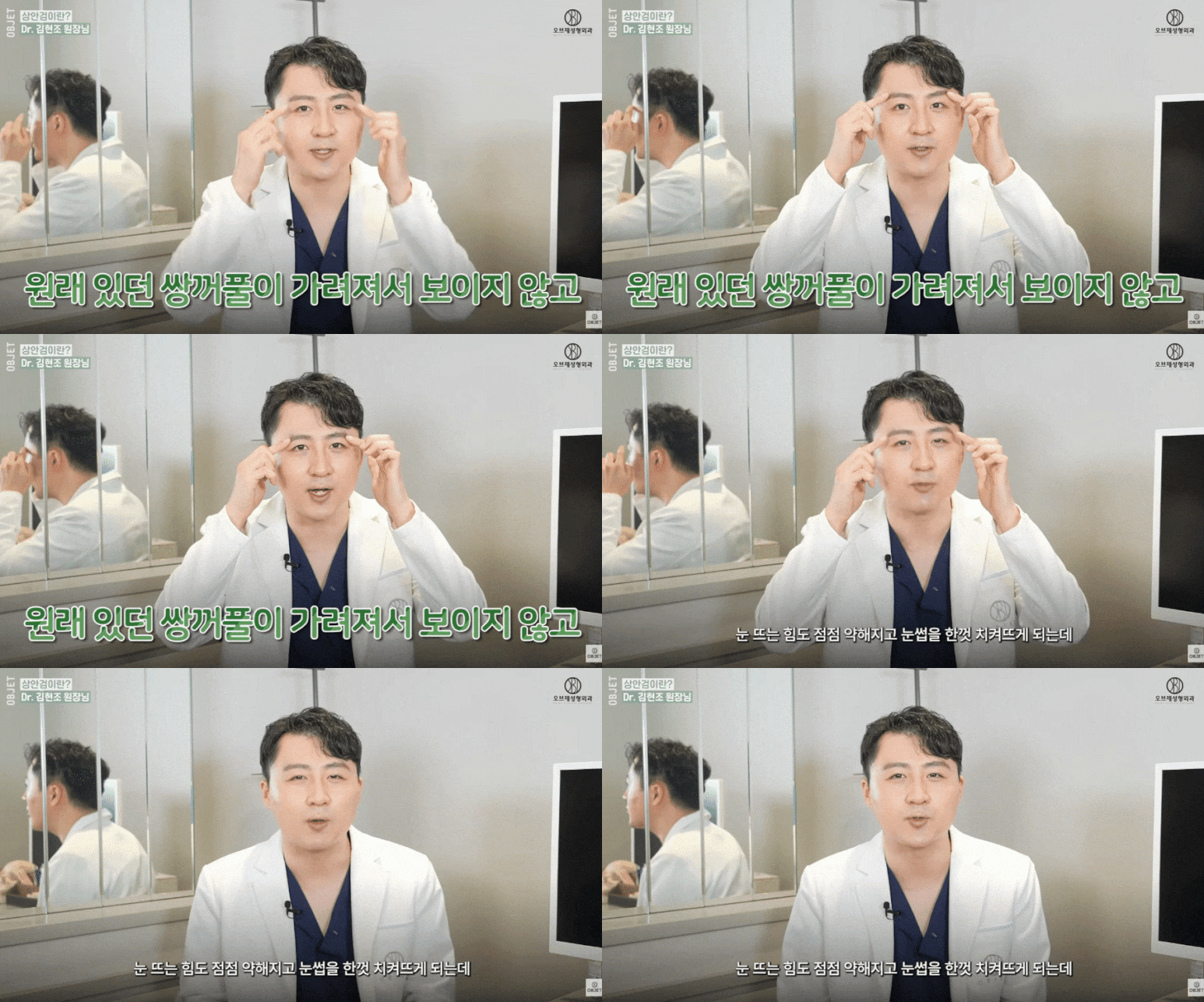
If the strength of the levator muscle,
which helps open the eyes,
also weakens,
you may unconsciously recruit your forehead muscles,
raising your eyebrows to open your eyes.
Upper blepharoplasty
helps interrupt this pattern.
The appropriate amount of loose upper-eyelid skin
is removed,
and the weakened levator muscle is supported
so that the eyes can open more comfortably
and easily.
A new double-eyelid crease
can also be created at the same time,
so an expression that previously looked heavy
may become more defined.
This approach can bring functional changes as well,
such as a clearer field of vision
and more comfortable eyes.
If you want to keep your double-eyelid crease as it is,
“brow lift”
The second eyelid drooping surgery
to consider is a brow lift.
This approach may be suitable
when the outer part of the eyebrow
has descended more than the eyelid itself.
With age,
the outer part of the eyebrow
tends to descend more quickly
than the inner part.
When the outer eyebrow descends,
the face can appear more downcast
or noticeably tired.
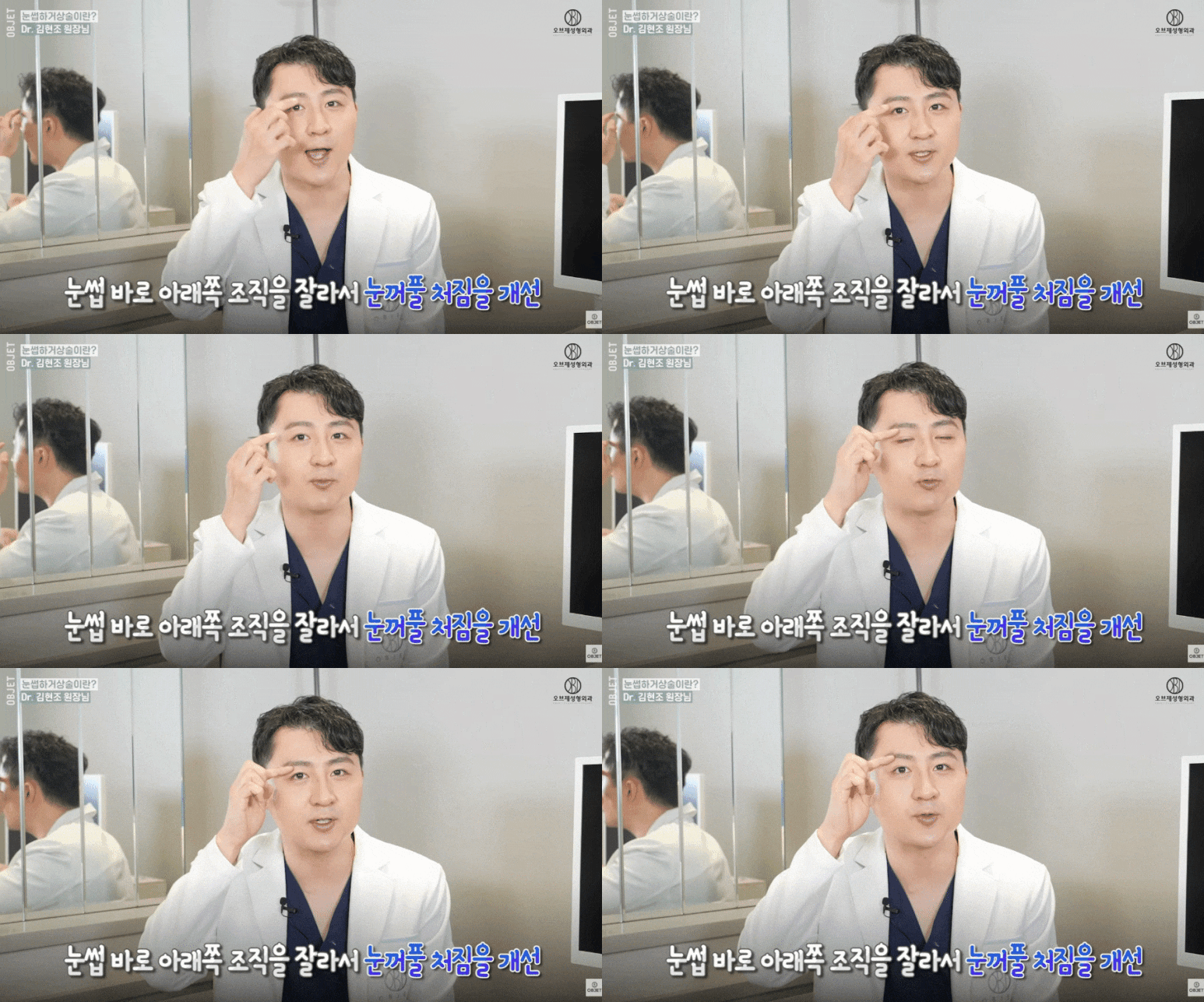
A brow lift is performed
by removing a certain amount of skin
and underlying tissue directly below the eyebrow,
then slightly raising and securing
the eyebrow in position.
The key difference from upper blepharoplasty
is that it does not create a new double-eyelid crease.
Instead, it preserves your original eye shape
and overall appearance
while reducing the heaviness
of the eyebrow and the area above it.
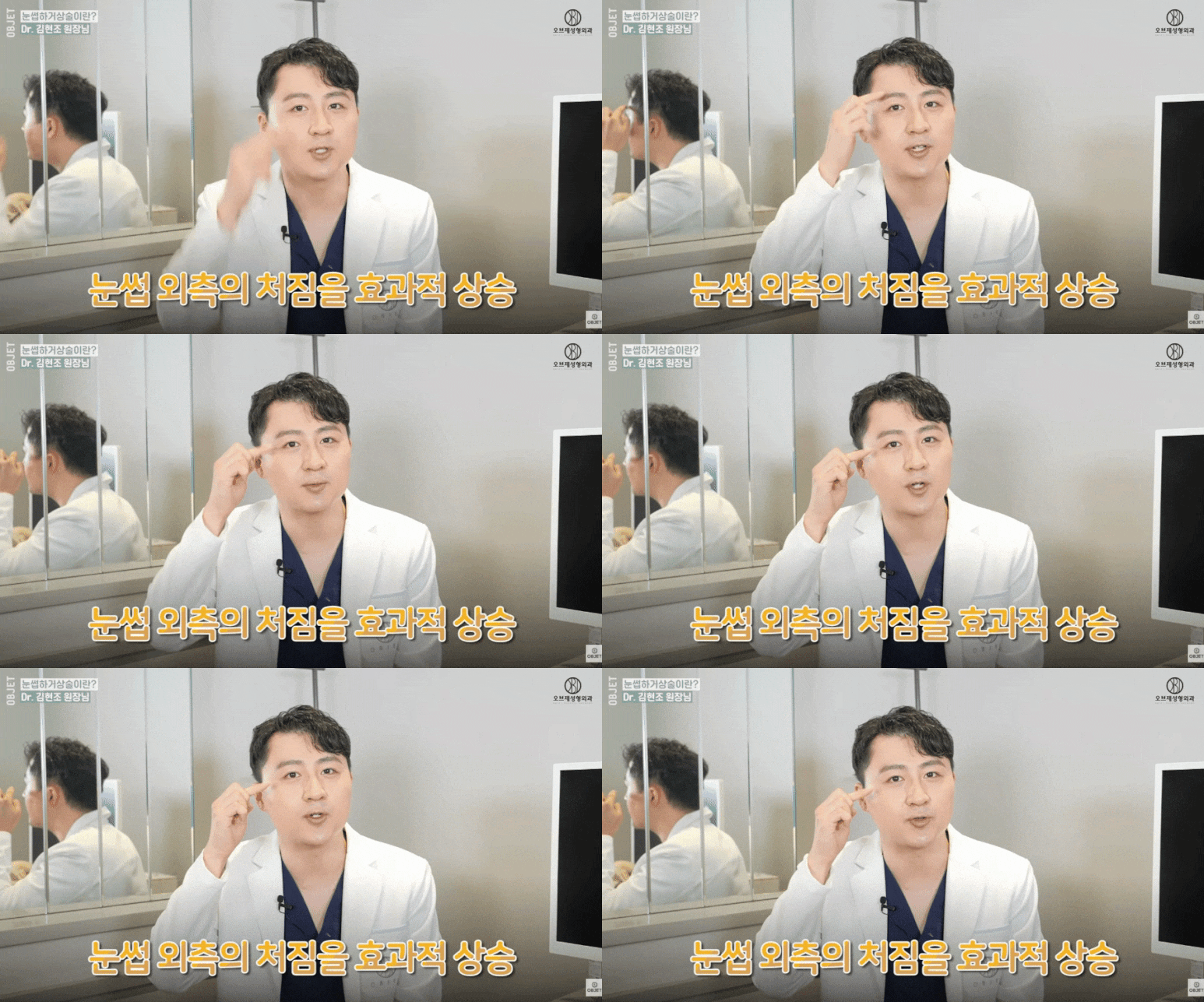
For this reason, it tends to suit people
who like the shape of their eyes
and do not want to significantly change their appearance,
as well as middle-aged people
who prefer a natural-looking change.
Because the incision follows the line
just below the eyebrow,
once healing progresses,
it becomes neatly concealed
by the eyebrow hairs
and is not very noticeable.
If the eyebrows and forehead have both descended,
“forehead lift”
The final method to consider
is a forehead lift.
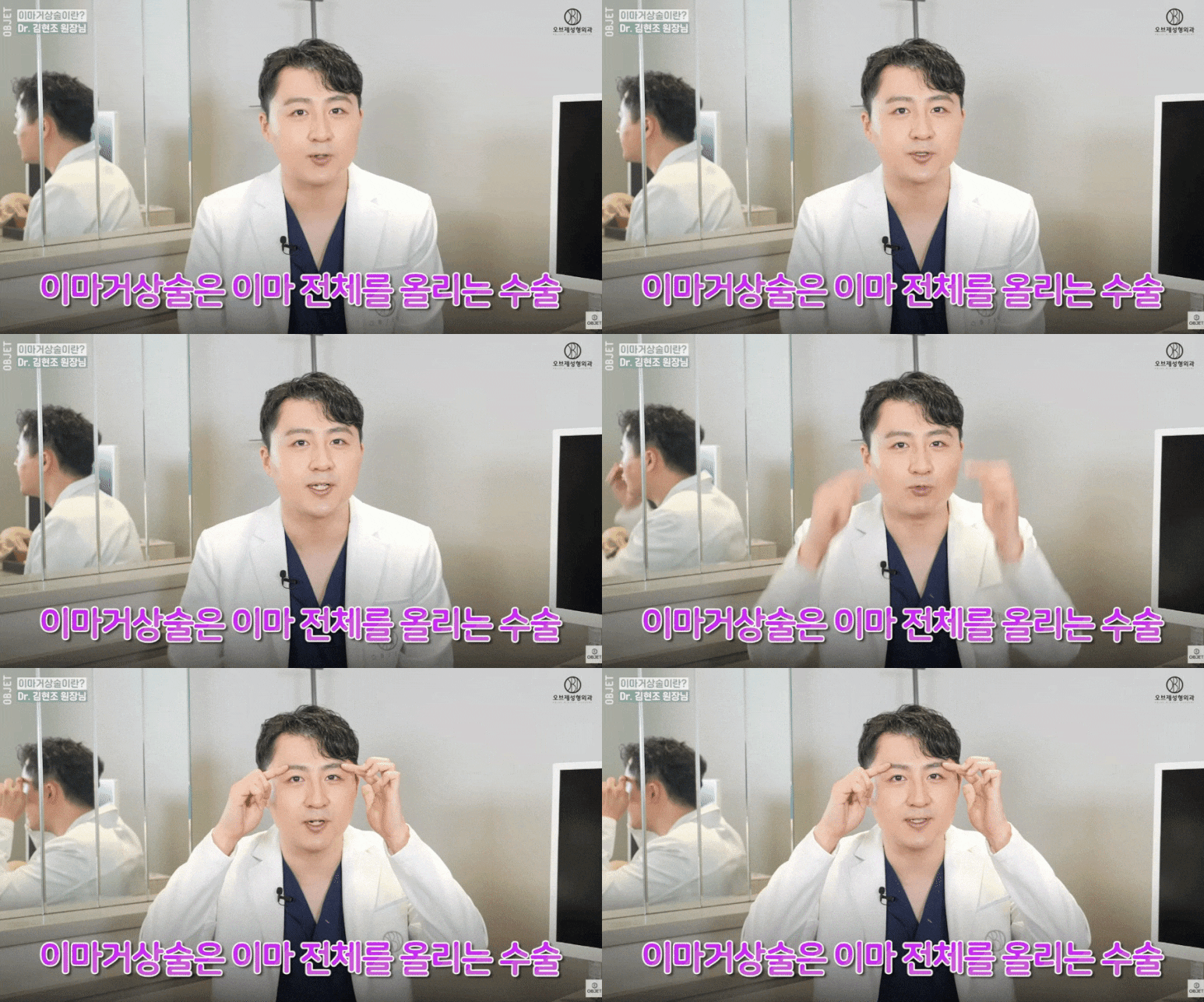
This method may be considered
when the eyebrows and forehead
have descended significantly together,
to the extent that upper blepharoplasty
and a brow lift alone
would not produce sufficient change.
Simply put, it involves lifting
the entire eyebrow and forehead area upward
and repositioning it.
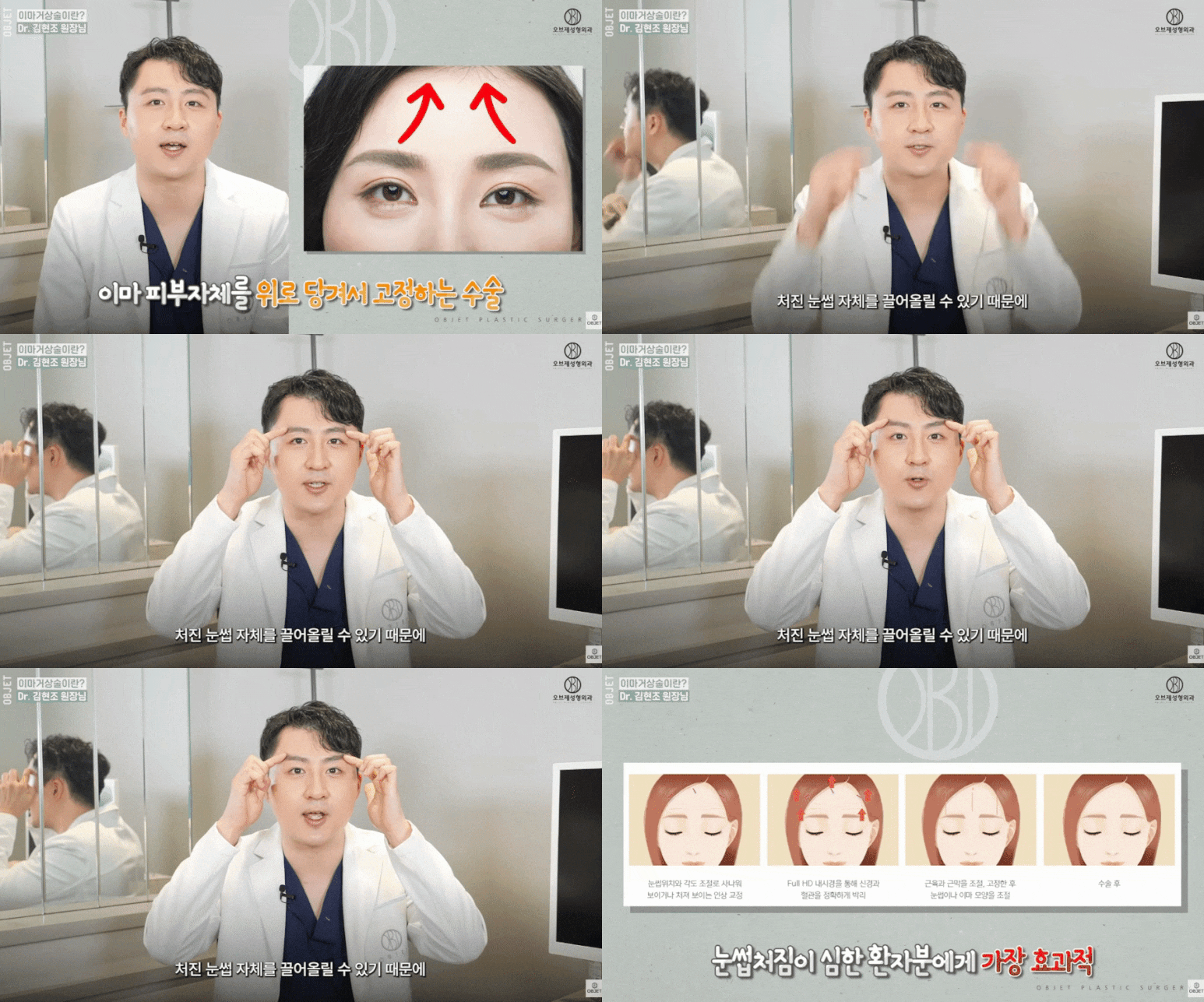
If the eyebrows have descended considerably
and are also affecting the upper eyelids,
or if deep wrinkles have developed
on the forehead and between the eyebrows,
addressing only the upper eyelids
may not sufficiently reduce
the heaviness of the overall appearance.
In such cases,
lifting and reshaping the entire forehead
allows the eyebrows and upper eyelids
that had been resting below it
to naturally follow upward as well.
A forehead lift is performed
by making only minimal incisions
within the scalp,
then using endoscopic equipment
to lift the forehead and eyebrow tissues
from within.
Because the incisions are located
within the hair-bearing area,
once healing progresses,
they are generally barely visible
from the outside.
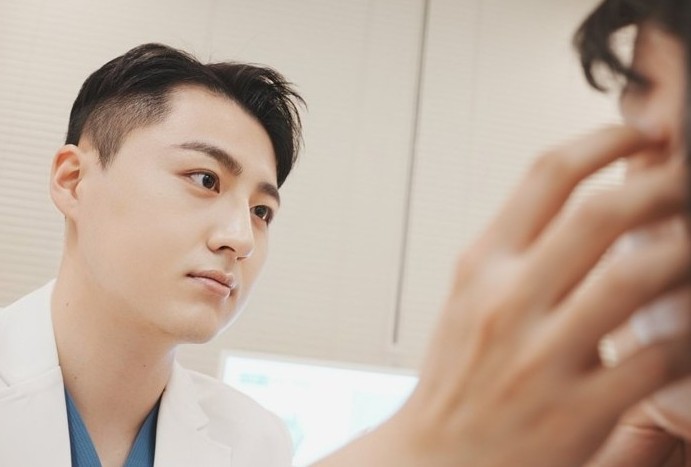
The most noticeable change
is that the eyebrows themselves
are raised,
which also reduces the heaviness
that had been resting on the upper eyelids.
The upper area that was obstructing the field of vision
is refined,
and the heavy-looking eyes
become more defined,
while the horizontal forehead wrinkles
may also be improved.
Today, we looked at
the three eyelid drooping surgeries
one by one.
If loose upper-eyelid skin
is the main cause,
upper blepharoplasty may be suitable.
If you want to refine
the descended outer eyebrow
while preserving your original eye shape,
a brow lift may be suitable.
If the eyebrows and entire forehead
have descended together,
creating a heavy appearance,
a forehead lift may be suitable.
Because the three methods
address different areas
and use different approaches,
the suitable eyelid drooping surgery
may vary depending on
where the heaviness in your appearance
began.
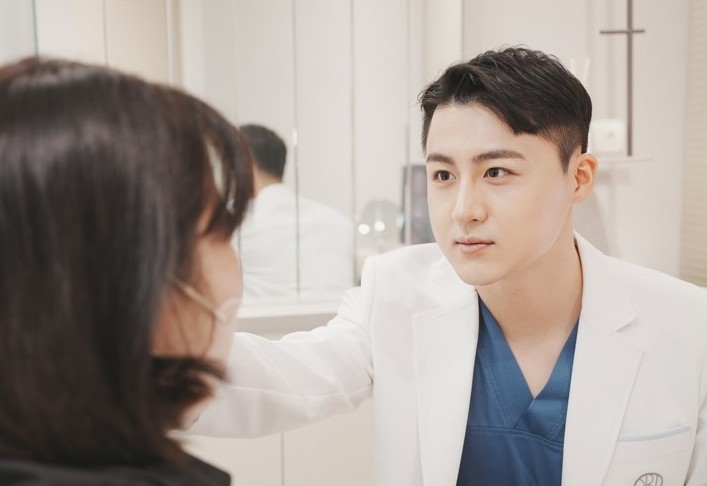
Director Kim Hyun-jo of
오브제성형외과
has spent many years
focusing in depth on
middle-aged eye surgery
and forehead lifts.
After examining the patient’s eyebrow position,
the degree of looseness in the upper eyelids,
and even forehead movement,
he continues to provide consultations
that carefully identify
which approach best suits each person’s condition.
Before deciding on surgery,
we recommend taking time
to carefully consider
which pattern most closely resembles
your own condition.
This has been 오브제성형외과.
Thank you.
<🔽🔽Recommended video to watch as well🔽🔽>
| Consultation and inquiries about middle-aged eye surgery |
|---|
| Quick phone consultation |
| Easy Kakao consultation |
-
This post contains medical information prepared by 오브제성형외과의원 in compliance with the Medical Advertising Act.
-
The effects of the procedure may vary from person to person, and side effects may occur.
We recommend that you decide whether to undergo the procedure only after first having a thorough consultation with a medical professional.