Eyelid Fat Grafting: Fat Retention Rate and Results?
Dr. Kim Hyun-jo’s <Q&A>

Hello.
This is Objet Plastic Surgery.
Among those looking into eyelid fat grafting,
some repeatedly come across the term “retention rate”
but are unsure of its exact meaning,
while others may want to picture more specifically
how their appearance might change
after the procedure.
Even after searching,
it can often be difficult to find a clear answer
because the standards vary depending on the source.
So today,
we have put together two questions
that Objet frequently receives
in a Q&A format
and will address them one by one.
After reading this,
you should have a clearer overall understanding
of the questions you may currently have.
Retention rate? Results?
Here are the answers
Let’s begin by looking at the term “retention.”
Retention refers to the process in which
transplanted fat receives blood vessels
at its new location
and survives as if it were part of your own tissue.

Not 100% of the transplanted fat
remains exactly as it was.
Some of it is gradually and gently absorbed over time,
while the remaining amount settles as “retained fat.”
Because the retention rate varies from person to person,
it is difficult to give an exact figure.
However, one thing is clear:
this rate can vary significantly depending on how the fat is placed.
If too much fat is concentrated in one area,
blood vessels may not reach the central portion.
Only the outer part receives nutrients,
while the fat inside does not receive sufficient blood flow
and may not settle evenly.
That is why, in thin and delicate areas such as the eyelids,
the fat should be spread evenly in multiple thin layers.
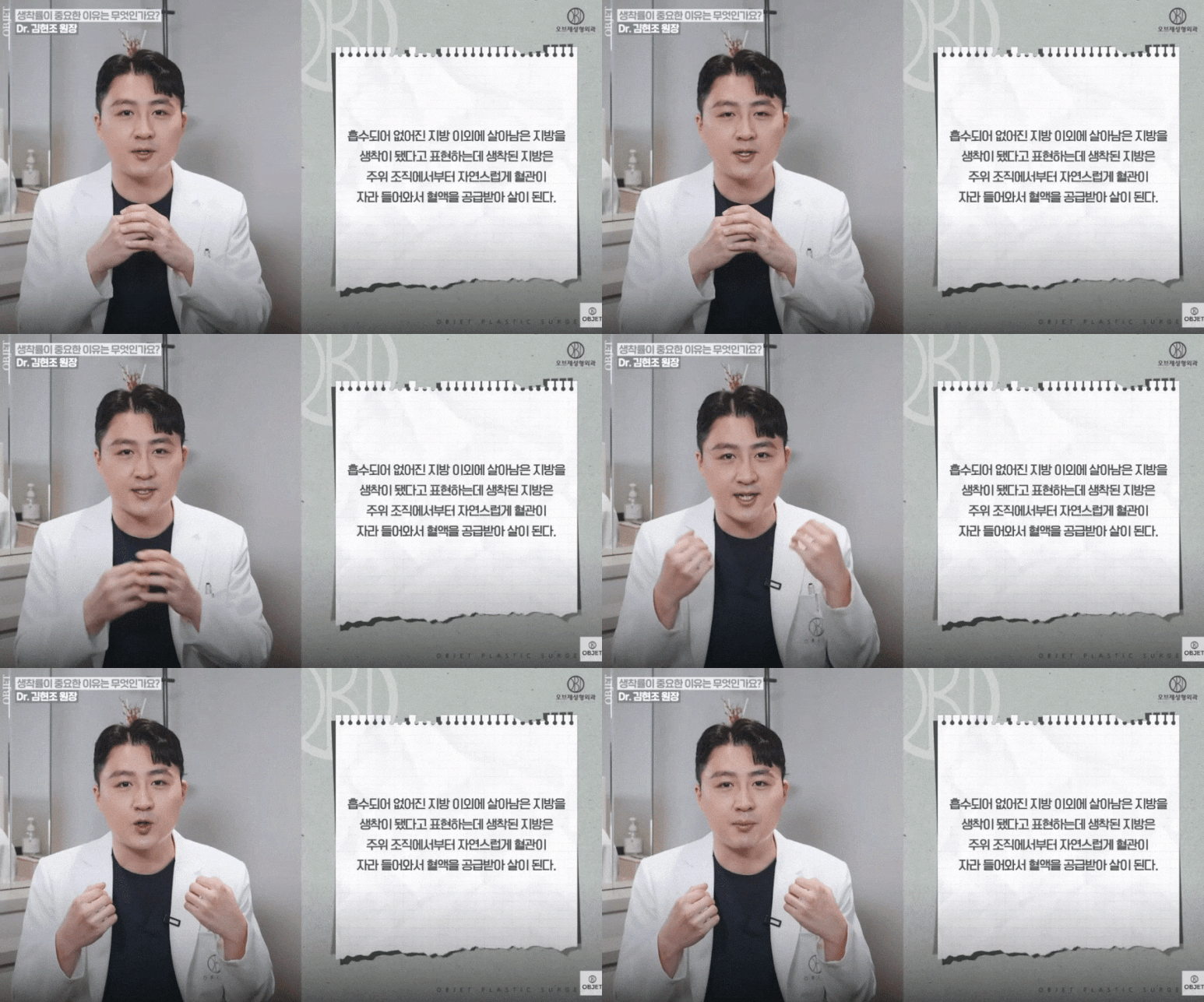
When placed this way,
blood vessels can grow in from the surrounding tissue
to each individual fat particle,
which may help the retained fat remain in place
for a longer period of time.
Then what might the results look like?
The most noticeable early effect of eyelid fat grafting
is a change in overall appearance.
As we age, facial subcutaneous fat decreases
and tissue descends.
When volume is lost, particularly above the eyes,
the upper eyelids can appear sunken,
causing a tired or gloomy appearance
to become more pronounced.
When autologous fat is used to fill the hollow area,
it gently restores the lost volume,
so the facial features can appear more defined.

The fact that your own fat is used
also has a significant impact on achieving a natural appearance.
Because it is tissue taken from your own body,
rather than an external implant,
it generally causes less of a foreign-body sensation
and tends to move relatively naturally
along with your facial expressions.
Because of this,
one of the most common comments after the procedure is
that the person looks “well rested.”
Fat should be placed
“well,” not simply “in large amounts”
At this point,
you may have the following thought:
“Then wouldn’t it make sense to put in a generous amount from the beginning,
so that even after some of it is absorbed,
an appropriate amount would remain?”
It may sound reasonable at first,
but with eyelid fat grafting,
it often has the opposite effect.

As mentioned earlier,
when a large amount is concentrated in one area at once,
the tissue in the center may not receive sufficient blood vessels.
Some of the fat that does not survive
may be gently absorbed,
but if a large amount has been clumped together,
it may not settle evenly
and the surface may appear uneven.
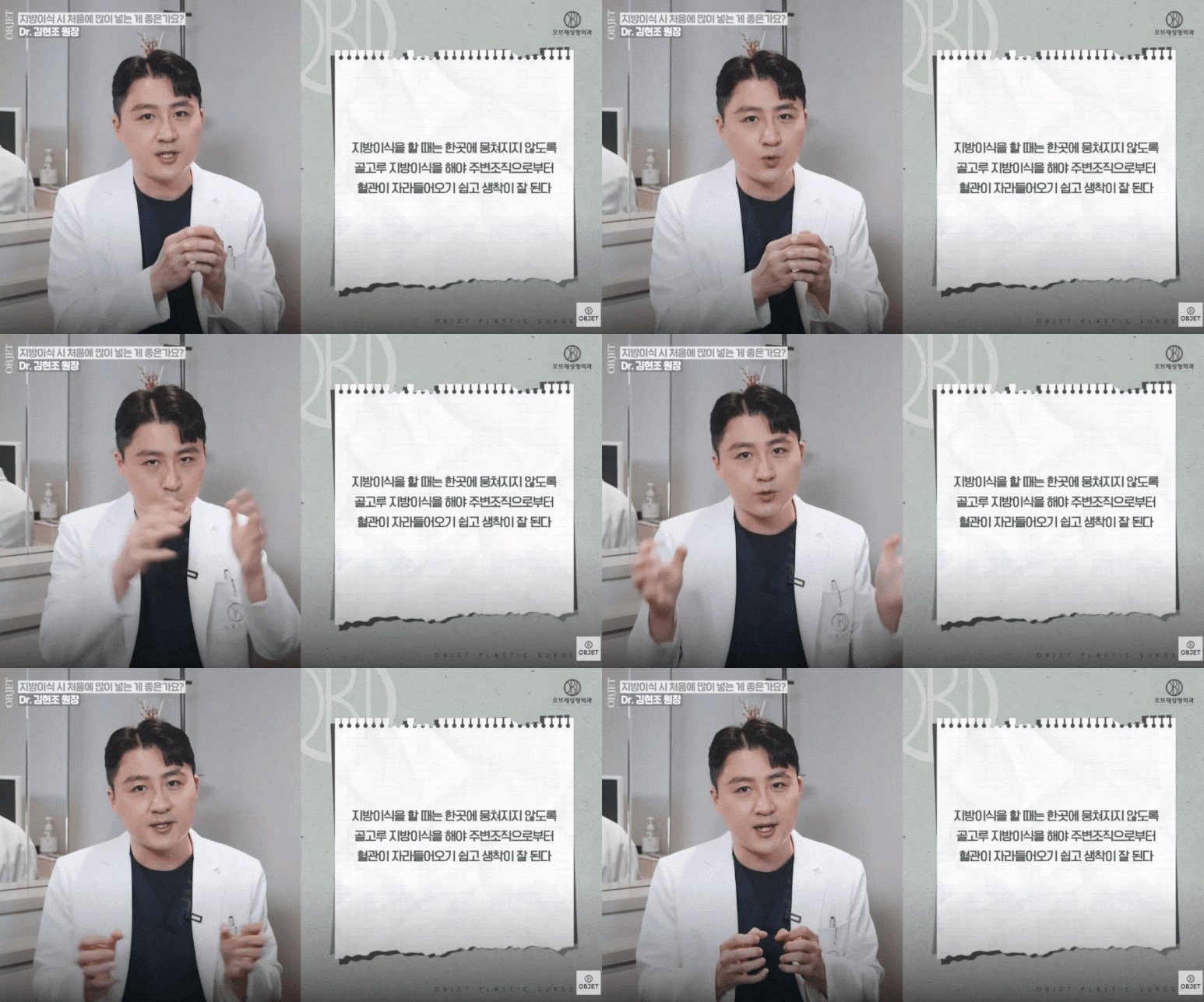
The eyelid skin is particularly among the thinnest areas of the face.
Because the skin is so thin,
even small irregularities underneath
can easily show through on the surface.
For this reason, at Objet,
rather than filling the area as much as possible in a single session,
we first prioritize placing the fat in thin layers
only to the extent that the area is naturally restored.
After observing how much has been absorbed
and whether both sides appear balanced,
we may reinforce the area in a second procedure if necessary,
adding only the amount that is lacking.
From the procedure through recovery!
Here is what to expect!
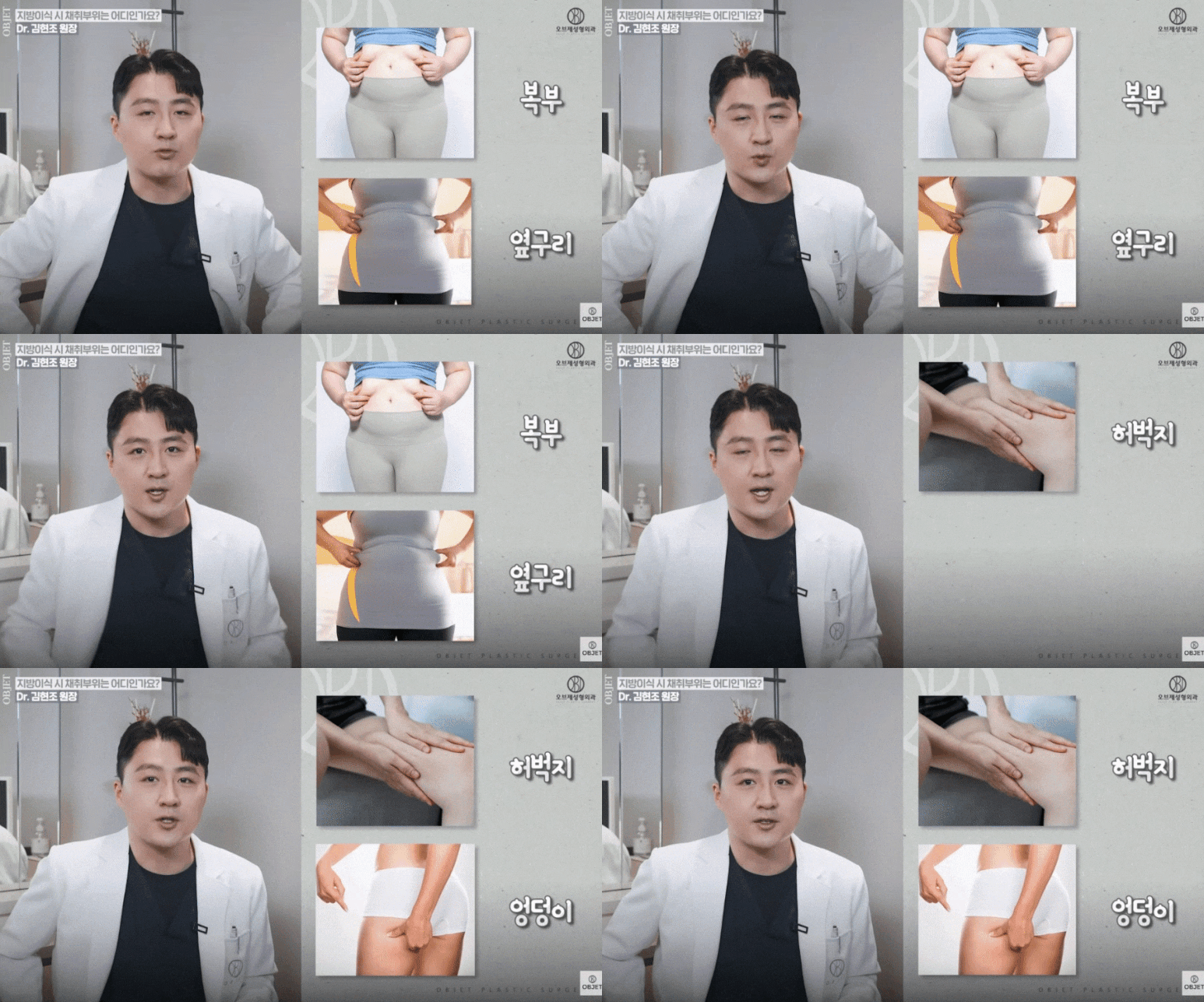
The fat is harvested from areas with sufficient volume,
such as the abdomen, flanks, or inner thighs.
Because only a small amount is harvested
from a location selected according to your body type
with minimal discomfort,
most people do not need to wear compression garments separately.
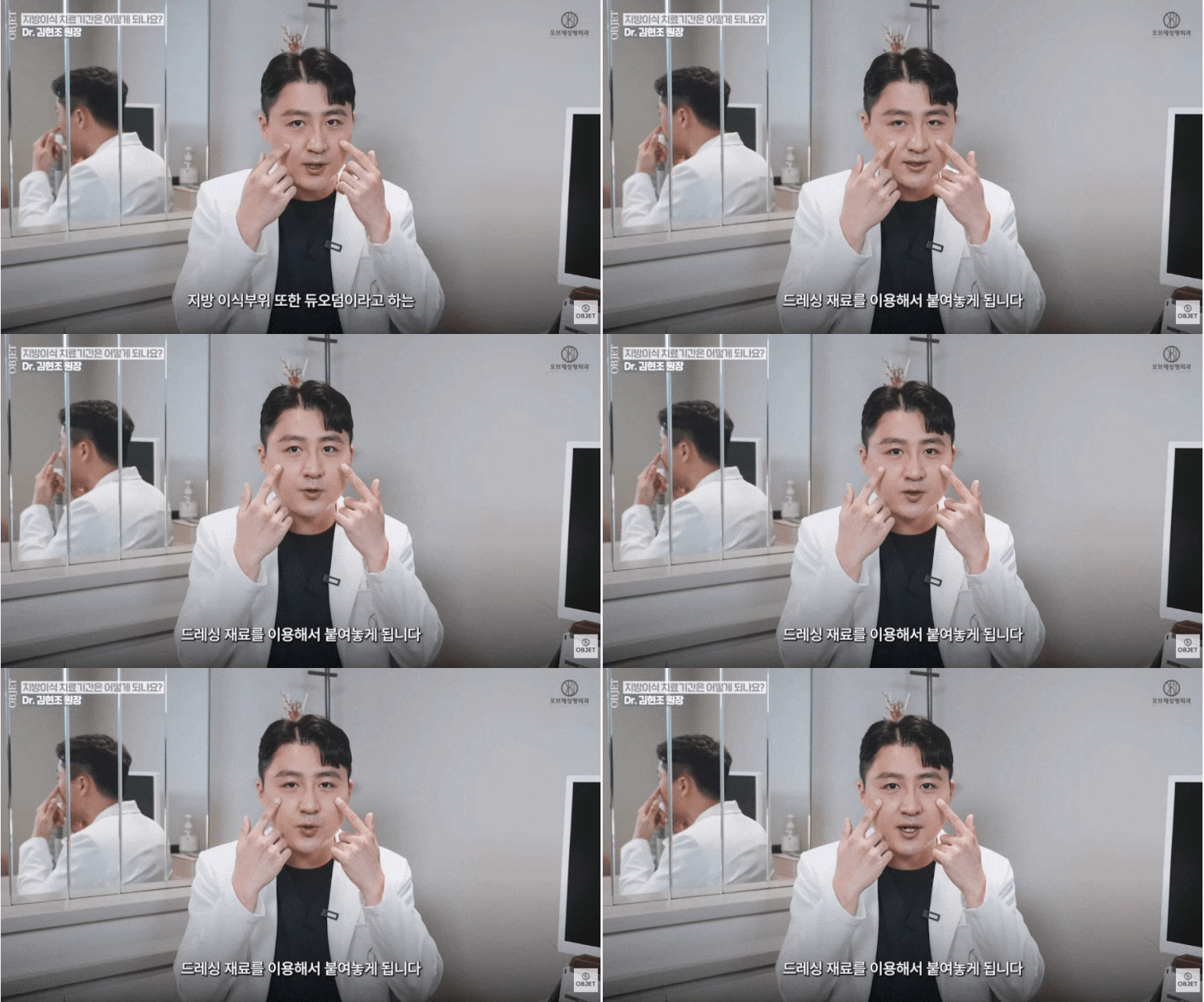
The donor site is closed with dissolvable sutures
and finished with taping,
while the grafted area is simply covered thinly
with a DuoDERM dressing.

Anesthesia is administered while you are comfortably asleep,
like during a sedated upper endoscopy.
Local anesthesia is administered at the same time while you sleep,
so there is generally little discomfort during the procedure.
Because waking up from sedation is usually quick,
many people can return home the same day.
Some swelling and bruising may occur
after the fat is placed layer by layer
using a fine needle.
However, because the procedure is performed through tiny passages
without an incision,
severe swelling or bruising is uncommon.
In most cases, it settles within one to two weeks
to the point that daily activities are not significantly affected.

During this period,
be careful not to press firmly on or rub the eye area,
and it is also advisable to temporarily avoid sleeping
in a position that puts pressure on your side of the face
so that the fat can stabilize in place.
Today, we have focused on frequently asked questions
about the retention rate and results of eyelid fat grafting,
as well as what to expect during recovery.

The proportion of transplanted fat that settles
varies depending on how it is placed,
and the results depend more on
“how naturally it settles”
than on “how much volume is added.”
Dr. Kim Hyun-jo of Objet Plastic Surgery takes into account
that eyelid skin is the thinnest skin on the face
and that even small irregularities underneath can show through.
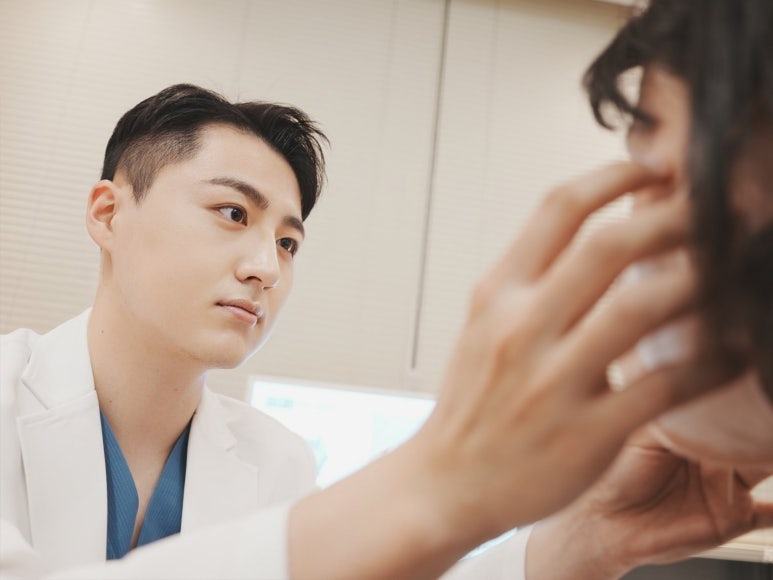
Rather than adding a large amount at once,
the fat is placed in multiple thin layers
so that blood vessels can grow into it.
Instead of overfilling the area from the beginning,
the amount that has been absorbed over time is assessed first,
and only the amount needed is added in a second procedure
to ensure that both sides look balanced.
If the area above your eyes looks hollow in the mirror,
or your appearance seems tired or gloomy,
we recommend beginning with a consultation
to calmly assess how much volume would be appropriate
for the condition of your eyelids.
This has been Objet Plastic Surgery.
Thank you.
<🔽🔽Recommended video to watch together🔽🔽>
| Eye surgery consultations and inquiries |
|---|
| Telephone consultation |
| KakaoTalk consultation |
-
This post is medical information prepared by Objet Plastic Surgery Clinic in compliance with the Medical Advertising Act.
-
The results of the procedure may vary from person to person, and side effects may occur.
We recommend that you make a decision about the procedure only after having a thorough consultation with a medical professional in advance.