It’s Because ‘This’ Was Overlooked
Hello.
This is Objet Plastic Surgery.
When the under-eye area appears puffy and you often hear that you look tired, you naturally start looking into under-eye fat repositioning.
However, when you search for information, you frequently come across comments such as:
“After surgery, my under-eye area actually looks hollow,”
“I ended up having revision surgery.”
You began looking into the procedure hoping to improve your appearance, but each time you see posts like these, you may feel uncertain.
You want to finish everything in one procedure, but the thought that something could go wrong and require a second surgery naturally makes you worried.

As a result, even before undergoing surgery, you may find yourself searching for the term “revision surgery after under-eye fat repositioning.”
Of course, it is not excessive to be concerned in advance.
However, one thing we can say with certainty is that there is a clear reason why some people undergo surgery again.
In most cases, it is because they overlooked ‘one thing’ during their first surgery.
Today, we will explain what that ‘one thing’ is, as well as what you should check before deciding on your first surgery.
We hope this will clearly help you choose a clinic and plan your surgery if you read to the end.
The ‘This’ That Was Overlooked
Was Actually ‘Balance’

People who are concerned about puffy under-eyes often think that removing the protruding fat is all that is needed.
In the past, a method known as under-eye fat removal, which reduced the protruding fat, was also widely used.
However, the most common concern we hear during consultations for revision surgery after under-eye fat repositioning is:
“The puffiness is gone, but my under-eye area looks hollow instead.”
Although the fat has clearly been reduced, the overall impression can look more tired—a change that is often the opposite of what was expected.
The reason lies in the role of under-eye fat.
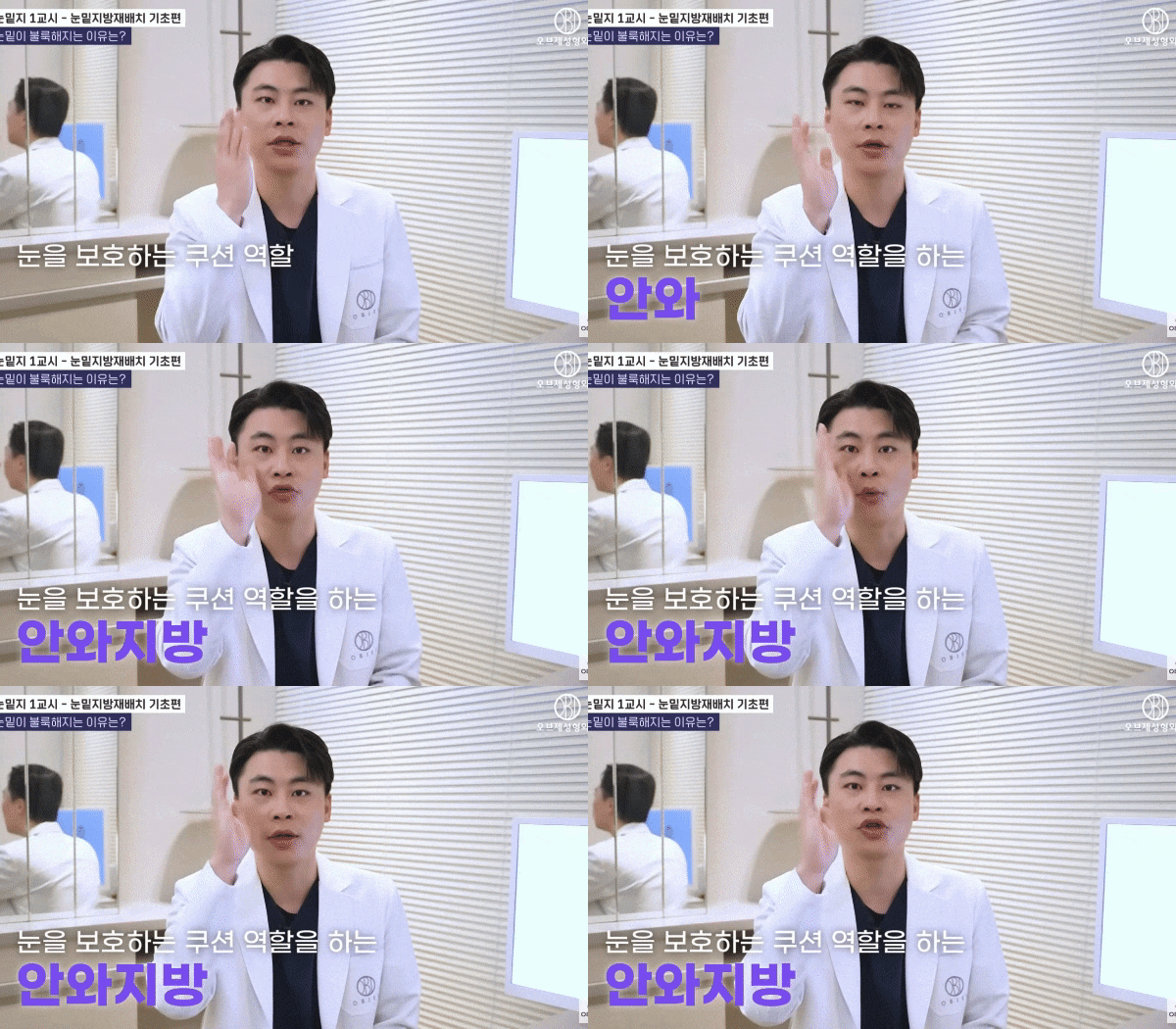
Under-eye fat is not simply excess tissue.
It supports the area beneath the eyes from inside and helps fill it out so that it appears smooth and free of shadows.
Therefore, if too much of this fat is removed, the puffiness may disappear at first and the area may look neatly corrected.
Over time, however, the space that was being supported becomes empty, causing the under-eye area to look sunken.
As shadows form in that area, the face may instead look more tired and older.
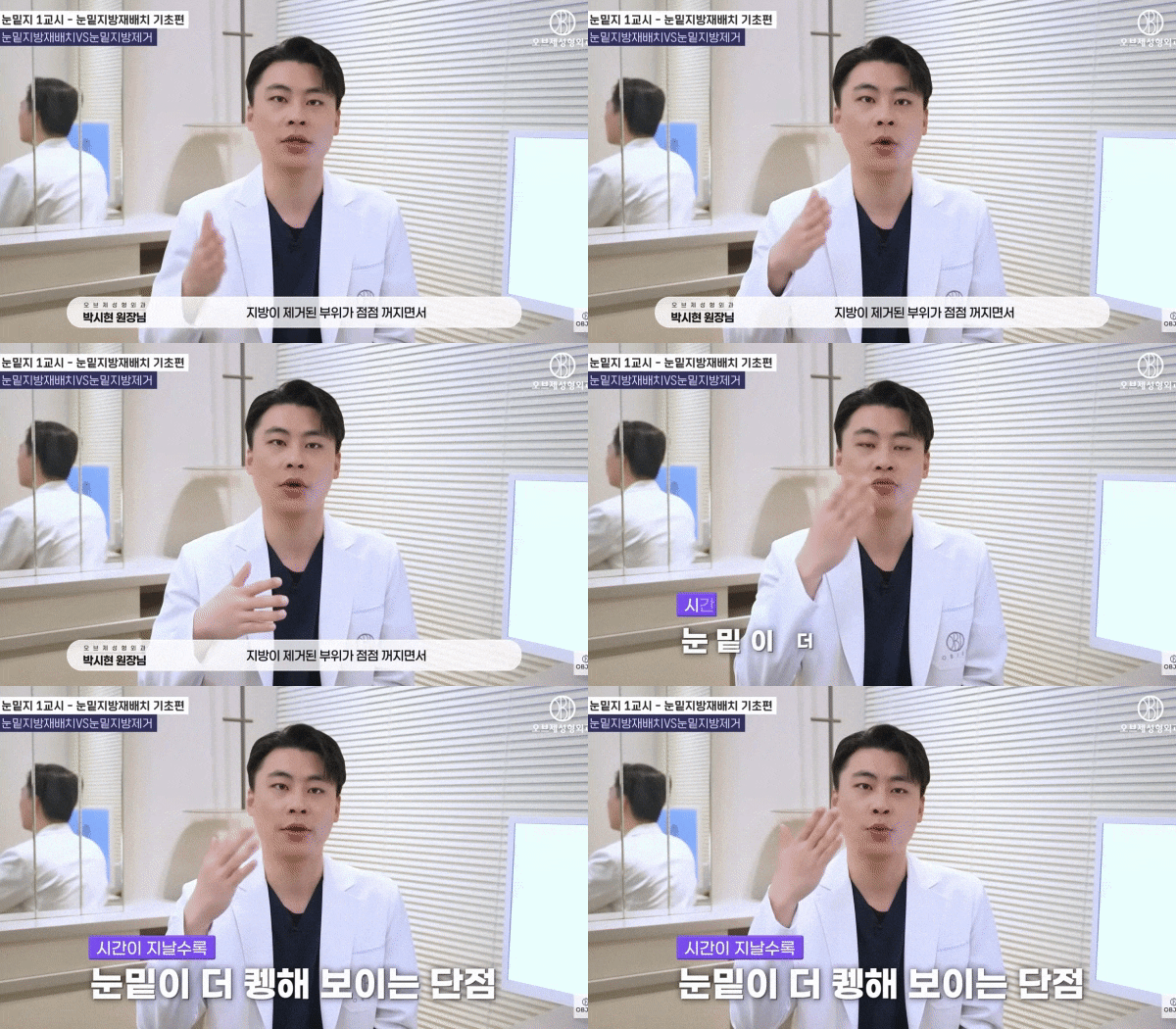
The ‘this’ mentioned in the title—the one thing overlooked by people who eventually undergo surgery again—is precisely this ‘balance of volume.’
The key to under-eye surgery is not how much fat is removed, but how evenly the differences in height between the protruding and sunken areas are balanced.
That is why, rather than removing fat indiscriminately, more people now choose under-eye fat repositioning, which moves the protruding fat toward the hollow tear trough area and smooths out the uneven contours.

Simply put, the principle is similar to shaving down a mound of earth and using it to fill the hollow immediately beside it, thereby leveling the ground.
If the protruding fat is the mound of earth, the tear trough is the hollow, and the process of balancing the difference in height between them is repositioning.
The Same Repositioning Procedure,
But Why Do the Results Differ?
At this point, it may seem that undergoing repositioning alone would be reassuring.
However, not every under-eye fat repositioning procedure produces the same result.
Even when people undergo surgery with the same name, some achieve a smooth correction while others appear hollow again.
The factors that create this difference can be broadly divided into three categories.
The first is when too much fat is removed during the repositioning process.
Although the area may look neat at first, there may not be enough volume to support it, causing the under-eye area to look empty again over time.
The second is when the original tear trough is deeply sunken.
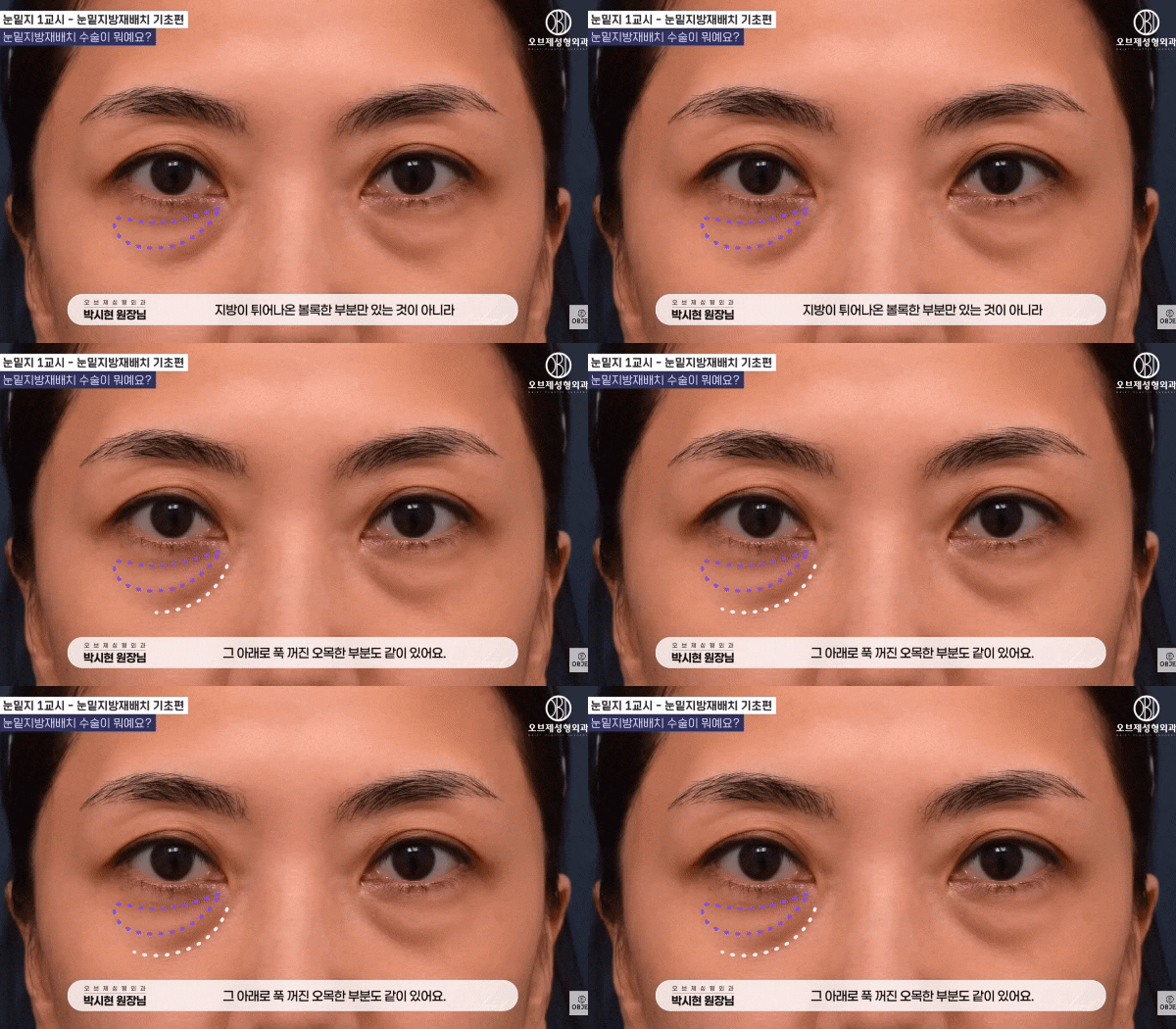
If there is not enough fat available to move and fill the area, it can be difficult to completely fill the hollow, no matter how evenly the fat is spread.
The third is when the under-eye skin is thin and there is not enough tissue beneath it to provide support.
In such cases, there may be limitations to creating a smooth contour through fat repositioning alone.
In short, what determines the result is not simply whether fat was moved, but whether sufficient volume remains evenly distributed afterward.
If this is not assessed from the beginning, the outcome may lead to revision surgery after under-eye fat repositioning instead of the appearance you expected.
If You Want to Avoid Revision Surgery,
Focus on ‘Filling’ Rather Than ‘Removing’
If we trace back the cases that eventually require revision surgery after under-eye fat repositioning, we can see what should be checked when planning the initial procedure.
You should first determine whether there is enough fat in your under-eye area to reposition.
If there is not enough, you should also determine what can be used to fill the area.
In particular, if the tear trough is deeply sunken or the under-eye skin is thin, repositioning alone may have limitations in creating a smooth contour.
Therefore, a filling plan should be established from the beginning along with the repositioning plan.
One method that can be considered together with repositioning is single-fat-cell grafting.
With conventional fat grafting, the harvested fat is injected in relatively large particles, so in the thin under-eye area, the injected fat may clump or its boundaries may become noticeable.
Single-fat-cell grafting separates and purifies the harvested fat tissue into fine particles, then fills the hollow area in small amounts across multiple layers.
Because the particles are fine and the amount and depth of injection can be adjusted precisely, volume can be supplemented while maintaining a smooth surface even beneath thin under-eye skin.
It can also help naturally fill areas that may look empty when there is not enough fat to reposition or when the tear trough is deeply sunken.

By assessing repositioning and filling together from the beginning, it may be possible to reduce the likelihood of a hollow appearance and expect a smooth under-eye contour within a single treatment plan.
To summarize today’s discussion, the factor that determines the result of under-eye surgery is not whether fat is removed, but whether the overall volume beneath the eyes is filled evenly.
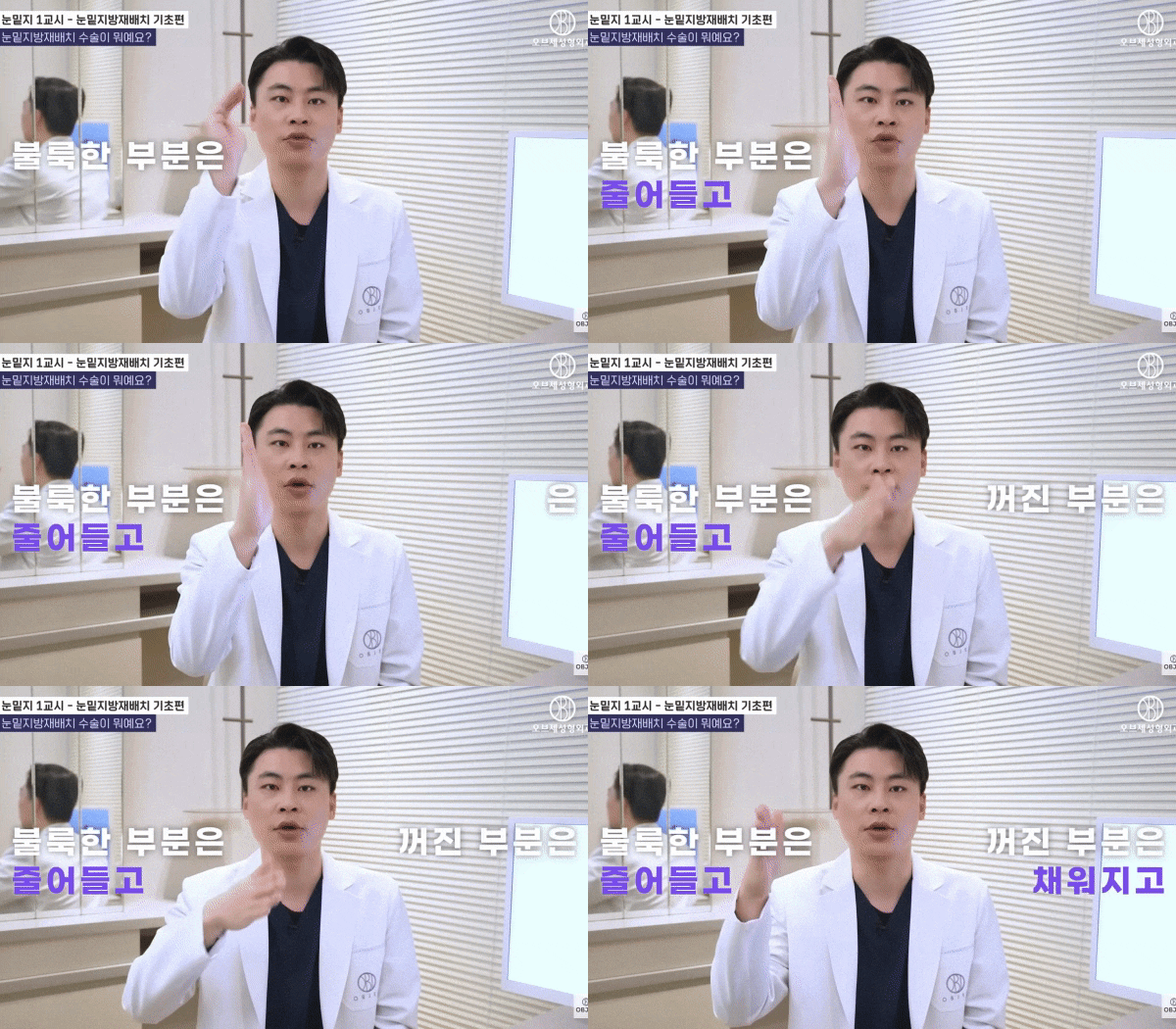
Therefore, if you are hesitating because you are concerned about revision surgery after under-eye fat repositioning, you should first examine these four points before deciding on surgery.
Is there enough fat in your under-eye area to reposition?
Is the thickness of the under-eye skin sufficient to support the repositioned or grafted fat?
How deeply sunken is the tear trough, and would repositioning alone be sufficient?
Does the clinic distinguish whether volume should also be filled using single-fat-cell grafting?
These assessments must be accurate from the beginning in order to achieve a smooth and natural result without having to consider surgery again.
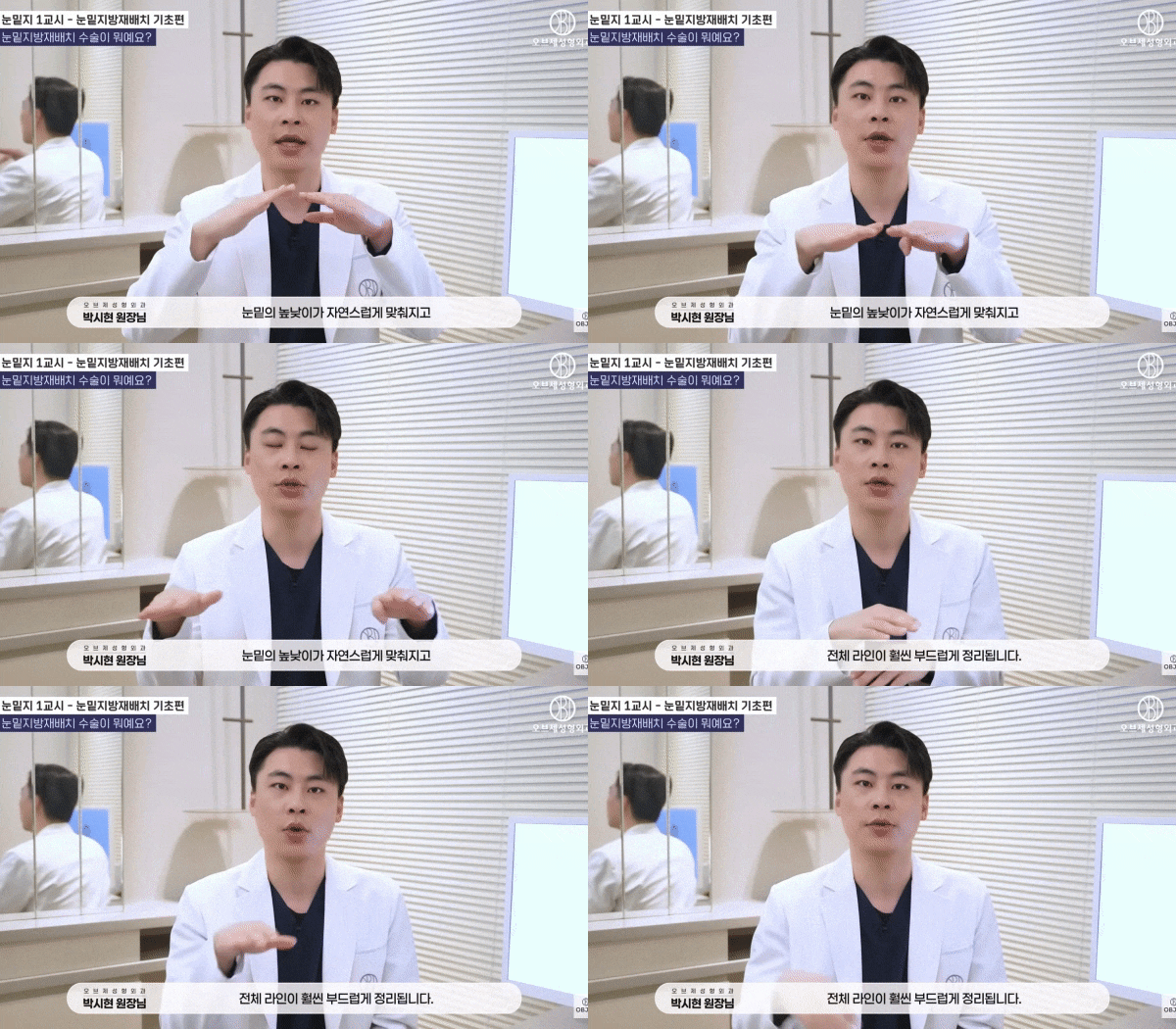
Director Park Si-hyun of Objet Plastic Surgery makes a detailed assessment of the amount and distribution of under-eye fat, skin thickness, and the degree of tear trough depression.
Based on this assessment, the surgical approach is planned by distinguishing between cases where repositioning alone is sufficient and cases where volume must also be supplemented with single-fat-cell grafting.
If you are carefully researching your options even before undergoing surgery, you are already taking the right steps.
Because the under-eye area has a significant influence on your overall facial impression, we hope you will review each of the above criteria carefully and make a choice you will not regret.
This has been Objet Plastic Surgery.
Thank you.
<🔽🔽Video You May Also Find Helpful🔽🔽>
| Under-Eye Fat Repositioning Consultation and Inquiries |
|---|
| Quick consultation by phone |
| Kakao quick consultation |
-
This post is medical information prepared by 오브제성형외과의원 in compliance with the Medical Advertising Act.
-
The effects of the procedure may vary from person to person, and side effects may occur.
We recommend that you make a decision about the procedure only after having a thorough consultation with a medical professional in advance.