Upper and lower eyelid surgery vs. presbyopia surgery,
which should you have first?

Hello.
This is Objet Plastic Surgery Clinic.
As we age,
two changes often appear
around the eyes at the same time.
One is the change in appearance that occurs when
the upper eyelids become heavy and droop,
making your expression look different every time you look in the mirror.
The other is the change in which nearby text becomes blurry
and your vision no longer feels the way it used to.
Because these two issues can overlap,
many people find themselves wondering
about both eyelid surgery and presbyopia surgery.
Among these concerns, the first question that often comes to mind
is which procedure should come first.

Today, for those considering both upper and lower eyelid surgery
and presbyopia surgery,
we will explain the criteria that can help you decide the order
and how much time to leave between the two procedures.
If you read to the end,
you should be able to determine for yourself
which procedure may be better to have first in your situation.
Upper and lower eyelid surgery vs. presbyopia surgery,
have “this” done first
Of upper eyelid surgery, lower eyelid surgery, and presbyopia surgery,
the procedures generally recommended first when deciding the order
are upper and lower eyelid surgery.

Of course, the situation is different
if your vision has deteriorated significantly
and is making daily life difficult.
We will discuss that point again below.
If your vision is not causing major discomfort,
it is generally smoother to have eyelid surgery first,
allow sufficient time for recovery,
and then undergo presbyopia surgery.
The reason this order feels more natural
becomes much easier to understand
when you look at which parts of the eye
the two procedures address.
There is an order that lets you fully enjoy
your newly clearer vision
Upper and lower eyelid surgery and presbyopia surgery
involve the same eye,
but they address completely different areas.
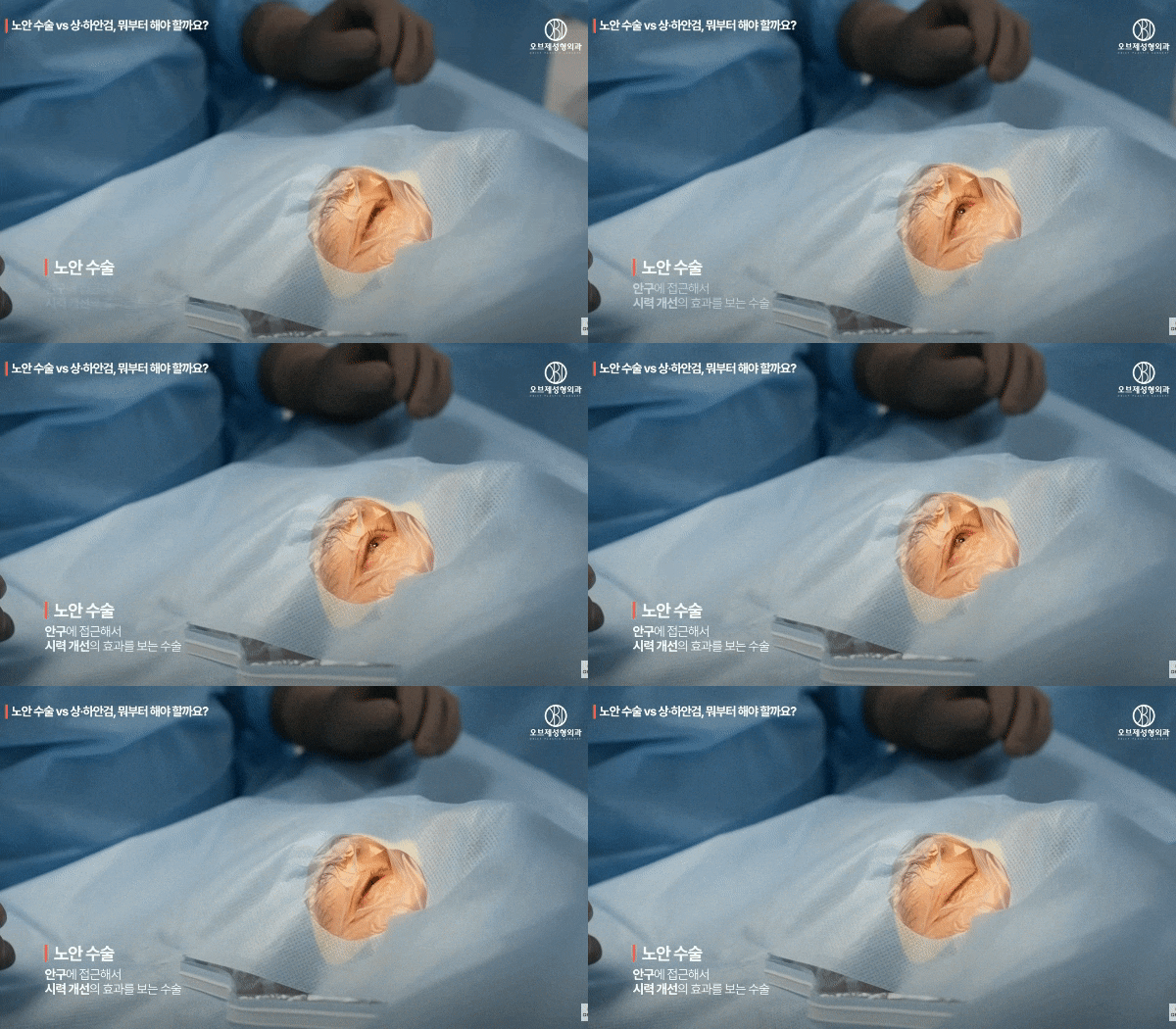
Presbyopia surgery is performed inside the eye
to correct the lens, which gathers light.
The lens is the part inside the eye
that focuses light like a camera lens.
Because this part is adjusted,
vision becomes clearer.

By contrast, upper and lower eyelid surgery
involves refining the upper and lower eyelids that cover the eyes,
along with the skin and fat beneath them.
Because the areas being treated are separate,
presbyopia surgery does not cause the eyelids
to droop further or become looser.

Since it is performed inside the eye,
it has little effect on the outer eyelids.
The reverse situation, however, is somewhat different.
Upper and lower eyelid surgery
is a process of reshaping and repositioning the eyelids.
The eyelids do more than simply cover the eyes.
Each time you blink, they spread tears evenly
to keep the surface of the eye smooth.

Therefore, while the eyelids are settling
into their new positions,
the sensation on the surface of the eye
may feel subtly different,
and small changes to the curvature of the cornea,
where light first enters,
may also cause your vision to feel different from usual for a while.

However, this sensation generally stabilizes naturally
as the tissues settle into place.
This difference is the key to deciding the order.
If you undergo presbyopia surgery first
and then refine the eyelids
after your vision has become clearer,
your newly sharpened vision
will require another period of adjustment
while the eyelids settle into place.
Conversely, if you address the eyelids first,
allow sufficient time for recovery,
and undergo presbyopia surgery after your vision has stabilized,
you can continue to enjoy the clear vision
achieved in the final step.

That is why, when planning both upper and lower eyelid surgery
and presbyopia surgery,
eyelid surgery is generally recommended first
if improving vision is not urgent.
My vision is the more urgent issue…
Do I need to have only presbyopia surgery first?
The discussion so far
has been based on cases where vision
is not causing significant discomfort.
In other words, it does not apply
in exactly the same way to everyone.

If presbyopia has already progressed significantly,
making it difficult to drive or read,
or making daily life itself uncomfortable,
then restoring vision is more urgent.
In such cases, consider having presbyopia surgery first.
After your vision stabilizes,
you can then proceed with upper and lower eyelid surgery.
Ultimately, the order of upper and lower eyelid surgery
and presbyopia surgery depends on
which issue is currently causing the most discomfort in your eyes.
Once you have decided on the order,
you should also consider the interval between the two procedures.

Even when different areas are treated,
the tissues need time to settle and recover
after one surgery.
Proceeding to the next step
after one area has stabilized sufficiently
makes it possible to assess each result accurately
and reduces the strain on the body.

For this reason, the usual recommendation is
to proceed with the next step
after the area treated first has recovered,
leaving an interval of approximately
three to six months.
This interval can vary considerably
depending on which area was treated first,
how quickly you recover,
and your overall eye condition.

Therefore, rather than applying
a fixed period equally to everyone,
it is better to determine the timing of the next step
while checking your recovery progress.
Today, we reviewed which procedure
may be better to have first
among upper and lower eyelid surgery
and presbyopia surgery,
as well as how long an interval
to leave between the two steps.
Here is a summary.
If your vision is not causing significant discomfort,
have the eyelid surgery first.
If your vision has deteriorated considerably
and is making daily life difficult,
address the presbyopia first.
If you are planning both procedures,
allow approximately three to six months for recovery.
Dr. Hyun-jo Kim of Objet Plastic Surgery Clinic
begins by distinguishing where the discomfort you are experiencing
originates when deciding the order of procedures.

If a drooping upper eyelid is covering part of the pupil,
then a significant portion of the reason for blurred vision
may lie in the eyelid.
In that case, priority is given to addressing
the upper and lower eyelids first.
If the lens's ability to focus light
has decreased substantially,
then presbyopia correction is considered first.
In addition, the thickness of the eyelid skin,
the strength of the muscles that open the eyes,
and the speed of recovery are all taken into account
when determining the timing
that allows the results of both procedures
to be assessed clearly and separately.
This is the most important criterion
Dr. Hyun-jo Kim considers when deciding the order.
The eyes are the first place people look at on the face,
and vision is directly connected
with everyday life.
For that reason, it is natural
to be cautious even about the order of the procedures.

If you are wondering which step to take first,
we recommend starting with a consultation
that evaluates both your eyelid condition and your vision.
This has been Objet Plastic Surgery Clinic.
Thank you.
<🔽🔽Videos You May Also Find Helpful🔽🔽>
| Consultation and Inquiries About Middle-Aged Eye Surgery |
|---|
| Quick Phone Consultation |
| Convenient Kakao Consultation |
-
This post is medical information prepared by 오브제성형외과의원 in compliance with the Medical Advertising Act.
-
The effects of the procedure may vary from person to person, and side effects may occur.
We recommend that you make a decision about the procedure only after having a thorough consultation with a medical professional in advance.