Upper eyelid fat grafting?
A must-read for those who are tired of being told they look tired!
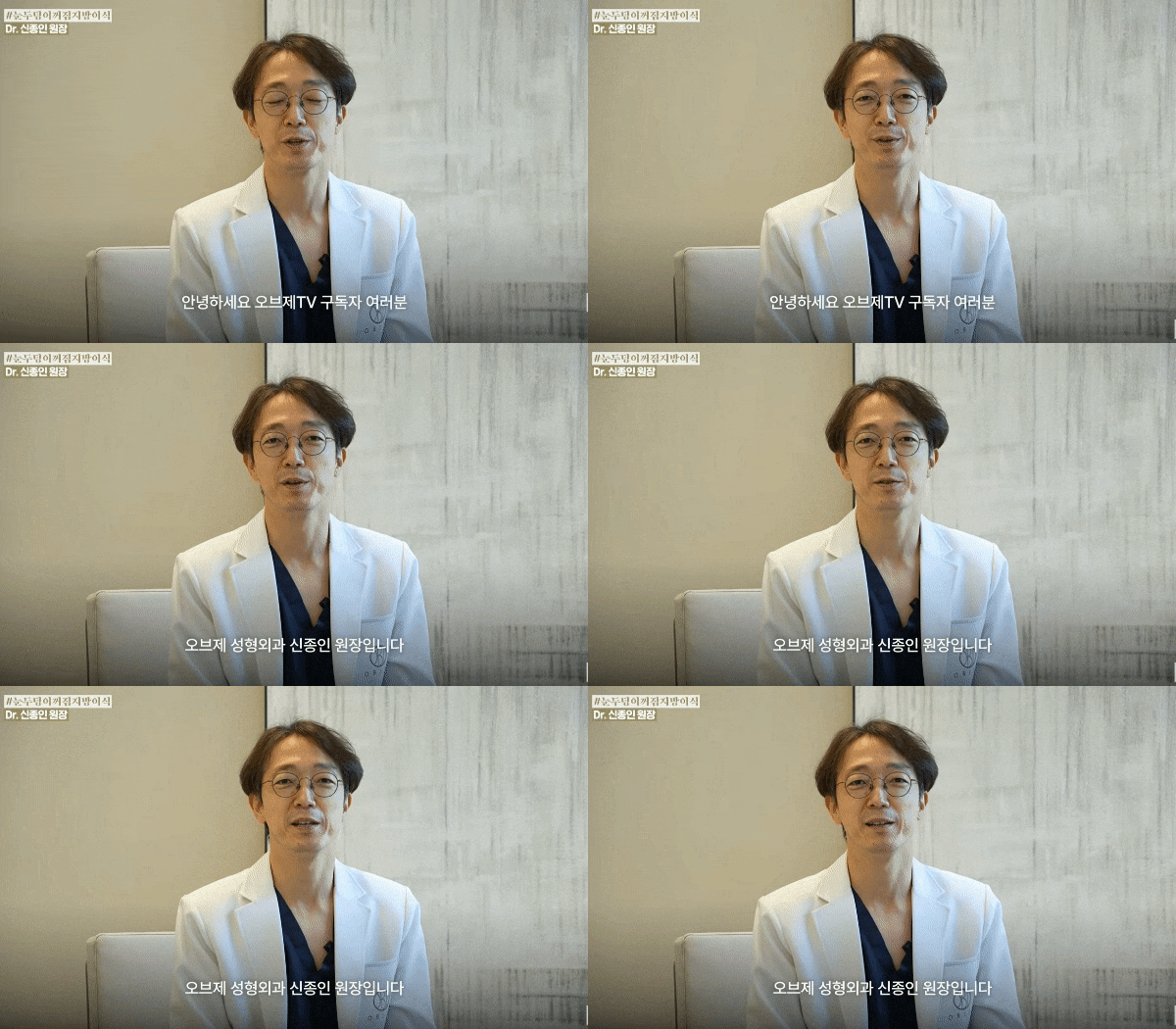
Hello.
This is 오브제성형외과.
There are people who are told they look unwell even on days when they have slept soundly and woken up refreshed.
The face in the mirror may not look very different from the day before,
but when people repeatedly say that you look particularly tired or lacking in energy, it is bound to bother you.
You may have tried covering it with makeup and even made an effort to get more sleep,
but your overall impression still does not seem to change.

Over time,
you may start to wonder whether it is not simply a matter of your condition,
but instead comes from somewhere on your face.
I believe those who have begun looking more closely at the area above their eyes are reading this post now.
So today,
we will explain step by step why a tired-looking impression begins above the eyes,
and how that impression can be changed.
If you read to the end,
you may gain both an understanding of why you have been hearing those comments
and clues toward a solution.
A tired-looking impression?
The problem is ‘here’
A tired-looking impression is often created,
somewhat unexpectedly,
not under the eyes but above them.
When the area between the eyebrows and eyelids is adequately full,
the face looks softer and brighter.
As you age,
or if you naturally have little facial fat,
the volume in this area gradually decreases.

As the volume decreases,
the brow bone becomes more prominent,
and shadows begin to form beneath it.
Even when the face catches the light, it does not look bright and open;
instead, deep shading settles in,
creating an impression of looking tired and lacking energy even when you are still.
That is why people may ask whether you are tired even after a good night’s sleep.

The method of restoring volume to sunken areas above the eyes in this way is upper eyelid fat grafting.
Is all upper eyelid fat grafting the same?
It depends on ‘how’ the volume is added
Upper eyelid fat grafting involves harvesting a small amount of fat from your own body
and transferring it to the hollow area above the eyes.
There is also a method of filling the area with filler,
but if you want it to remain in place for a long time
and blend naturally with the surrounding tissue,
many people choose to transfer their own fat instead.
There is one important point here.
The skin above the eyes is the thinnest on the face,
and this area moves constantly with facial expressions.
That is why microfat grafting—finely dividing the fat and placing it in multiple layers as if dotting the area—is important.

When the fat is finely divided and distributed,
it does not clump in one place
but blends naturally with the surrounding area.
There is one more point,
and it is considered the most important:
‘At what depth is it placed?’
If it is placed only directly beneath the skin,
the fat may show through
or the surface may look uneven.

Therefore, the deeper layer closer to the bone is filled first
to establish a stable foundation for the volume.
However, if the fat is placed only in the deeper area,
the shallow layer may remain hollow,
leaving fine lines or creases.
For this reason, the amount to be placed in the deep and shallow layers must be planned separately,
so that both the surface and the underlying area settle smoothly.
To put it simply,
when painting a wall,
applying a thick coat all at once can cause it to run or clump,
but applying several thin coats
allows it to dry smoothly.
Ultimately, upper eyelid fat grafting
does not simply involve inserting fat;
it is a delicate procedure that involves designing volume at each depth.
From recovery to candidacy!
Here is everything summarized at once
Because upper eyelid fat grafting is performed in a sensitive area above the eyes,
many people worry about scarring.
However, because only very small points are used for the insertion of fine needles,
there is generally little visible incision marking.

Bruising and swelling
typically continue for about two weeks before gradually subsiding over time.
However, recovery may vary from person to person.
Even while the volume is settling,
the burden of returning to daily activities is relatively low.
So, to summarize who may be well suited to this procedure:

Those whose upper eyelids look particularly hollow,
whose eyes appear sunken and shadowed,
or whose prominent brow bones make their features look somewhat angular,
and, above all,
those who are often told they look tired even after getting plenty of rest
may wish to have the volume above their eyes assessed.
This may also be worth considering if you naturally have little facial fat
or if the area has lost volume with age.
Today, we looked at why the comment that you look tired can begin above the eyes,
how to fill hollowed volume naturally,
and what recovery may be like.
Even when filling the same area,
the result can differ depending on how finely the fat is divided
and the depth at which it is placed.
Simply remembering this point
can be a great help when making your decision.

Because the area above the eyes has thin skin
and delicate structures, Dr. 신종인 of 오브제성형외과
designs the volume separately for the deep and shallow layers.
In addition, because the degree of hollowing and tissue condition above the eyes differ from person to person,
these factors are assessed together
to plan where and how much to fill.
Rather than stopping at simply adding volume,
we also consider the changes created by the area above the eyes within the overall impression of the face
and envision an upper eyelid fat grafting result that blends naturally over time.
If you would like to put an end to being told that you look tired,
we recommend first having a calm consultation to assess the current condition of the volume above your eyes.
This has been 오브제성형외과.
Thank you.
<🔽🔽Video You May Also Find Helpful🔽🔽>
| Eye Surgery Consultations and Inquiries |
|---|
| Quick phone consultation |
| Easy Kakao consultation |
-
This post contains medical information prepared by 오브제성형외과의원 in compliance with the Medical Advertising Act.
-
The effects of the procedure may vary from person to person, and side effects may occur.
We recommend that you make a decision about the procedure only after having a sufficient consultation with a medical professional in advance.