Does alar-retraction rhinoplasty make the philtrum look longer?
<Answer from Dr. 이경묵>
Hello.
This is 오브제성형외과.
After rhinoplasty,
the nose may look much more defined,
but sometimes the center of the face
can feel strangely empty.
In particular, the area between the tip of the nose and the lips—
in other words, the philtrum—
may seem longer than before,
leading you to spend a long time examining it in the mirror.
You may be happy with the changes to your nose,
but because that one area keeps catching your eye,
you may even have searched for alar-retraction rhinoplasty
and found yourself unnecessarily conflicted.
Today, we will look at
whether the philtrum has actually become longer after rhinoplasty,
and how to design the nose
so that it blends naturally with the philtrum as well.
By reading to the end,
you may find it helpful in organizing
your current concerns.
My philtrum became longer after rhinoplasty!
Actually, it is because of OO
Let me first give you
the answer you are probably most curious about.
When the philtrum appears longer
after rhinoplasty,
it is often a visual change in appearance
caused by a change in the position and angle of the nasal tip,
rather than the philtrum itself actually becoming longer.
When the nasal tip is lifted upward,
the nostrils become slightly more visible,
and the line extending from the nasal tip to the lips
spreads out more gently.
This lifted appearance of the nasal tip
is commonly referred to as an upturned nose.
When the angle between the nasal tip and the lips
becomes wider than usual,
it can also create the impression that the center of the face—
that is, the midface—
looks longer.
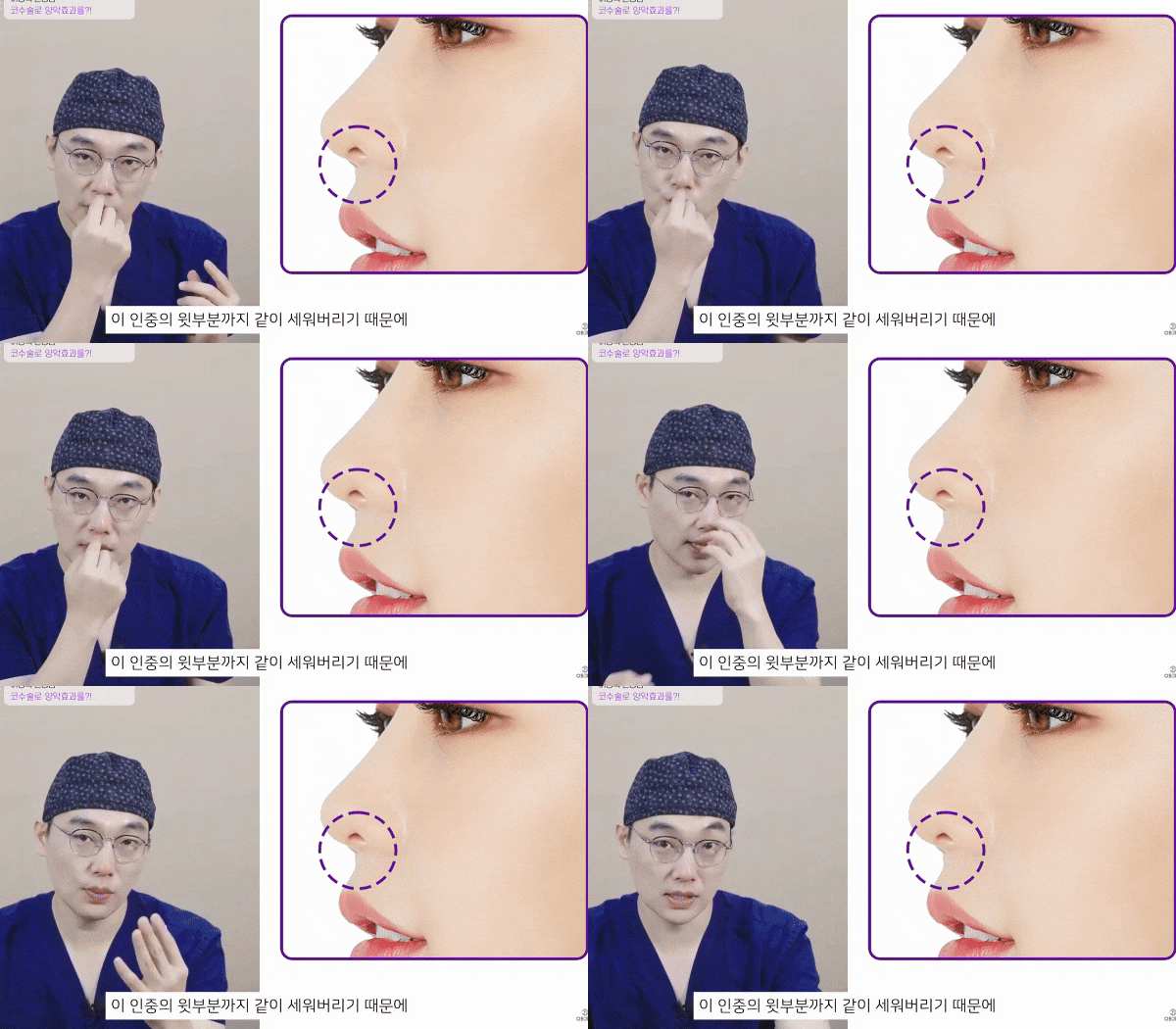
Even though the philtrum is the same,
the area that draws the eye becomes wider,
so it looks longer than it actually is.
To put it simply,
it is similar to a room remaining the same size
but appearing to have more empty space
when the furniture is pushed to one side.
As the nasal tip moves upward,
the space beneath it becomes more prominent,
which is why many people look into
alar-retraction rhinoplasty.
Why does the nasal tip become lifted?
It is because it exceeds the “limit”
Now let us look at
where the upward lifting of the nasal tip begins.
Many people come to consultations
imagining a defined, high nose.
A high nose can indeed look clear and open,
but rhinoplasty is not a procedure
that simply creates the exact height you want.
The factor that ultimately determines how high the nose can be
is not the cartilage or implant,
but the skin covering the nose.
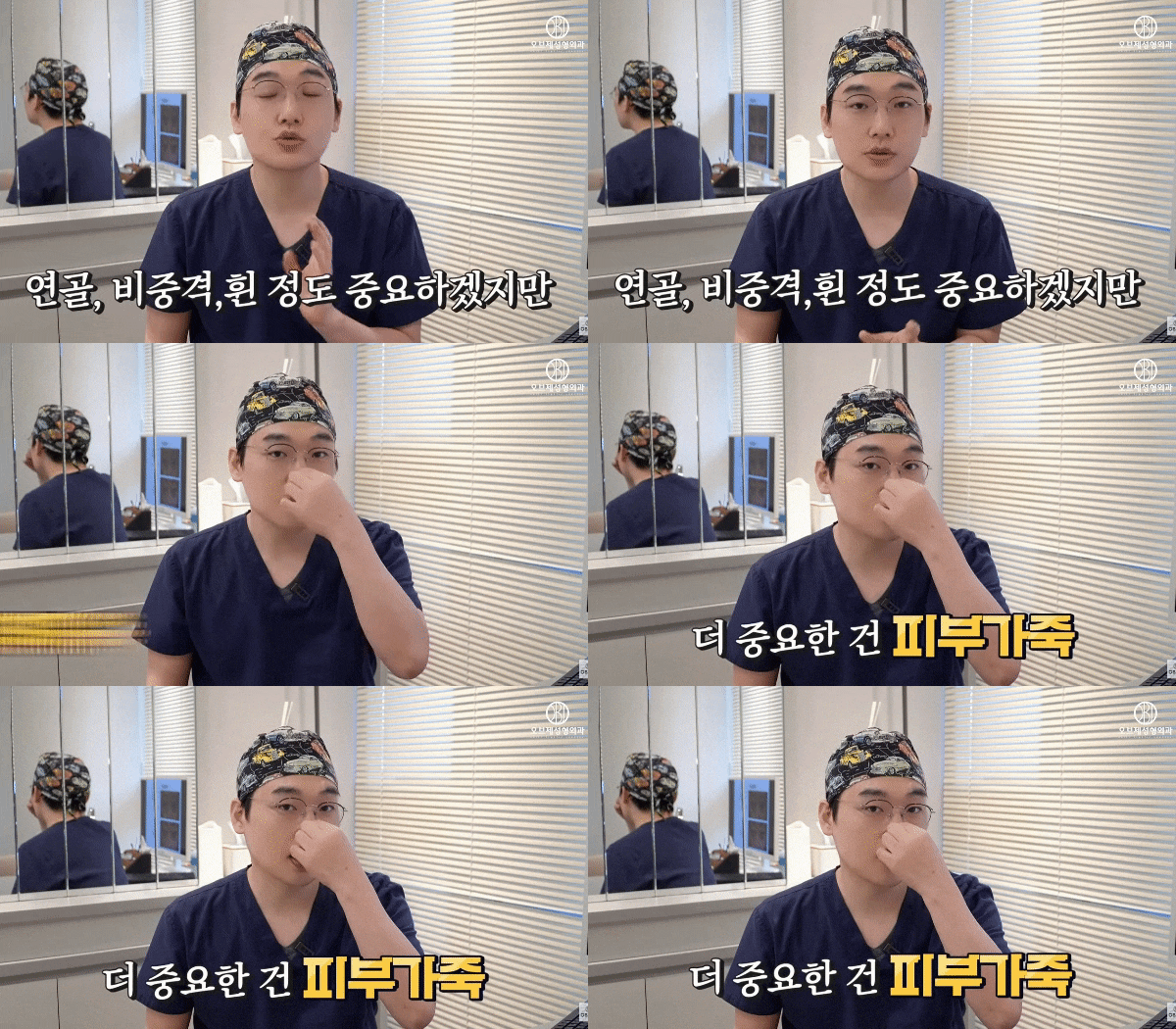
Everyone’s skin has
a limit to how far it can stretch.
If it is pushed higher than this limit,
the nasal tip is likely to become lifted,
bringing the appearance closer to that of an upturned nose.
There is one thing
you must remember here.
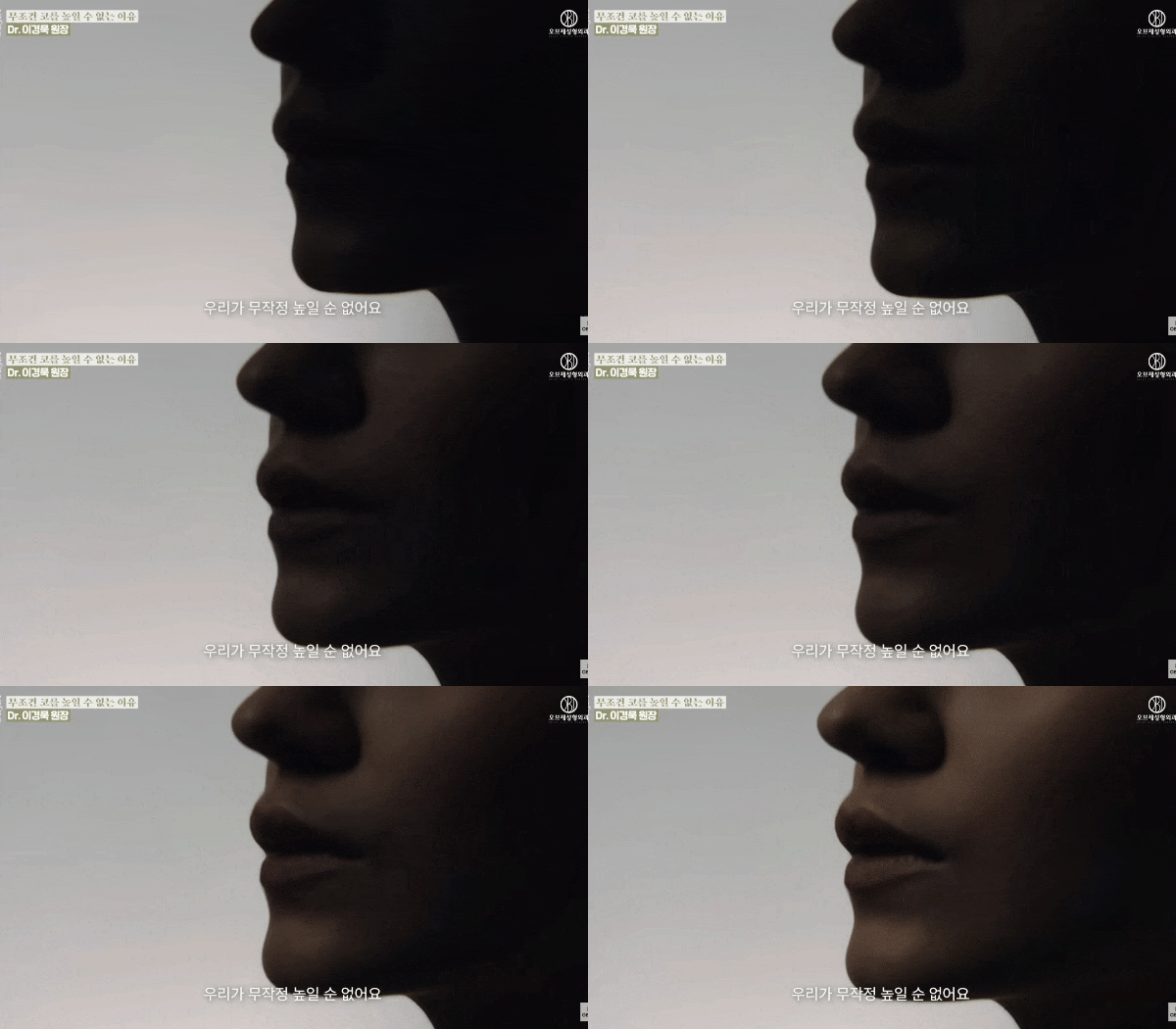
Even a 1 mm difference in the nose
can dramatically change the overall impression.
Even if the height and angle of the nasal tip,
or the point where the bridge of the nose begins,
move only slightly,
the overall atmosphere of the center of the face
changes along with them.
If the nasal tip is already lifted
and this makes the philtrum look longer,
alar-retraction rhinoplasty can be used
to naturally adjust the angle of the nasal tip downward.
However, even in this situation,
the goal is not simply to lower the nasal tip arbitrarily.
It is important to find the angle that suits you precisely
while taking the available skin laxity into account.
Since it is rhinoplasty, should we only look at the nose?
It needs to be considered “together” to look natural
The nose is located at the center of the face.
That is why it is not an area
that can be designed separately in isolation.

When determining the height and angle of the nasal tip,
the elements that make up the center of the face—
including the length of the philtrum,
the degree to which the lips project,
and the position of the chin—
must all be considered together.
Whether it is primary rhinoplasty or alar-retraction rhinoplasty,
if these proportions are not considered together from the beginning,
it is easy for only the nasal tip to change
while the impression of a longer philtrum remains.
Conversely, if the angle between the nasal tip and the lips
is refined according to the facial proportions,
the center of the face may actually
appear shorter and more defined.
When the nasal tip settles at an appropriate angle,
the profile line becomes smoother,
and as the three-dimensional definition comes to life,
the philtrum also appears considerably shorter.
Ultimately, the quality of a nose design
is determined not by how high the nose has been made,
but by how well it harmonizes with the entire face.
Today, we discussed
why the philtrum may look longer after rhinoplasty,
alar-retraction rhinoplasty for adjusting the angle of the nasal tip,
and nose design that considers the entire face together.
To summarize, the philtrum has often not actually become longer;
it simply appears that way because the position and angle of the nasal tip have changed.
To avoid this,
it is especially important from the beginning
to consider the available skin laxity and facial proportions together.
At 오브제성형외과, Dr. 이경묵
designs the angle of the nasal tip
by first checking the available skin laxity at the tip,
rather than raising the nose excessively,
and by also calculating the length of the philtrum,
the degree to which the lips project,
and the position of the chin.
The angle between the nasal tip and the lips,
as well as the proportions formed by the philtrum and chin,
is refined to match the flow of the center of the face,
so that the midface appears shorter and more defined.
Looking closely down to the last 1 mm of the nasal tip
and finding the point of balance
that makes the center of the face most defined—
please always keep this aspect in mind.
Just as important as raising the nose
is considering the philtrum and facial proportions together.
We hope today’s discussion
has helped you organize your thoughts, even a little.
If you remain concerned about the shape of your nasal tip
or the length of your philtrum,
we recommend beginning with a consultation
that carefully examines your current facial proportions
and skin condition.
This has been 오브제성형외과.
Thank you.
<🔽🔽Recommended videos to watch together🔽🔽>
| Rhinoplasty Consultation and Inquiries |
|---|
| Quick phone consultation |
| Convenient Kakao consultation |
-
This post is medical information prepared by 오브제성형외과의원 in compliance with the Medical Advertising Act.
-
The results of the procedure may vary from person to person, and side effects may occur.
We recommend that you make a decision about the procedure only after having a sufficient consultation with a medical professional in advance.