Recommended Clinic for Rhinitis Surgery
Can functional rhinoplasty resolve rhinitis?
Revealing the “truth”

Hello.
This is Objet Plastic Surgery.
If you could improve the appearance of your nose while also improving your rhinitis,
there would be nothing more ideal.
In fact, many people look into rhinoplasty
with this expectation.
If you could raise the bridge of your nose and refine the tip
while also opening up your previously blocked airways,
it would be like resolving two concerns
with a single surgery.
However, when you search for information,
claims that “rhinoplasty also cures rhinitis”
and claims that it is “completely unrelated”
are mixed together.
It is only natural to be unsure
which one is correct.
Today, we will organize everything in one place:
the relationship between rhinoplasty and rhinitis,
as well as the criteria you should check
when choosing a clinic for rhinitis surgery.
If you read to the end,
you will be able to take away
criteria for making a decision suited to your situation.
Can cosmetic rhinoplasty cure rhinitis?
<It is a misconception>!
To give you the conclusion first,
ordinary cosmetic rhinoplasty
is not directly related to treating rhinitis.
The reason is simpler than you might think.
It is because the areas being operated on
are different.
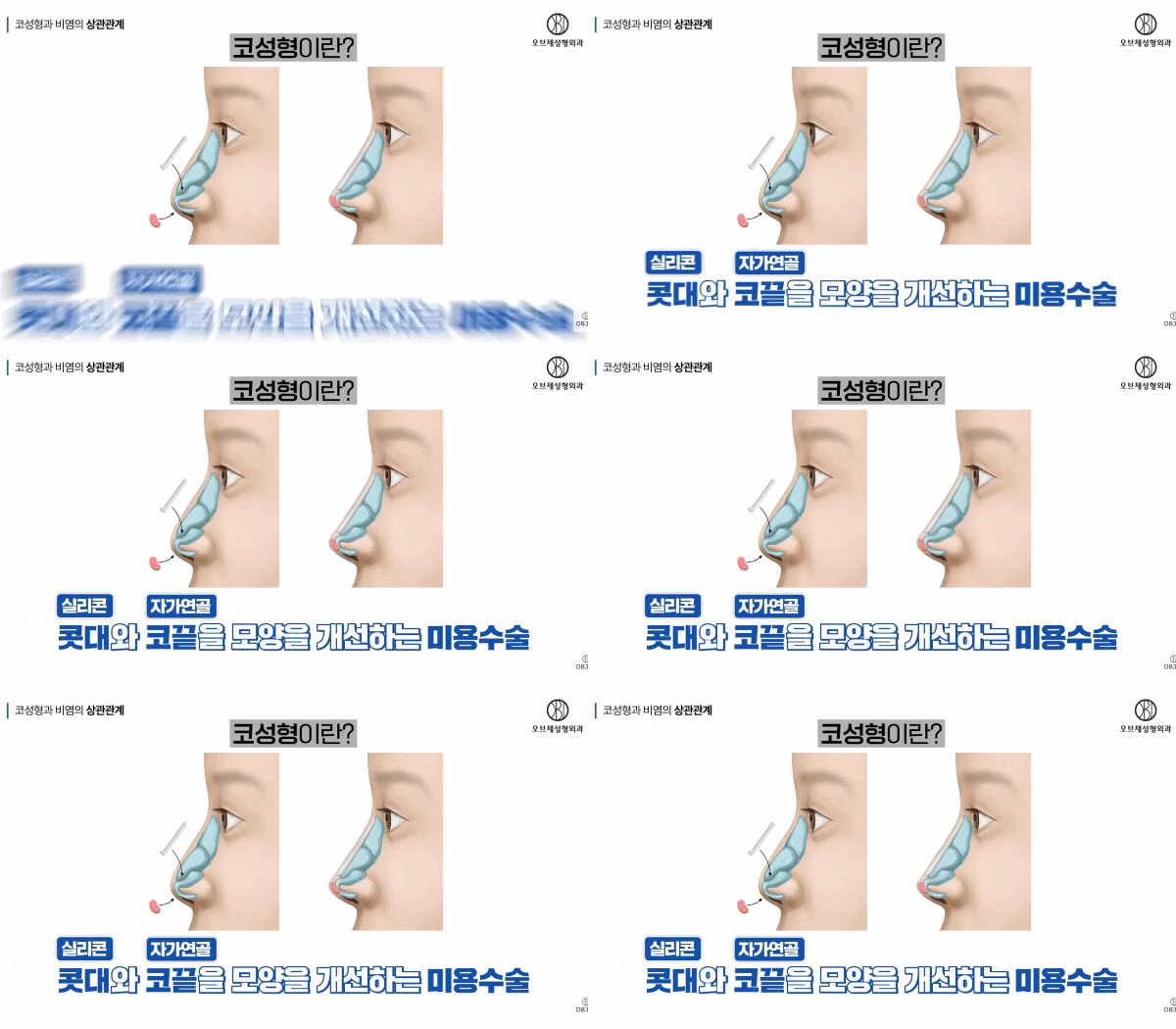
When people refer to cosmetic rhinoplasty,
they usually think of surgery to raise the bridge
with silicone or refine the nasal tip
using cartilage.
This changes the outer shape of the nose;
it is not surgery to widen the airway inside the nose.
By contrast, rhinitis and nasal congestion
usually originate from structures inside the nose.
The most representative cause
is a deviated nasal septum.
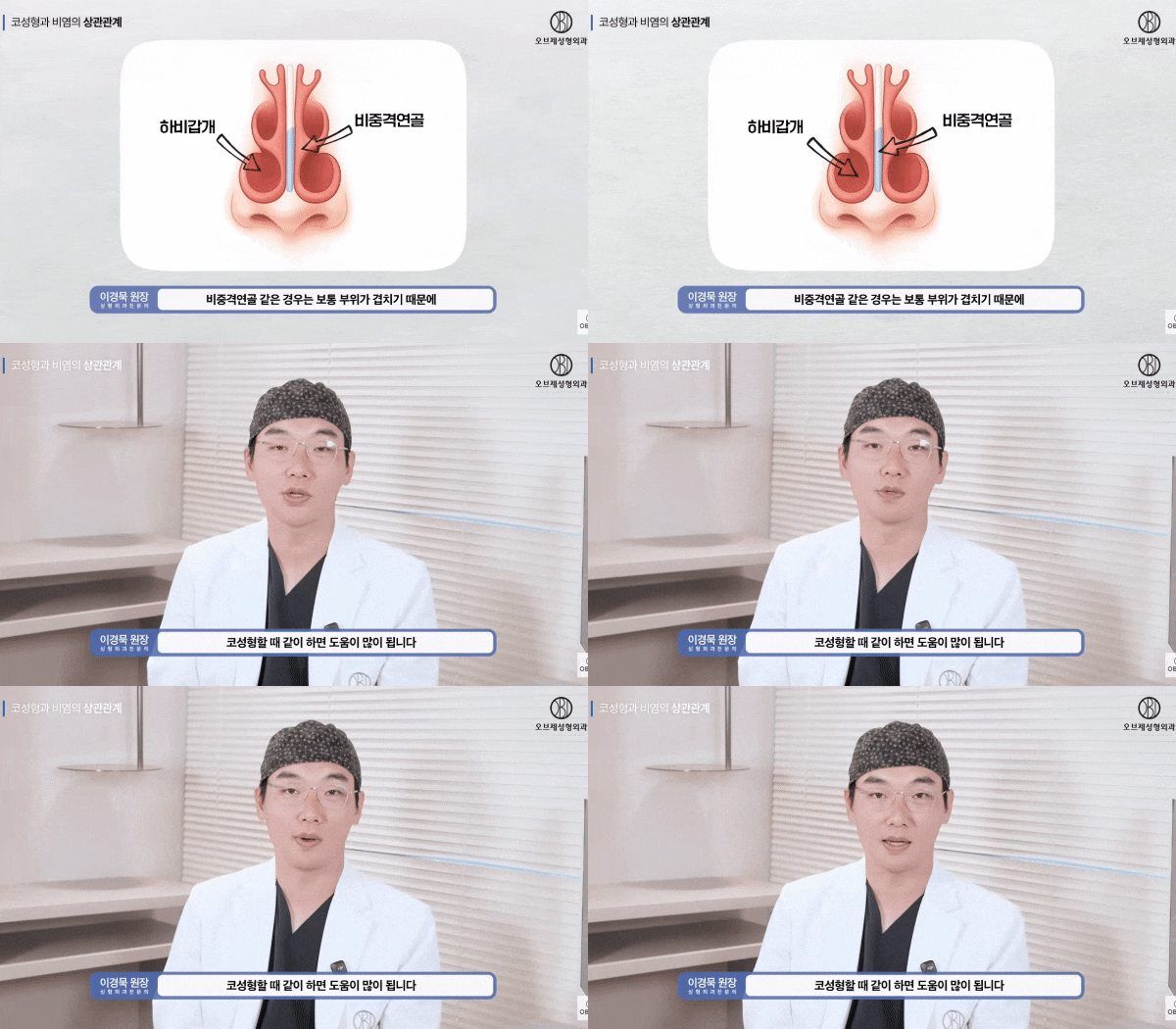
The nasal septum is
a bone-and-cartilage structure resembling a partition
that stands vertically in the center of the nose.
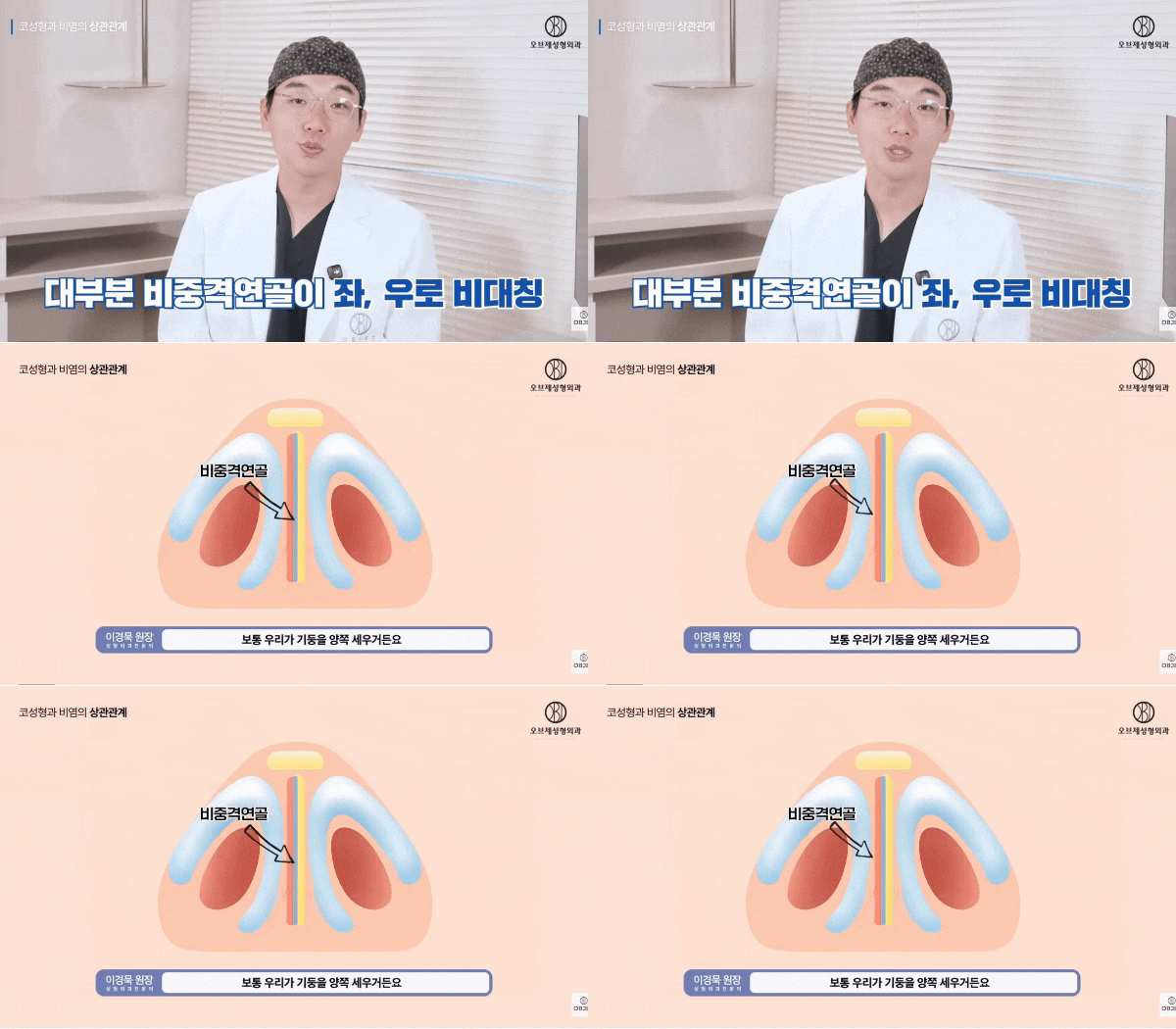
If the septum is bent to one side,
one airway becomes narrower,
causing nasal congestion.
Another common cause
is enlarged inferior turbinates.
Inside the nose are structures
covered with mucous membrane called the inferior turbinates.
When these tissues become swollen,
the passage through which air moves
becomes narrower.
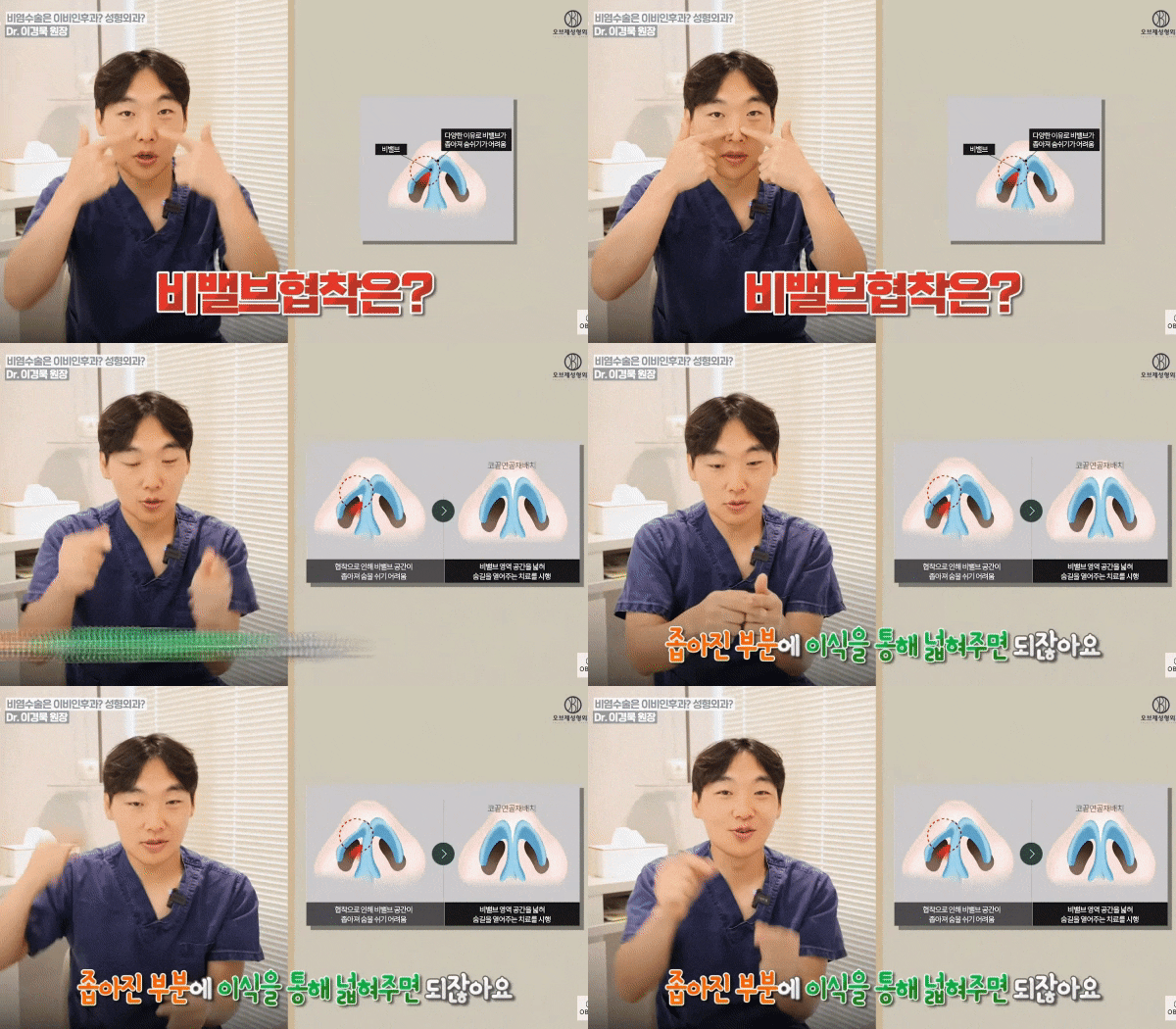
There is also nasal valve narrowing.
The nasal valve is
the narrowest area through which air moves
inside the nose.
If this area is narrowed,
you may feel restricted when inhaling.
In other words, cosmetic rhinoplasty,
which refines the outer appearance of the nose,
and surgery that corrects the internal nasal structures
are entirely different areas.
Simply raising the bridge
and lifting the tip
does not improve rhinitis symptoms.
Functional rhinoplasty: If you meet “this condition,”
your breathing may also change
First, let us clarify
how functional rhinoplasty differs
from ordinary cosmetic rhinoplasty.
Functional rhinoplasty
is surgery that corrects the internal nasal structures
as well as changing the shape of the nose.
Put simply,
it addresses the external shape of the nose
and the internal airways
together as part of a single design from the outset.
Rather than performing cosmetic rhinoplasty
and functional correction separately,
its greatest difference is that
the outside and inside of the nose
are designed in an integrated way.
For example,
if a deviated nasal septum is confirmed,
the deviated septum can also be corrected
while refining the shape of the nose.
In this case,
you may expect both an improved appearance
and improved breathing at once.
However, there is an important point here.
For functional rhinoplasty to be effective,
there must actually be a structural problem
inside the nose.
As in cases where the septum is deviated,
the nasal valve is narrowed,
or the inferior turbinates are enlarged,
both the CT findings
and the actual symptoms must be consistent.
This also means that
undergoing functional rhinoplasty
when there is no structural abnormality inside the nose
will not improve rhinitis.
That is why there is one more important point.
Even when planning cosmetic rhinoplasty,
the internal nasal structures
must also be examined.
For example,
if the septum is already slightly deviated,
the placement of cartilage to support the nasal tip
must be designed accordingly.
When using your own rib cartilage
or donor rib cartilage,
the position and direction must be calculated precisely
so that it remains stable over time.
The amount of septal cartilage used
must also be adjusted within a range
that maintains internal support.
Ultimately, satisfactory results depend on
how precisely the internal nasal structures are understood
and how carefully the surgery is designed.
Recommended clinic for rhinitis surgery:
Check only these “three things”
If you want both the appearance of your nose
and your breathing to improve,
the clinic you choose can also have a significant effect
on the outcome.
As criteria for choosing a clinic for rhinitis surgery,
it would be helpful to check the following three things.
First,
check whether the clinic examines
the internal nasal structures through a CT scan first.
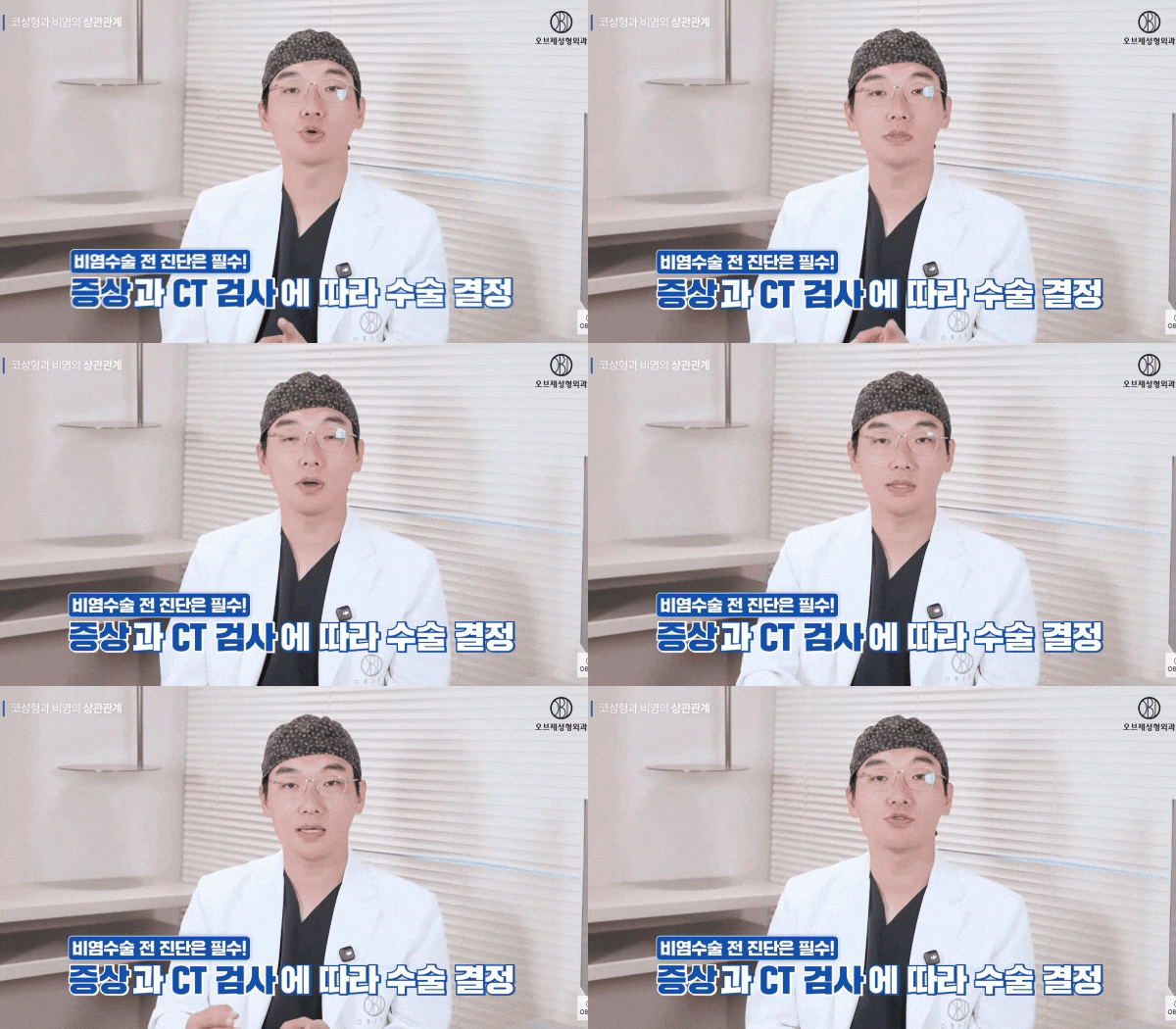
The extent of septal deviation,
the size of the inferior turbinates,
and whether nasal valve narrowing is present
must be accurately identified
before the scope and direction of surgery can be determined.
If a clinic creates a surgical plan
based only on the external appearance,
it may miss the internal structures.
Second,
check whether cosmetic surgery
and functional correction
can be planned together
within a single design.
Because the internal structures may be affected
while changing the shape of the nose,
an integrated surgical plan
that considers the outside and inside at the same time
is necessary.
Be sure to check whether the clinic
designs both aspects together from the beginning,
rather than considering appearance and function separately.
Third,
check whether the consultation considers
changes in breathing after surgery.
Rather than focusing only on making the nose look better,
if the clinic also explains
how breathing may change after surgery,
it may be more trustworthy.
Keeping these three criteria in mind
may help you make a choice you will not regret.
Today, we organized the relationship
between cosmetic rhinoplasty and rhinitis,
as well as the cases in which
you may also expect improved breathing.
To review the key points,
ordinary cosmetic rhinoplasty alone
does not resolve rhinitis.
Only when there is a structural problem inside the nose
and surgery is performed to correct it as well
can you expect improved breathing.
It is also important to remember
that surgical planning which considers
the internal nasal structures together
is essential.
Dr. Lee Kyung-mook of Objet Plastic Surgery
examines the condition of the nasal septum,
the nasal valve structure,
and the size of the inferior turbinates
when designing the external shape of the nose,
and then determines the direction of surgery.
Because the process of refining the outer shape of the nose
and the process of securing the internal airway
are carried out together within a single design,
results that consider both appearance and breathing
may be expected.
If you are considering both the shape of your nose
and your breathing,
we recommend starting with a detailed consultation
that includes a CT scan.
This has been Objet Plastic Surgery.
Thank you.
<🔽🔽Recommended video to watch together🔽🔽>
| Rhinoplasty consultations and inquiries |
|---|
| Quick consultation by phone |
| Easy consultation via Kakao |
-
This post is medical information prepared by Objet Plastic Surgery Clinic in compliance with the Medical Advertising Act.
-
The effects of the procedure may vary from person to person, and side effects may occur.
We recommend having a thorough consultation with a medical professional beforehand before deciding whether to undergo the procedure.