Can Ptosis Correction for Monolids Be Done with Double Eyelid Surgery?
Dr. Park Si-hyun Answers!
Hello.
This is 오브제성형외과.
Many people begin looking into surgery with the expectation that
a single double eyelid procedure will make their eyes look more defined than they do now.

However, when they start searching for consultation information,
the term “ptosis” often appears alongside it,
and they may even hear that
eye-shape correction should be performed as well.
This is when unfamiliar terms begin to pile up,
even though they had only been thinking about double eyelid surgery,
leaving them increasingly confused about
what they actually need.
I imagine those of you who came across this article
may be at a similar point in your decision-making process.
So today,
we will look at whether double eyelid surgery alone
really resolves the issue when someone has monolids and ptosis.
From the relationship between double eyelid surgery and eye-shape correction
to which procedure may be right for your eyes,
I will explain everything step by step,
so reading to the end may help you determine your direction.
Double eyelid surgery alone makes the eyes look bigger?
It depends on “this.”
To give you the conclusion first,
double eyelid surgery alone
does not make the eyes themselves larger.
Double eyelid surgery creates a crease on the eyelid,
making more of the iris visible
and increasing the vertical width of the eyes.
It can make the eyes look more defined,
but it does not increase their horizontal length
or strengthen the muscles used to open the eyes.
In particular, when the eyes are short horizontally,
they may not look as large as expected
even if their vertical width increases.
This is where
we need to discuss ptosis.
Ptosis refers to a condition in which
the muscles used to open the eyes are weak.
Because the upper eyelids cannot rise sufficiently
when opening the eyes,
the eyes may appear half-closed even normally,
creating a sleepy-looking impression.
If double eyelid surgery alone is performed in this condition,
the crease may become clearly defined,
but the strength used to open the eyes remains unchanged,
so the eyes may not look as open and refreshed as expected.
Therefore, when the muscles used to open the eyes are weak,
planning ptosis-related eye-shape correction together
with double eyelid surgery may lead to a natural-looking result.
Do all monolids require eye-shape correction?
Not these eyes.
At this point,
you may feel that everyone with monolids
needs eye-shape correction as well.
That is not necessarily the case.

If the muscles used to open the eyes are sufficiently strong,
many monolids can achieve
a well-defined, attractive crease
and clear-looking eyes with double eyelid surgery alone.
Adding eye-shape correction for monolids in such cases
may instead make the eyes look excessively large
or artificial.
In other words, eye-shape correction for monolids
is not a procedure required for everyone with monolids.
It is a procedure that can be helpful
when the muscles used to open the eyes
are actually weak.
If the eye-opening strength is adequate
but the crease simply forms faintly,
how the crease is designed for double eyelid surgery
becomes more important than adding ptosis-related eye-shape correction.
Thus, even when the starting point is the same—monolids—
the required procedure can differ
depending on the strength used to open the eyes.
The “real reason” the results differ
even with apparently identical monolids
In addition to eye-opening strength,
there are other factors that influence the result.
Even if two people appear to have the same type of monolids,
the horizontal length of their eyes,
the degree of their epicanthic folds,
the amount of fat in the upper eyelids,
and the thickness of their eyelid skin can all differ.
First, let us consider eyes that are short horizontally.
Double eyelid surgery can increase the vertical width,
but because it does not change the horizontal length,
the eyes may not look as large as expected
with double eyelid surgery alone.
In such cases,
an eye-opening procedure that increases horizontal length
may also be considered.
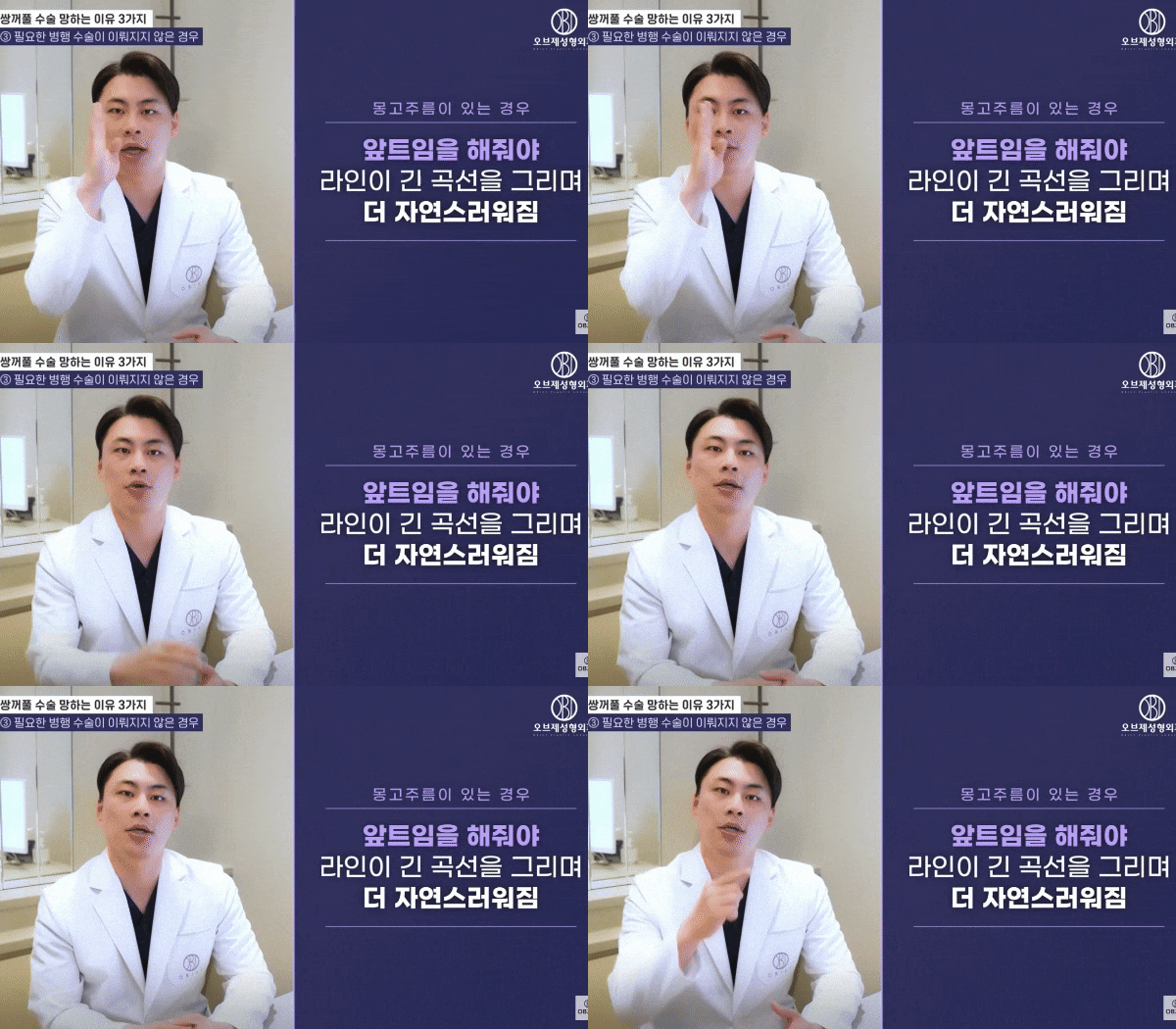
Eyes with pronounced epicanthic folds
that cover the inner corners
may also have difficulty forming
a smooth double eyelid crease toward the front.
In such cases, considering medial epicanthoplasty as well
may help the crease appear more naturally and clearly.
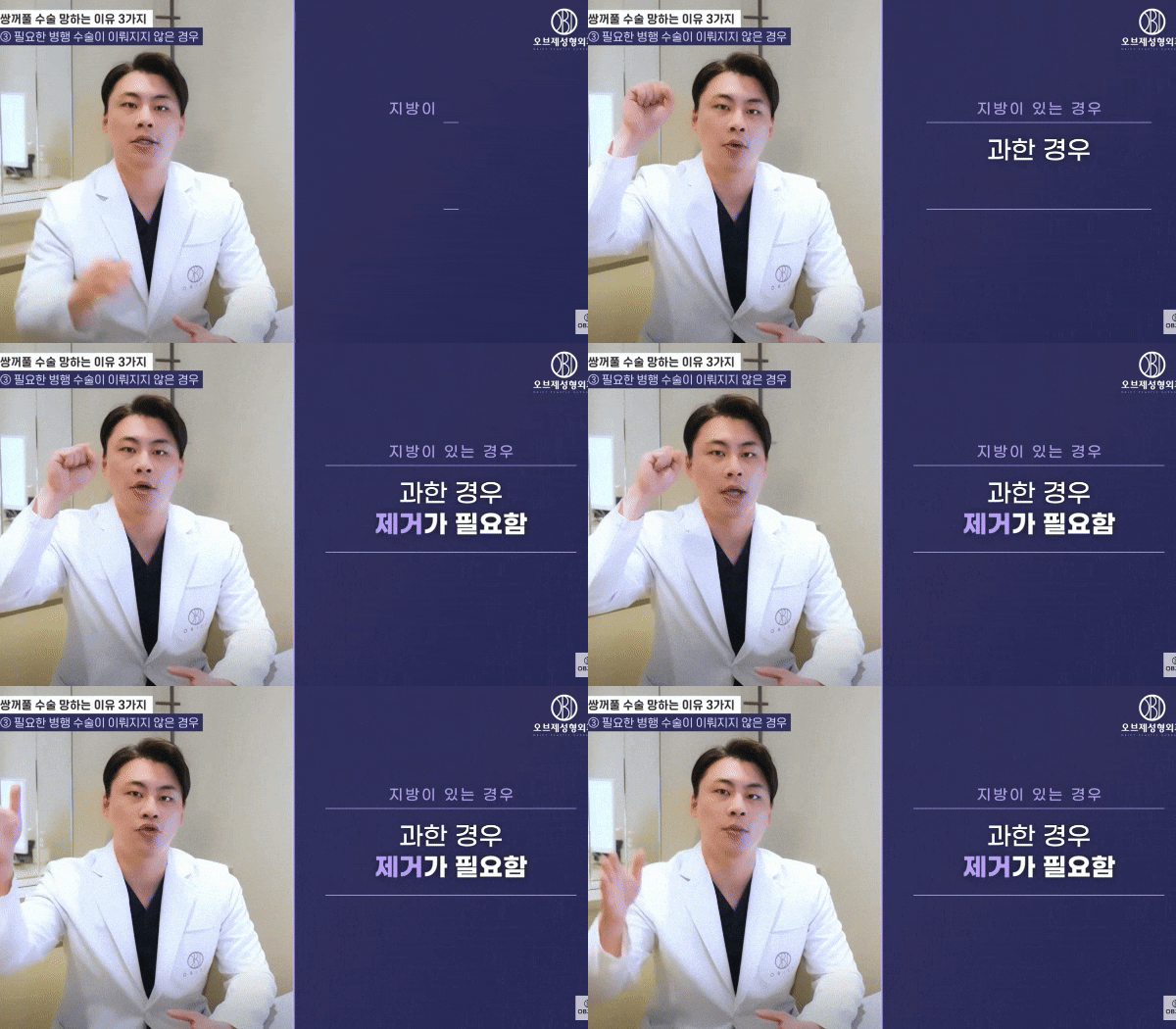
When there is a substantial amount of fat in the upper eyelids,
the crease can become obscured by the fat
and appear faint.
In such cases, appropriately adjusting the amount of fat
may help the crease become more clearly defined.
However, removing too much fat
can make the upper eyelids look sunken,
so appropriate adjustment is important.

The same applies when choosing the method
for double eyelid surgery.
People often assume that the non-incisional method is natural-looking
while the incisional method is more noticeable,
but in reality, some eyes are better suited to the incisional method
while others are better suited to the non-incisional method,
depending on their structure.
Ultimately, the key is not simply
to make the eyes look bigger,
but to accurately identify
why your eyes look small.
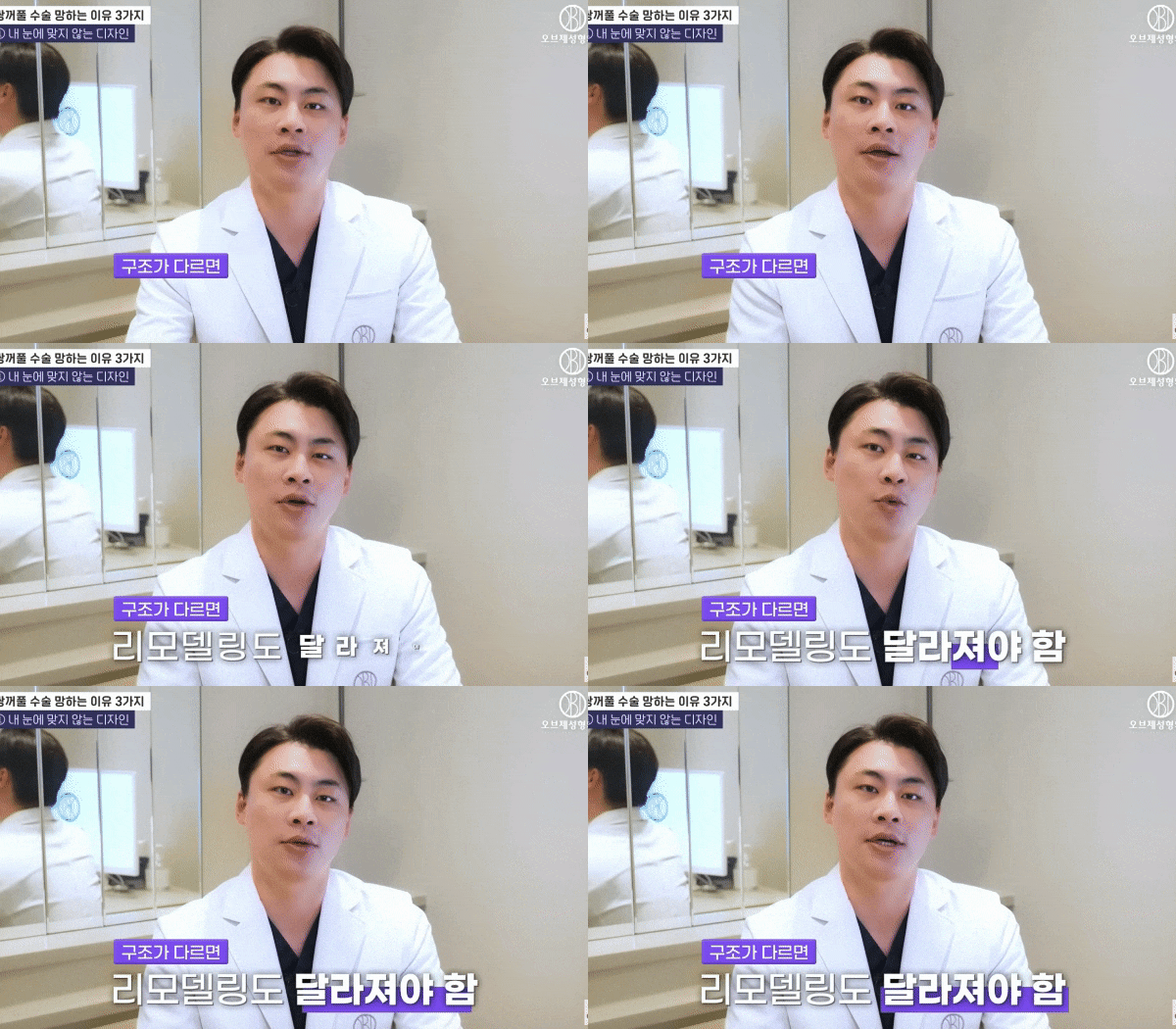
Whether the reason is
the strength used to open the eyes,
their horizontal length,
the epicanthic folds,
or the amount of fat determines
whether double eyelid surgery alone is sufficient
or whether ptosis-related eye-shape correction
should be added.
Today, we reviewed the relationship between
monolids, ptosis, and double eyelid surgery.
Double eyelid surgery increases the vertical width of the eyes
and creates a more defined impression,
but it does not strengthen the muscles used to open the eyes.
For eyes with weak eye-opening strength,
planning ptosis-related eye-shape correction together
with double eyelid surgery may lead to a more natural-looking result.
We also looked at how the necessary procedure can differ
even for people with the same type of monolids,
depending on their epicanthic folds, fat,
horizontal eye length, and skin condition.
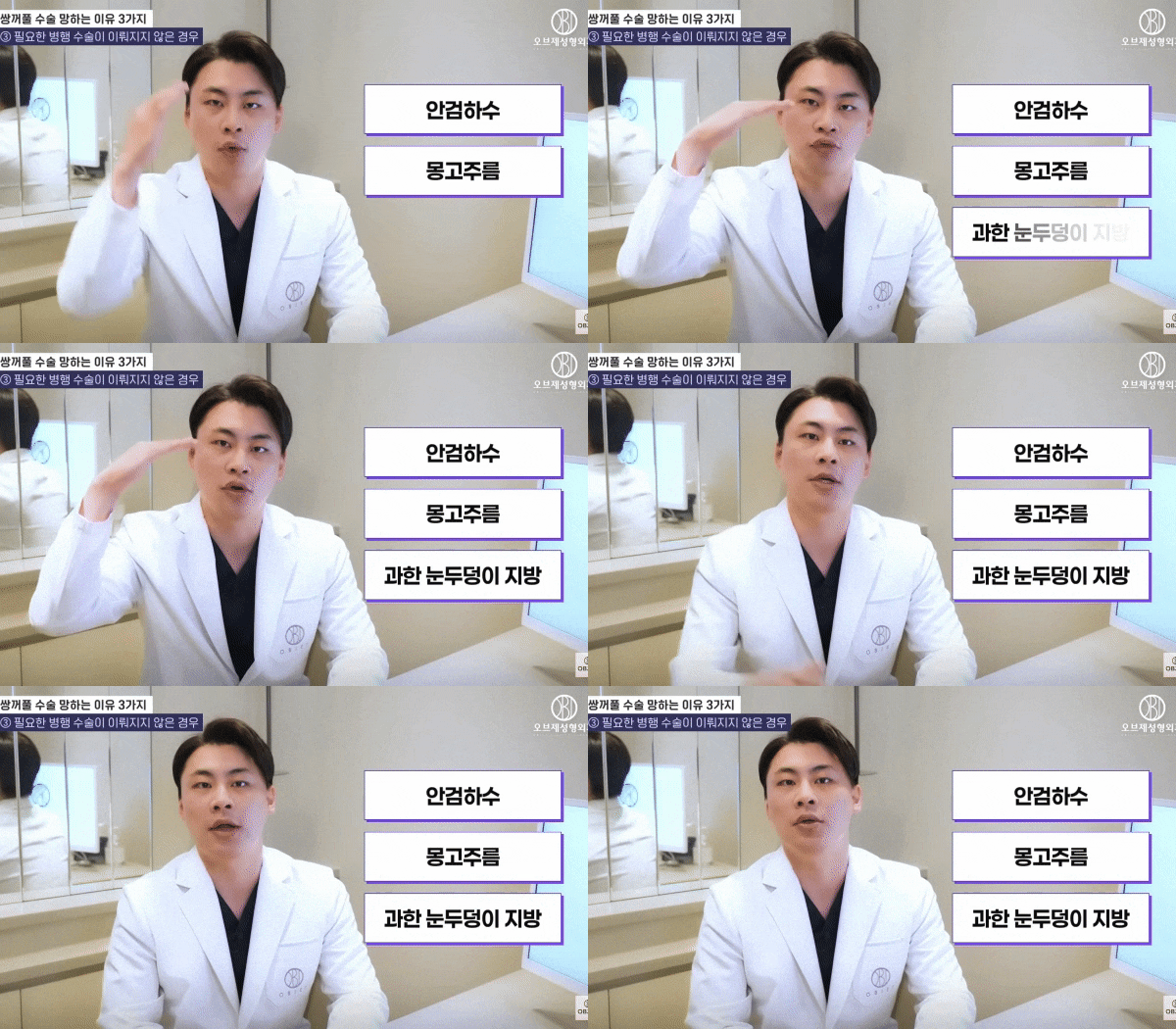
Dr. Park Si-hyun of 오브제성형외과
checks the vertical and horizontal dimensions of the eyes,
the strength used to open them,
the epicanthic folds,
the amount of fat in the upper eyelids,
and even the thickness of the eyelid skin,
before determining whether double eyelid surgery alone is sufficient
or whether eye-shape correction for monolids
or ptosis-related eye-shape correction is needed,
and then plans an approach suited to each person’s eyes.
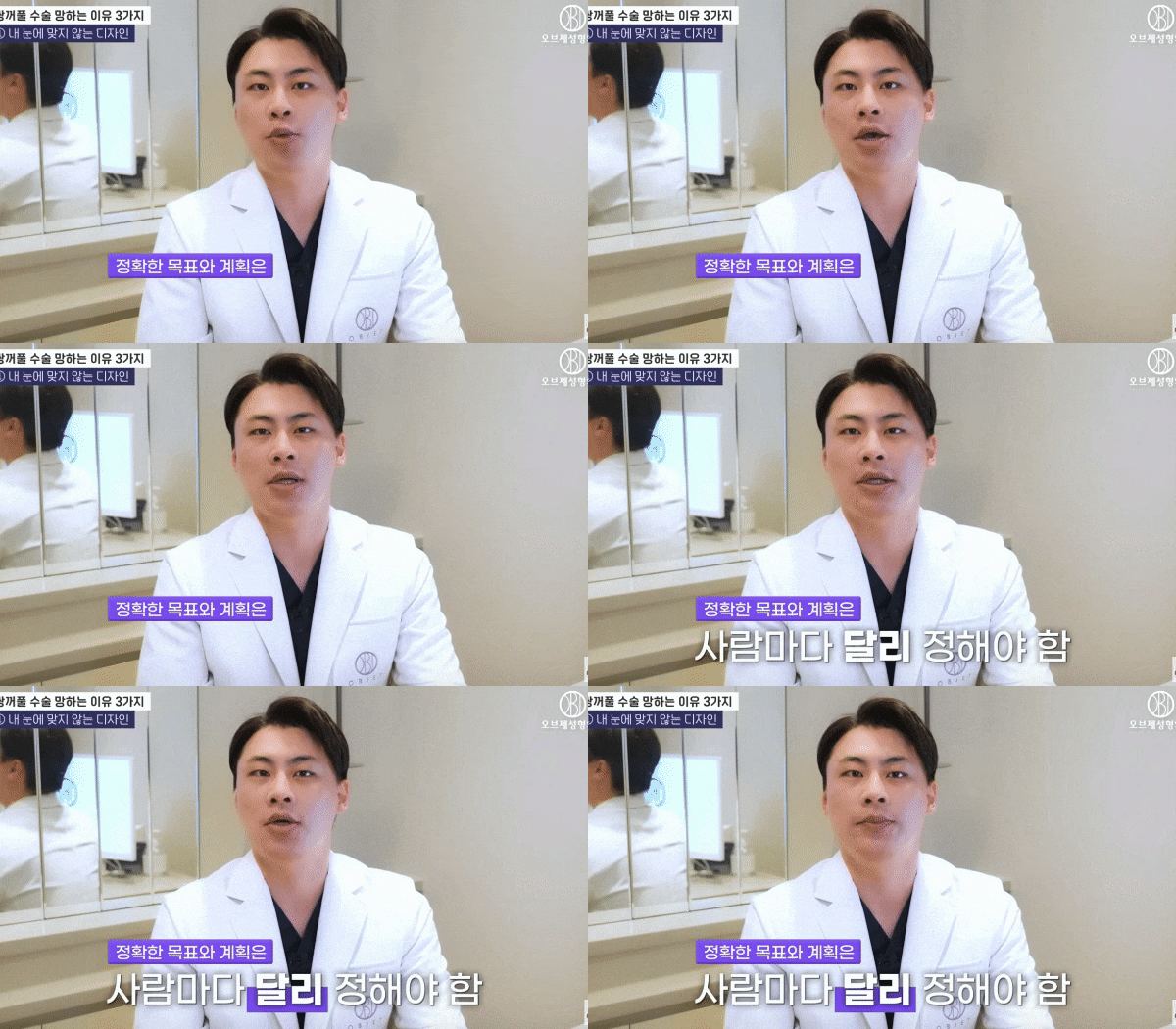
Even when starting from the same concern about monolids,
the reason the eyes look small differs from person to person.
We recommend carefully consulting with several clinics
and taking the time to determine
why your eyes look small
and which procedure is appropriate for that reason.
We hope that the careful research you undertake
will lead to a result you are happy with.
This has been 오브제성형외과.
Thank you.
<🔽🔽Related Video🔽🔽>
| Eye Surgery Consultations and Inquiries |
|---|
| Quick consultation by phone |
| Easy consultation via Kakao |
-
This post contains medical information prepared by 오브제성형외과의원 in compliance with the Medical Advertising Act.
-
The effects of the procedure may vary from person to person, and side effects may occur.
We recommend that you make a decision about the procedure only after having a thorough consultation with a medical professional in advance.