Why Is Fat Grafting Needed for Under-Eye Hollows?
Why Isn’t Repositioning Enough?

Hello.
This is Objet Plastic Surgery Clinic.
If you are concerned about your under-eye area,
the first procedure you are likely to look into
is under-eye fat repositioning.
It is widely known,
and it is also the procedure that most commonly comes to mind
when people think about under-eye concerns.
However, as you look into it further,
you may also come across statements that
“repositioning alone may not be enough.”
This is especially the case when the under-eye area is hollow:
repositioning alone may leave something to be desired.
Under-eye fat repositioning
is certainly a good procedure,
but it is not suitable for
every under-eye concern.
So today,
I will explain why repositioning alone may not be enough
and in which cases fat grafting for under-eye hollows
may be considered.
Reading to the end may help you
determine which approach is suitable
for the condition of your under-eye area.
Under-Eye Fat Repositioning:
Why It Can Be “Successful but Still Unsatisfying”
First, let’s briefly review
what under-eye fat repositioning is.
When the fat under the eyes pushes forward,
that area becomes noticeably bulging.
The tear trough below it may then
appear relatively deeper.
This difference in height creates shadows,
which can make the area look like dark circles.
Under-eye fat repositioning
is not simply a procedure that removes
this protruding fat.
It moves the protruding fat
toward the hollowed area
to smooth out the entire under-eye region.
Therefore, if a significant amount of fat is protruding
and the skin has good elasticity,
under-eye fat repositioning alone
may provide a sufficiently satisfactory result.
Satisfaction tends to be high,
particularly among people with firm skin
and protruding fat as the primary concern.
However, there is one point
that needs to be addressed here.
Although the protruding fat may be well corrected,
the under-eye area can sometimes still look hollow
or tired.
This does not mean the procedure was unsuccessful.
The protrusion has been corrected,
but the volume in the hollowed area
has not been filled.
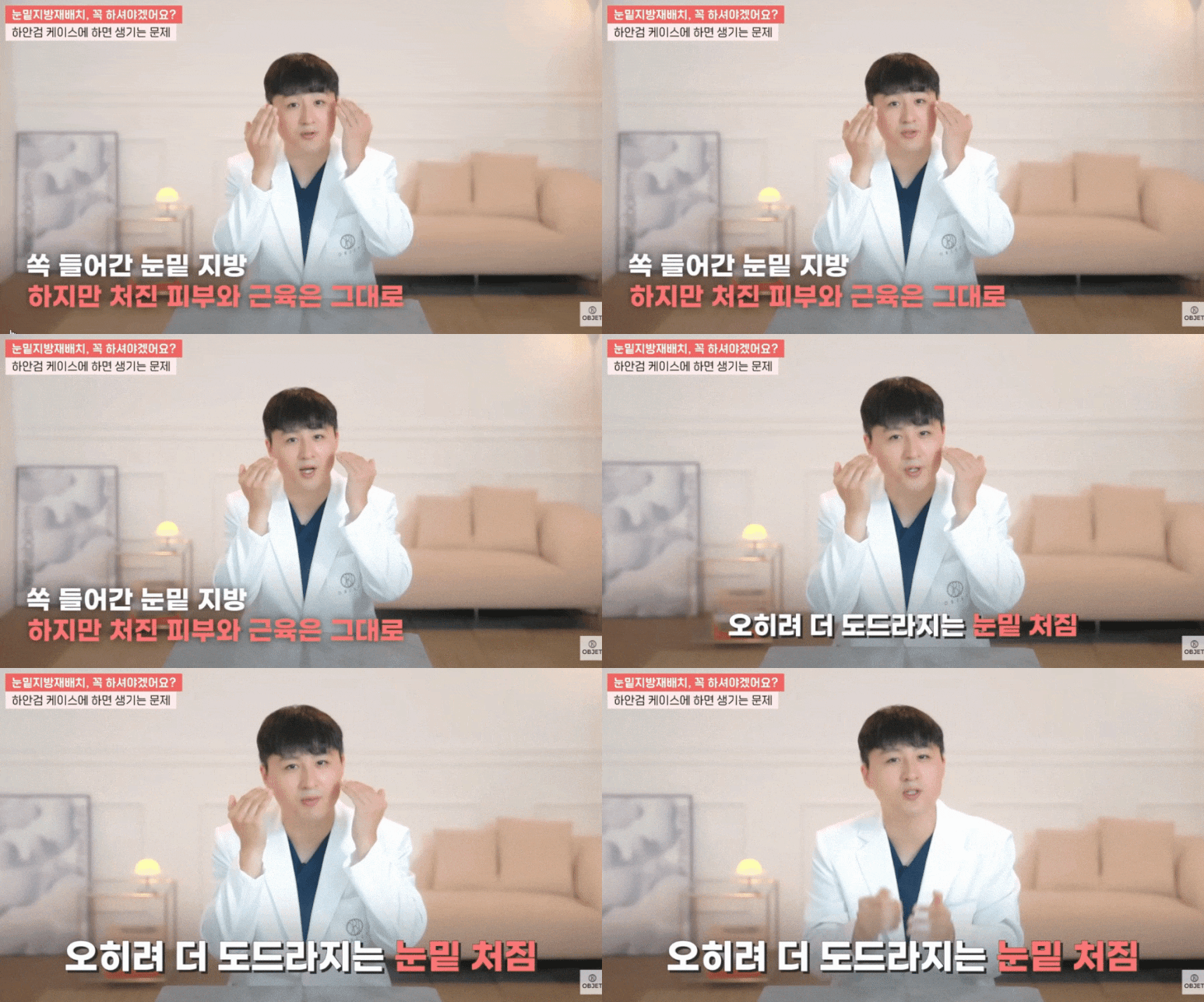
Here is a simple example
to help explain this.
Imagine smoothing out an uneven road.
You can shave down the raised areas,
but filling in the recessed areas
requires a separate step.
The under-eye area is similar.
The protruding fat
can be adjusted through repositioning,
but filling hollow areas
has limitations when using repositioning alone.
This situation may occur when
the under-eye area was originally very hollow,
the skin is naturally thin,
the amount of under-eye fat itself is small,
or the volume in the anterior cheek is insufficient.
In summary,
there is a limit to the amount of fat
that can be moved through under-eye fat repositioning.
Therefore, when the under-eye area is deeply hollow,
it can be difficult to sufficiently restore the volume
through repositioning alone.
Fat Grafting for Under-Eye Hollows:
Consider It Together in These Cases
When it is difficult to restore all the deficient volume
with under-eye fat repositioning alone,
separate fat grafting for the under-eye area
may also be considered.
The fat grafting referred to here
is not simply about filling the area with fat.
The Single Fat-cell Grafting (SFG)
performed at Objet Plastic Surgery Clinic
uses a different approach from conventional fat grafting.
With conventional fat grafting,
depending on the characteristics of the grafted fat,
areas with thin skin, such as the under-eye area,
may appear uneven on the surface.
In contrast, Single Fat-cell Grafting
separates the fat into individual cells
and injects it in extremely small amounts.
Simply put,
it is similar to dividing the fat into small portions
and placing it precisely, layer by layer,
over a thin layer.
This allows volume to be supplemented
evenly and smoothly
even in delicate areas such as the under-eye region.
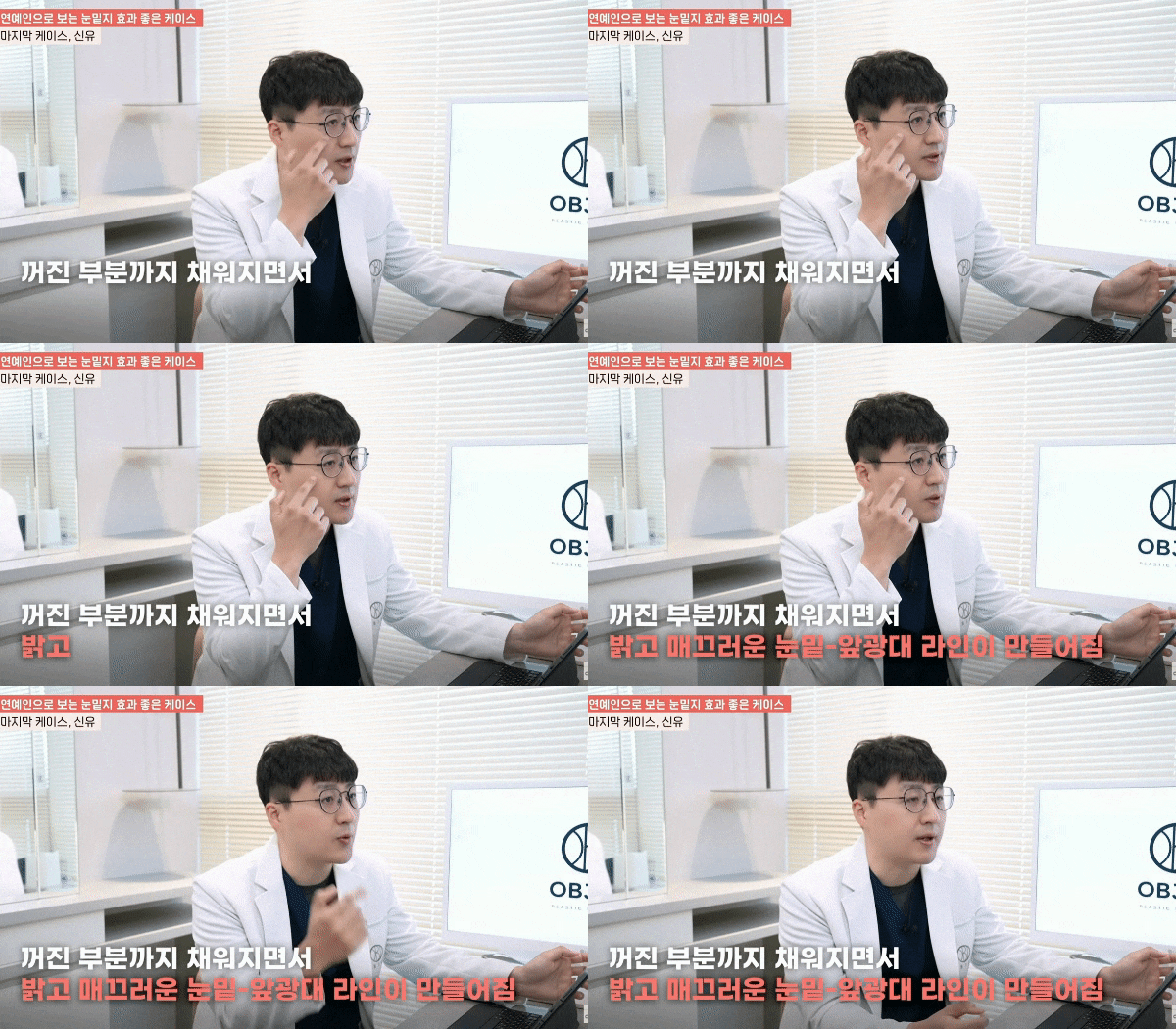
When fat grafting for under-eye hollows is performed together,
the deficient volume is restored,
the under-eye area connects naturally with the anterior cheek,
and a more refreshed appearance may be expected.
It may be worth considering together,
particularly in the following cases:
When the under-eye area is deeply hollow,
when the skin is thin enough for the bone contours to show through,
when the amount of under-eye fat itself is small,
or when the anterior cheek is flat, creating a pronounced step between it and the under-eye area.
Under these conditions,
volume supplementation may be difficult
with under-eye fat repositioning alone.
Combining it with fat grafting for under-eye hollows
may therefore lead to a more natural result.
How to Find the Approach
That Suits Your Under-Eye Area
If you have read this far,
you may be wondering,
“Which of these cases applies to me?”
In reality, the condition of the under-eye area
varies greatly from person to person.

How much the fat protrudes,
how deeply hollow the under-eye area is,
and how thick the skin is,
whether the skin is sagging,
and what the volume of the anterior cheek is like—
all of these factors
work together.
As a result, even when the concern is the same,
the appropriate approach may be completely different.
For some people,
under-eye fat repositioning alone is sufficient,
while for others,
combining it with fat grafting for under-eye hollows
may be more appropriate.
In addition, if the skin or muscles are sagging,
another approach, such as a lower blepharoplasty,
may be more suitable.
In such cases,
even if only the fat is repositioned,
the excess skin and tissue remain as they are,
which can make it difficult to achieve the desired result.
For this reason,
rather than deciding on the procedure name first,
it is most important to accurately assess
the current condition of your under-eye area.
The degree of fat protrusion,
the depth of the under-eye hollow,
skin thickness and elasticity,
and even the volume of the anterior cheek
must all be assessed comprehensively
to find the approach that is right for you.
Today, we looked at
why under-eye fat repositioning alone
may leave something to be desired,
and in which cases
fat grafting for under-eye hollows
may be considered together with it.
When seeking to address under-eye concerns,
it is more important to find an approach
that suits the condition of your under-eye area
rather than deciding on the procedure first.
Please keep this in mind.

Dr. Kim Hyun-jo of Objet Plastic Surgery Clinic
analyzes the degree of under-eye fat protrusion,
the depth of the under-eye hollow,
skin thickness, and anterior cheek volume
one by one before determining
whether under-eye fat repositioning alone is sufficient
or whether to combine it
with Single Fat-cell Grafting.
Even with the same under-eye concern,
the approach should vary according to the structure.
For this reason,
we consider establishing a customized plan
suited to the condition of each person’s under-eye area
to be the most important consideration.
If you are considering surgery
for under-eye concerns,
we recommend beginning with a consultation
that examines the under-eye structure and volume
along with the condition of the skin.
This has been Objet Plastic Surgery Clinic.
Thank you.
<🔽🔽Recommended video to watch together🔽🔽>
| Consultation and Inquiries About Under-Eye Fat Repositioning |
|---|
| Quick consultation by phone |
| Easy Kakao consultation |
-
This post is medical information prepared by Objet Plastic Surgery Clinic in compliance with the Medical Advertising Act.
-
The effects of the procedure may vary from person to person, and side effects may occur.
We recommend that you have a thorough consultation with a medical professional in advance before deciding whether to undergo the procedure.