Worried About Lower Eyelid Scarring and Swelling?
김현조’s <Q&A>

Hello.
This is 오브제성형외과.
When looking into lower eyelid surgery,
there are two things that tend to cause the most concern.
Lower eyelid scarring and swelling.
Since this is an incision-based procedure,
many people hesitate because they worry that
a mark might remain under the eyes for a long time,
or because they are unsure
when the swelling will subside after surgery.
Even after searching online,
you may have found that each article says something different,
leaving you even more confused.

So today,
we will gather the questions that come up most often during consultations
and explain them one by one.
From how scars change over time
to the course of swelling recovery,
as well as under-eye fullness and fine lines,
we hope that reading to the end
will help organize the questions
you had before surgery.
Lower Eyelid Scars—
This Is How They Change Over Time
Lower eyelid surgery
involves an incision.
That is why it is important to understand
how lower eyelid scars may change
over time.
From immediately after surgery
through approximately one to two months,
the suture area may appear as a red line
or may look slightly raised.

During this period,
as the skin tissue heals on its own,
more blood gathers around the wound.
This is a natural response
as the body works to heal
the injured area quickly.
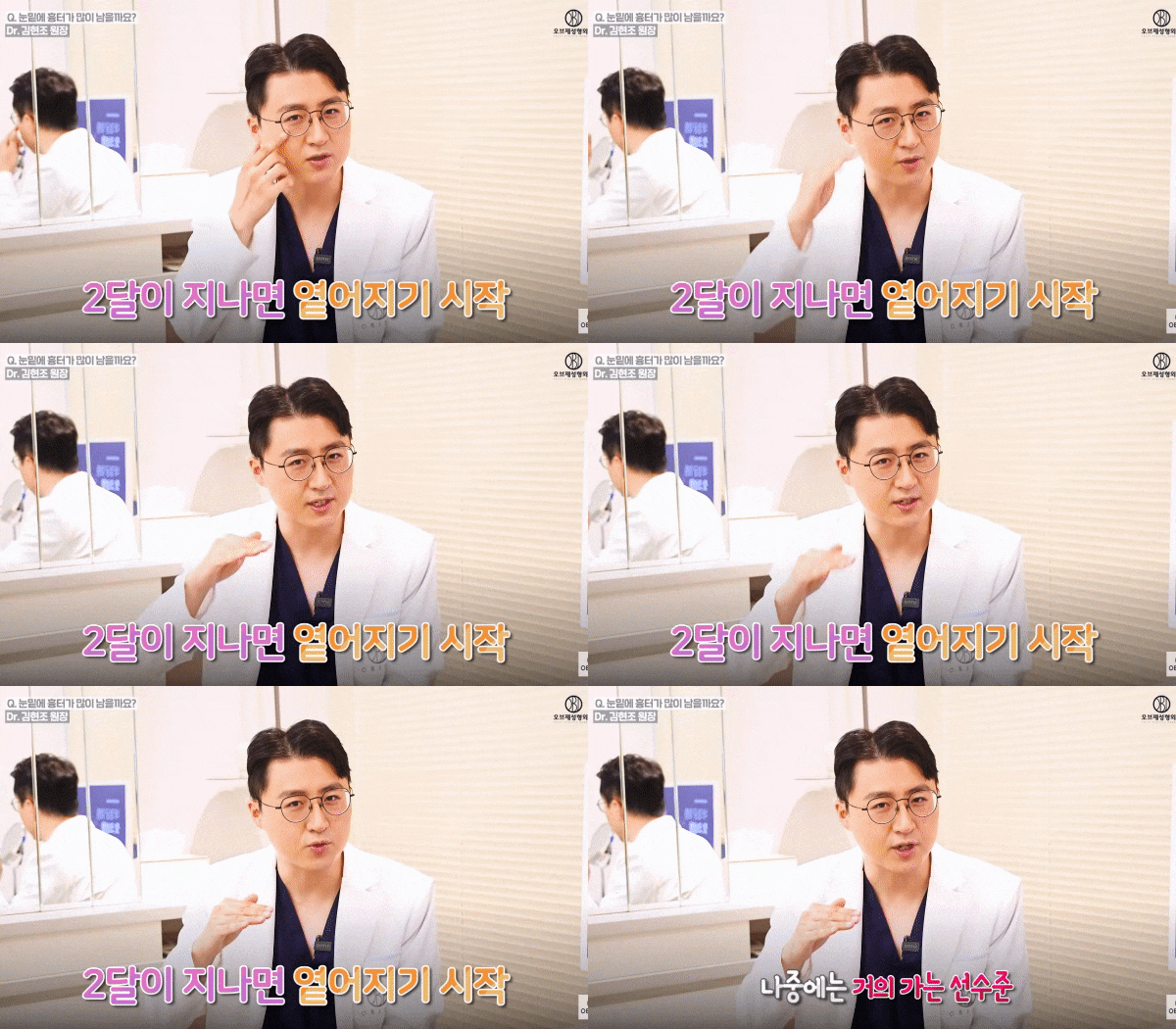
After two months,
the color often gradually becomes lighter,
and the scar changes into a fine line.
There is one useful thing to know here.
The eyelid skin
is among the thinnest skin on the body.
Compared with thicker skin,
thin skin tends to heal with finer suture marks.
In addition,
the direction of the incision also plays an important role.
There is a natural direction
to the fine lines under the eyes.
When the incision is designed to follow this direction,
the incision line naturally blends into the lines
as healing progresses,
so lower eyelid scars
are often less noticeable.

Of course, the course of recovery
may vary depending on skin thickness,
elasticity, and age.
Therefore, after sufficient time has passed,
the incision line is often naturally concealed
and does not draw attention in everyday life.
Lower Eyelid Swelling—
Things Change After This Period

Swelling and bruising after lower eyelid surgery
are a natural part of the recovery process.
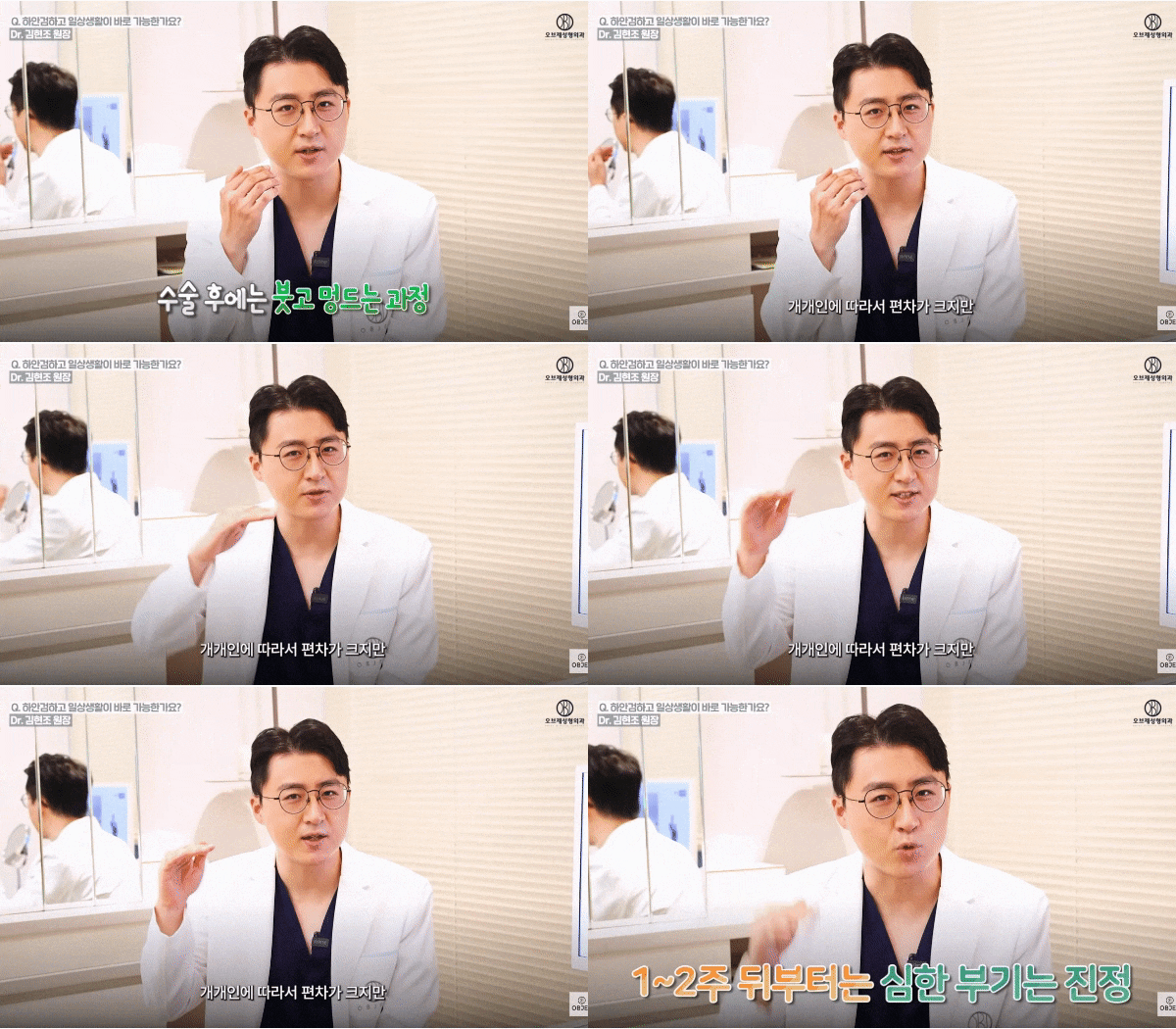
Although there are individual differences,
most of the significant swelling usually subsides
after about one to two weeks.
Bruising also often gradually fades
after this period.
Although this varies from person to person,
many people are able to go out
after about one to two weeks.
However, the speed of recovery may vary
depending on age, individual constitution,
and the presence or absence of underlying conditions.
If you have an important appointment,
it is safer to allow ample recovery time
rather than scheduling it too soon.
It is also helpful to know about
the recovery care process after lower eyelid surgery.

After lower eyelid surgery,
the area is disinfected
on the following day or within two days,
and the sutures are removed
after approximately five days.

Fat repositioning under the eyes
is managed primarily with cold compresses
without suture removal,
whereas lower eyelid surgery
includes suturing,
so it is helpful to understand in advance
that the care methods are different.
Under-Eye Fullness and Fine Lines After Surgery—
These Changes May Occur
Many people considering lower eyelid surgery
also worry that their under-eye fullness may disappear.
To give you the conclusion first,
under-eye fullness is not a structure made of fat.
Inside the eyelid,
there is a thin, firm, plate-shaped tissue
that supports the shape of the eyelid.
This is called the tarsal plate.

A muscle is located directly in front
of this tarsal plate.
The shape created by these two structures together
is what produces the rounded appearance
of under-eye fullness.
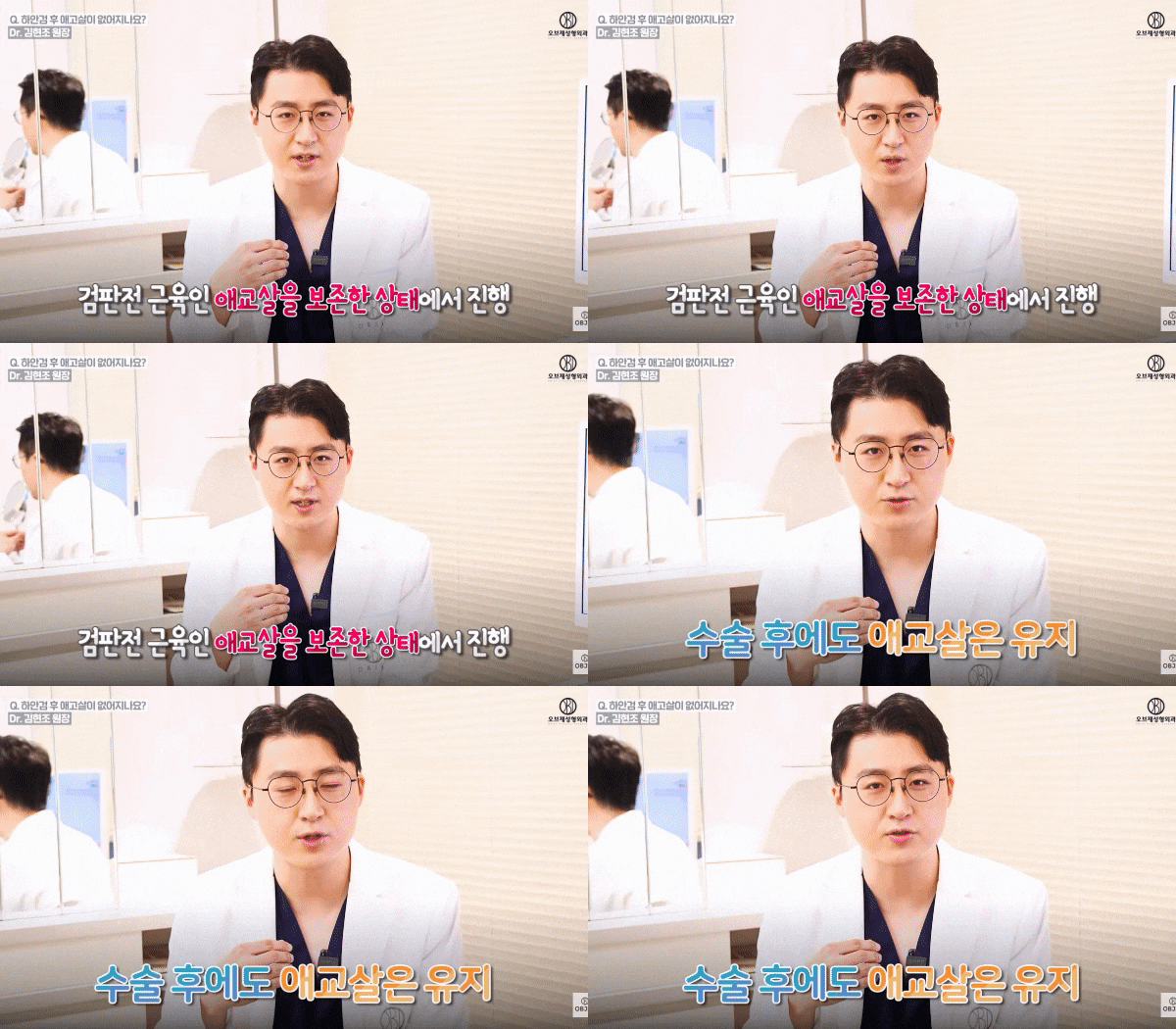
Lower eyelid surgery
is generally performed while preserving
this muscle structure,
so under-eye fullness is often maintained.
There is also something to explain
about fine lines.
Deep wrinkles caused by sagging skin
and loose skin often improve.
However,
not every tiny, densely spread fine line
will disappear.
Immediately after surgery,
swelling may make it look
as though the fine lines have been smoothed out.

As the swelling subsides,
some fine lines may become visible again.
Fine lines are especially likely to appear
if the skin is thin or tends to be dry,
so some may remain even after surgery.
Knowing this in advance
can help you set realistic expectations
for the surgical results.
Today, we reviewed frequently asked questions
about lower eyelid scars and swelling,
as well as under-eye fullness and fine lines.
Lower eyelid scars
may look red at first,
but they gradually become lighter over time,
and when the incision follows the direction of the wrinkles,
the scar is often less noticeable.

Lower eyelid swelling varies from person to person,
but most of the significant swelling usually subsides
after one to two weeks.
Under-eye fullness is preserved,
while some fine lines may remain.
If you are still considering the procedure carefully,
you are taking the right approach.
We recommend consulting several clinics thoroughly,
while keeping in mind the information covered today.
김현조 at 오브제성형외과
examines the thickness and elasticity of the skin under the eyes
along with the eyelid structure
to design the location and direction of the incision.
The incision is made to follow the direction
of the under-eye wrinkles,
and the procedure is performed without excessively removing skin
so that a natural under-eye contour
can be maintained after surgery.
If you are considering lower eyelid surgery,
we recommend starting with a consultation
that examines the current condition under your eyes
along with your individual skin characteristics.
This has been 오브제성형외과.
Thank you.
<🔽🔽Recommended Video to Watch Together🔽🔽>
| Consultation and Inquiries for Middle-Aged Eye Surgery |
|---|
| Quick Consultation by Phone |
| Easy Kakao Consultation |
-
This post is medical information prepared by 오브제성형외과의원 in compliance with the Medical Advertising Act.
-
The effects of the procedure may vary from person to person, and side effects may occur.
We recommend that you decide whether to undergo the procedure only after having a thorough consultation with a medical professional in advance.