Can Forehead Lift Surgery Improve the Ability to Open Your Eyes Before and After?
Dr. Hyun-jo Kim Explains!
Hello.
This is Objet Plastic Surgery.
There are people who feel a great deal of tension in their forehead every time they open their eyes,
and whose upper eyelids feel heavy and uncomfortable throughout the day,
especially by evening.
At first, they may dismiss it as being related to their condition that day,
but when it does not improve over time,
and they notice their forehead wrinkles becoming deeper every time they look in the mirror,
a moment may come when they realize it is not simply fatigue.
That is probably why you came to this article while looking into the changes before and after forehead lift surgery,
particularly to find out whether your ability to open your eyes actually improves.
Today, we will explain step by step
how forehead lift surgery changes the way you open your eyes,
and how to determine whether the procedure is suitable for you.
We hope this article will help you decide
whether forehead lift surgery is the right option for you.
The “Real Reason” Your Eyes Feel More Comfortable
Before and After Forehead Lift Surgery
To start with the conclusion,
your ability to open your eyes may change before and after forehead lift surgery.
However, this does not mean that the muscles themselves responsible for opening your eyes become stronger.
Let us explain briefly to make this easier to understand.
Opening the eyes involves the muscles inside the eyelids contracting and pulling them upward.
However, when the forehead and eyebrows droop,
weight is placed on top of the eyelids.
In simple terms, the muscles that open your eyes are working with the same amount of force,
but additional weight is pressing down from above.
It is similar to placing a heavy blanket on top of a comforter.
Just as it takes more effort to raise your arms under a blanket when an additional blanket is placed on top,
a drooping forehead and eyebrows create an additional burden when opening your eyes.
Because the eyelid muscles alone are not enough,
the body also recruits the forehead muscles.
You tense your forehead to raise your eyebrows,
and use that force to lift the eyelids along with them.
When this is repeated,
horizontal forehead wrinkles develop,
and the forehead and area around the eyes can inevitably become fatigued easily.
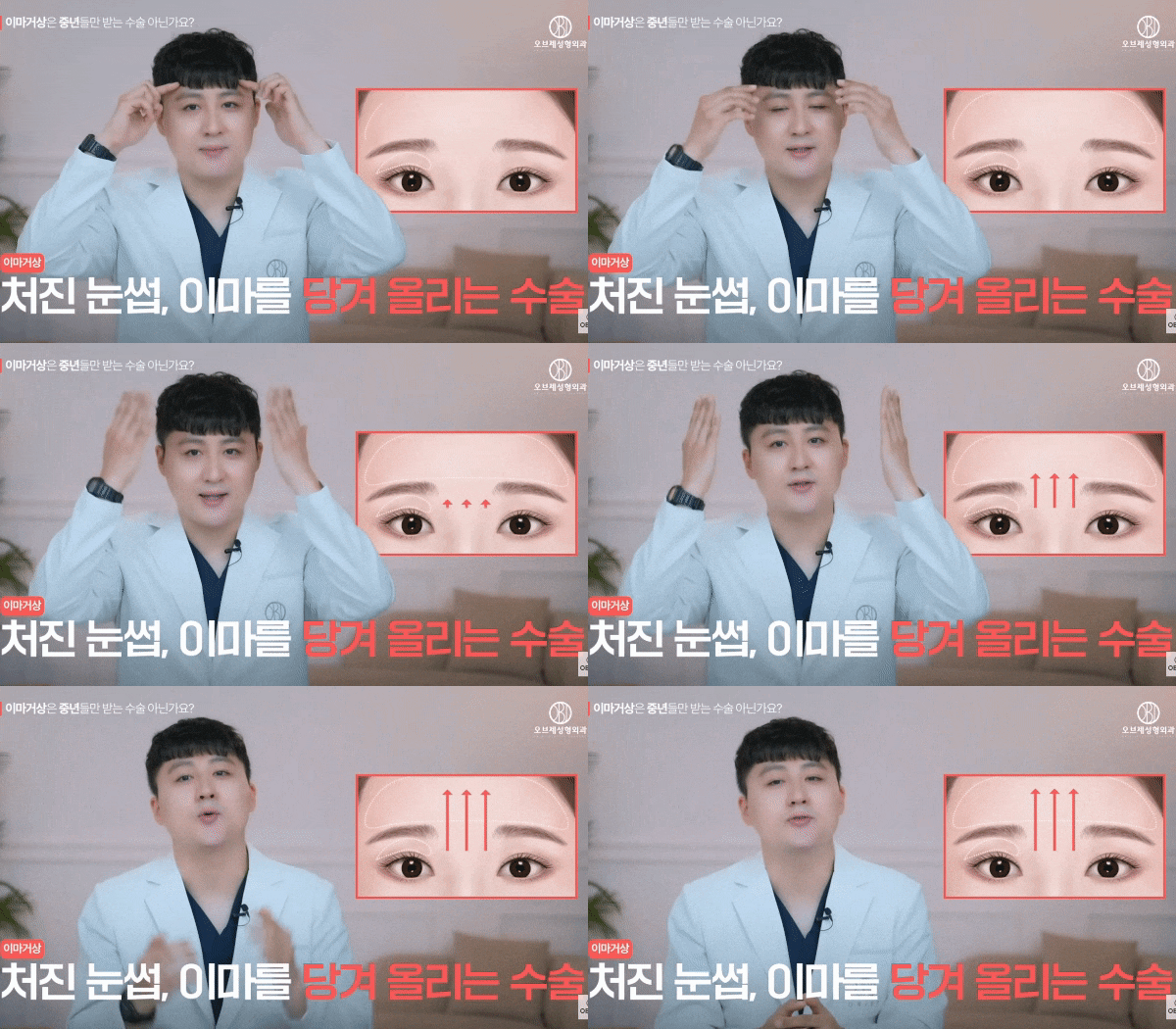
Forehead lift surgery is a procedure that lifts and secures the drooping forehead tissue in this condition.
When the forehead and eyebrows return to their proper positions,
the weight pressing on the upper eyelids is reduced,
allowing the muscles that open the eyes to open them sufficiently using their original strength alone.
The reason the sensation of opening the eyes differs before and after surgery
is not that the muscles become stronger,
but that unnecessary strain is reduced.
The Cause of Heavy, Uncomfortable Eyes:
Check “Here” First
When your eyes feel heavy and uncomfortable,
the first things that often come to mind are a loosened double-eyelid crease
or stretched eyelid skin.
Of course, that can sometimes be the case.
However, upon closer examination,
the cause is often the position of the eyebrows rather than the eyelids.
There is a simple way to check this at home.
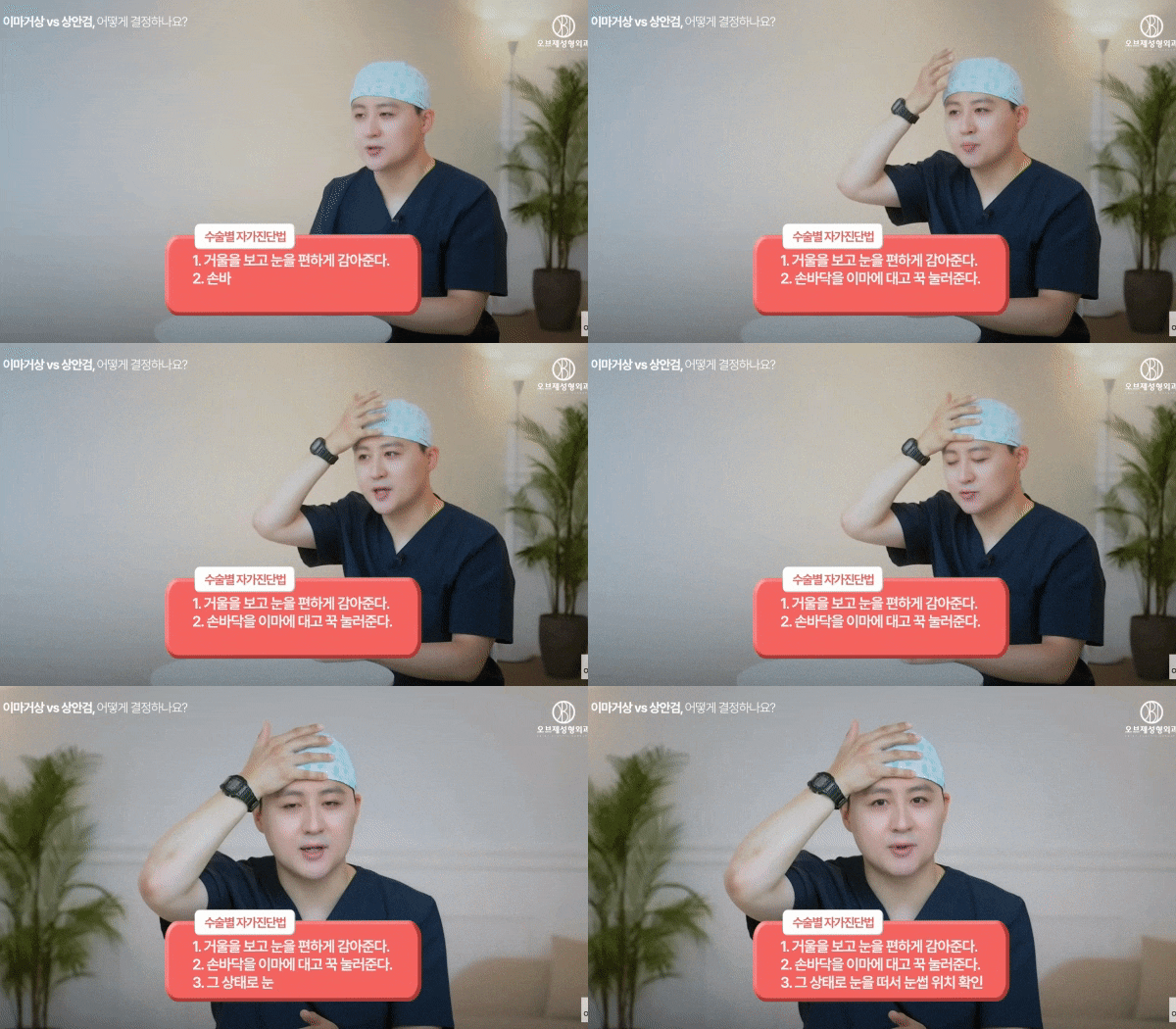
Stand in front of a mirror, close your eyes comfortably,
and press your forehead with your palm to keep your eyebrows from rising.
Then open your eyes in that position.
If your eyes do not open easily at this point,
or feel much heavier than usual,
it is possible that you normally use your forehead muscles together with your eyelid muscles to open your eyes.
You should also check the position of your eyebrows.
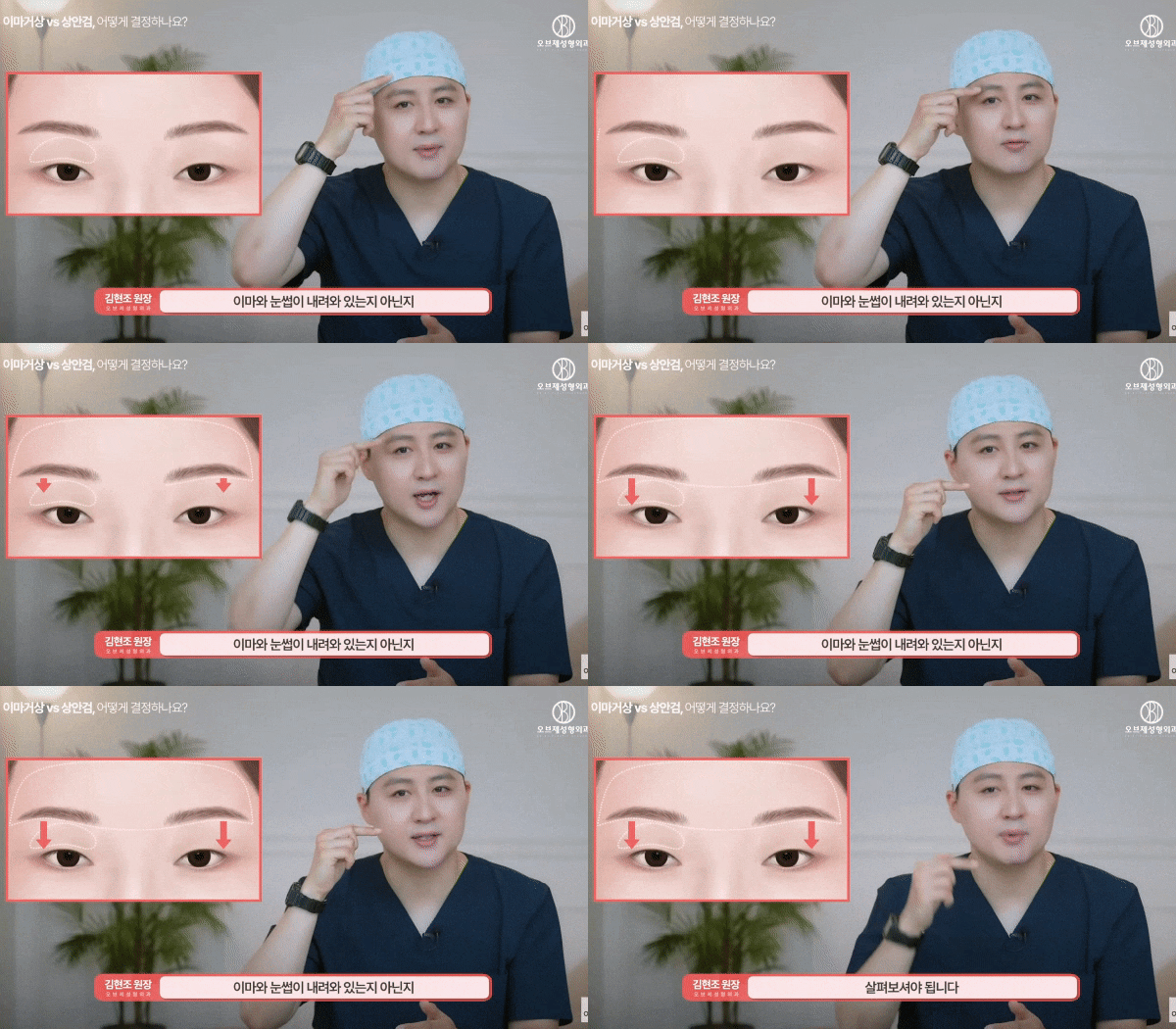
If, while pressing your forehead, your eyebrows are below or nearly level with the brow bone,
your forehead and eyebrows may be drooping.
In this case, surgery on the eyelids alone may not sufficiently relieve the uncomfortable sensation.
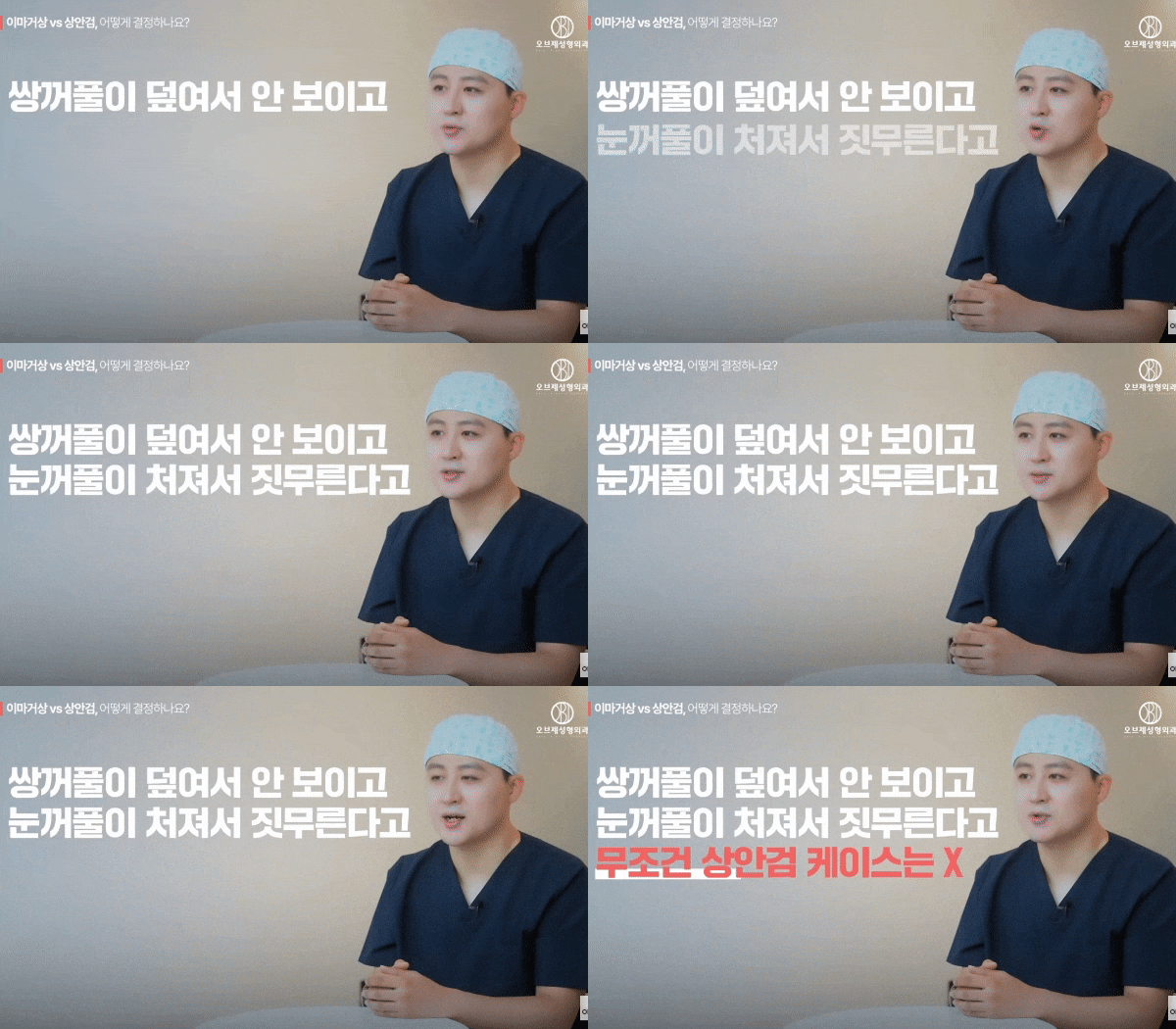
Many people who show a noticeable difference before and after forehead lift surgery
also have symptoms that begin with this underlying cause.
Conversely, if the eyebrow position is normal and only the eyelid skin is stretched,
upper eyelid surgery may be a more suitable option.
Because the surgical approach differs completely depending on whether the heaviness comes from the eyelids
or is caused by drooping eyebrows and forehead,
identifying the exact cause first is the most important step.
For Forehead Lift Surgery,
“This” Criterion Matters More Than Age
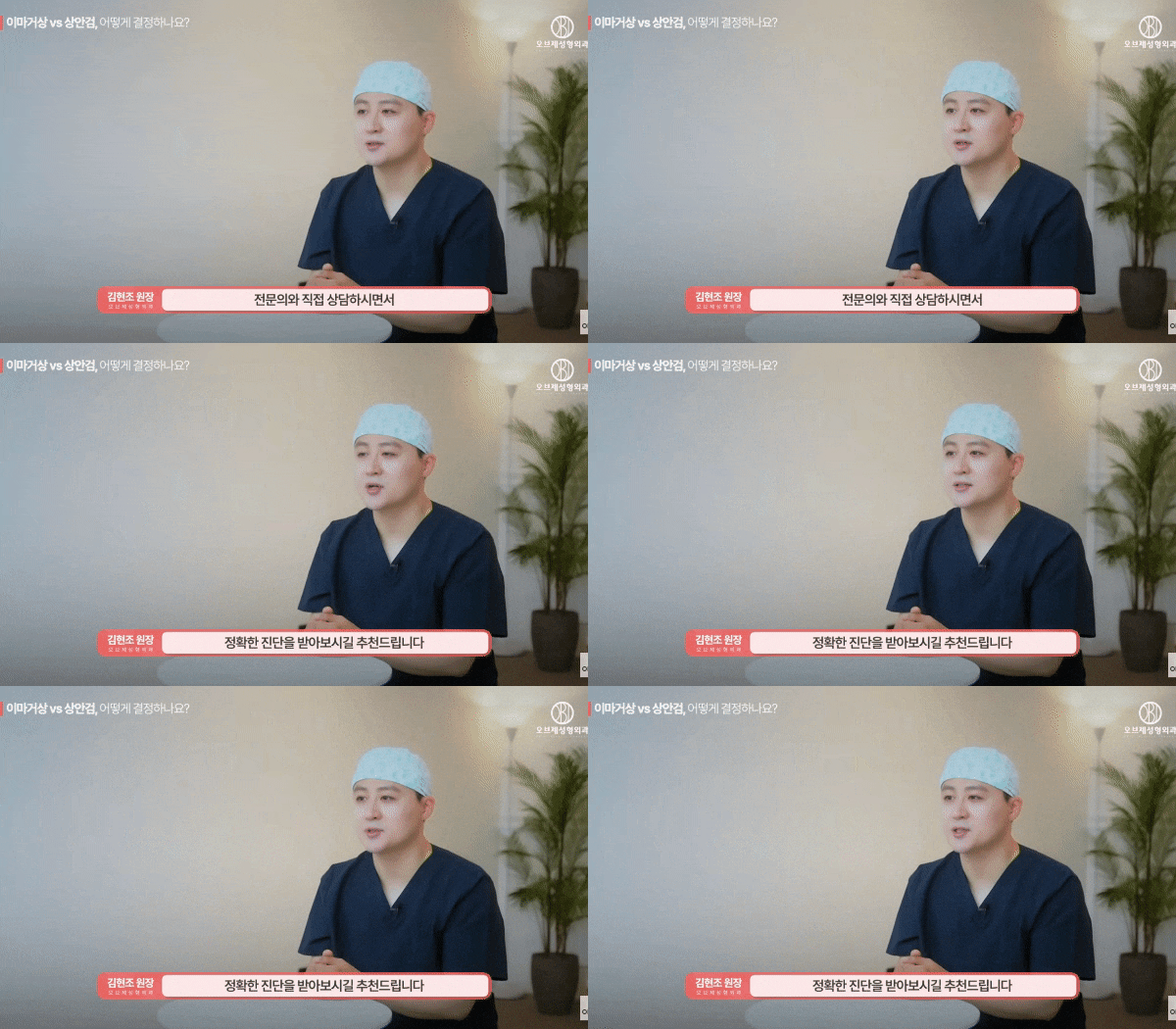
Forehead lift surgery is often perceived as a procedure for people in their 50s, 60s, or older.

However, forehead lift surgery is not determined by age.
The relevant criteria are not age, but the position of the eyebrows,
the thickness of the skin above the eyes,
and the extent to which the forehead muscles are used.
Even among people in their 20s and 30s,
those with naturally low eyebrows or thick upper eyelids
may need to tense their forehead to open their eyes clearly.
If these individuals undergo double-eyelid surgery alone,
the underlying issue—the position of the eyebrows—
remains unchanged, so their eyes may still not open comfortably.
After middle age,
the eyebrows and forehead often droop together with aging,
causing the eyelids to obstruct the field of vision.
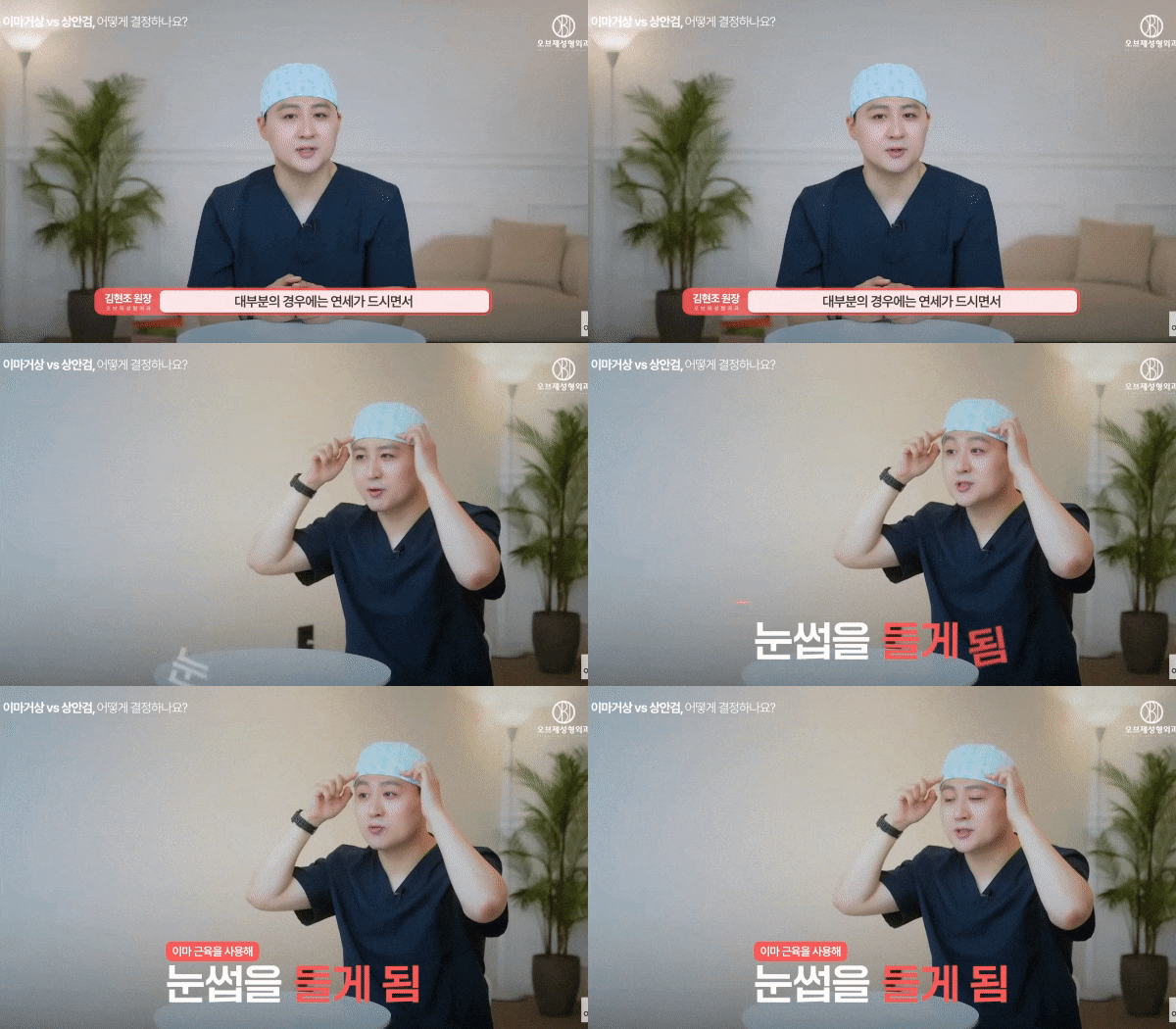
When the drooping forehead and eyebrows are lifted through forehead lift surgery,
the burden on the upper eyelids is reduced,
making the field of vision more comfortable
and giving the overall appearance a brighter look.
In summary,
the cases in which forehead lift surgery may be suitable can be categorized as follows.
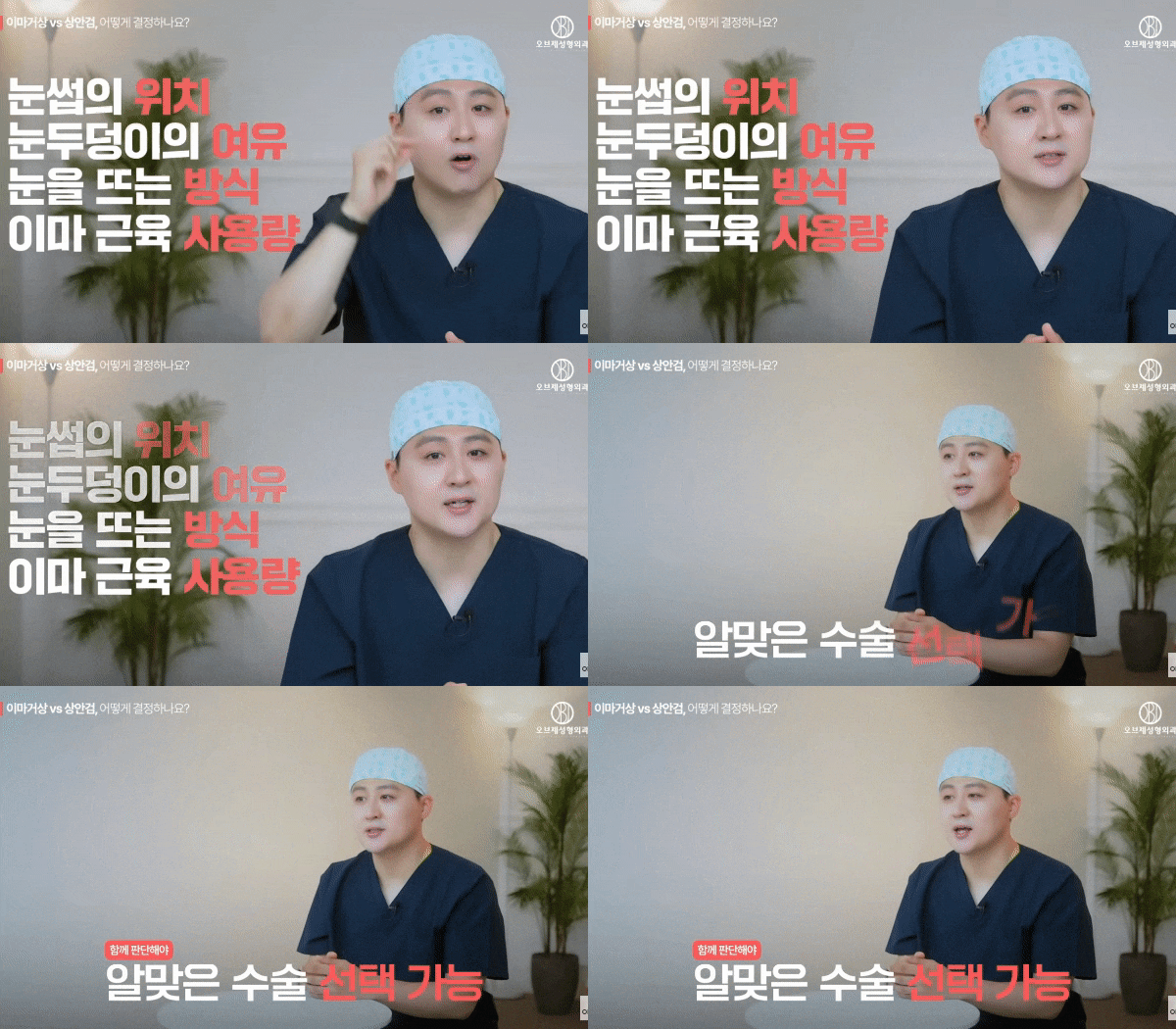
If you tense your forehead when opening your eyes,
if your eyebrows are below or level with your brow bone,
if your double-eyelid crease is hidden by the upper eyelid and is difficult to see,
or if forehead wrinkles began appearing at an early age,
forehead lift surgery may be worth considering.
Today, we explained why the way you open your eyes may change before and after forehead lift surgery,
and how to determine whether the procedure may be suitable for you.
You may now understand that heavy, uncomfortable eyes are not necessarily caused only by an eyelid problem.
You need to consider the position of your eyebrows,
how much your forehead has drooped,
and the way you open your eyes together
to find the surgical approach that is right for you.
We recommend consulting several clinics carefully,
but be sure to check where your eyebrows are currently positioned
and how much you are using your forehead muscles.
Dr. Hyun-jo Kim of Objet Plastic Surgery evaluates your habits when opening your eyes,
where your eyebrows are positioned,
and how much you use your forehead
to determine why your ability to open your eyes has changed.
Rather than simply lifting the forehead,
we consider your eye-opening habits and the extent to which you use your forehead
and then determine the lifting range and direction suited to you before proceeding with surgery.
If you are considering forehead lift surgery,
rather than comparing only the surgical methods,
we recommend starting with a consultation that also examines where your eyebrows are currently positioned
and how much your forehead has drooped.
This has been Objet Plastic Surgery.
Thank you.
<🔽🔽Recommended video to watch together🔽🔽>
| Eye Surgery Consultations and Inquiries |
|---|
| Quick phone consultation |
| Convenient Kakao consultation |
-
This post contains medical information prepared by 오브제성형외과의원 in compliance with the Medical Advertising Act.
-
Treatment outcomes may vary from person to person, and side effects may occur.
We recommend that you make a decision about treatment only after having a thorough consultation with a medical professional in advance.