Does Septoplasty Cause the Nose to Collapse?
The 'Reason' Behind This Misconception
Hello.
This is 오브제성형외과.
When looking into septoplasty,
there is one story
you are likely to come across at least once.
"If the septum is touched,
the nose may collapse."
This one sentence
often creates concern
about using one's own tissue.
You may have understood that
using your own tissue is safe,
but when you look into it,
you may even come across claims
that the nose can become depressed.
This can make it difficult
to distinguish fact from misconception.
To give you the conclusion first,
using the septum does not itself
cause the nose to collapse.
This problem can occur
when the necessary structures
are not preserved sufficiently.
There is a clear reason
behind this misconception,
and understanding it
can actually help you make
a more informed decision.
Today, we will explain in order
why this misconception arose,
and what is genuinely important
in nasal surgery using the septum.
By reading to the end,
you will have a clearer understanding
of how the septum is used.
The Misconception About Nasal Collapse
Started 'Here'
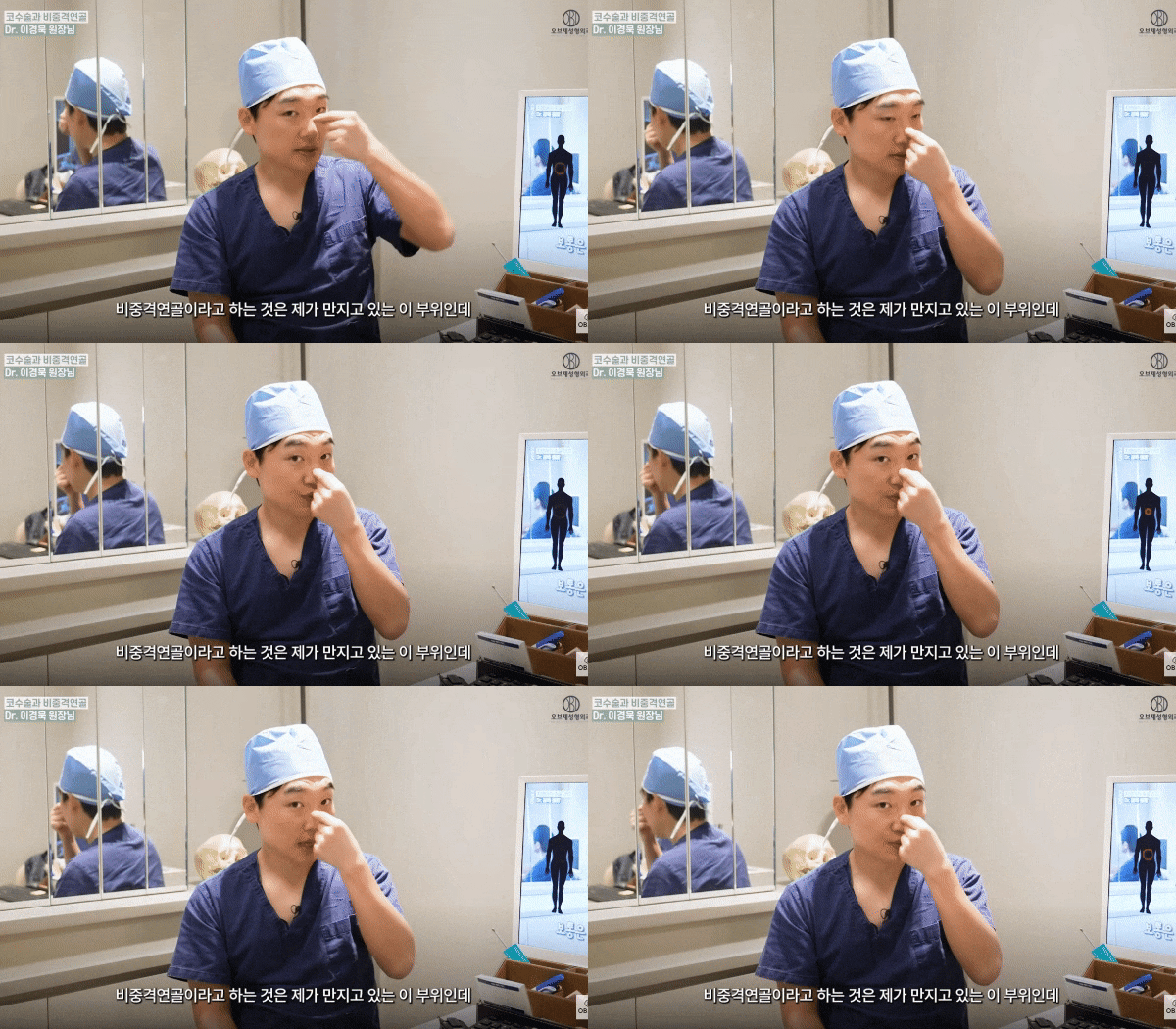
The septum
is the cartilage that serves as
the central wall dividing the two nostrils.
Although it cannot be seen from the outside,
it is also a structure that supports
the shape of the nose from within.
In septoplasty,
part of this cartilage is harvested
and used to raise the nasal tip
or create a supporting structure.
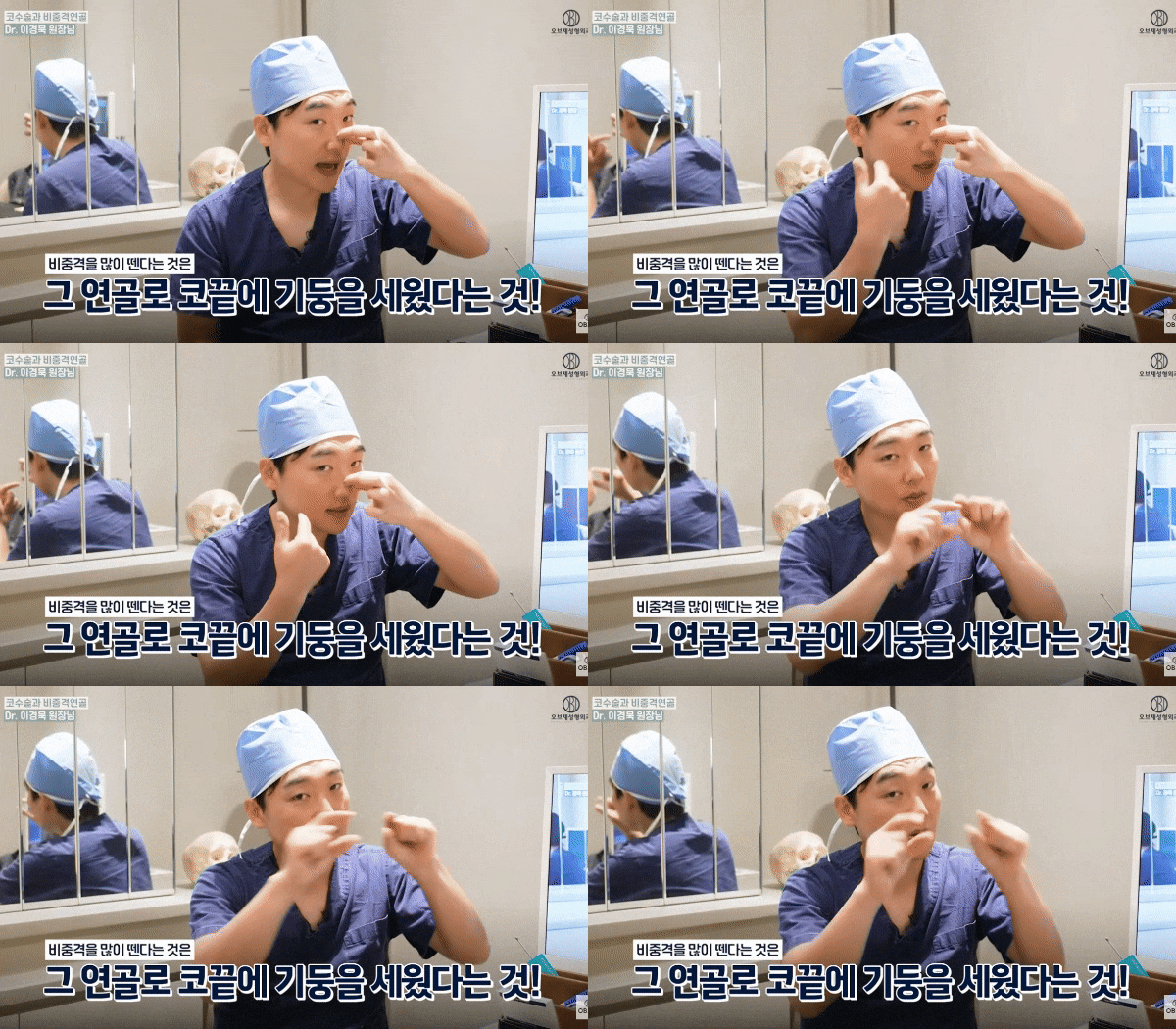
The key point here
is that it is only 'part' of the septum.
When harvesting septal cartilage,
an L-shaped supporting structure
must always be left in place.
What is this L-shaped structure?
It is a framework-like portion of cartilage
that extends along the lower part of the nasal bones
and the upper part of the nasal opening.
This framework supports
the center of the nose from within.
To use an easy analogy, when setting up a tent,
it is similar to the central pole
supporting the entire tent.
Even if part of the pole is cut off
and used for another purpose,
some of the pole itself
must remain for the tent to stand.
However, if this L-shaped structure
is not preserved sufficiently
and more cartilage than necessary is harvested,
the force supporting the nose
may become weaker.
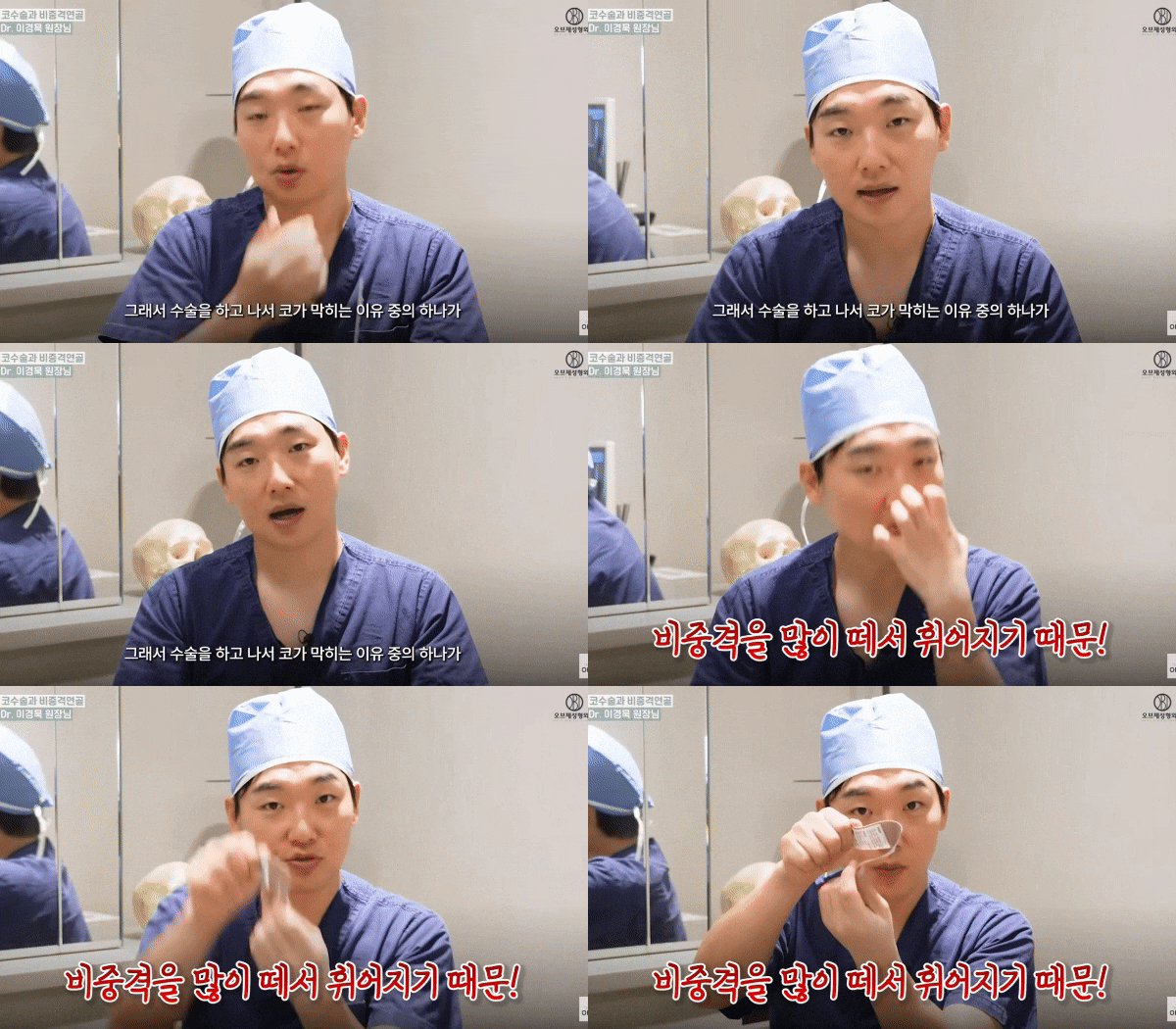
When the supporting strength weakens,
the middle part of the nose
may appear to sink inward,
and the septum may tilt to one side,
which can also create a sensation
of nasal obstruction.
In other words, nasal collapse
does not occur because the septum was 'used.'
It is a problem that can occur
when 'more than necessary
is harvested.'
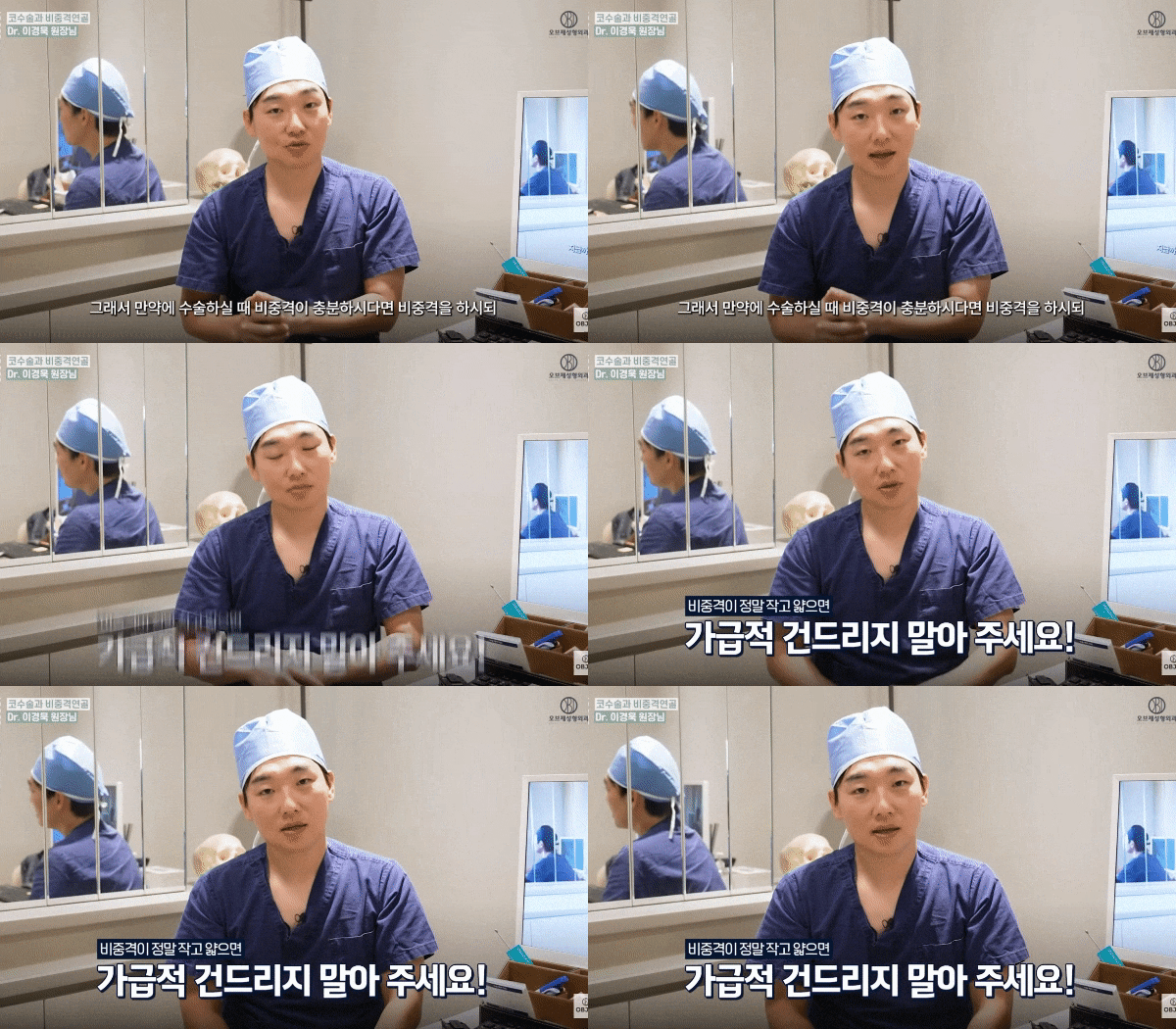
This distinction was not understood,
and information spread in the form of
"touching the septum is dangerous,"
which led to this misconception.
It should now be a little clearer
why the claim that
"touching the septum causes the nose to collapse"
started circulating.
So how can this problem be avoided
in actual surgery?
We will explain that next.
The One Thing More Important
Than 'Using a Lot'
In septoplasty,
septal cartilage clearly has advantages
because it is tissue from one's own body.
Because it comes from your own body,
there is less sensation of a foreign body,
and it is advantageous for naturally elevating
the nasal tip.
For this reason, many people ask during consultations,
"Please use septal cartilage no matter what."
It is easy to understand why you may feel that way.
It is natural to think
that using tissue from your own body
would be the safest option.

However, there is one point
that needs to be addressed here.
The size, thickness, and strength of the septum
vary from person to person.
In particular, among East Asians,
it is not uncommon for the septum
to be small or thin.
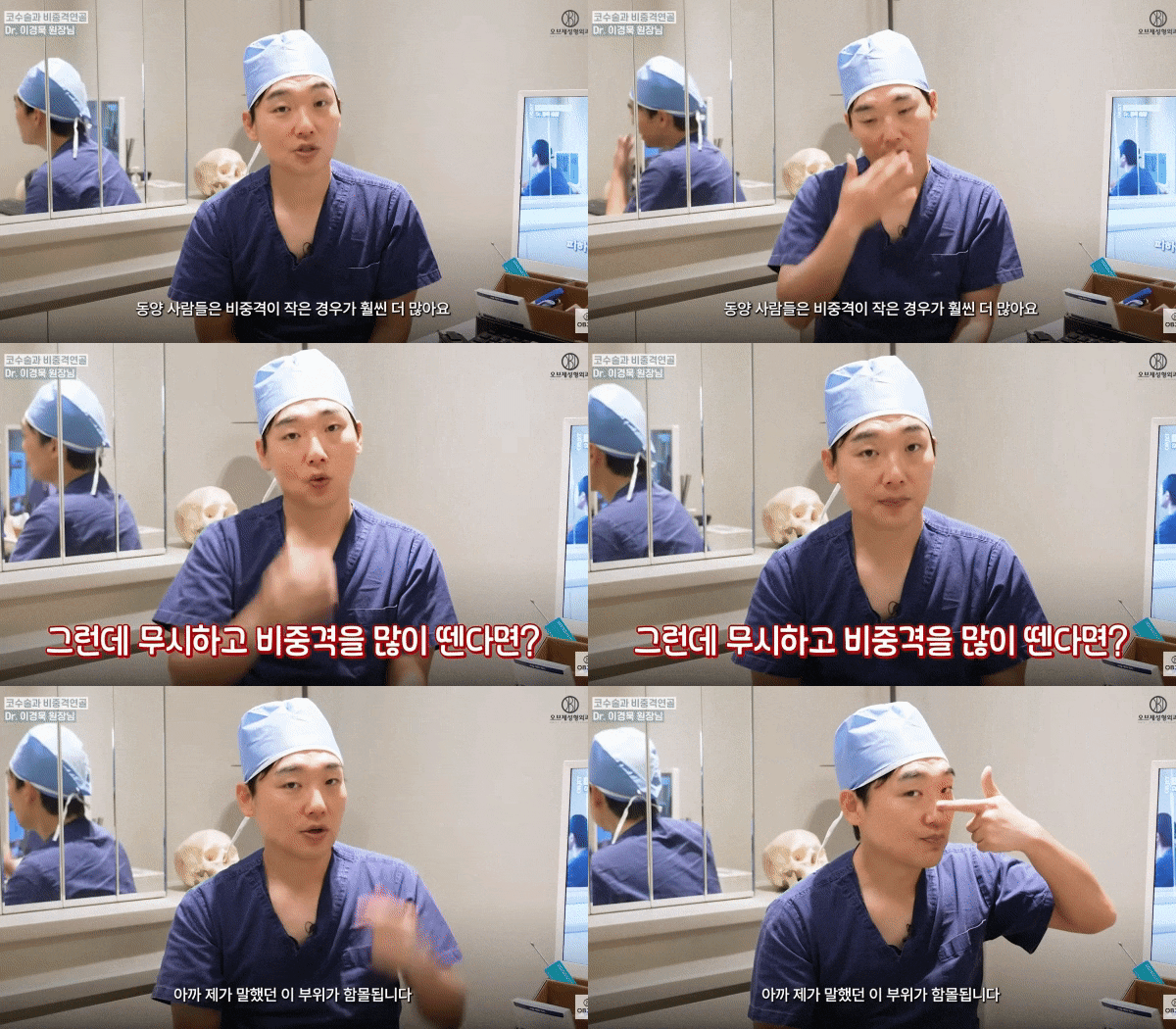
If you insist on using only septal cartilage
when the septum is insufficient,
more than necessary may be harvested,
as explained earlier,
which may affect
the supporting structure of the nose.
Therefore, what matters is not
'how much septal cartilage is used,'
but 'how appropriately it is preserved.'
Once septal cartilage is harvested,
it does not grow back.
Even if revision surgery is needed later,
having sufficient septal cartilage remaining
can be a great help in maintaining
the basic structure of the nose.
Conversely,
if too much is used from the beginning,
there may be fewer options available
when correction is needed later.
Ultimately, septal cartilage
is not a material that is better
the more you use it;
it is a material that can be preserved
for the future by using it sparingly.
The 'One Thing' That Makes a Difference
When You Know It Before Your Consultation
If you are considering septoplasty,
there is one point
that is helpful to know before your consultation.
Rather than deciding in advance
which material to use for your nose,
it is a priority to first check
the condition of your septum.
After checking the size, thickness,
and strength of the septum before surgery,
septal cartilage can be used if sufficient,
while ear cartilage or other supplementary materials
can also be considered if it is insufficient.
This may actually lead to a safer surgical plan.
Rather than saying,
"Please use septal cartilage no matter what,"
an approach such as
"Please use the septum if there is enough,
and consider other materials as well
if it is insufficient"
can help create a more appropriate surgical plan.
Rather than focusing on whether the material itself
is good or bad,
choosing material suited to the condition of your nose
is the starting point for creating
a safe and natural result.
During your consultation,
asking not only
"How much septal cartilage will you use?"
but also
"How much septal cartilage will you leave?"
may help you understand
what standards the medical professional
uses regarding preservation.
Today, we reviewed
where the misconception about septoplasty began,
and what is actually important.
To summarize once again,
nasal collapse is not a problem
that occurs because septal cartilage was used.
It is a problem that can occur
when more than necessary is harvested.
The key is not to use septal cartilage
as much as possible,
but to preserve it appropriately
and use only as much as necessary.
Rather than deciding on the material in advance,
it is a safer approach to first check
the condition of your septum
and create a plan suited to it.
Dr. 이경묵 of 오브제성형외과
provides care in the fields of rhinoplasty
and revision rhinoplasty,
with a focus on correction of a bulbous nose
and reconstruction of a contracted nose.
The amount of septum preserved is carefully considered,
and it is used within the necessary range.
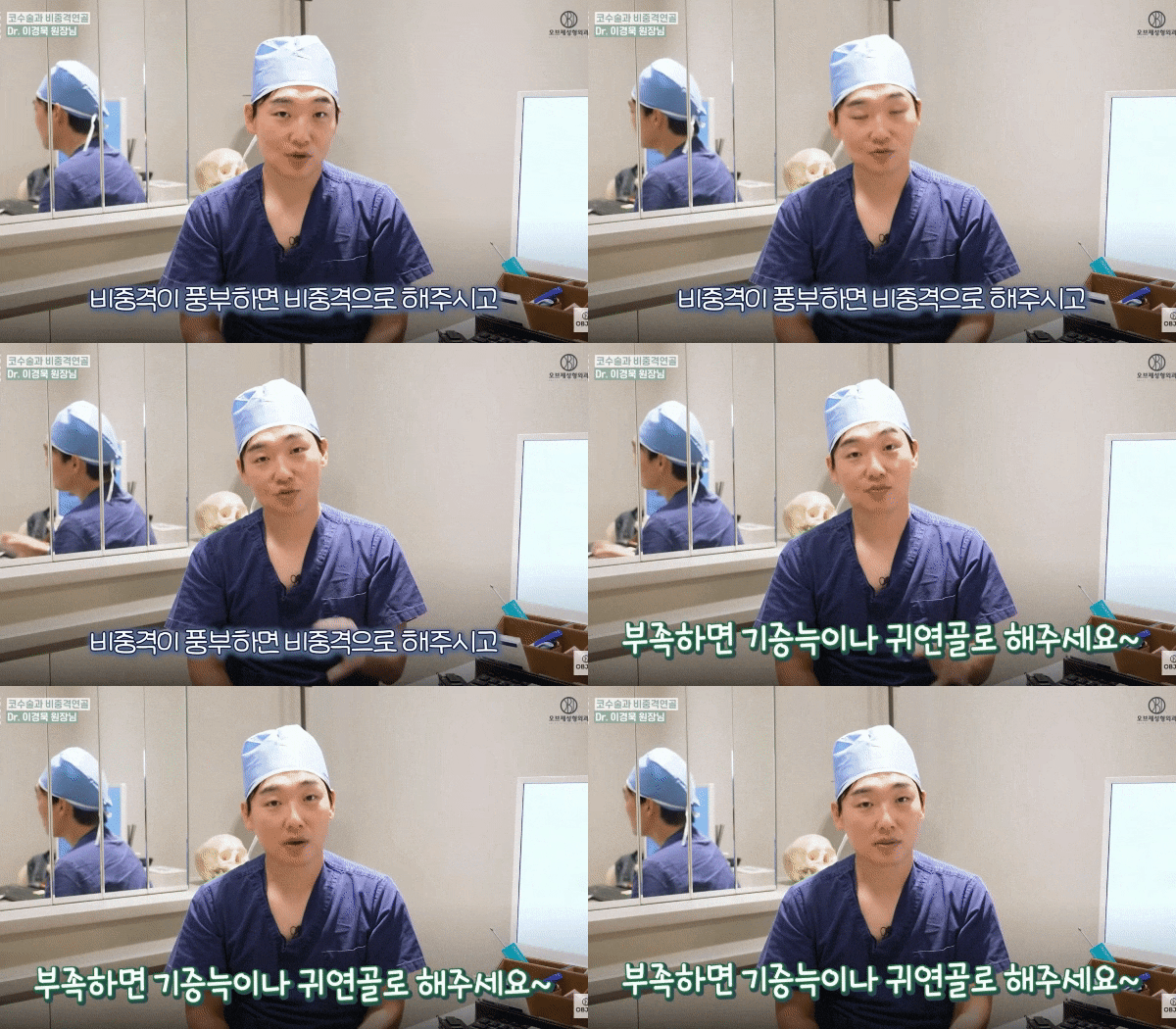
When the septum is insufficient,
surgery is planned using a combination
of other materials, such as ear cartilage,
with the aim of stably maintaining
the supporting structure of the nose.
We recommend consulting carefully
at several clinics,
and checking not only
'how much septal cartilage is used,'
but also 'how much is preserved.'
This has been 오브제성형외과.
Thank you.
<🔽🔽Video You May Also Find Helpful🔽🔽>
| Rhinoplasty Consultation and Inquiries |
|---|
| Quick phone consultation |
| Kakao quick consultation |
-
This post is medical information prepared by 오브제성형외과의원 in compliance with the Medical Advertising Act.
-
The effects of procedures may vary from person to person, and side effects may occur.
We recommend that you make a decision about the procedure only after having a thorough consultation with a medical professional in advance.