What Causes Revision Rhinoplasty in Gangnam?
In Fact, It’s Neither Skill nor Materials, but OO!
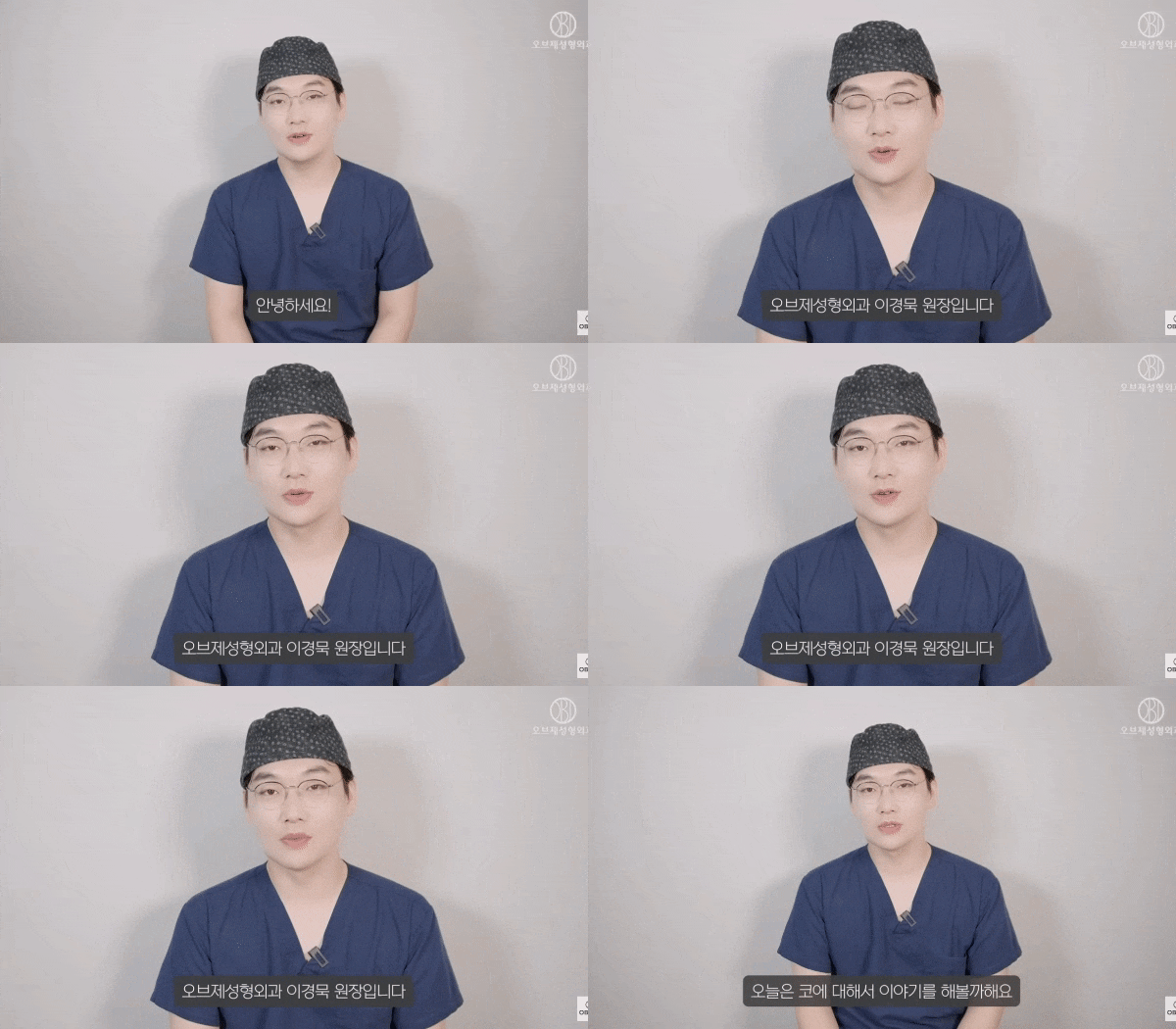
Hello.
This is 오브제성형외과.
There are more people than you might think who, dissatisfied with the results after nose surgery, begin looking into having the procedure done again.
Some of you may have searched for revision rhinoplasty in Gangnam and read various articles.
Most articles say that the surgeon’s skill is important and that a good implant should be used.
That is true.
However, when we look at the reasons people undergo revision rhinoplasty one by one, there is a cause that is easy to overlook before skill or materials.
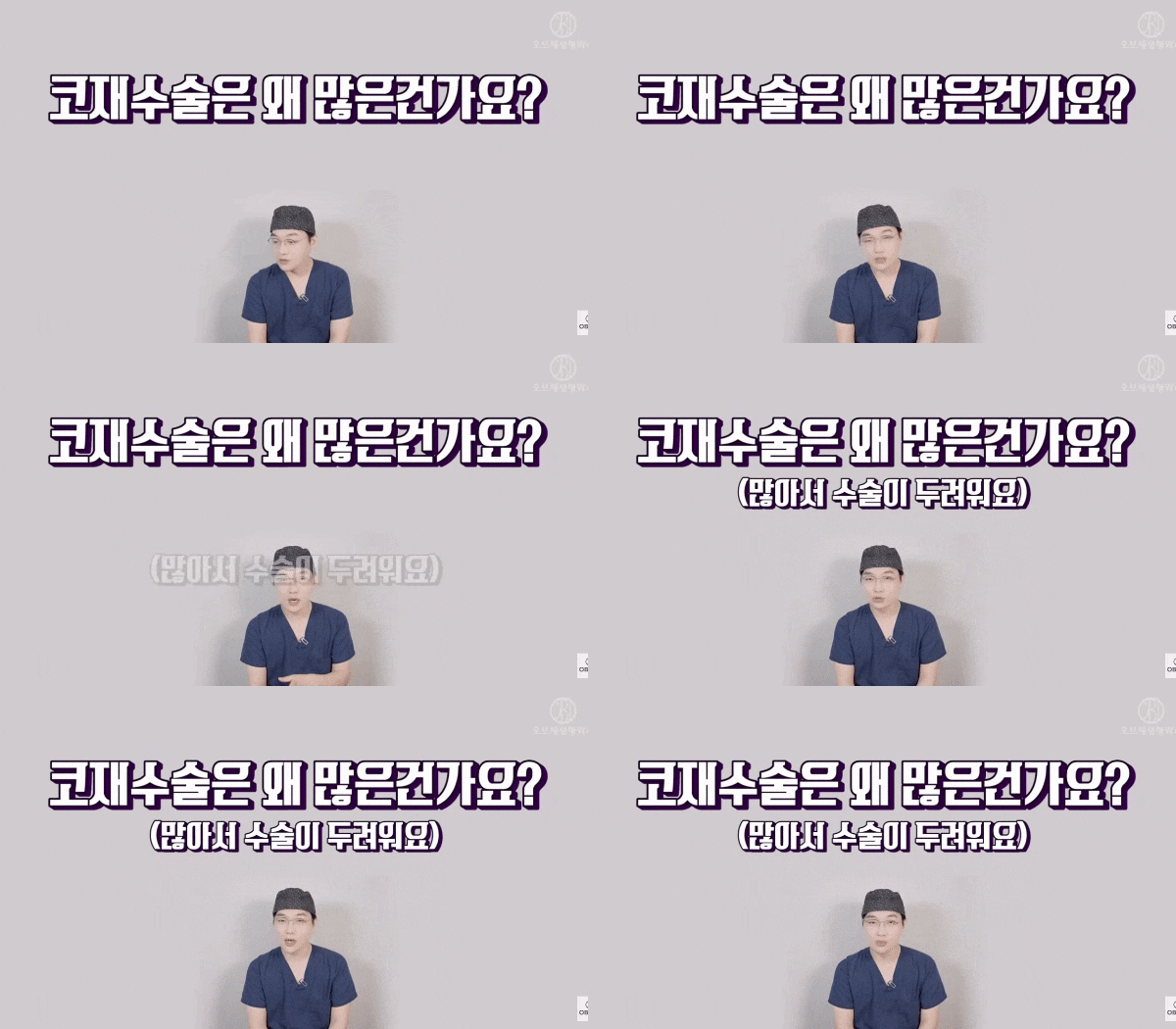
If you clicked on this article after seeing the title, this is probably the part you were curious about.
Today, we will discuss the most important cause of revision rhinoplasty, how to prevent revision surgery, and why revision surgery is challenging.
We hope you find it helpful if you read to the end.
Not skill or materials—
the real cause is “this”
One of the causes of revision rhinoplasty that is frequently mentioned is “excessive ambition.”
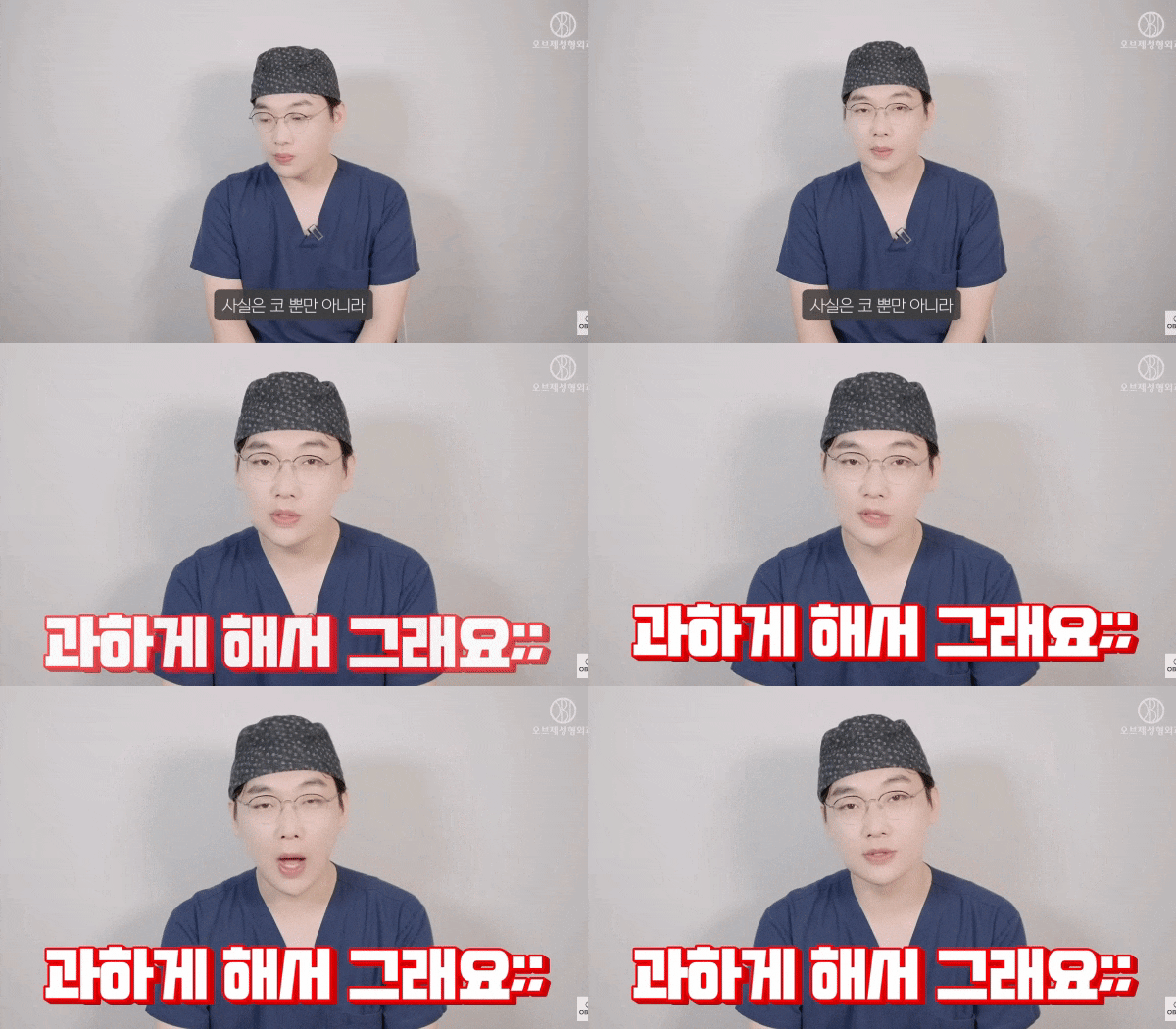
It may sound blunt, but in many cases where revision surgery becomes necessary, the process begins with requesting a design that exceeds what the individual’s nasal structure can accommodate.
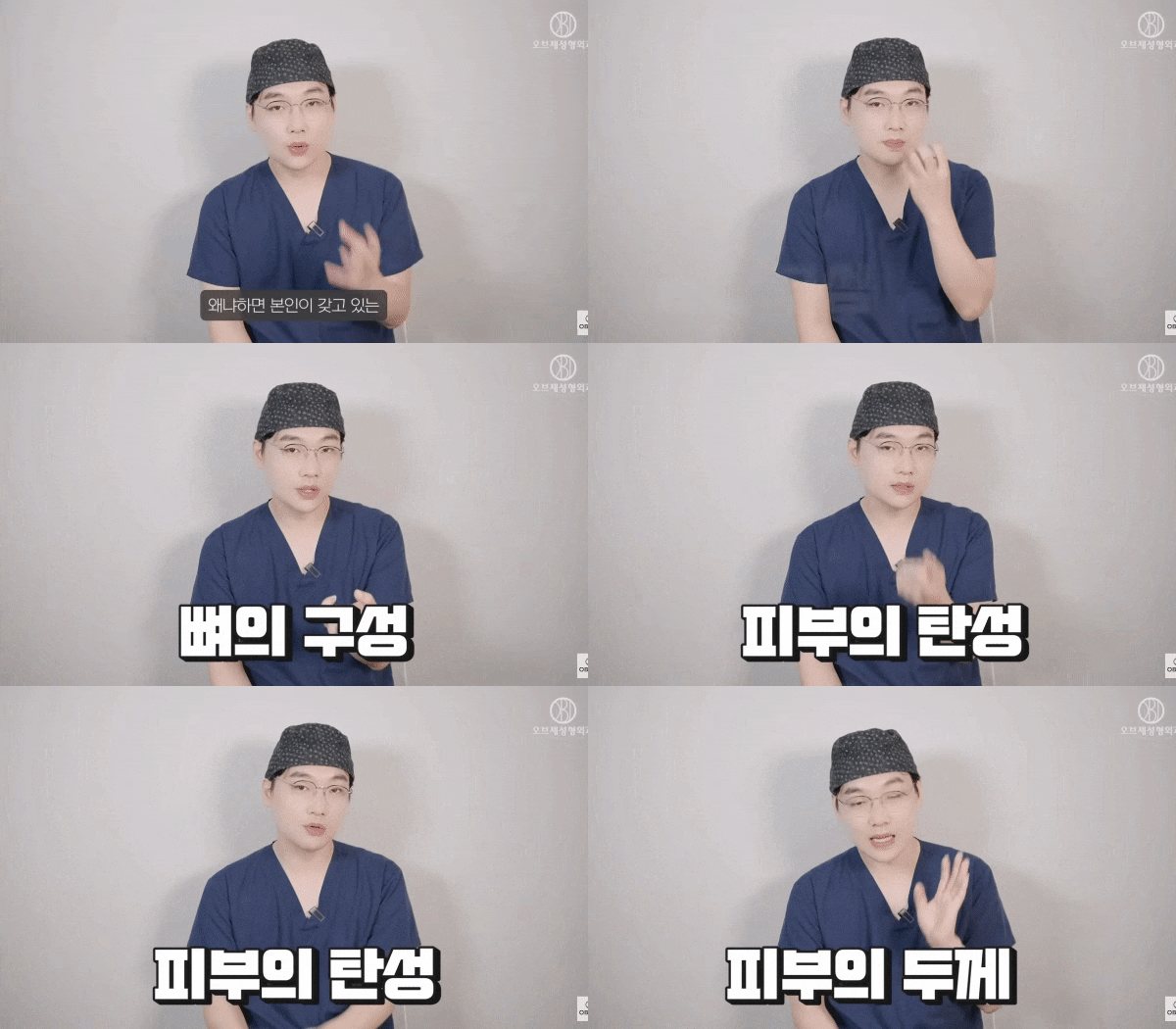
Everyone has a different skin thickness, nasal bone size, and cartilage shape.
This is why wanting the same design does not mean that the same result can be achieved.
For example, if someone with thin skin has an implant placed excessively high, the outline of the implant may show through the skin.
The skin may also become thinner over time.
Conversely, even if someone with thick skin wants a high nose, the thickness of the skin itself may prevent the nose from appearing as slender as desired.
There is another consideration: the larger the implant, the greater the burden placed on the tissues inside the nose.
If the skin is stretched tightly and the internal structures are also raised, the nose may not have enough strength to support itself.
As a result, the shape may change or additional correction may become necessary.
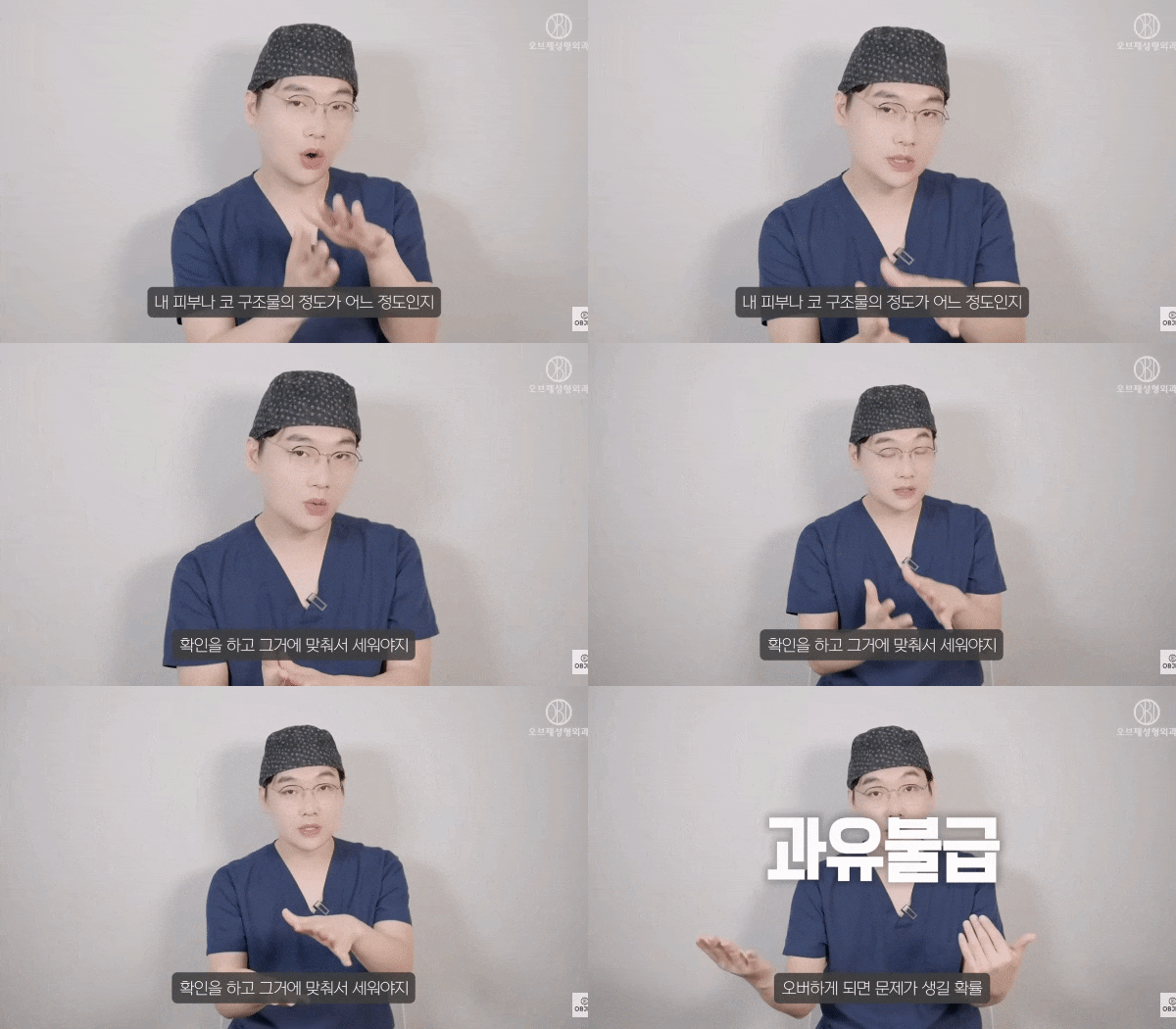
Ultimately, a “higher nose” is not necessarily a “better nose.”
Finding the most natural and stable line within the range your structure can accommodate is the surest way to finish without revision surgery.
If you want to finish in one procedure, remember “this one thing”
The surest way to prevent revision surgery is to establish a realistic plan for the initial operation.
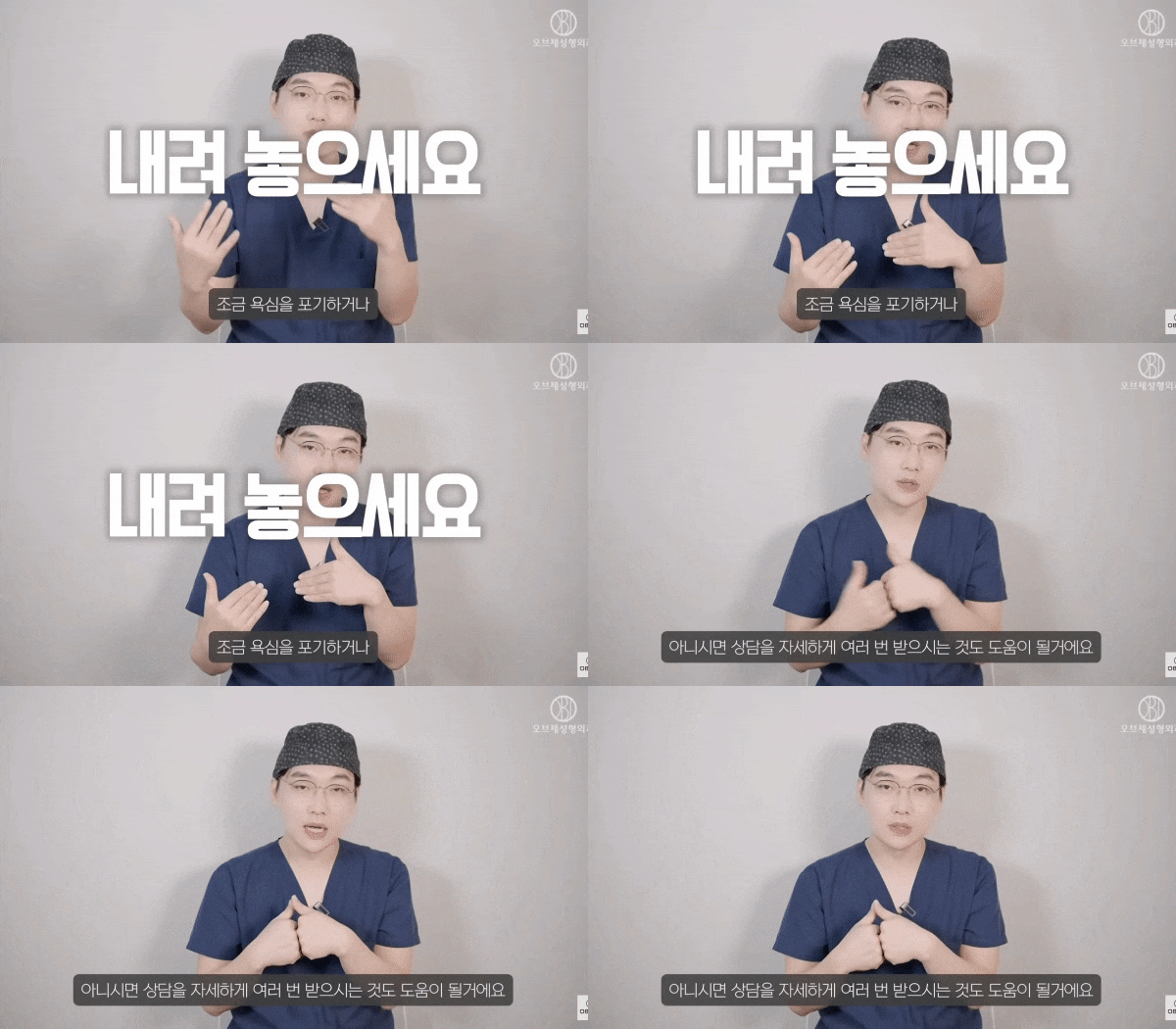
To do that, you first need to accurately understand the current condition of your nose.
Even among those looking into revision rhinoplasty in Gangnam, quite a few proceeded quickly with their previous surgery without sufficient consultation.
During the consultation, the important questions are not simply “What shape is attractive?” but rather:
How thick is my skin?
What is the structure of my nasal bones and cartilage?
What is the range of change that is possible?
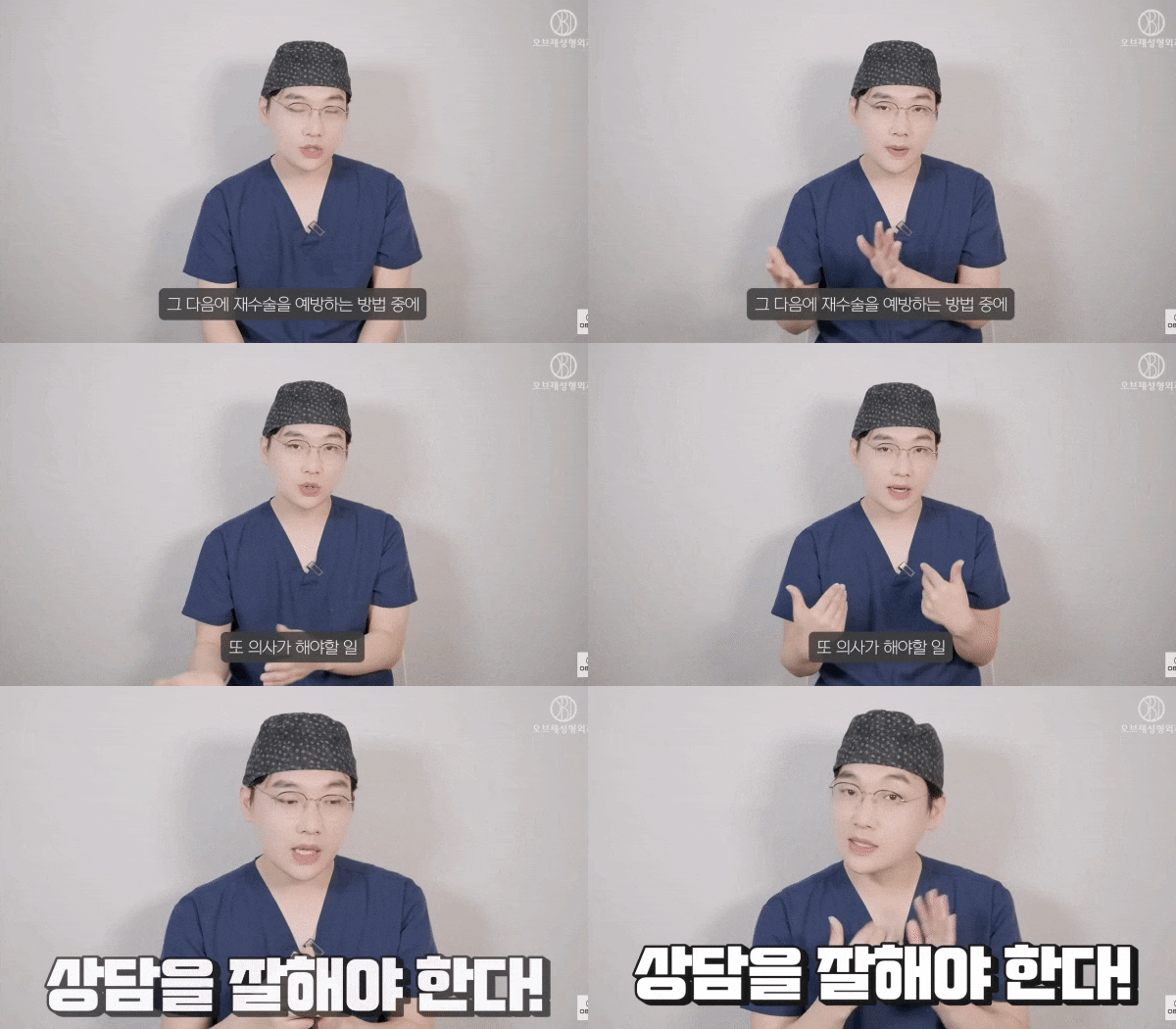
The role of the medical staff is also important here.
A good consultation explains, “This part is difficult for these reasons,” rather than simply saying, “We can do everything.”
Even one honest consultation process like this can greatly reduce situations that may lead to revision rhinoplasty.
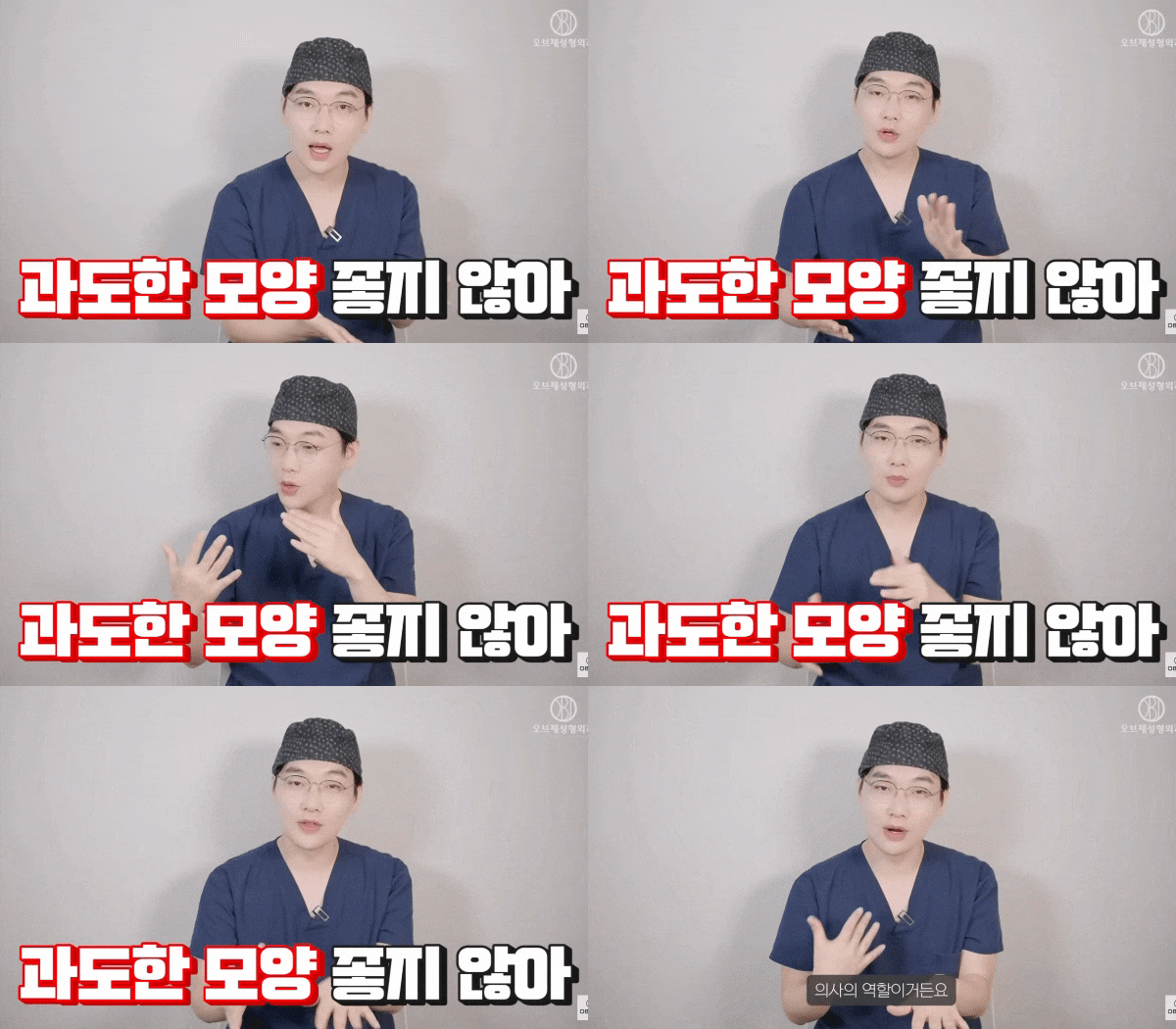
Rather than rushing into surgery, it may also help to hear opinions from several clinics, compare them carefully, and then make a decision.
The surgical process itself is just as important as the consultation.
Rhinoplasty is a procedure in which the result is influenced not by finishing quickly, but by completing the work with precision.
During surgery, the left-right balance and shape are continuously checked, with adjustments made again when necessary.
The process of minimizing bleeding and achieving thorough hemostasis also directly affects the result.
If the surgical site is not cleaned and organized properly, it may affect recovery.
That is why careful hemostasis is something that must not be overlooked until the very end of surgery.
You need to let go of the thought,
“I can just have it done again”
Some people think, “If I don’t like it, I can just have it done one more time.”
However, revision rhinoplasty is much more difficult than the initial surgery.
There are three main reasons.
First, the normal structure has changed.
The initial surgery is performed when the anatomical structure is relatively clear.
In revision surgery, however, the tissues are often altered as a result of the previous operation.
The relationship between the bones and cartilage has changed, and the condition of the surrounding tissues is also different from before.
Second, the tissues may be attached to one another.
Adhesions formed during the previous surgery can make it difficult even to identify the normal tissue layers.
Because it is necessary to accurately distinguish where the original tissue ends and where the adhered tissue begins, the surgery may also take longer.
Third, a deep understanding of revision surgery is needed to accurately identify and correct the structural changes that led to the need for another nose operation.
Because a new balance must be established while working with altered tissues, the approach itself differs from that of the initial surgery.
In addition, care after surgery also affects the result.
Immediately after surgery, severe sneezing or coughing and activities that involve straining may increase the possibility of bleeding.
Alcohol consumption may slow the recovery process.
You should also pay attention to your sleeping position.
In the early stages, it is best to lie on your back facing upward. You should be cautious because the habit of continuously lying on only one side may affect the nose.
Particular care is needed when the height of the nose has been corrected.
Ultimately, nose surgery does not end on the operating table; it is completed as a whole, including the recovery process.
Today, we discussed the key points among the causes of revision rhinoplasty, ways to prevent revision surgery, and the difficulty of revision surgery.
To summarize:
The biggest reason revision surgery occurs is often not the surgeon’s skill or the materials, but excessive ambition that goes beyond the limits of one’s own structure.
Preventing this requires a realistic plan and sufficient consultation.
Once revision surgery becomes necessary, the process is much more challenging than the initial operation.
Director Lee Kyung-mook of 오브제성형외과 first assesses the patient’s skin thickness and the structure of the nasal bones and cartilage, then develops a plan within the possible range.
Rather than raising the height excessively, the focus is placed on the structural stability of the nose.
If you are looking into revision rhinoplasty in Gangnam, rather than focusing first on the surgical method or cost, we recommend checking whether the clinic develops a realistic plan suited to your nose.
This has been 오브제성형외과.
Thank you.
<🔽🔽Recommended video to watch together🔽🔽>
| Rhinoplasty Consultation and Inquiries |
|---|
| Quick phone consultation |
| Convenient Kakao consultation |
-
This post contains medical information prepared by 오브제성형외과의원 in compliance with the Medical Advertising Act.
-
The effects of the procedure may vary from person to person, and side effects may occur.
We recommend that you make a decision about the procedure only after having a thorough consultation with a medical professional in advance.