What’s the Difference Between Lower Blepharoplasty and Under-Eye Fat Repositioning?
<MUST READ> If You’re Worried About Ectropion

Hello.
Objet Plastic Surgery Clinic here.
If you came across this post after seeing the title “The Difference Between Lower Blepharoplasty and Under-Eye Fat Repositioning,”
you probably want to clearly understand
how these two procedures differ.
The more you search,
the more you see people repeating that they look similar but are different,
without the key difference
really being easy to understand.
And with the word “ectropion”
also catching your attention,
you may have become even more cautious.

So today,
we’ll explain step by step
how lower blepharoplasty and under-eye fat repositioning differ,
starting with the exact distinction between the two procedures,
as well as why ectropion occurs
and what needs to be checked when designing the surgery.
By reading to the end,
you may find it helpful when deciding
which procedure is right for your under-eye condition.
Lower Blepharoplasty vs. Under-Eye Fat Repositioning,
‘This One Thing’ Is Completely Different
Lower blepharoplasty and under-eye fat repositioning
both address the same “under-eye” area,
but the incision locations are different.
That is the key point.
Lower blepharoplasty
involves an incision on the skin beneath the eyes.

The skin is opened
to remove excess skin,
while also refining the condition of the under-eye tissues,
including muscles and fat that have descended.
This procedure improves sagging
and wrinkles beneath the eyes.
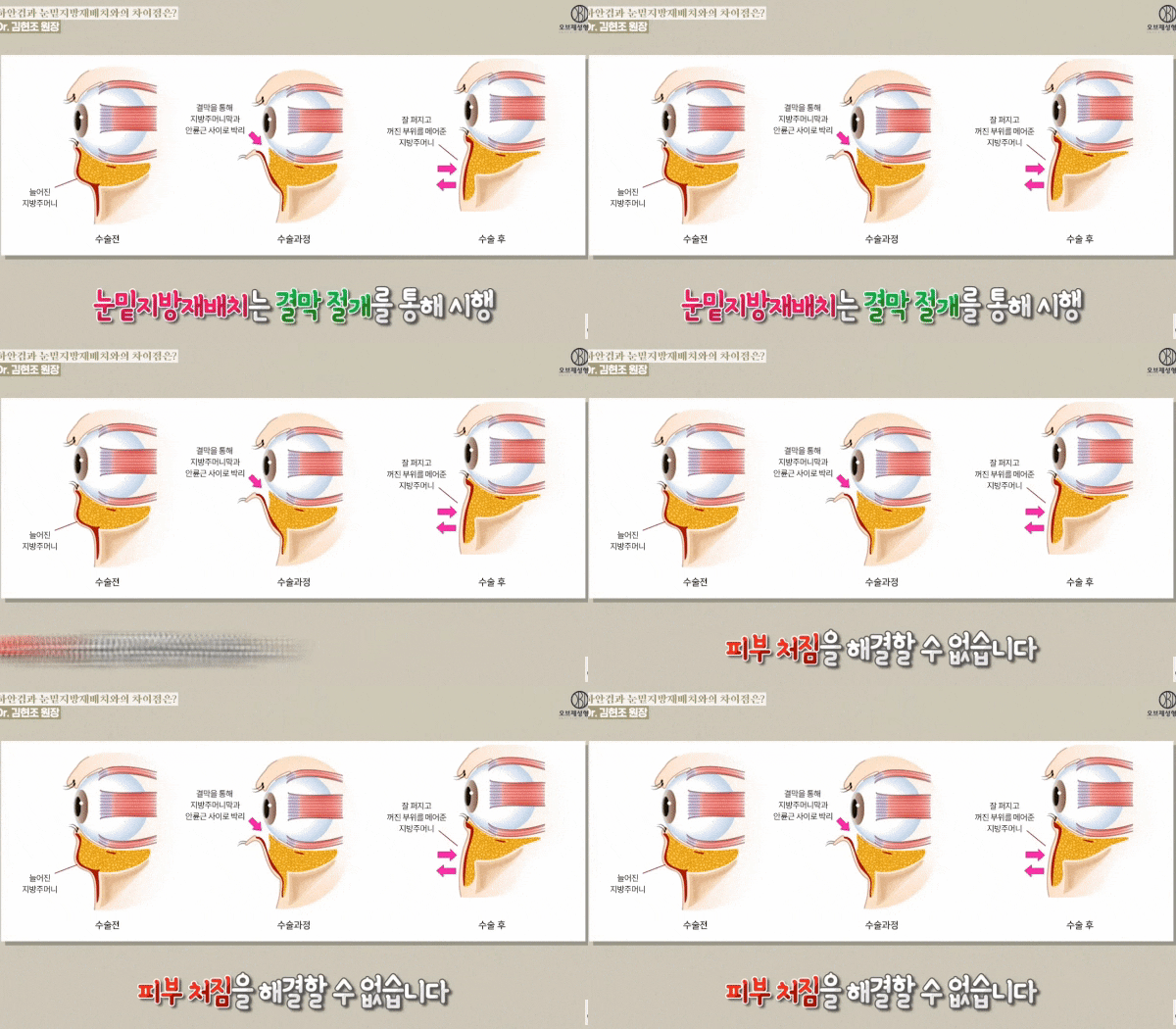
By contrast, under-eye fat repositioning
is performed through the conjunctiva on the inside of the eye.
The conjunctiva is the inner mucosal area
that can be seen when the lower eyelid is gently pulled down.
Because the procedure is performed through this area,
there is no externally visible incision.

The bulging fat beneath the eyes
is repositioned evenly
to smooth out the tear troughs
and hollow areas.
There is one important point
you should be sure to understand.
Because under-eye fat repositioning
changes the location of the fat,
it is difficult to improve
sagging skin itself.
To put it simply,
it is like rearranging the furniture in a room neatly,
while the wallpaper on the walls is old and peeling.
The internal structures may have been organized,
but if the skin covering the outside has become loose,
the under-eye area may still appear saggy.
In contrast, lower blepharoplasty
approaches the area through an incision in the skin,
so it can improve not only excess skin
but also the condition of the under-eye tissues.

For this reason,
lower blepharoplasty is often selected
when the skin beneath the eyes has become loose
and lost elasticity with age.
The difference between these two procedures
should now be a little clearer.
Then why does ectropion occur,
which many people are curious about?
Let’s take a look.
Ectropion,
<3 Reasons It Occurs>
When researching lower blepharoplasty,
ectropion is one of the most frequently searched terms.
Ectropion refers to a condition
in which the lower eyelid is pulled downward
or appears to roll outward.
It may look unusual,
and it can also cause functional discomfort,
such as dry eyes
or frequent tearing.
For this reason, it is something worth checking
carefully before surgery.

However, ectropion
does not occur automatically
when you undergo lower blepharoplasty.
There are clear causes,
and understanding them
can help reduce the possibility.
The first cause is
excessive removal of skin and tissue.
If more skin than necessary is removed
while trying to correct sagging skin,
there may not be enough skin remaining.
As a result, the lower eyelid
may be pulled downward.
Lower blepharoplasty
is not a procedure where removing more is better.
Removing only as much as necessary
and taking a conservative approach
is the most important principle
for reducing the possibility of ectropion.
The second cause is
the development of a hematoma after surgery.
A hematoma is a collection of blood
at the surgical site.
When a hematoma develops,
the tissues may not recover normally,
and the eyelid may be pulled downward.
The third cause is
excessive formation of firm tissue
around the incision during recovery.
If this tissue creates a downward pulling force,
it can lead to ectropion.
Therefore, when planning lower blepharoplasty,
it is important to design the procedure
with these three causes in mind from the beginning.
In particular, people whose eyes protrude forward
or whose under-eye elasticity has significantly decreased
may have a relatively higher possibility
of developing ectropion.

In such cases,
it may be necessary to consider
not only removing skin
but also methods of securing the muscle.
Even for the same lower blepharoplasty procedure,
the surgical design must vary
depending on the condition beneath the eyes.
That is the key point.
Which Procedure Is Right for My Under-Eye Area?
<Selection Guide>
Which procedure is right for you—
lower blepharoplasty or under-eye fat repositioning—
depends on the condition of your under-eye area.
If the fat beneath your eyes is noticeably bulging
and the degree of skin sagging is not significant,
under-eye fat repositioning may be suitable.

Because the procedure does not involve
an externally visible skin incision,
recovery is also relatively quick.
On the other hand, if the skin beneath your eyes has become loose,
lost elasticity,
and developed wrinkles,
lower blepharoplasty may be the more suitable choice.
Especially when aging has caused changes
in the skin, muscles, and fat,
it can be difficult to improve the appearance of sagging
by repositioning fat alone.
There is one more thing
that is useful to know.
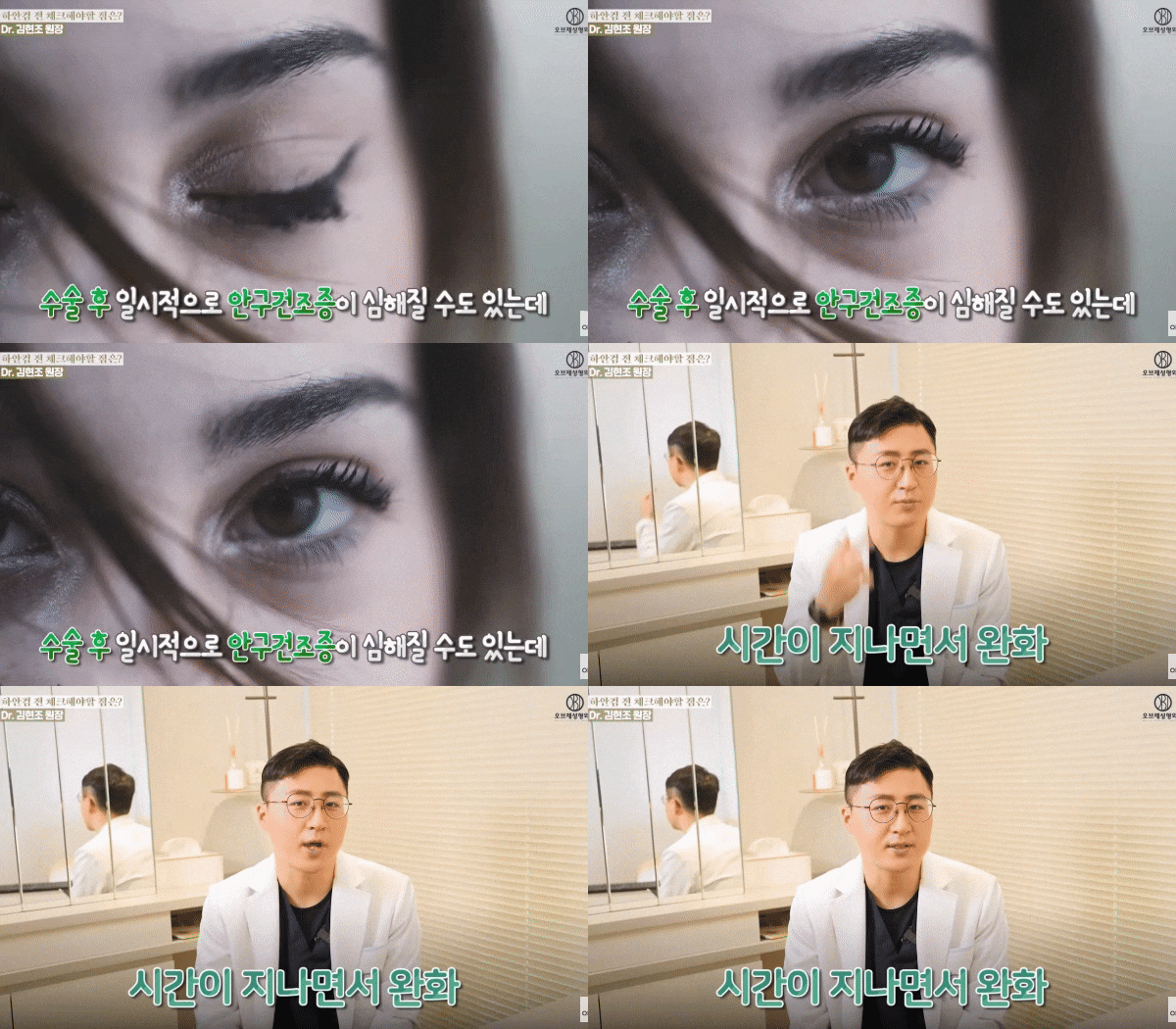
If you already have dry eye syndrome,
dryness may temporarily worsen
immediately after lower blepharoplasty.
This is because the tissues around the eyelids
are irritated during the procedure.
In many cases, it naturally improves over time,
so it is important to monitor the healing process.
It is best to decide which procedure is suitable
after comprehensively assessing
the degree of under-eye sagging,
skin elasticity,
and the degree of fat protrusion.
Today, we discussed the difference
between lower blepharoplasty and under-eye fat repositioning,
why ectropion occurs,
and what kind of surgical design is needed
to reduce its possibility.
To summarize:
Lower blepharoplasty is a procedure
that uses a skin incision
to improve both excess skin
and the condition of the under-eye tissues,
while under-eye fat repositioning
uses a conjunctival incision
to reposition fat.
Ectropion may occur when tissue is removed excessively,
when a hematoma develops,
or when excessive tissue forms
during the recovery process,
but its possibility can be reduced
through conservative removal
and appropriate fixation.
If you are still considering your options carefully,
you are doing the right thing.
The eyes are the first feature people notice
on the face,
and the results of surgery
can last for a long time.
Dr. Kim Hyun-jo of Objet Plastic Surgery Clinic
carefully assesses the elasticity and thickness
of the under-eye skin,
the degree of fat protrusion,
and the support of the eyelids
before determining the extent of tissue removal.

Rather than removing more tissue than necessary,
the surgery is designed to lift sagging tissue upward,
with a focus on reducing the possibility of ectropion.
If you are considering lower blepharoplasty,
we recommend beginning with a consultation
that examines the current condition of your under-eye skin,
as well as the location of the fat and skin elasticity.
This has been Objet Plastic Surgery Clinic.
Thank you.
<🔽🔽Recommended Video to Watch Together🔽🔽>
| Eye Surgery Consultations and Inquiries |
|---|
| Quick consultation by phone |
| Convenient Kakao consultation |
-
This post is medical information prepared by Objet Plastic Surgery Clinic in compliance with the Medical Advertising Act.
-
The effects of the procedure may vary from person to person, and side effects may occur.
We recommend that you decide whether to undergo the procedure only after having a thorough consultation with a medical professional in advance.