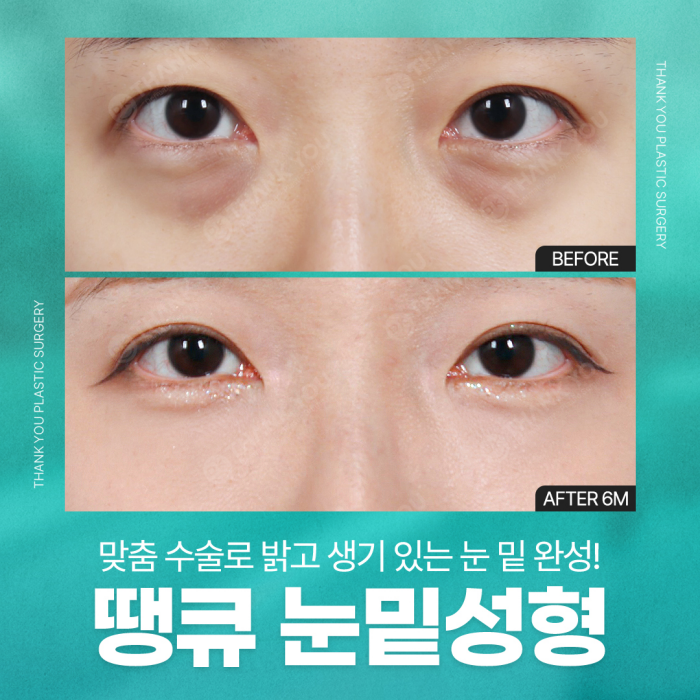
Lower blepharoplasty and under-eye fat repositioning
What’s the difference?
The eyes are one of the most important parts of the face,
and they play a major role in shaping a person’s impression.
As time passes, skin elasticity and
fat distribution change,
which often leads to various changes around the eyes.
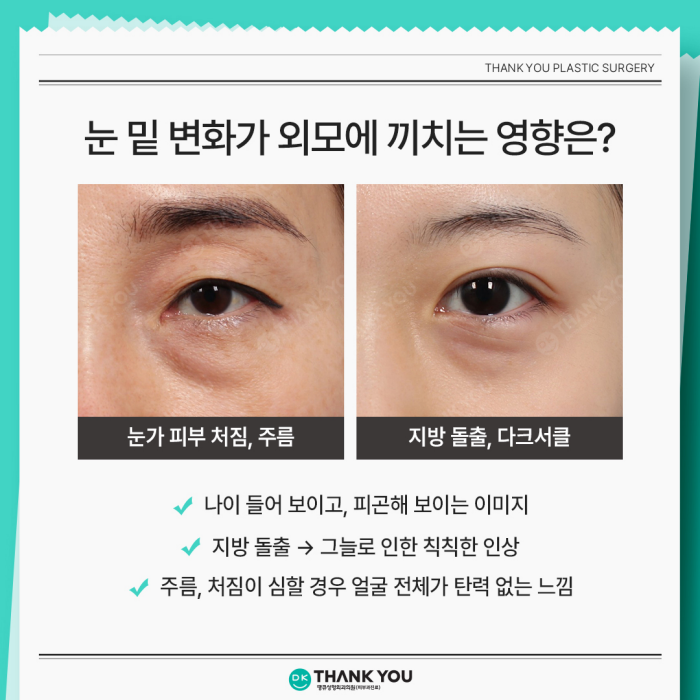
Among these changes, the most noticeable problems are
sagging and wrinkles under the eyes, and protruding eye-area fat.
These not only make a person look older and tired,
but also create a shadowed and dull impression.
Because the eyes are the first area people tend to look at on the face,
if wrinkles and sagging are severe,
the entire face can appear less firm.
To improve this, two representative surgical options are
lower blepharoplasty and
under-eye fat repositioning.
Today, we’ll take a closer look at these two similar yet different procedures.
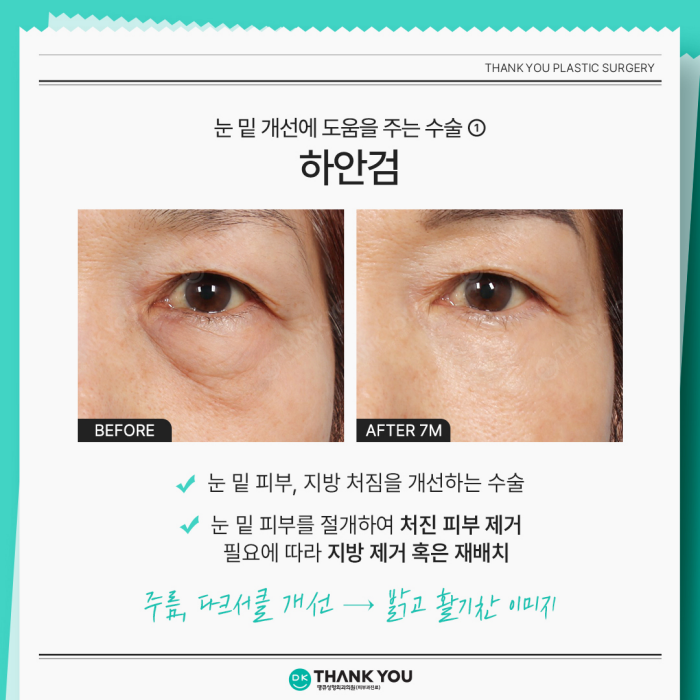
First, lower blepharoplasty is
a procedure to improve sagging of the skin and fat
under the eyes.
The surgery is performed by making an incision in the skin under the eyes,
removing the sagging skin,
and, if necessary, repositioning or
removing fat.
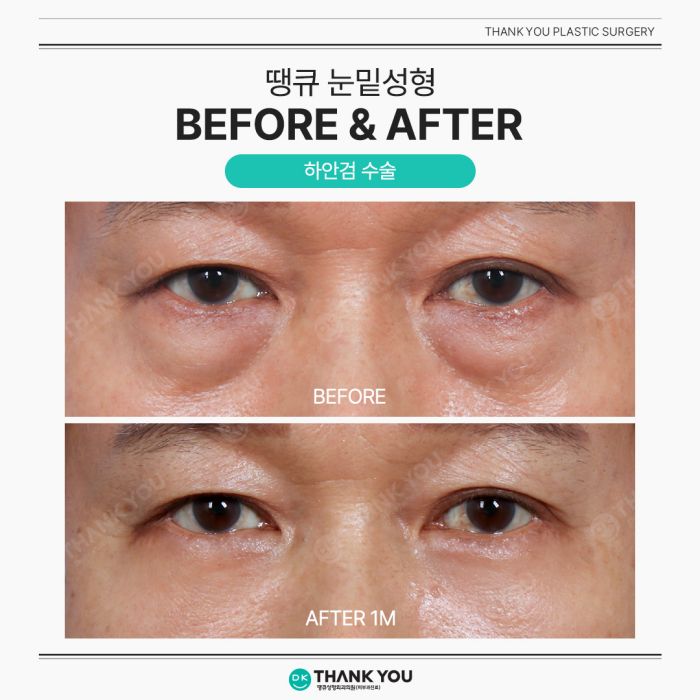
It mainly focuses on improving
under-eye wrinkles, sagging skin, and dark circles
that develop as people age.
By smoothing and tightening the
sagging under-eye area,
it can create a brighter and more energetic look,
and may also improve wrinkles and dark circles.
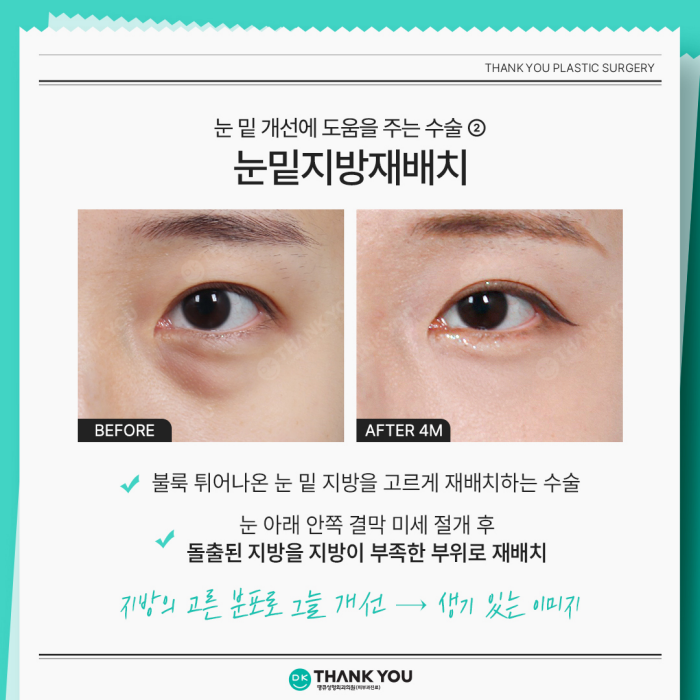
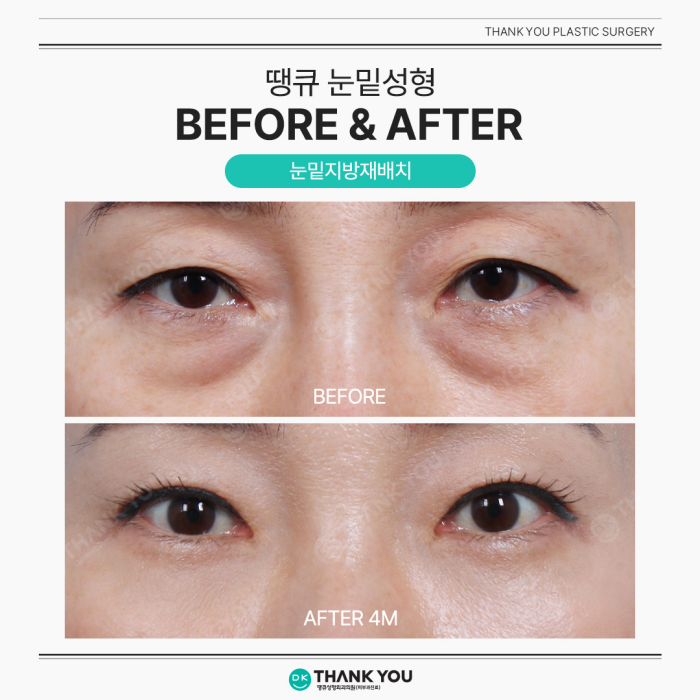
Under-eye fat repositioning is
a procedure that improves volume by repositioning
the fat accumulated under the eyes.
As people age, the skin and muscles
that support the fat lose strength,
which can cause the fat to shift.
As the fat moves downward,
it can bulge forward,
creating shadows and a tired appearance.
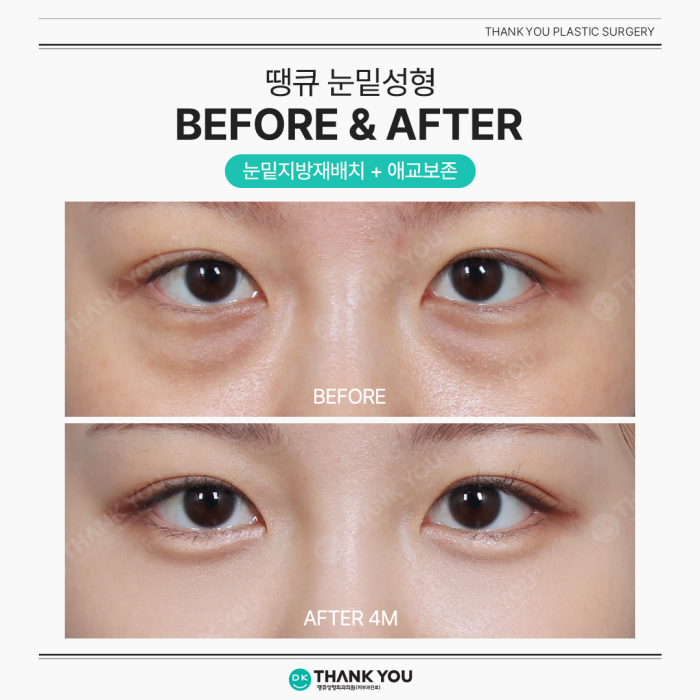
To address this, a small incision is made in the inner conjunctiva under the eye,
and the excessively protruding fat is
repositioned to areas that lack volume,
such as the tear trough.
This is the procedure known as under-eye fat repositioning.
Because the surgery is performed through an incision inside the conjunctiva,
there is no visible scar,
and it has the advantage of producing
a natural-looking result.
As the under-eye fat is distributed more evenly,
the shadow beneath the eyes, or dark circles, can improve,
making the overall face look brighter and more vibrant.

At first glance, these two procedures may not seem very different,
but what are the differences?
They share the common goal of addressing under-eye fat problems,
but!
Unlike under-eye fat repositioning,
lower blepharoplasty makes a small incision near the eye area
to correct sagging skin and muscle.
The difference lies in the fact that it involves
incising and removing sagging skin and muscle.
In conclusion, if the problem is protruding under-eye fat
and contour irregularities such as a hollow tear trough,
under-eye fat repositioning is recommended.
If sagging skin and wrinkles are also present,
lower blepharoplasty is
more effective.

At Thank You Plastic Surgery,
a thorough assessment of each person’s under-eye structure is performed first,
and the appropriate surgical method is applied to create a brighter, smoother
under-eye area.
Depending on the patient’s needs, a method that preserves the aegyo-sal line is applied,
helping ease concerns from those worried that their aegyo-sal may disappear after surgery.
In some cases, custom tools such as absorbable sutures
and a double-ended needle designed specifically for under-eye fat repositioning are used
during the procedure.
Because the surgery is performed by a board-certified plastic surgeon
with extensive surgical experience and know-how,
1:1 customized surgery is possible depending on the case.
As a result, you can expect a more satisfying
improvement effect.

In particular, Thank You offers dual lower blepharoplasty
to reduce concerns about incisions and scars.
Unlike standard lower blepharoplasty, which involves incising the entire lower eyelid,
the procedure makes small incisions in part of the inner conjunctiva
and the outer lower eyelid,
helping reduce scar concerns.
In addition, by using a surgical method that preserves the orbicularis oculi muscle,
it helps prevent ectropion, a condition in which the skin under the eyes turns outward,
and by reinforcing and fixing the orbital septum,
it helps prevent recurrence.
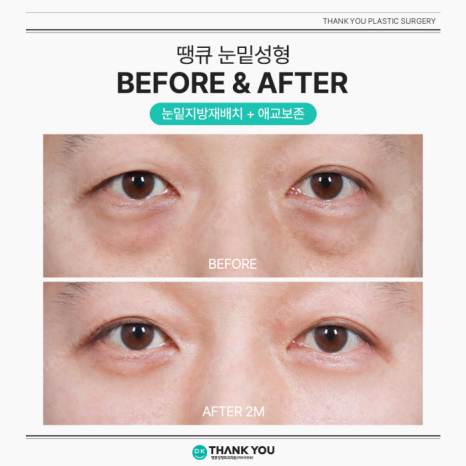
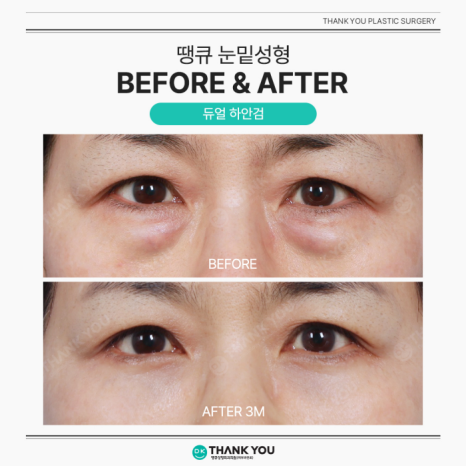
For procedures such as lower blepharoplasty and under-eye fat repositioning,
it is most important to accurately diagnose the individual condition of the under-eye area
and establish a customized treatment plan.
Therefore, we recommend thorough consultation before surgery
and choosing a hospital and medical team that can propose a tailored surgical plan.😉
At Thank You Plastic Surgery,
we are running an under-eye surgery event✨
If you're interested, click the direct link below!
Go to Thank You Event
⬆⬆Click⬆⬆
Thank You Plastic Surgery
Conveying gratitude and more, Thank You Plastic Surgery (dermatology consultation available)
🟡Phone inquiries: 02-567-0900
💗KakaoTalk consultation: https://pf.kakao.com/_Pvrxgb
🍀Website: https://www.thankyoups.com/
- 5th, 8th, and 9th floors, Hanwell Building, 446 Gangnam-daero, Gangnam-gu [Reception: 9th floor]