
When choosing a revision double eyelid surgery clinic,
why should you be careful?!⚠️
Double eyelid surgery is one of the most popular cosmetic procedures,
so much so that it would not be an exaggeration to say it is the surgery many people seek.
Because of that, there are also many people who need revision surgery.
However, many people end up worrying even more when choosing a revision double eyelid surgery clinic than they did before their first surgery.
You might think that choosing a revision double eyelid surgery clinic should be easier,
since you have already gone through the first surgery once,
but because there is already an experience of failure,
many people run into trouble right from the hospital selection stage,
wondering which doctor they should entrust the procedure to.
So today, I will explain the cases where revision double eyelid surgery is needed,
along with what to consider when choosing a revision double eyelid surgery clinic.
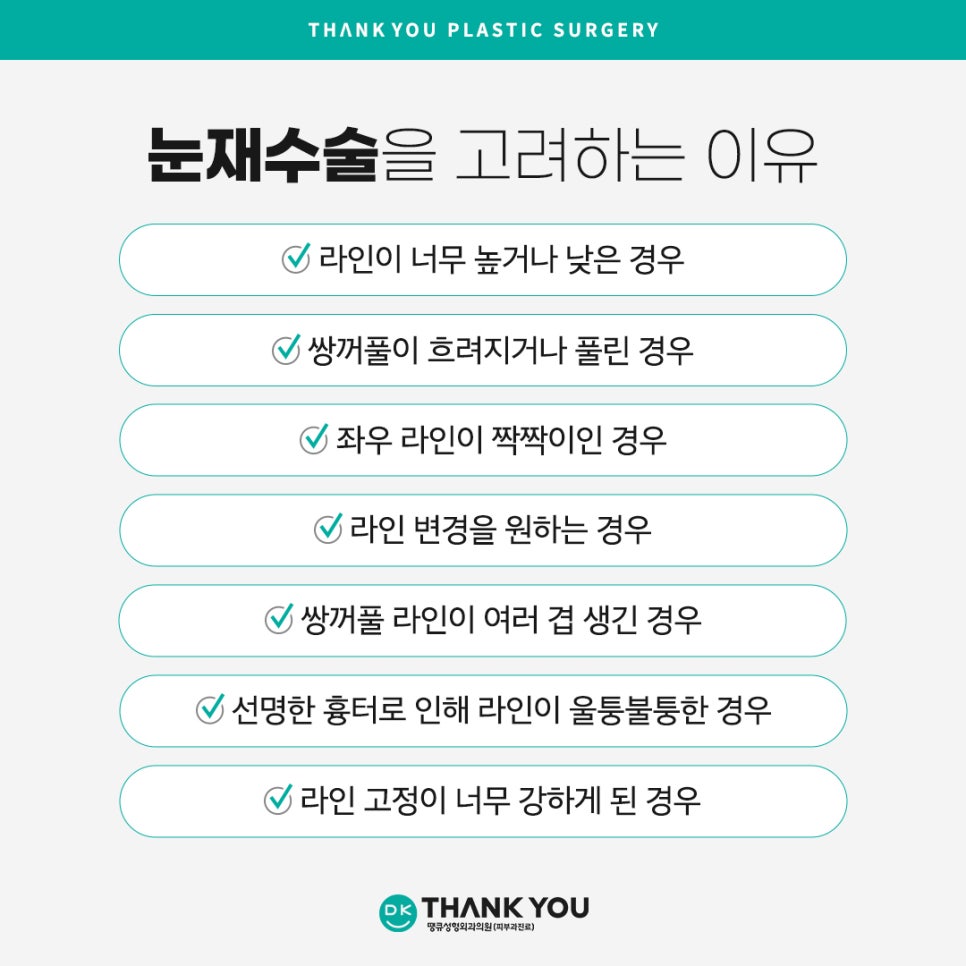
First, many people consider visiting a revision double eyelid surgery clinic for the following reasons:
-
The line is too high or too low
-
The double eyelid crease has become faint or has come undone
-
The left and right lines are uneven
-
They want to change the line
-
Multiple double eyelid creases have formed
-
The line is uneven due to a noticeable scar
-
The crease has been fixed too tightly
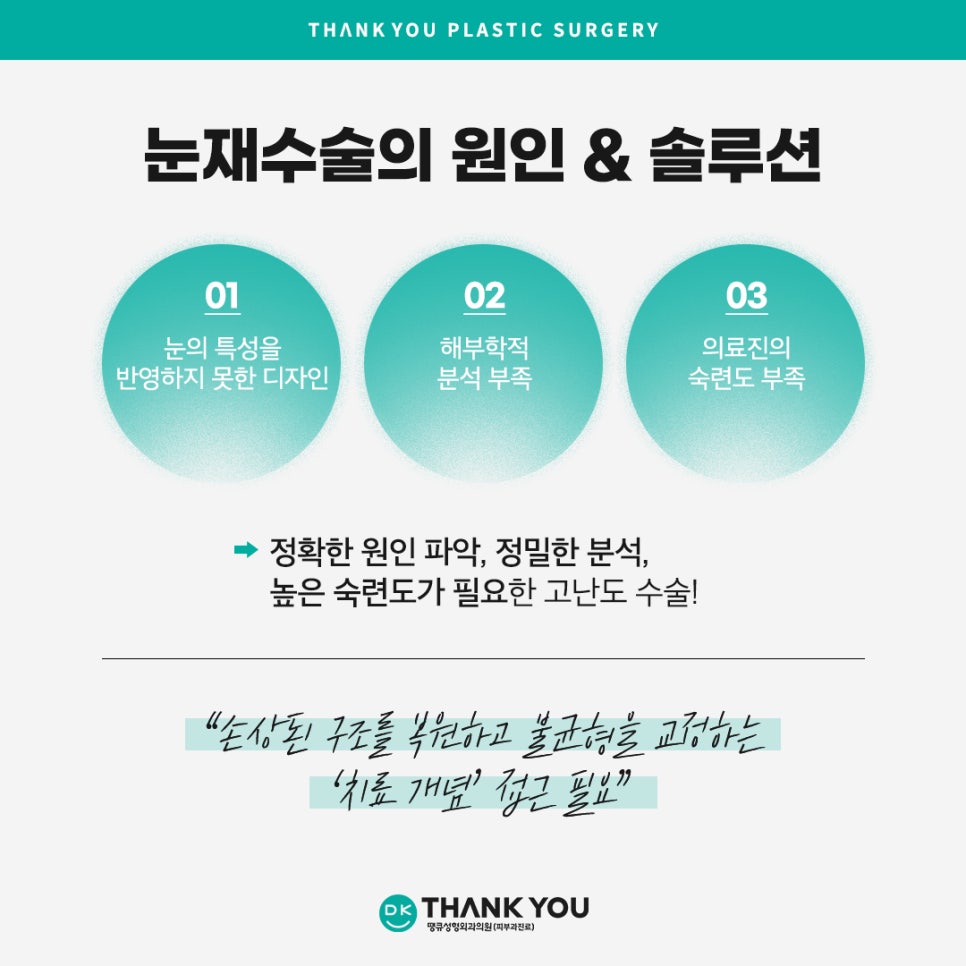
Situations like the above often occur when, during the first surgery,
the individual eye structure was not sufficiently considered,
anatomical analysis was not thorough enough,
or the medical staff lacked enough experience.
Because there are so many reasons for considering revision double eyelid surgery,
it is important to identify the cause accurately.
Since the approach must be taken as a form of "treatment" by carefully assessing not only the exact cause,
but also the adhesion between tissues from the previous surgery and whether there is enough remaining tissue,
the difficulty level of revision surgery is inevitably higher.
This is because revision double eyelid surgery is not simply a matter of recreating the crease,
but of restoring damaged structures and correcting imbalance.
Therefore, it requires much more detailed analysis and a higher level of skill than the first surgery.
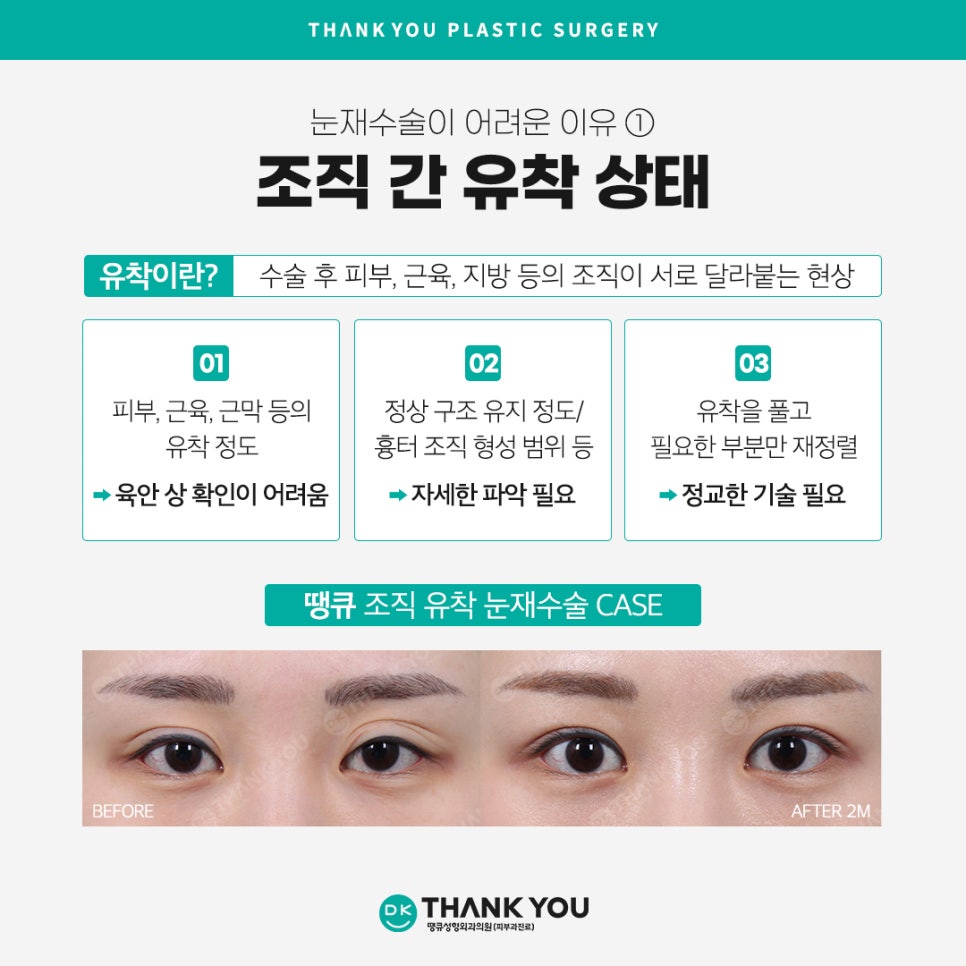
For example, after the first surgery, adhesions formed between the skin and muscles around the eyes,
or between the fat and the muscles that open the eyes,
are often difficult to identify accurately just by looking at the surface.
Adhesion refers to tissue sticking together after surgery.
Revision double eyelid surgery is a delicate process in which these adhesions, which are hard to see with the naked eye,
must be safely released,
only the necessary areas rearranged,
and the desired crease recreated.
For that reason, the surgeon must carefully determine not only where and how much adhesion exists,
but also how much of the normal, smoothly moving structure remains,
and the extent of the firm scar tissue newly formed during the incision, dissection, and fixation process of the first surgery.
The revision surgery should only proceed after these factors have been examined in detail.
If revision double eyelid surgery is performed without this process,
it can lead to results even more disappointing than the first surgery,
which is why it is important to receive help from an experienced specialist.
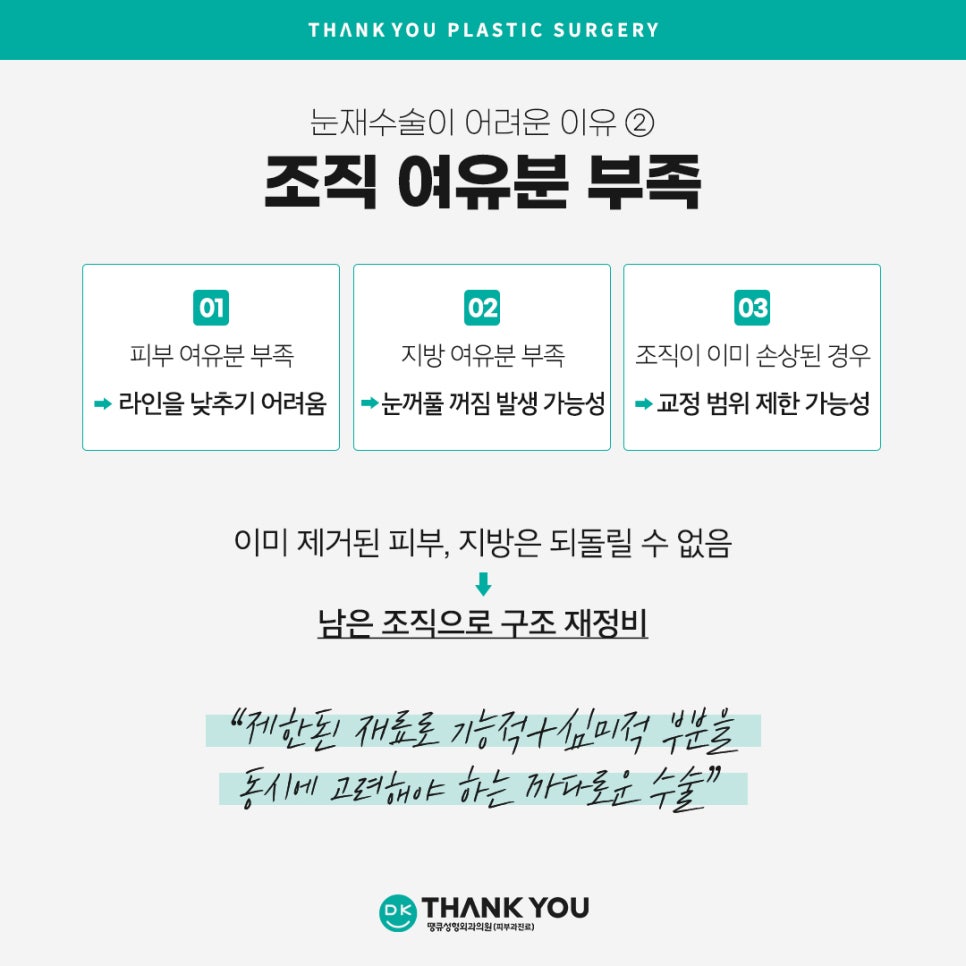
Another reason revision double eyelid surgery becomes more difficult
is that there may not be enough tissue available for the revision.
If there is not enough excess skin,
it may be difficult to lower the crease,
and if there is not enough fat,
even after revision surgery the eyelid may appear hollow.
In addition, if tissue has already been damaged,
the range of correction may be limited.
However, because skin or fat that has already been removed cannot be restored,
it is important to rebalance as much as possible within the remaining tissue
and reorganize the structure.
Since this is a surgery in which both function and aesthetics must be considered at the same time,
with limited materials available,
revision double eyelid surgery is inevitably more complicated.
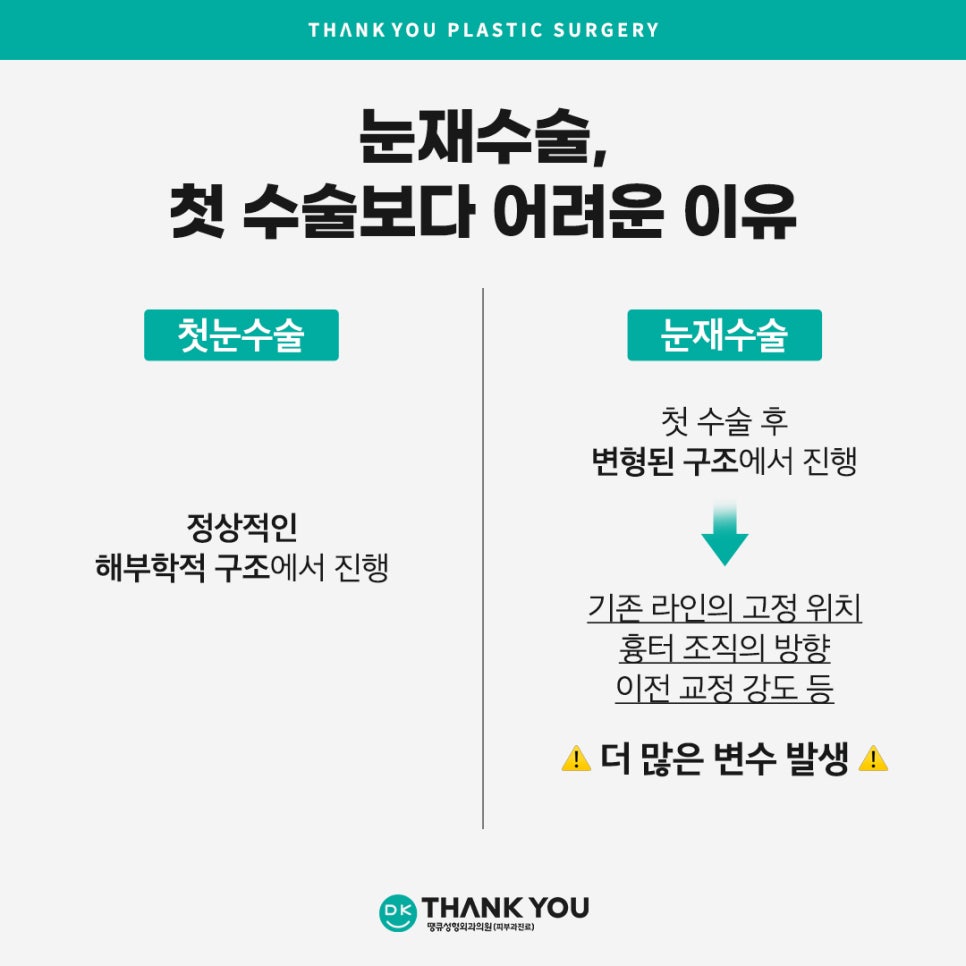
In conclusion, the first double eyelid surgery begins from a normal anatomical structure,
whereas revision double eyelid surgery is performed on a structure that has already been altered once by the first surgery,
so the difficulty increases.
During revision surgery, more factors such as the fixation position of the existing crease,
the direction of scar tissue,
and the strength of the previous correction act as variables,
so above all, it is safer to proceed under a systematic plan at a revision double eyelid surgery clinic with many cases of this type.
Please keep this in mind.
There is one more thing to remember,
which can make choosing a revision double eyelid surgery clinic easier.
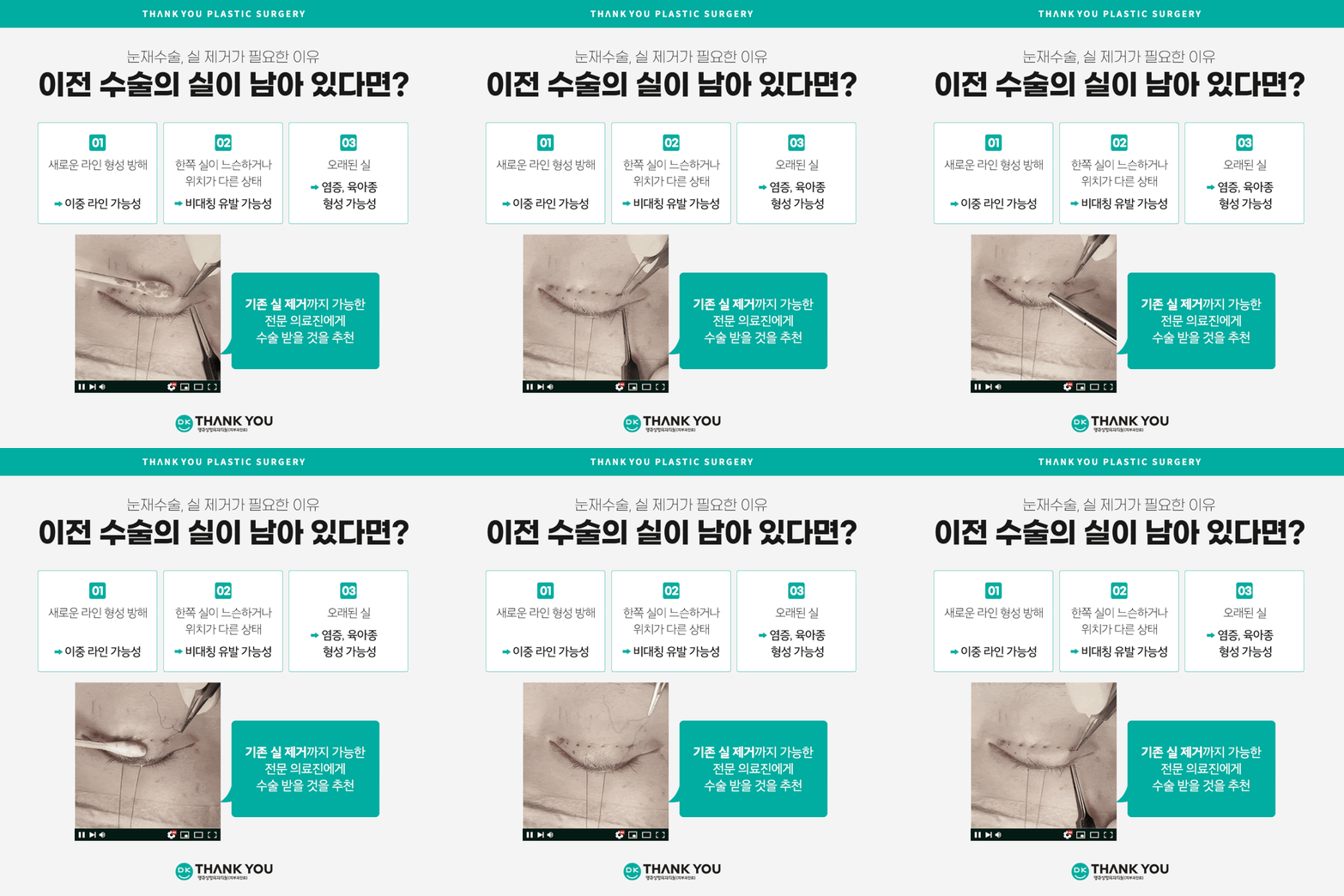
If the first surgery was performed using the non-incision method,
a fixation thread may still remain inside the eyelid.
If revision surgery is performed while leaving this fixation thread in place,
it can interfere with the formation of new adhesions
and cause the crease to form as a double line.
Also, if one side of the thread has already loosened or is in a different position,
the new correction may become unbalanced and cause asymmetry.
Because old threads can also cause inflammation or form a granuloma,
when consulting a revision double eyelid surgery clinic,
in addition to the points mentioned above,
we recommend that you also be sure to check whether removal of the threads used in the previous surgery is possible.
Thank You Plastic Surgery, a revision double eyelid surgery clinic with many revision cases,
is also working day and night to create more beautiful double eyelid lines for our patients,
beyond the aspects mentioned above.
At Thank You, by filling out a custom double eyelid checklist,
we thoroughly identify the patient’s preferences in advance,
including the crease line, size, depth, and curve,
and we also take photos beforehand to conduct a detailed analysis that considers many factors,
such as eye asymmetry, pupil position, and the distance from the eyebrows.
In addition, based on the information gathered,
an experienced specialist conducts an in-depth one-on-one consultation before revision double eyelid surgery while looking in the mirror together.
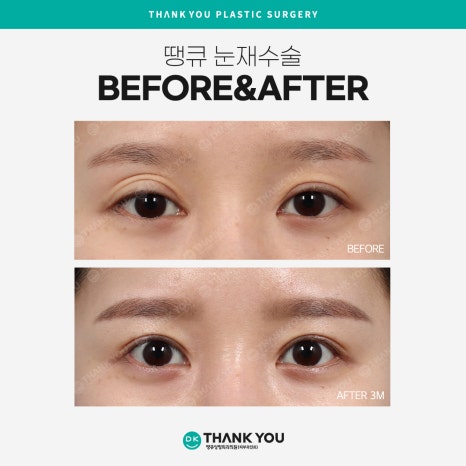
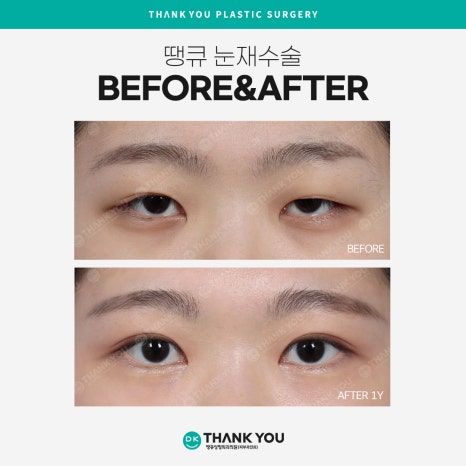
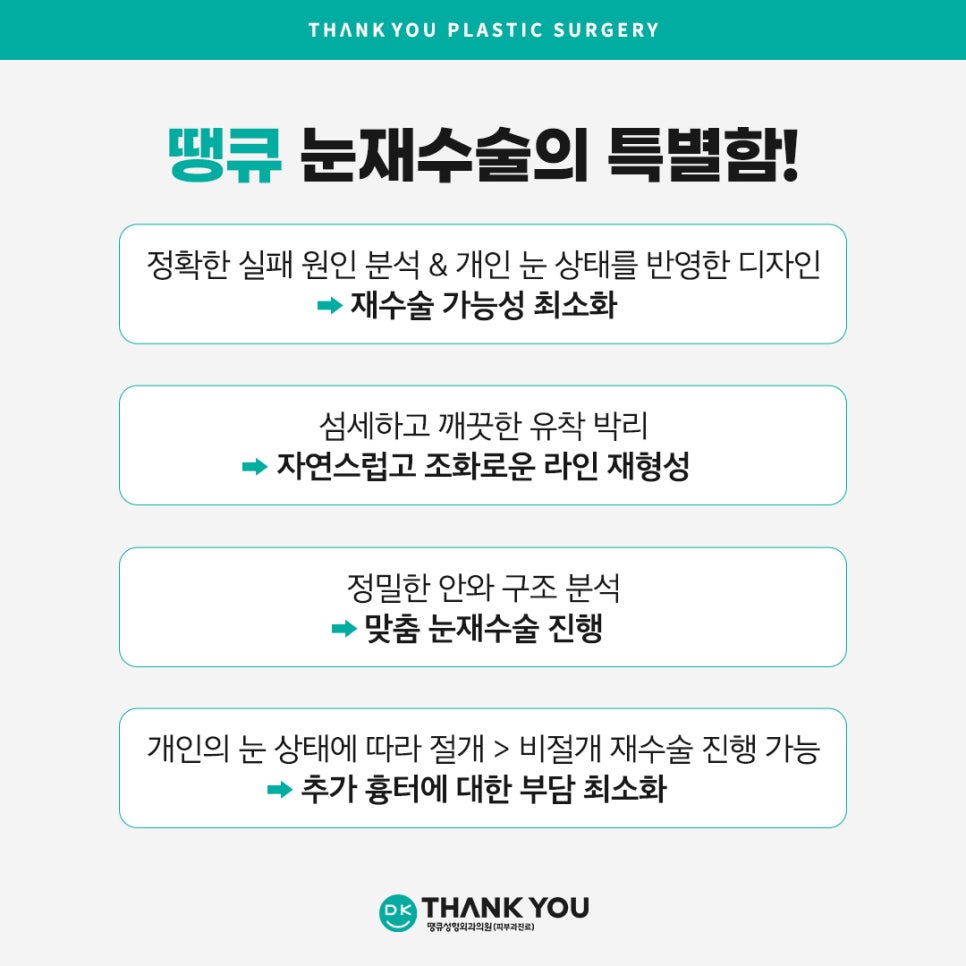
Through this systematic process, Thank You identifies the exact cause of the previous surgery’s failure
and designs the optimal crease while considering each person’s eye condition,
thereby minimizing the possibility of yet another revision surgery.
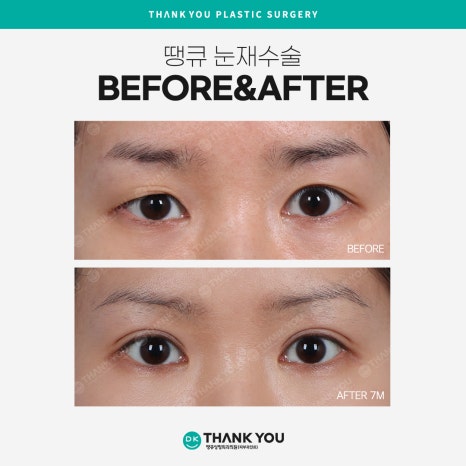
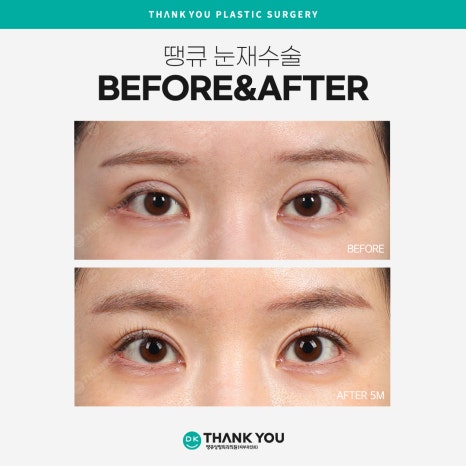
Through precise preoperative consultation, we provide a detailed custom design,
and with delicate and clean adhesion release,
we create a new crease that is not noticeable even when the eyes are closed.
In addition, for revision double eyelid surgery, we perform a precise orbital structure analysis that considers not only the amount of eyelid fat,
but also skin thickness, the degree of eyelid drooping, and the strength of eyelid opening,
and provide customized revision surgery suited to each patient.
Lastly, at Thank You,
depending on the condition of your eyes,
even if your first surgery was performed using the incision method,
it is possible to have revision surgery using the non-incision method,
which can reduce concerns about additional scarring
and may help you achieve a more natural result.
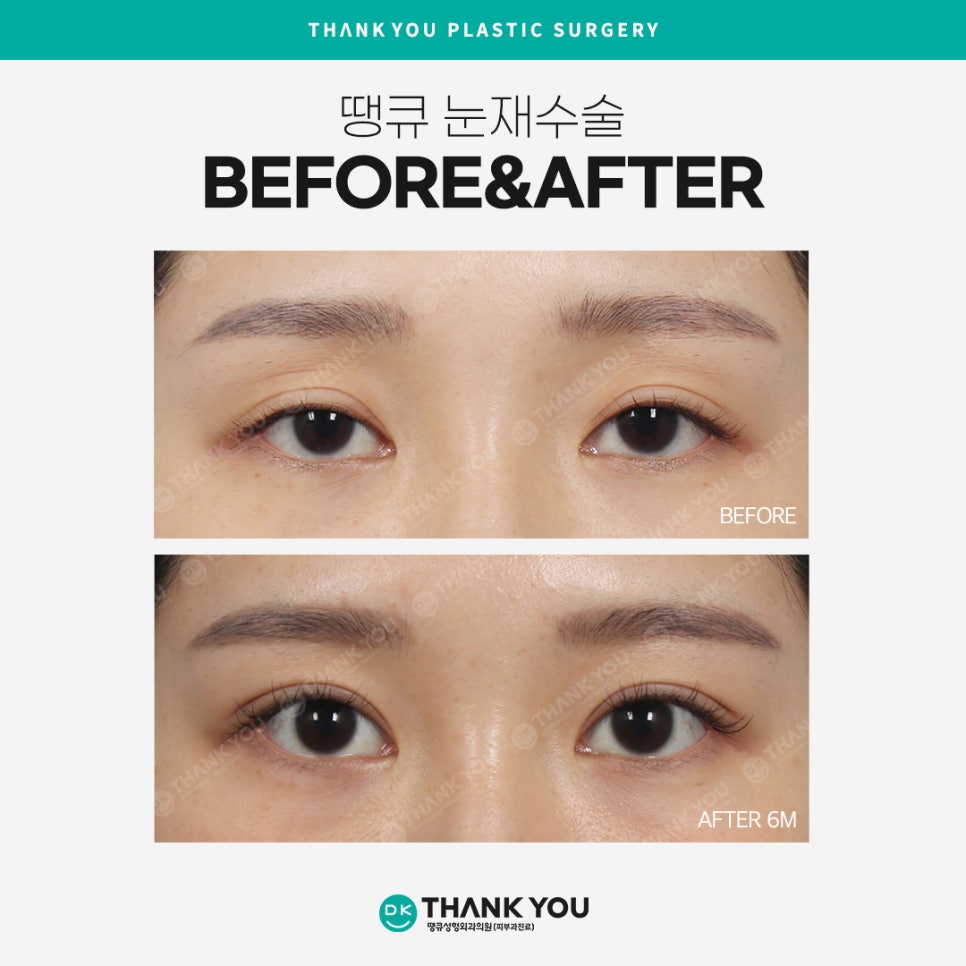
At Thank You, a revision double eyelid surgery clinic with these many strengths,
an event is currently underway where you can receive revision double eyelid surgery at a reasonable price.
For more details about the event,
please check the link below.
⬇️Click⬇️
Go to website
Thank You Plastic Surgery
Thank You and keep thanking, Thank You Plastic Surgery (dermatology treatment available)
🟡Phone inquiry: 02-567-0900
💗KakaoTalk consultation: https://pf.kakao.com/_Pvrxgb
🍀Website: https://www.thankyoups.com/
-Gangnam-daero 446, Hanwell Building, 5th, 8th, and 9th floors, Gangnam-gu (Reception: 9th floor)