Recurrence of Lower Eyelid Fat Repositioning?
Why the Under-Eye Area Looks Bulging After Surgery
After lower eyelid fat repositioning surgery,
many people have probably heard of what is commonly referred to as “recurrence of lower eyelid fat repositioning,”
in which the under-eye area becomes bulging again over time.
In this post, we will take a look at why the under-eye area can become bulging
even after lower eyelid fat repositioning surgery,
and whether this really means that recurrence has occurred.

As mentioned earlier, the under-eye bulging that occurs after surgery
usually develops as aging progresses, weakening the support of the orbital septum,
while reduced skin elasticity
allows the fat to push forward again.
However, there are also cases in which the under-eye area does not become completely flat
and remains bulging even though it has not been long since the surgery.
In such cases, the cause should be approached as something other than simple “recurrence of lower eyelid fat repositioning.”
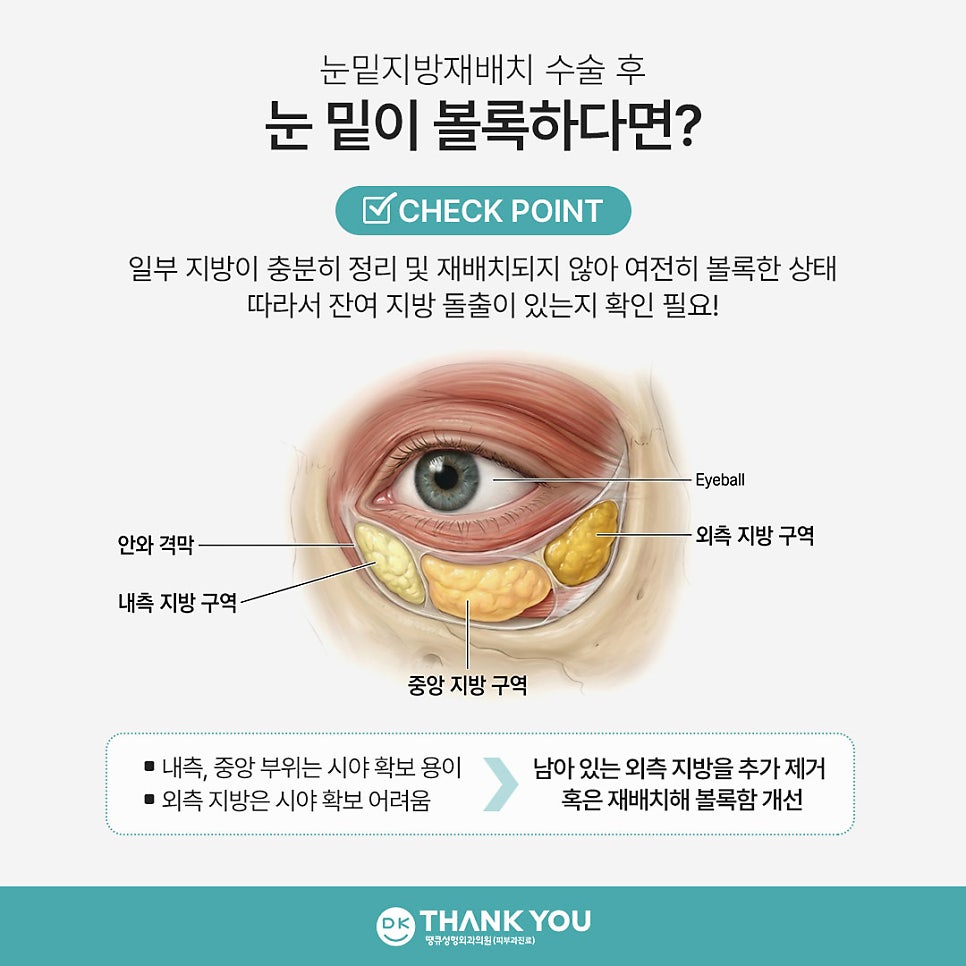
✏️It is important to check whether fat remains under the eyes
Unlike undercorrection, in which the tear trough is not sufficiently improved,
there are also cases in which the fat that remains becomes the issue.
This is called “residual fat protrusion.”
An anatomical examination of the fat under the eyes
shows that it is divided into three areas: medial, central, and lateral.
Of these, the area that most often causes residual fat protrusion
is the lateral fat compartment.
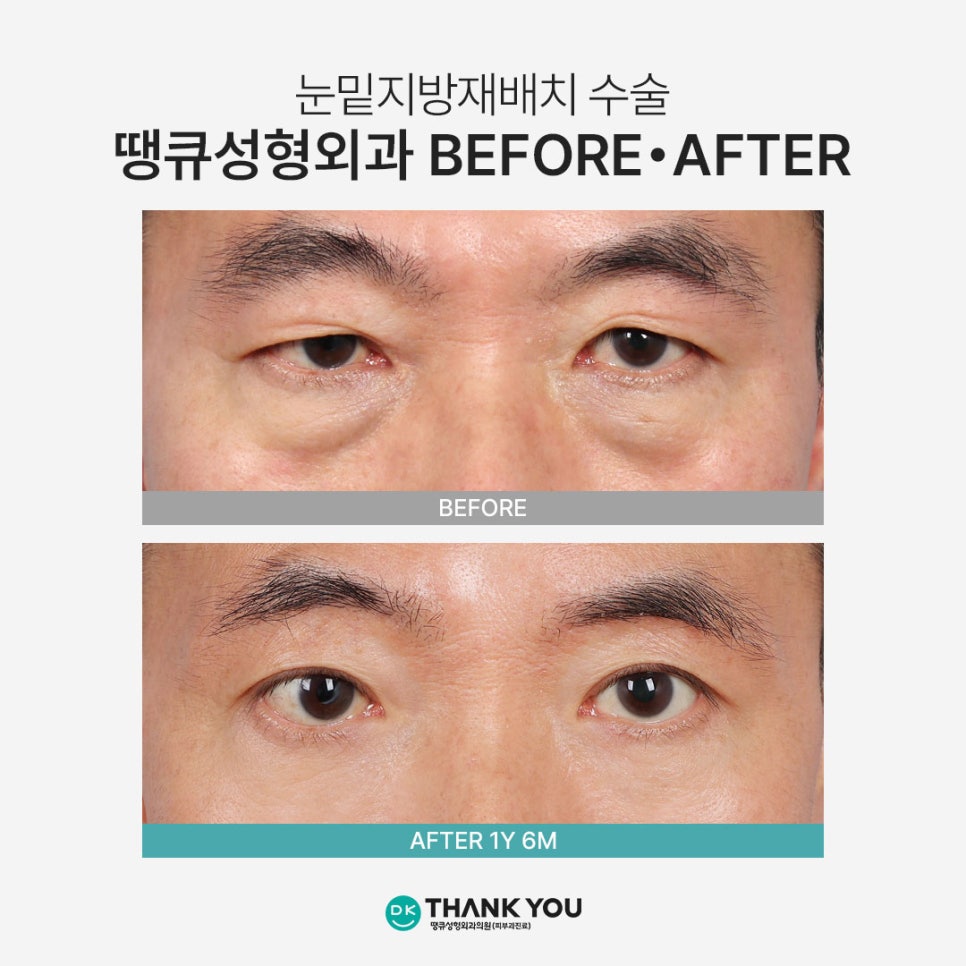
The medial and central areas are relatively easy to visualize,
but the lateral area is structurally difficult to access and visualize.
As a result, some fat may remain because it was not sufficiently removed
or repositioned during surgery.
In such cases, the remaining lateral fat can be removed,
or, if necessary, repositioned to an appropriate location
to improve the condition.
Because this is also performed through a transconjunctival approach,
there is little concern about external scarring,
and after correction, the under-eye line can be seen to be more evenly
refined, including the lateral area.
✏️Avoiding a second surgery is especially important
Lower eyelid fat repositioning surgery requires more than just waiting for the swelling to subside.
It takes approximately 10 months or more for the tissues to stabilize
and for the final result to settle.
From the patient’s perspective, this means having to wait during this period
while maintaining an unsatisfactory condition,
and then bearing the burden of undergoing surgery on the same area again afterward.
This is not only physically burdensome,
but also considerably tiring psychologically.
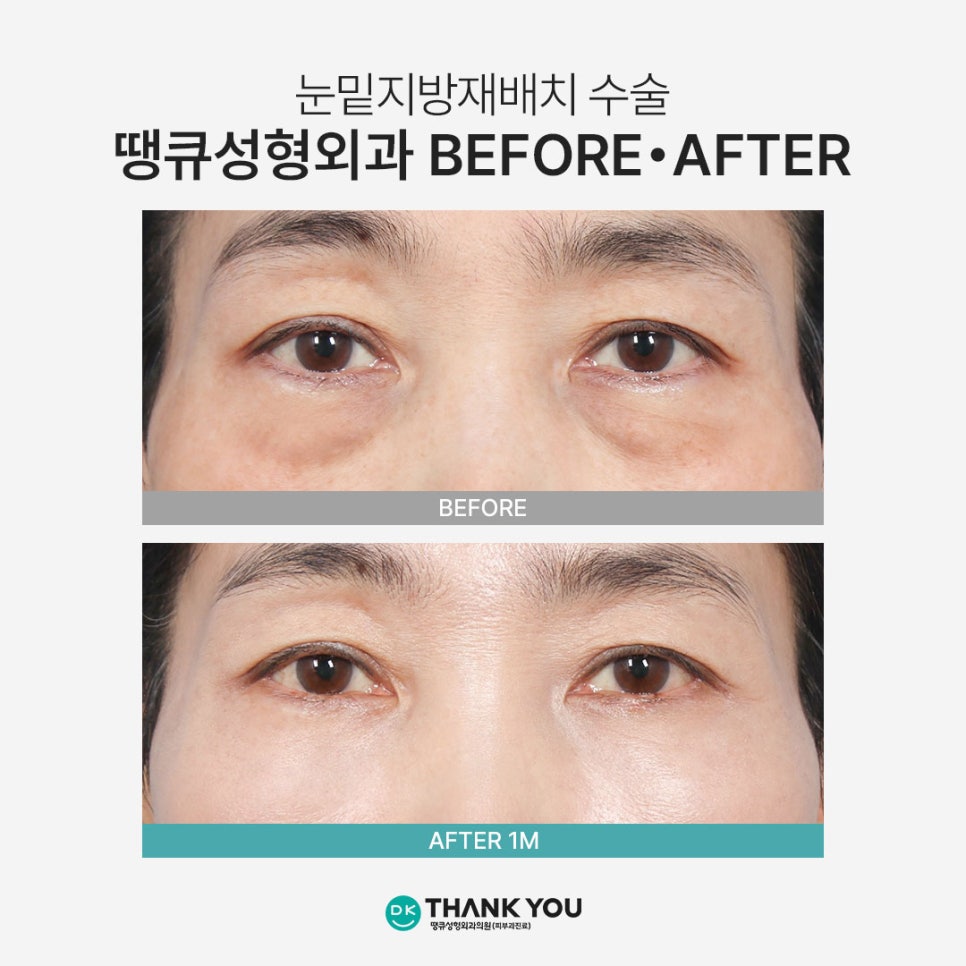
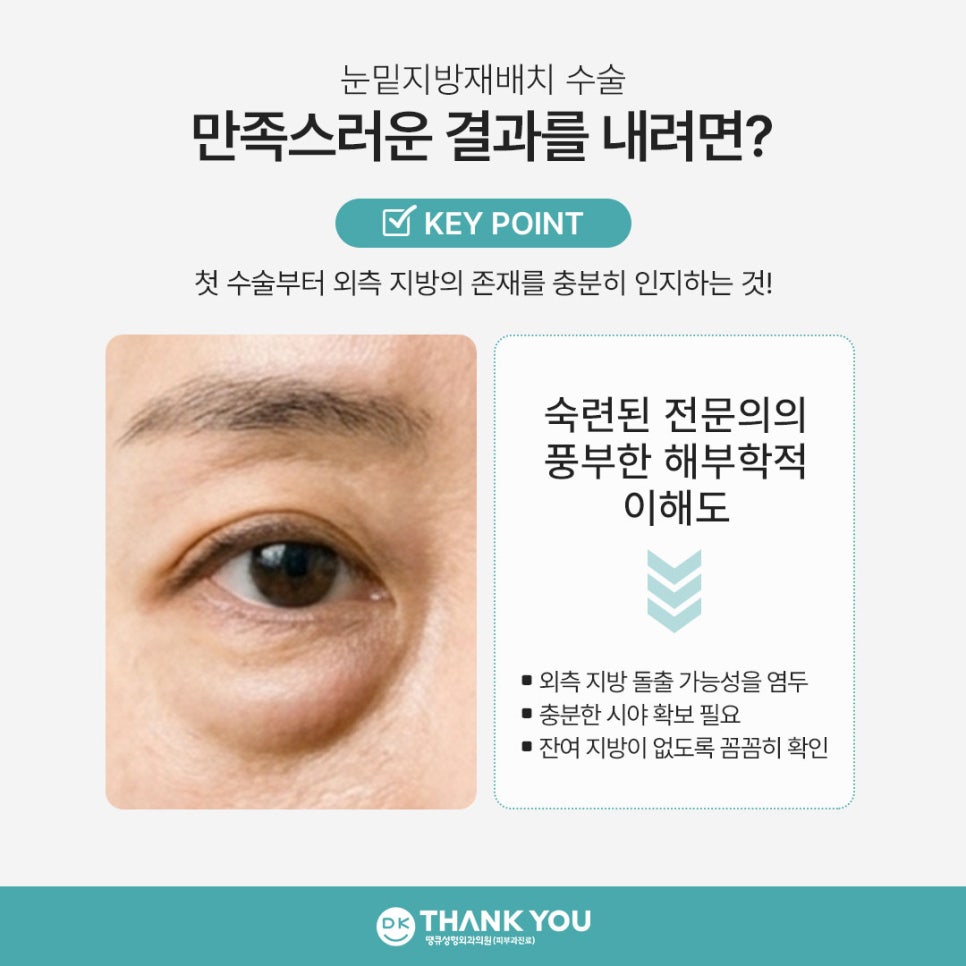
The key here is to fully recognize the presence of lateral fat
at the initial surgical stage
and actively check for it.
Rather than taking a passive approach simply because visualization is difficult,
the possibility of lateral fat protrusion should be considered from the outset.
After securing a sufficient field of view,
it is necessary to carefully check that no residual fat remains.
Ultimately, this is not merely a matter of technique,
but of “how thoroughly the area is checked.”
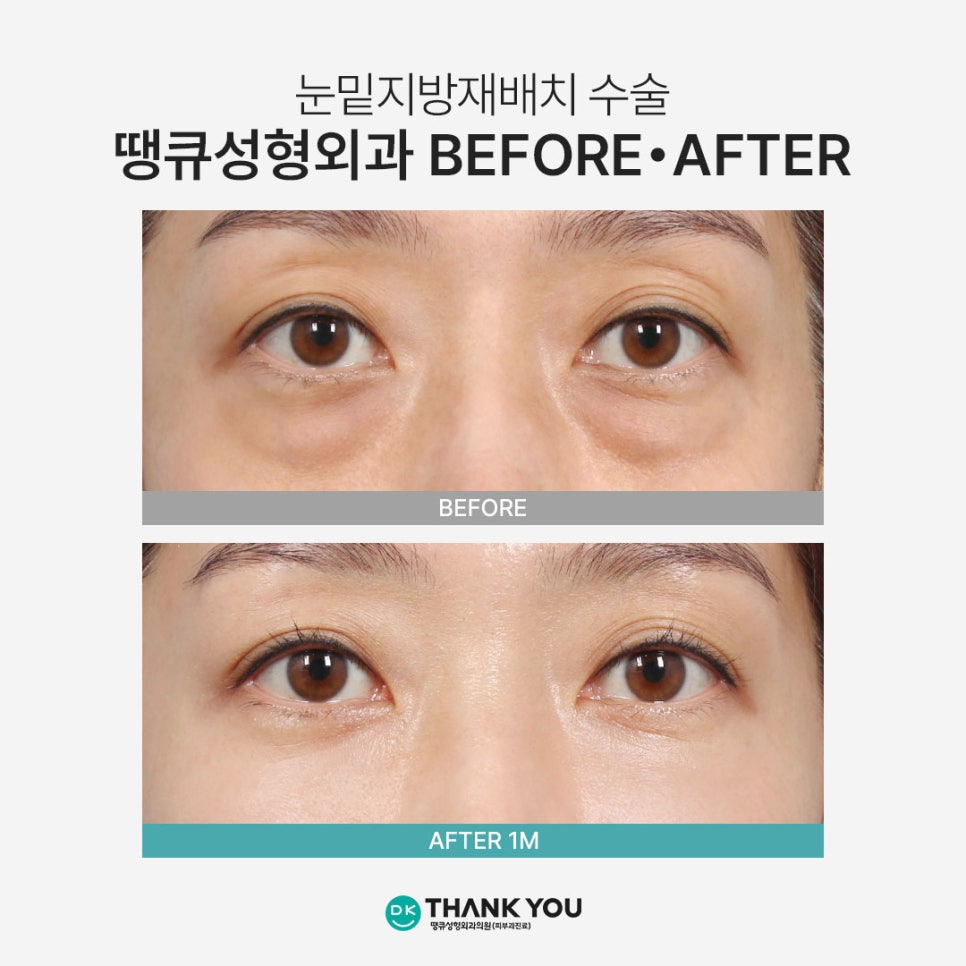
The results of lower eyelid fat repositioning surgery
cannot be simply divided into “successful” or “unsuccessful.”
Various factors, including undercorrection, residual fat, and skin elasticity,
work together to shape the outcome.
Ultimately, good results do not happen by chance.
They require sufficient anatomical understanding
and a painstaking process of checking carefully so that even areas that cannot be seen are not overlooked.
Such differences can create results that are completed in a single lower eyelid fat repositioning surgery.
Thank You Plastic Surgery
Expressing our gratitude, Thank You Plastic Surgery (Dermatology services)
🟡Phone inquiries: 02-567-0900
💗KakaoTalk consultation: https://pf.kakao.com/_Pvrxgb
🍀Website: https://www.thankyoups.com/
-5th, 8th, and 9th floors, Hanwell Building, 446 Gangnam-daero, Gangnam-gu [Reception: 9th floor]