
What Does a Contracted Nose Mean, and How Is Revision Surgery Performed? ❓
Why Stem Cell Treatment Is Gaining Attention
Many people seek nose surgery, just as they do eyelid surgery.
As one of the most common cosmetic surgeries, rhinoplasty can have a significant impact on the overall appearance of the face.
However, in some cases, a contracted nose may develop over time after rhinoplasty.
So, what does a contracted nose mean, and what treatments can be considered as revision surgery options?
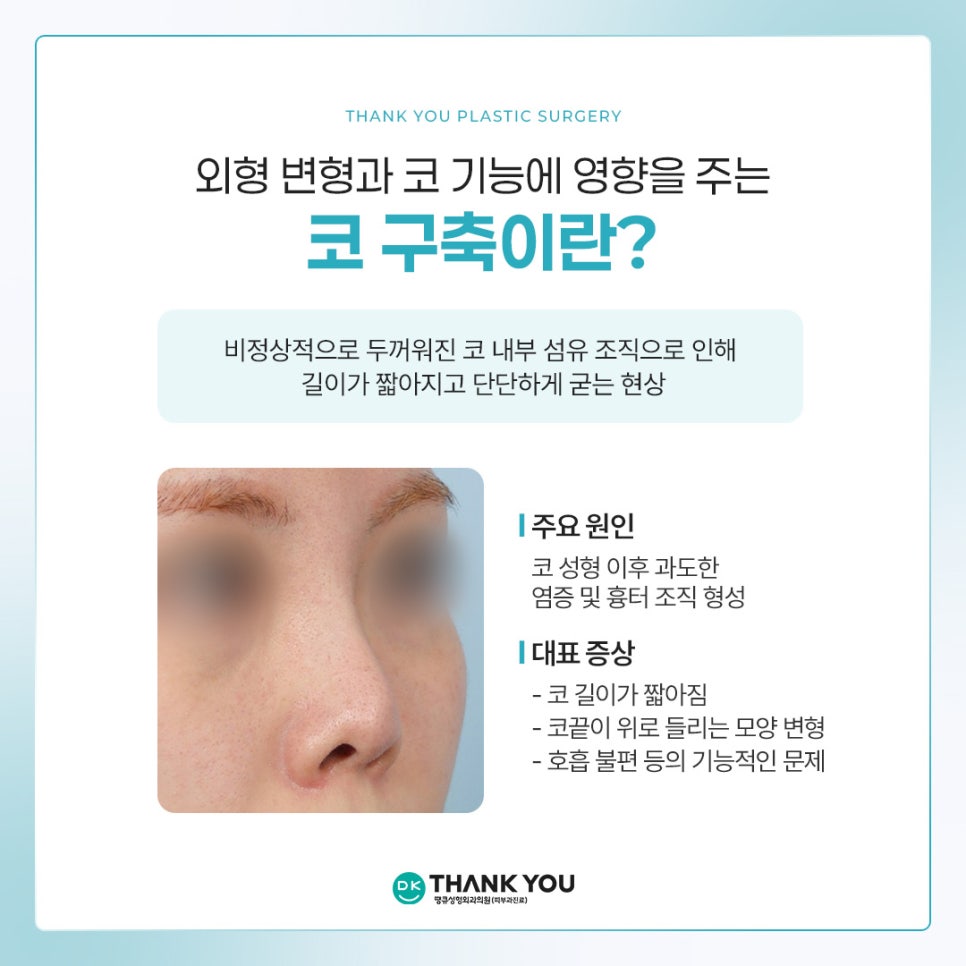
First, let us look at the meaning of a contracted nose.
A contracted nose refers to a condition in which the fibrous tissue inside the nose becomes abnormally thick, narrowing the inside of the nose.
This contraction typically occurs after rhinoplasty due to inflammation and excessive formation of scar tissue, resulting in symptoms such as a shortened nose and hardened tissue.
The shape of the nose may also become distorted, causing the tip to turn upward.
When the symptoms are severe, they may develop into functional problems, such as difficulty breathing, so a revision surgery plan based on an accurate diagnosis is necessary.
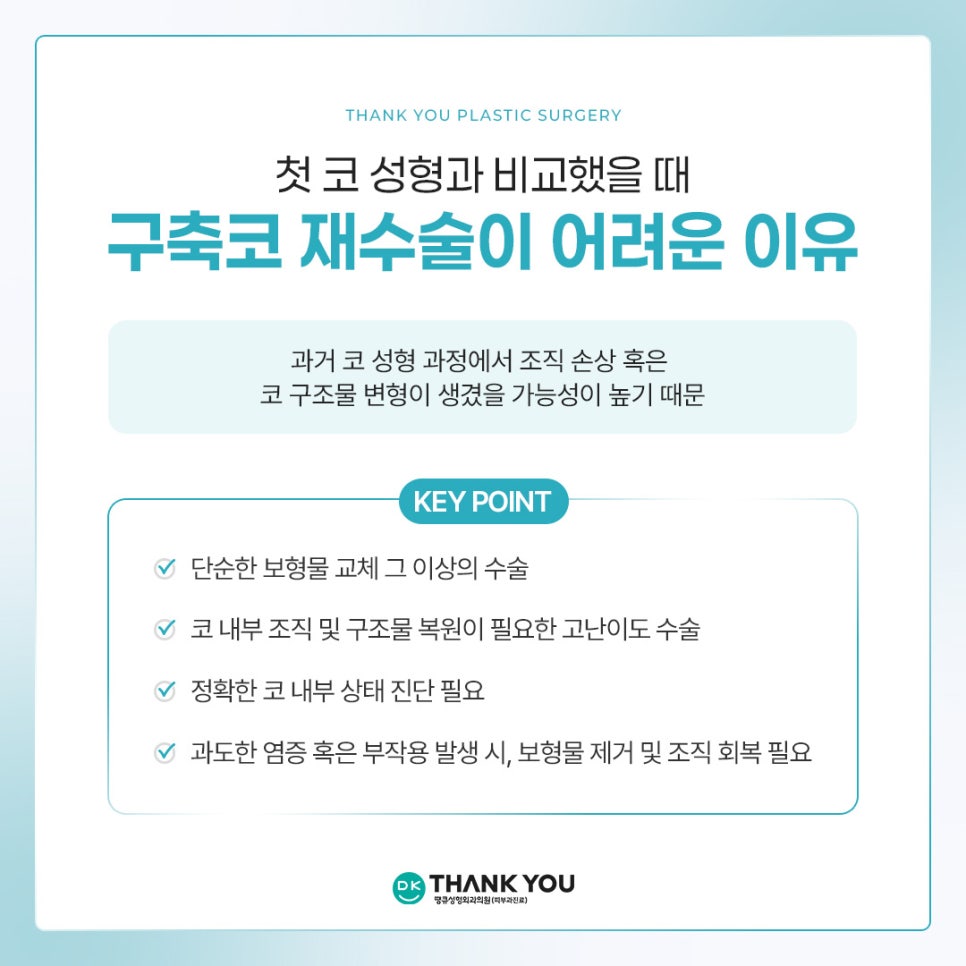
An important point to note here is that revision surgery for a contracted nose is considerably more difficult than the initial rhinoplasty.
Revision surgery for a contracted nose does not simply involve replacing an implant.
It is a highly complex procedure that requires restoration of both the internal tissues and the anatomical structures of the nose.
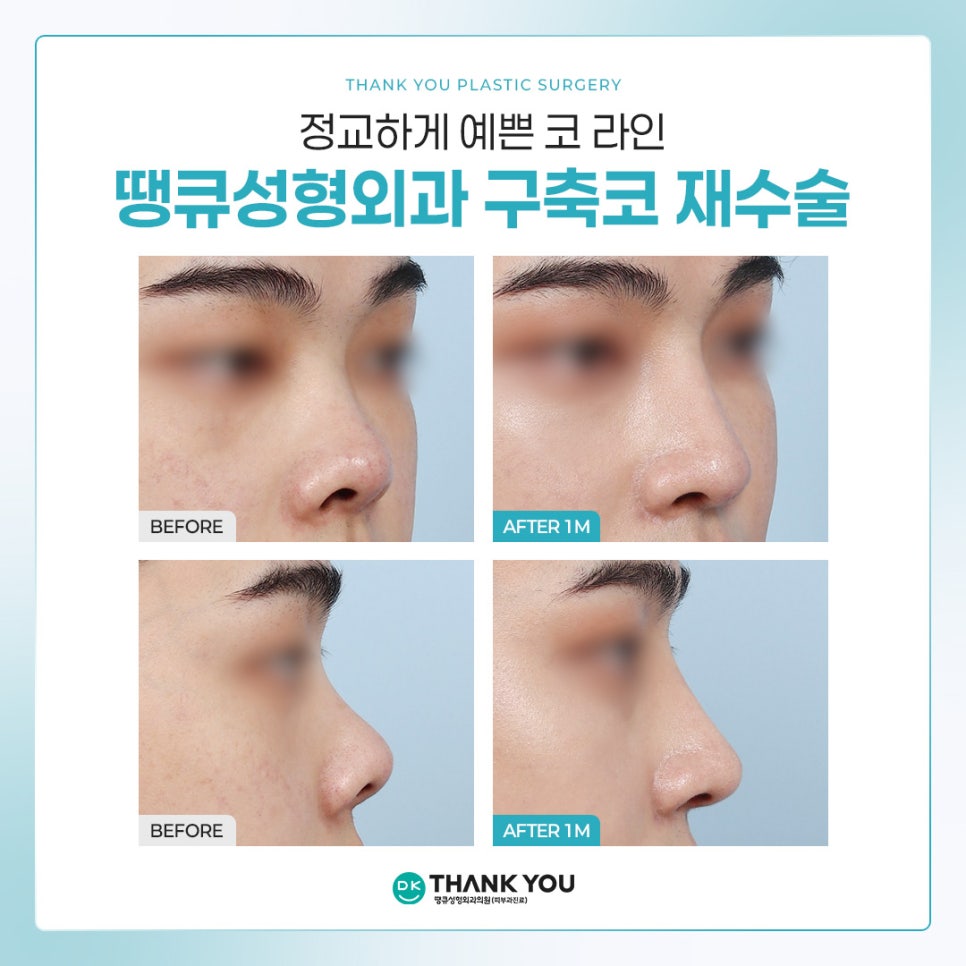
In other words, because tissue damage may have already occurred during the previous rhinoplasty or the nasal structures may have become deformed, simply reshaping the nose has limitations.
Therefore, when performing revision surgery for a contracted nose, the current internal condition of the nose must be carefully diagnosed using 3D CT scans, nasal endoscopy, and other examinations.
If there is excessive inflammation or a complication, the existing implant must first be removed, followed by a recovery period for the damaged tissue.
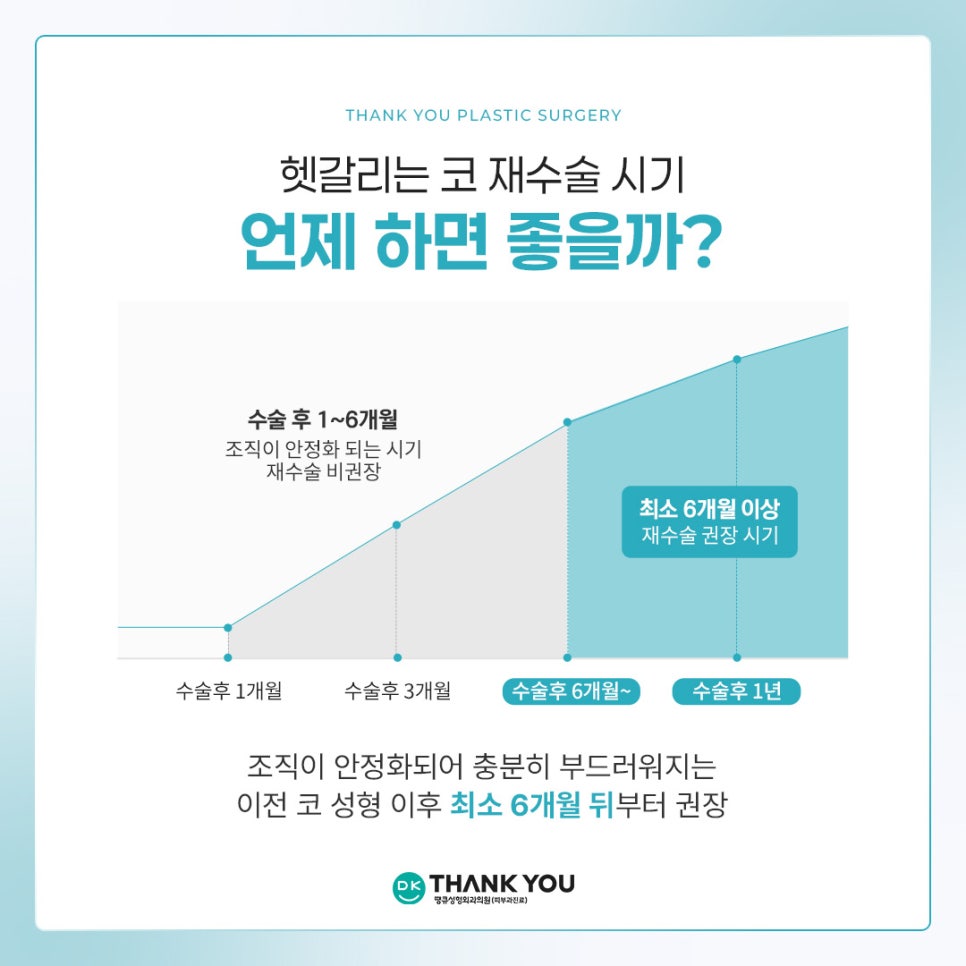
It is recommended to undergo revision surgery for a contracted nose after six months have passed since the previous rhinoplasty.
In other words, revision surgery to reshape the nose is performed once the tissue has stabilized and become sufficiently soft again.
Some people may wish to shorten this period and undergo revision surgery for a contracted nose as soon as possible.
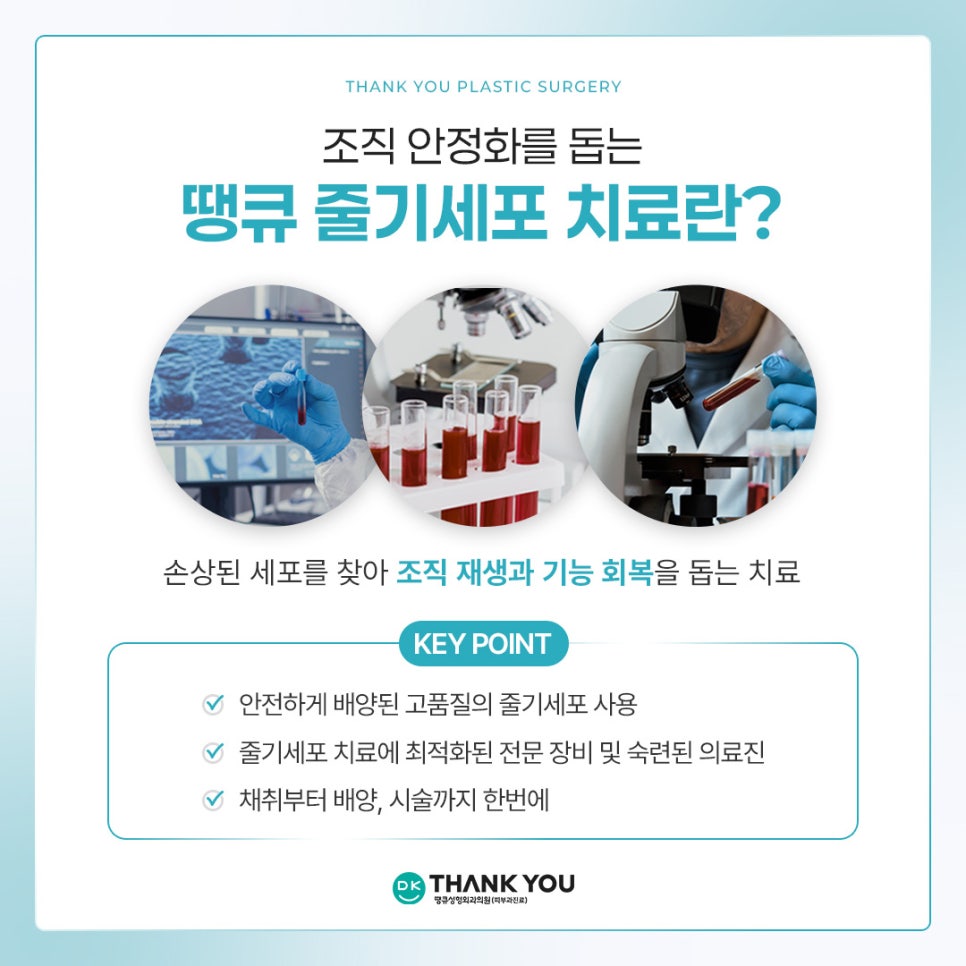
One option that may be considered at this time is stem cell treatment, which is intended to support tissue regeneration.
At Thank You Plastic Surgery, which has accumulated diverse clinical experience related to rhinoplasty, revision surgery for a contracted nose is performed in conjunction with stem cell treatment.
Stem cell treatment here refers to supporting the recovery of damaged tissue by secreting growth factors and bioactive substances involved in tissue regeneration.
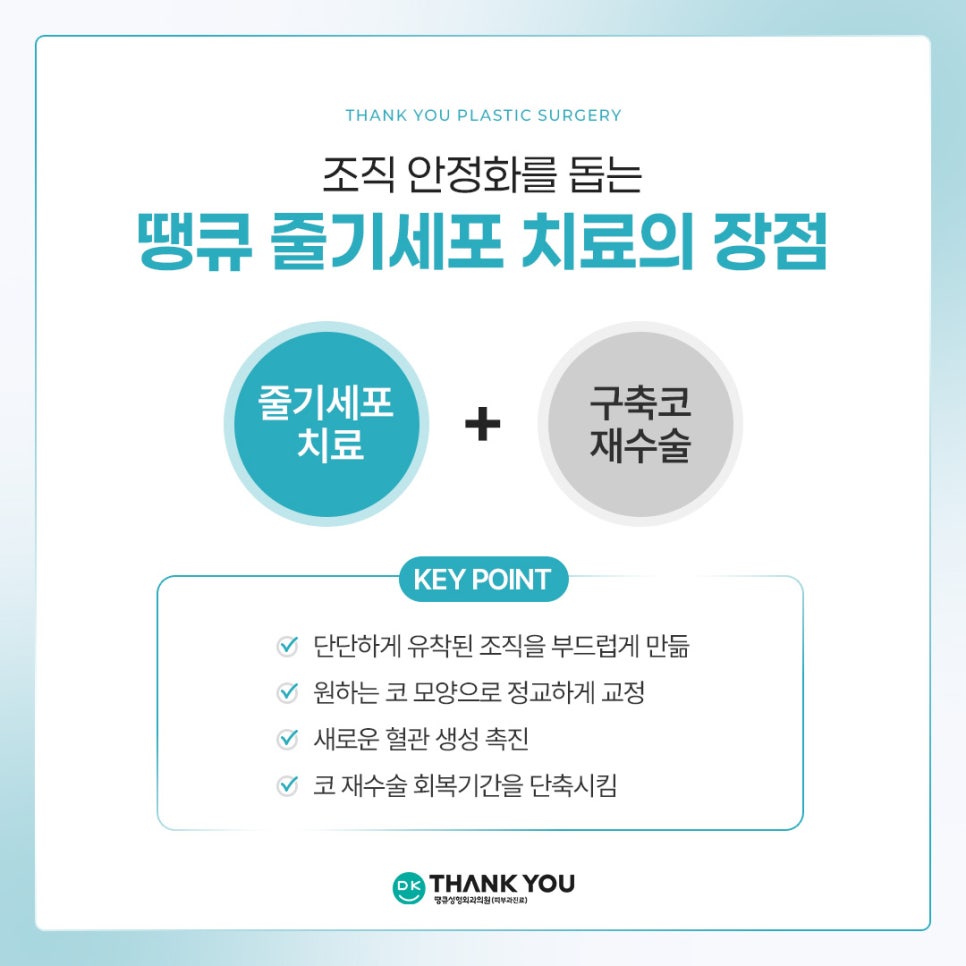
In particular, when stem cell treatment is combined with revision surgery for a contracted nose, it may help soften skin tissue that has become hardened and adhered.
Because revision surgery can be performed more easily when the tissue has become softer, it may allow comparatively more precise correction of the nasal shape than when the tissue is firmly adhered.
The formation of new blood vessels may also be promoted, potentially shortening the recovery period after surgery.
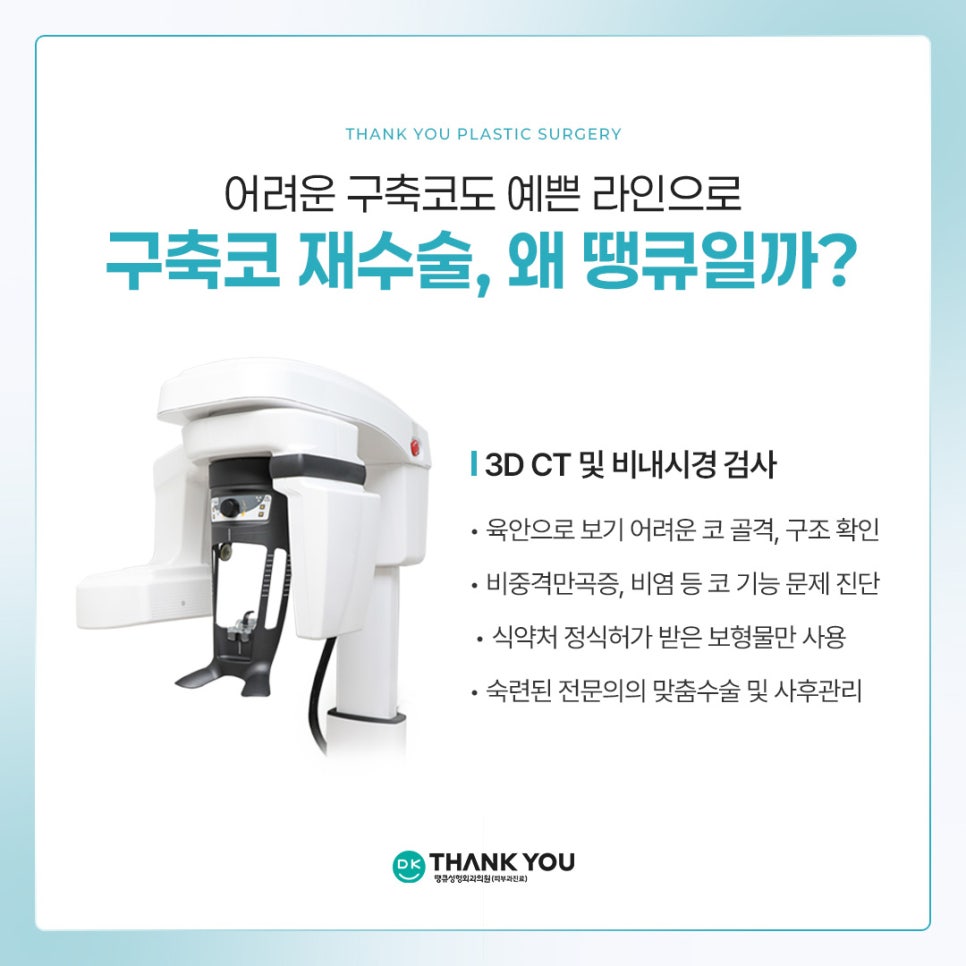
Before revision surgery for a contracted nose, Thank You Plastic Surgery performs 3D CT scans and nasal endoscopy to accurately assess the internal condition of the nose.
An experienced specialist with extensive clinical experience in various types of revision rhinoplasty identifies the cause of the need for revision surgery, establishes a revision surgery plan appropriate for the patient, and oversees customized surgery and postoperative care.
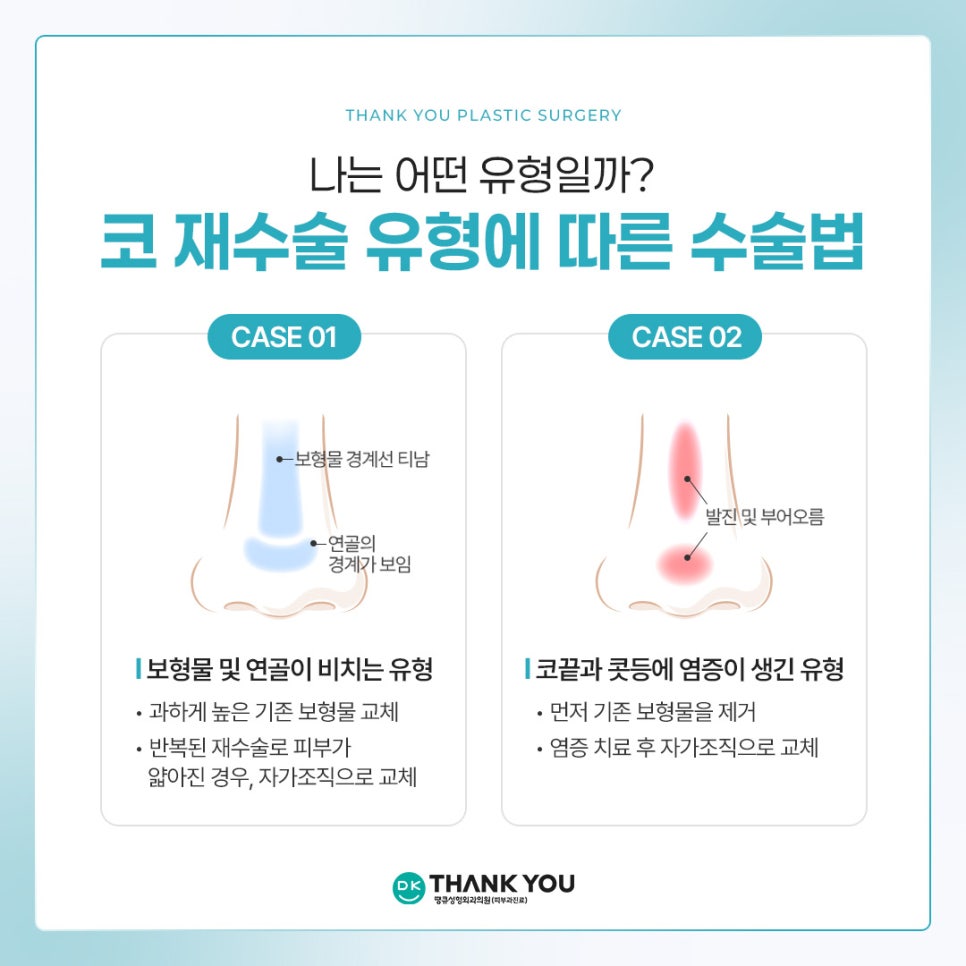
In addition, the surgical method varies depending on the type of revision surgery required.
First, there is the type in which the implant and cartilage are visible.
If an excessively high implant was used, revision surgery to replace it is performed.
If the skin has become thin due to repeated revision surgeries, it may be replaced with the patient’s own tissue.
Second, there is the type in which inflammation has developed at the nasal tip and bridge.
In this case, the implant is removed and inflammation is treated, after which revision surgery to replace it with the patient’s own tissue may be performed.
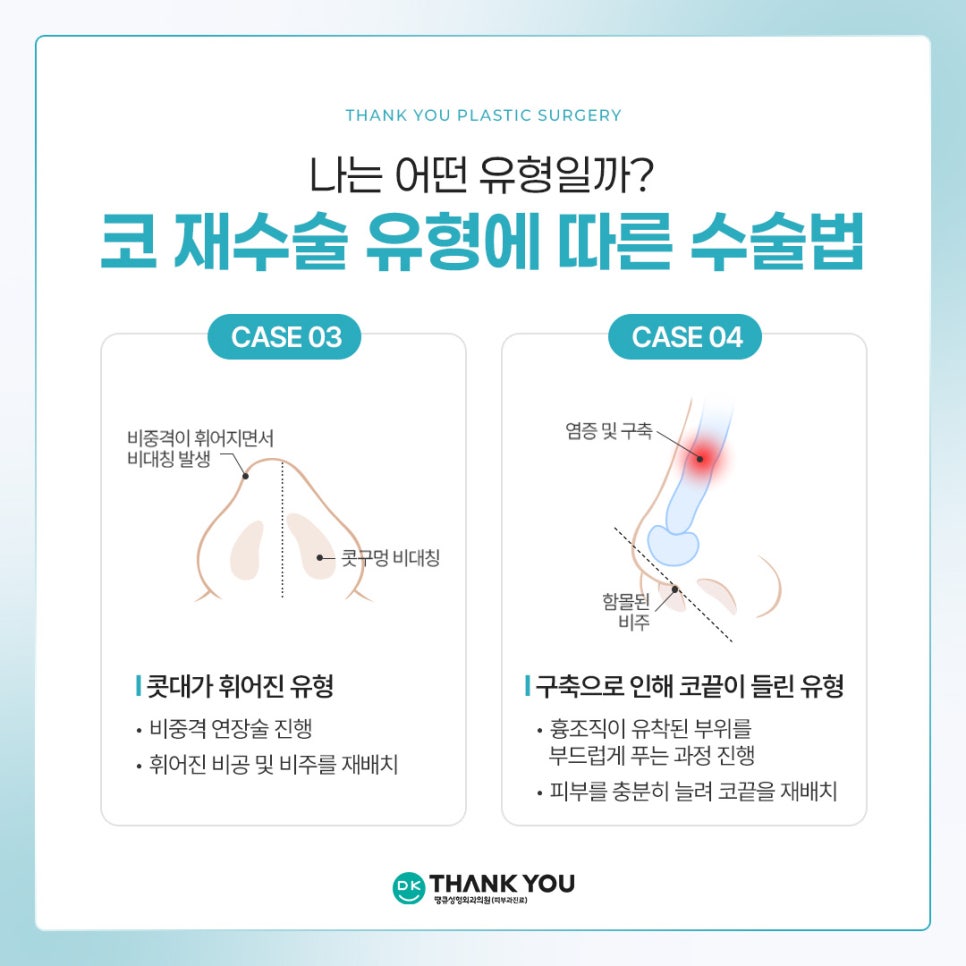
Third, there is the type in which the nasal bridge is crooked.
Septal extension surgery is performed to reposition the crooked nostrils and columella.
Fourth, there is the type in which contraction has progressed and the nasal tip has become lifted.
In this case, the areas where scar tissue has adhered are released, and the skin is sufficiently stretched before the nasal tip is firmly repositioned.
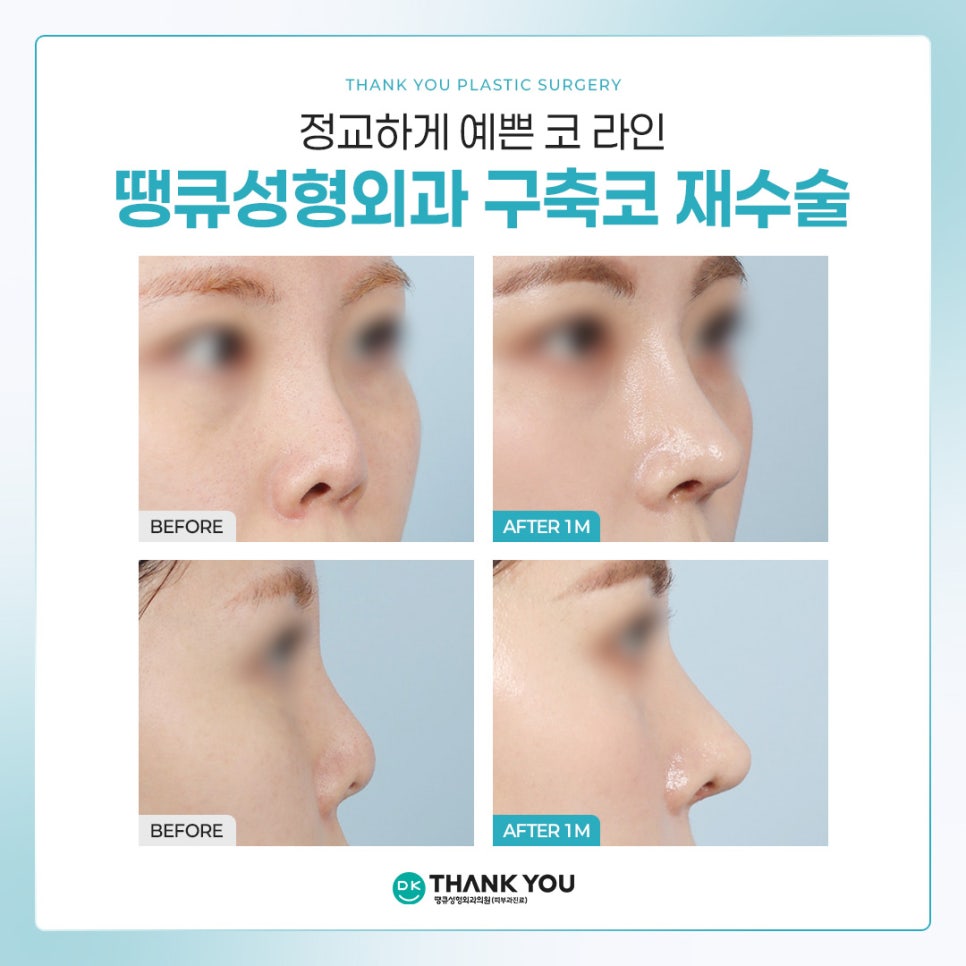
We recommend deciding how to assess these types and proceed with surgery through thorough consultation with a medical professional.
So far, we have taken a detailed look at the characteristics of revision surgery for a contracted nose and stem cell treatment.
If you are considering revision surgery because a contracted nose has developed, why not consider Thank You Plastic Surgery, which seeks to achieve satisfactory results through stem cell treatment?
Thank You is currently running a revision rhinoplasty event, so if you are interested, click the link below to check the event details!
🤍Click for Event Details🤍
Thank You Plastic Surgery
Expressing and sharing our gratitude, Thank You Plastic Surgery (dermatology services)
🟡Phone inquiries: 02-567-0900
💗KakaoTalk consultation: https://pf.kakao.com/_Pvrxgb
🍀Website: https://www.thankyoups.com/
-Gangnam-gu, 8th and 9th floors, Hanwell Building, 446 Gangnam-daero [Reception: 9th floor]