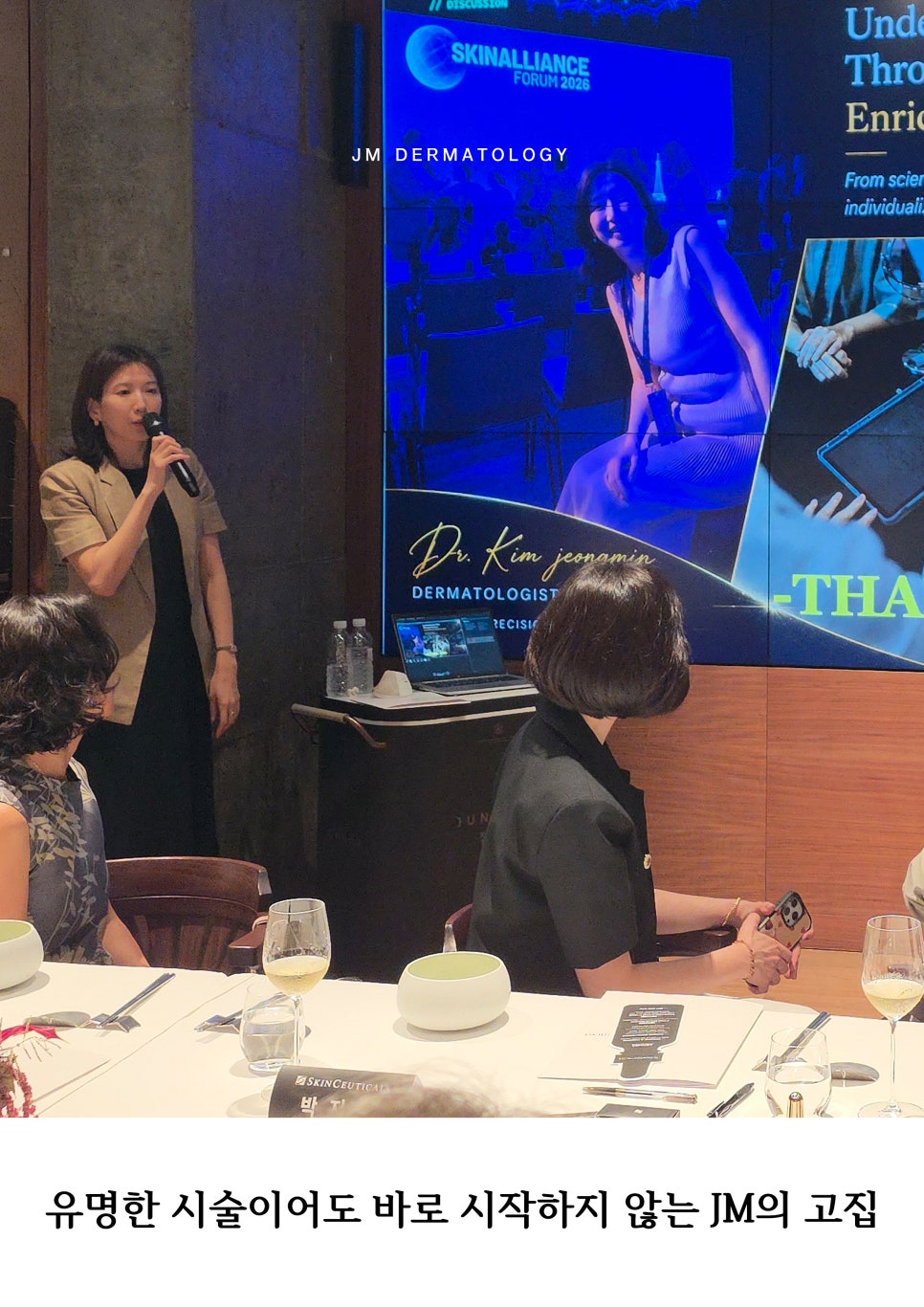
Recently, interest in GOURI has been growing among people looking for skin boosters.
GOURI is known as a liquid PCL-based collagen booster procedure.
It has attracted considerable attention after being described as reducing the possibility of nodules, which has been mentioned as a concern with some existing PCL procedures.
However, when Gangnam Station JM Dermatology considers a new procedure, we always begin with the same question:
“Is this procedure popular?” is not the question.
“Which skin types is it suitable for?”
We believe this standard should come first.
The liquid formulation is certainly presented as an advantage, but it may be premature to say that this alone makes it suitable for every skin type.
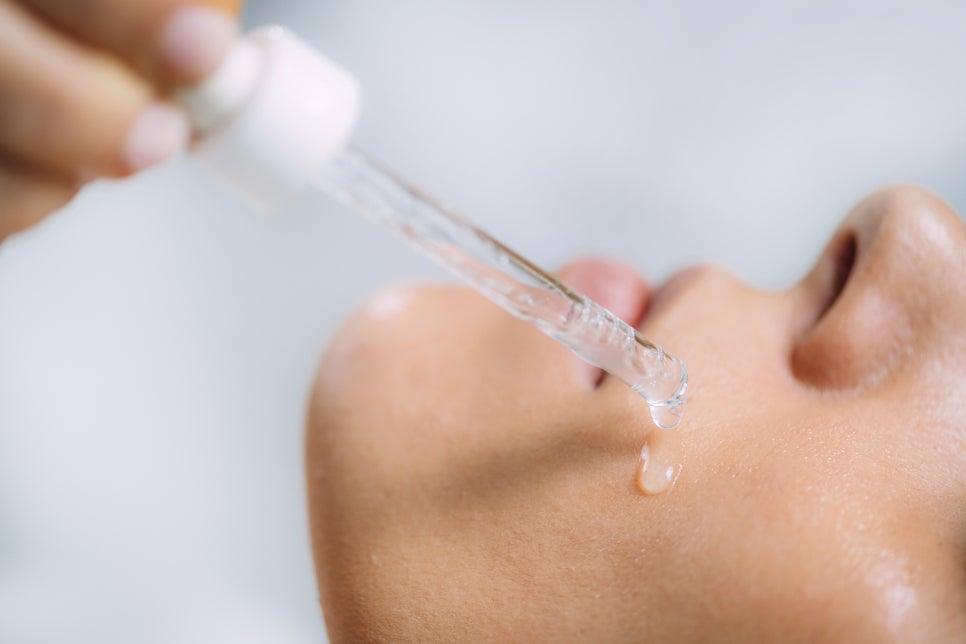
Because this is a procedure involving injection into the skin, not only the ingredients but also the injection layer, injection volume, treatment interval, and the skin’s current condition must all be considered together.

GOURI | Liquid PCL-Based Collagen Booster
GOURI is a procedure in the collagen booster category that uses liquid PCL.
PCL is a biodegradable polymer also known as an ingredient used in medical sutures and Ellansé filler.
While some existing collagen boosters are used by diluting a powder, GOURI was developed in liquid form from the outset.
Because of this characteristic, it is sometimes introduced as having relatively less concern regarding a gritty texture or clumping.
However, it is not advisable to decide on a procedure based solely on the fact that it is “liquid.”
A liquid formulation does not mean that the possibility of nodules or inflammation is completely eliminated.
For procedures injected into the skin, not only the ingredients but also the injection layer, injection volume, treatment interval, and the skin’s current condition must all be considered together.
If you are looking into the Gangnam Station GOURI skin booster, it is important to first examine the conditions that must be checked before treatment—such as skin thickness, sensitivity, and the presence of inflammation—rather than relying on the explanation that “it is fine because it is liquid.”
What kind of changes can be expected from GOURI? | Restoring Skin Health Rather Than Providing Immediate Volume
Some people understand GOURI as being similar to a filler, but the approach is different.
Rather than immediately filling in hollow areas, GOURI is closer to a procedure intended to promote changes in skin texture and elasticity through a collagen response.
In other words, it may be one option in situations such as:
- When the skin appears to have lost firmness compared with before
- When fine lines and skin texture are concerns at the same time
- When you want to manage skin health in a more natural way
Conversely, if you expect volume to appear immediately after the procedure or want an instant change, it may not match that purpose.
At JM, we fully explain the characteristics of the procedure and first check whether they align with the direction of the patient’s expectations.
Why can the results differ even with the same ingredient? | What matters is “how the procedure is performed”
There is one point that JM always emphasizes when discussing skin boosters.
The treatment method is as important as the ingredients.
Even with the same ingredients, the skin’s response may differ depending on:
- Which layer they are injected into
- How much is injected
- At what intervals
- Into which areas
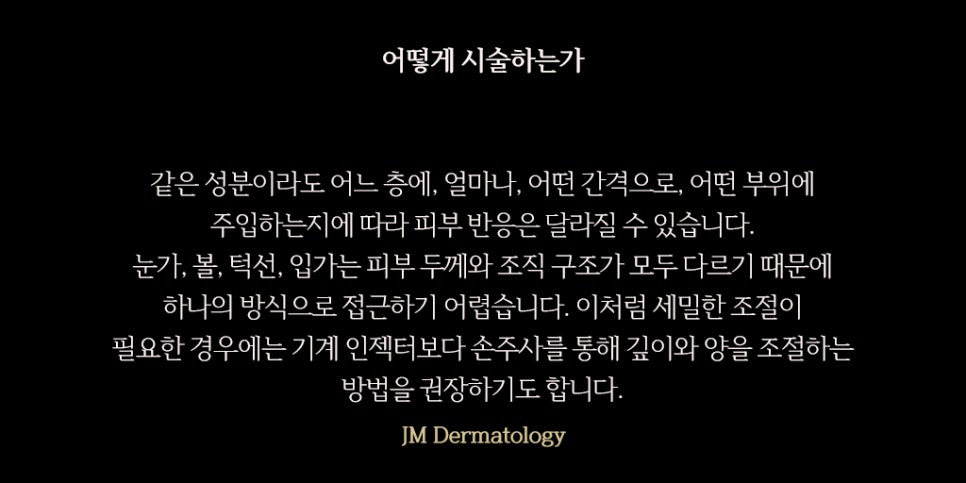
The skin thickness and tissue structure around the eyes, cheeks, jawline, and mouth are all different, making it difficult to use one uniform approach.
When fine adjustment is required, we may recommend controlling the depth and amount through manual injections rather than using a mechanical injector.
In addition, JM does not generally recommend sedation.
Even with anesthesia, a person may move or flinch, which can make detailed treatment difficult. Various factors associated with medication use must also be considered.
Instead, we believe that sufficiently applying numbing cream, adjusting the depth and amount according to the characteristics of each area, and taking steps to reduce pain are also important parts of the procedure.

Why doesn’t JM immediately introduce new procedures?
Patients often ask us questions like this:
“If it is a popular procedure, don’t you start offering it right away?”
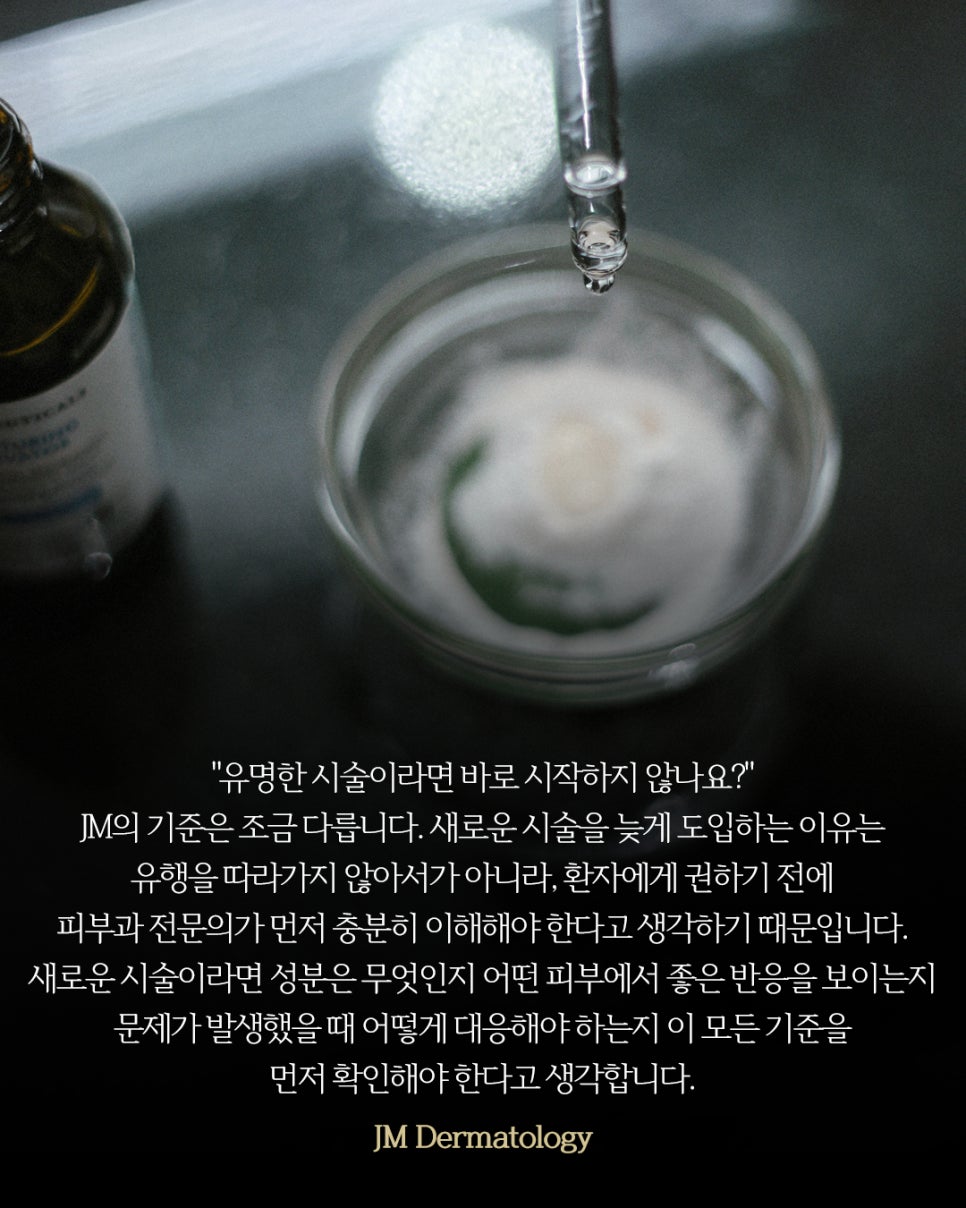
JM’s standard is somewhat different.
The reason we introduce new procedures slowly is not that we refuse to follow trends. Rather, we believe that a dermatologist must first understand them thoroughly before recommending them to patients.
For a new procedure, we believe we must first check all of the following:
- What are the ingredients?
- On which types of skin does it show a favorable response?
- On which types of skin is caution required?
- How should we respond if a problem occurs?
GOURI was no exception.
The characteristics of liquid PCL and the possibility of a collagen response were certainly areas worthy of interest.
However, we first observed the process as sufficient clinical results accumulated and confirmed the ingredients and treatment responses. After that, we began preparing to introduce it according to JM’s standards.
What JM considers important is not trends, but standards
Gangnam Station JM Dermatology considers the process of first determining whether a new procedure is necessary for the patient more important than introducing new procedures quickly.
Rather than recommending the same procedure to everyone, we suggest suitable options by considering the patient’s skin condition, goals, and current skin environment together.
That is the direction of care JM pursues.
Adding Science to Beauty.
We believe that adding science to beauty does not mean introducing many new procedures. Rather, it means considering together which procedure is necessary for each individual, based on scientific evidence and clinical judgment.
Therefore, instead of saying that GOURI is suitable for everyone, we first want to determine whether it can be a new option for people whose skin condition and goals are a good match.
FAQ
Q1. Does GOURI create immediate volume like a filler?
No.
GOURI is known as a liquid PCL-based collagen booster procedure, and its approach differs from that of a filler, which immediately fills in volume.
It is closer to a procedure intended to promote a collagen response within the skin and may be considered when the goal is to improve skin texture and elasticity. Therefore, the appropriate method may vary depending on the purpose of the procedure.
Q2. If it is liquid, are there no concerns about nodules or side effects?
GOURI is characterized by having been made in liquid form from the outset and is known to reduce the possibility of nodules, which has been mentioned as a concern with some existing PCL procedures.
However, the fact that it is liquid does not eliminate all risks.
It is important to plan the procedure while considering skin thickness, injection layer, amount used, treatment interval, and the skin’s current condition together.
Q3. Why doesn’t JM Dermatology immediately introduce new procedures?
Rather than quickly recommending a procedure simply because it is new, JM Dermatology’s principle is to review the following thoroughly before applying it in clinical care:
- Understanding of the ingredients
- Clinical results and responses
- Skin conditions requiring caution
- How to respond if a problem occurs
Gangnam Station JM considers designing treatments based on scientific evidence and clinical experience, rather than trends, to be its standard of care.
for your JM
| JM Dermatology | Dr. Jeong-min Kim, Board-Certified Dermatologist |
| --- |
| We set out to create a dermatology clinic true to dermatology. |
| Graduated from the Department of Biological Sciences, Korea Advanced Institute of Science and Technology (KAIST) |
| Completed the Thermage FLX Master course |
| Full member of the Korean Association of Dermatologists |
| Full member of the Korean Society for Laser Dermatology |
| Full member of the Korean Society for Dermatologic Anti-Aging Research |
| Published more than 20 papers in dermatology SCI/SCI-level journals (internationally recognized academic journals) and Korean dermatology journals |