
Rhinoplasty: Essential Basics You Need to Know.
Let's take a careful look at artificial implants used in rhinoplasty.
| | Love is said to be when, because of me, your partner shines and stands out. If the affection I give brings the other person joy and happiness, nothing could shine brighter than that. ^^ Are all of you enjoying a glowing romance? Today, I’ve prepared news about sparkling rhinoplasty. You can look forward to today’s post as well. Then let’s get started! | |

Silicone is the most commonly used implant for raising the bridge of the nose,
and rhinoplasty can also be performed using one’s own cartilage or artificial skin.
In addition, when undergoing rhinoplasty, not only autologous tissue but also
similar types of implant materials such as artificial skin are often used.
Meanwhile, Gore-Tex has excellent compatibility with human tissue,
so it is used as an alternative when a hypersensitive reaction occurs to silicone.
In addition, Gore-Tex is an implant also used as a substitute for human tissue,
such as artificial blood vessels, artificial heart valves,
and artificial meninges.

In addition, artificial skin refers to the dermis of another person made so that no immune response occurs by removing antigens.
After receiving approval from the U.S. FDA, it is used for various purposes,
such as cosmetic plastic surgery and skin loss caused by accidents.
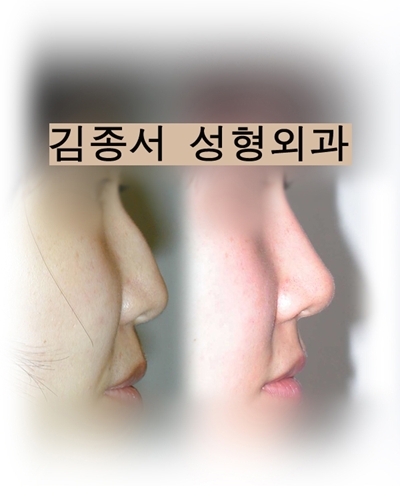
Let's learn about the features of crooked nose correction surgery.
The nasal bone and nasal cartilage can become crooked due to a combination of various symptoms, such as facial asymmetry.
Because the reasons for a crooked nose are complex, you need to receive an accurate diagnosis at a clinic and undergo correction through the procedure route that is appropriate for your symptoms in order to avoid side effects.
In addition, surgery to correct a crooked nose may require an implant that is a perfect fit for you,
and representative options include cartilage and dermis from your own body, or artificial materials such as AlloDerm, silicone, and artificial rib cartilage made to resemble human tissue.
Also, in the case of septoplasty, which is often used to correct a crooked nose,
there is the advantage of thoroughly preventing the nose from becoming crooked again after surgery by moving the lateral and medial bones together to straighten the crooked bone.
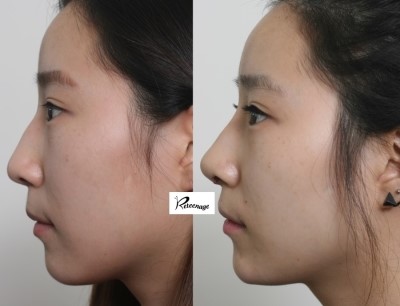
The recovery period after crooked nose correction surgery varies from person to person, but for most people it is about two weeks.
You can go home immediately after the surgery, and it takes about a week for the swelling to go down.
In addition, a non-open incision technique is used for crooked nose correction surgery,
and in the case of a non-open incision, the incision is made in a place that does not show externally, so the scar is not visible.
| | Are you worried about the growing number of side-effect cases caused by non-specialists’ mini procedures recently? Visit Kim Jong-seo Plastic Surgery, where board-certified plastic surgeons provide direct treatment, and feel confident entrusting your care to us! | |
Kim Jong-seo Plastic Surgery is an officially designated hospital by the Entertainment Producers Association,
proud of its procedure team made up of certified expert instructors in the fields of Restylane/Radiesse/Xeomin/Ellansé
and state-of-the-art procedure equipment.

The shortcut to becoming beautiful safely, with the director’s care from start to finish of the procedure!
In addition to non-open rhinoplasty and all-direction eye corner surgery, we also promise a quick return to daily life with eye surgery that leaves no swelling.
A hospital where, in addition to mini procedures, you can also receive systematic skin care with Vitamin C light injection,
Kim Jong-seo Plastic Surgery will help bring out our customers’ beauty!
We looked at essential information about rhinoplasty, like breakfast in the morning.^^
Just knowing a few important pieces of information like this can be a big help!
Be sure to keep the information you need close at hand~
Please add us as a neighbor, and we hope you’ll visit often in the future too?