Hello.
This is Haru Plant Dental Clinic, where your comfortable daily life begins with Haru.
Many people do not feel any particular discomfort at first after losing a tooth,
but as time passes, they begin to notice difficulties with eating or speaking.
Then, after deciding on implants and completing treatment, some people feel unfamiliar
when we explain how to manage oral hygiene.
It seems that because they have been used to living without teeth for a long time,
the fact that they need to manage oral hygiene again feels unfamiliar.
Also, some people sometimes ask, “Implants don’t get cavities, so do I still need to
care for them?” Of course, implants do not decay like natural teeth.
This is because they are made of artificial materials that are not affected by cavity-causing bacteria.
But that does not mean no care is needed. Even if there is no risk of implant cavities,
implant care may need to be even more thorough than for natural teeth. That is because
the gums and jawbone around the implant are still affected by bacteria.
Today, we will correct the common misconception that “since there is no need to worry about implant cavities, care is unnecessary,” and look at proper implant care together.
Are implant cavities really nothing to worry about?
First, to start with the conclusion, implants do not develop cavities.
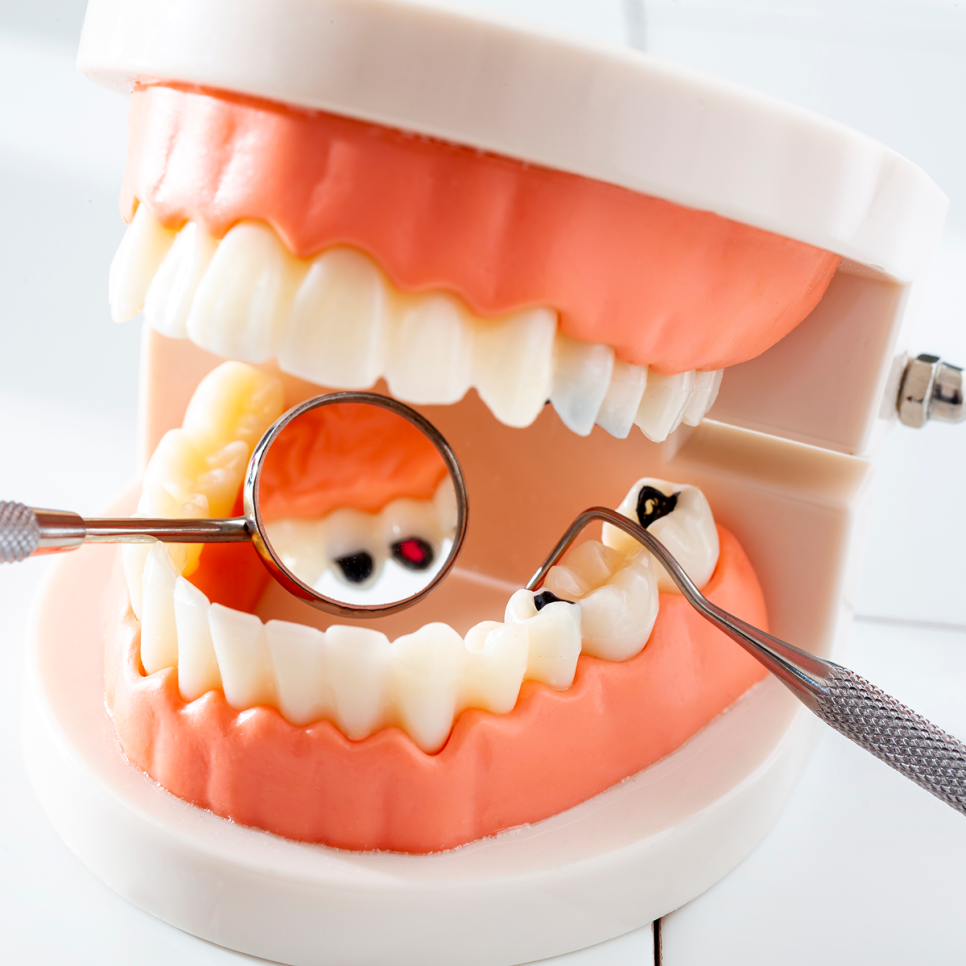
Cavities are a condition caused when cavity-causing bacteria in the mouth break down food,
producing acid, and this acid corrodes the enamel, the protective layer on the tooth surface.
That is why natural teeth require consistent hygiene care to prevent cavity risk.
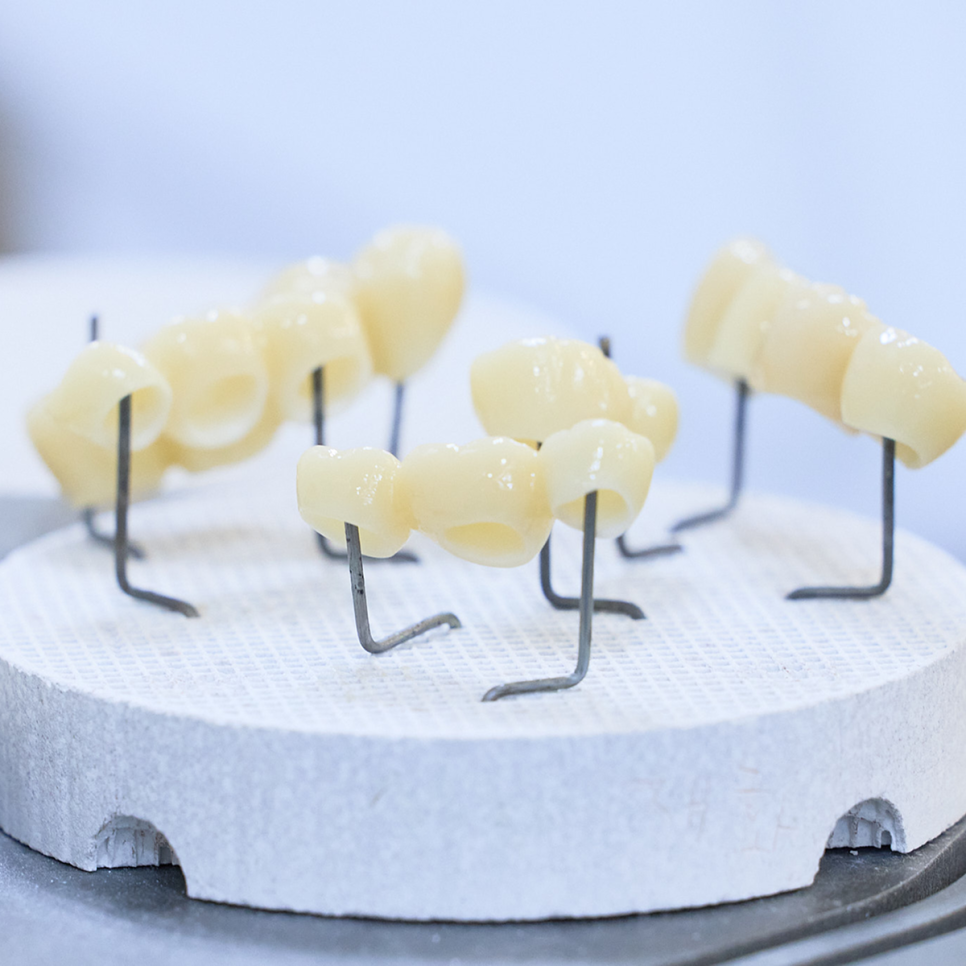
However, the artificial root that replaces the root function in an implant is made of titanium,
a metal, and the prosthetic placed on top is also made of ceramic, zirconia, or other metallic
materials, so cavity-causing bacteria have a hard time penetrating or corroding it.
Then does that mean you can live without worrying about implant cavities after treatment? No.
While implants themselves are free from cavities, gum disease can still occur.
The greater risk than implant cavities is peri-implantitis
The risk of implant cavities is relatively lower than that of natural teeth, but that does not mean
care is unnecessary. Because implants are made of artificial materials, cavity-causing bacteria cannot
penetrate them, but instead peri-implantitis, a gum disease, can occur.
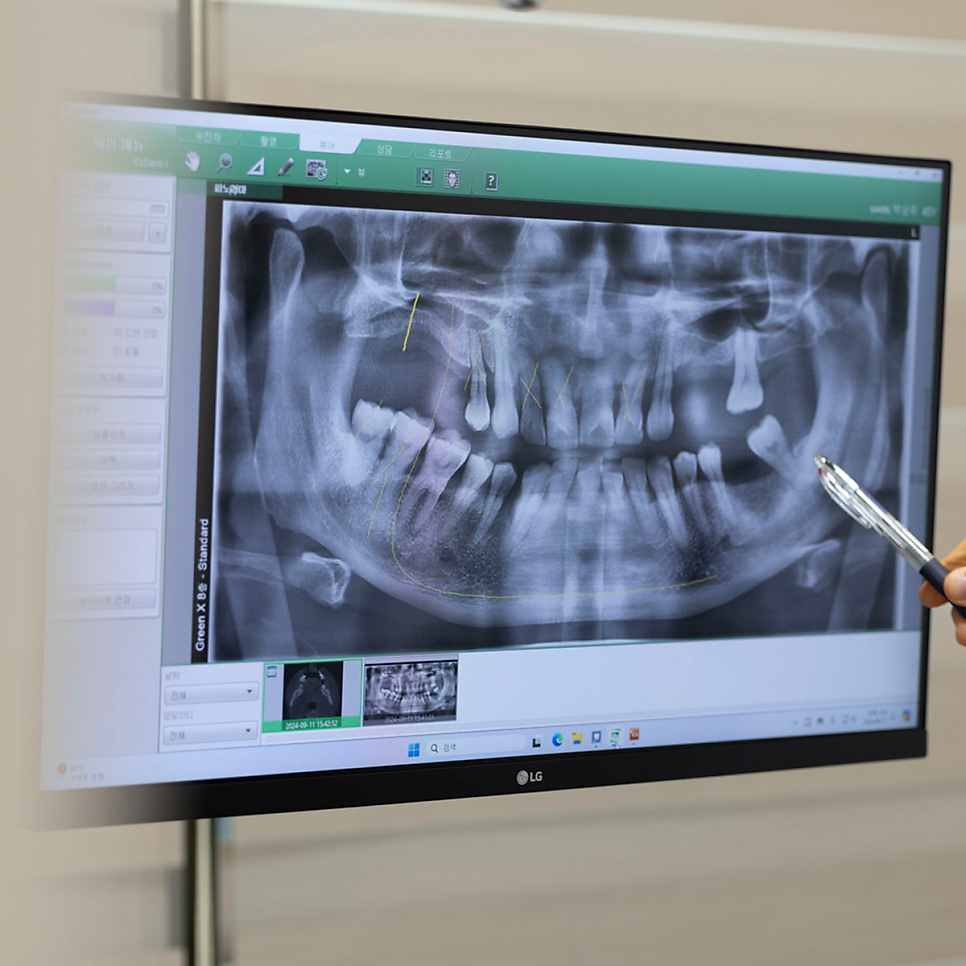
There is a tiny gap between the implant and the gums, and when food debris and bacteria accumulate there,
plaque forms and eventually hardens into tartar over time.
As a result, mild symptoms such as simple gum swelling or bleeding may appear at first,
but if care is insufficient, it can progress into peri-implantitis, which can gradually damage the jawbone.
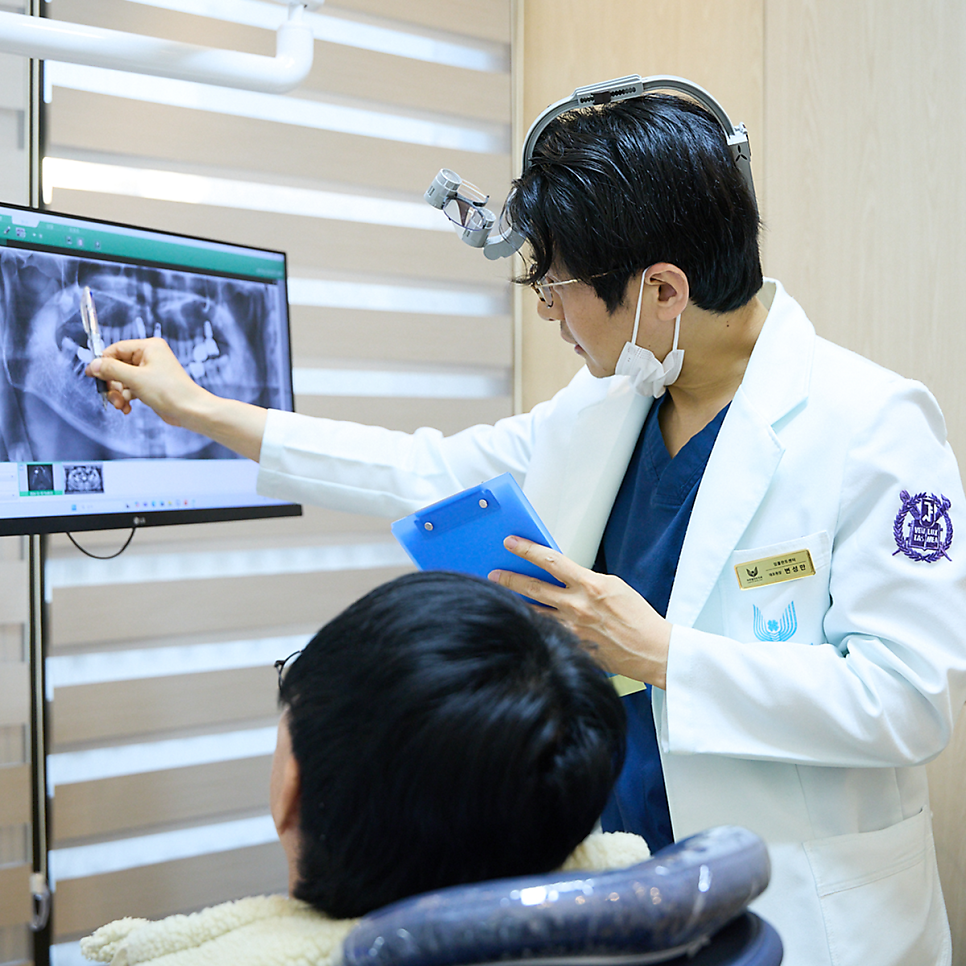
In particular, unlike natural teeth, implants do not have a protective structure called the periodontal ligament,
so inflammation can progress quickly and deeply. The problem is that because there are no nerves,
pain is minimal and awareness is delayed.
If peri-implantitis worsens, bleeding from the gums, pus, or even loosening of the implant can occur.
In severe cases, a situation may arise where reoperation is needed.
Even if there is no risk of implant cavities, thorough care is essential
There is no risk of implant cavities, but the important thing for preventing inflammation and keeping implants healthy for a long time is thorough oral care. Implants may be strong against cavities, but if they are not properly managed, they can actually become vulnerable to inflammation and develop peri-implantitis.
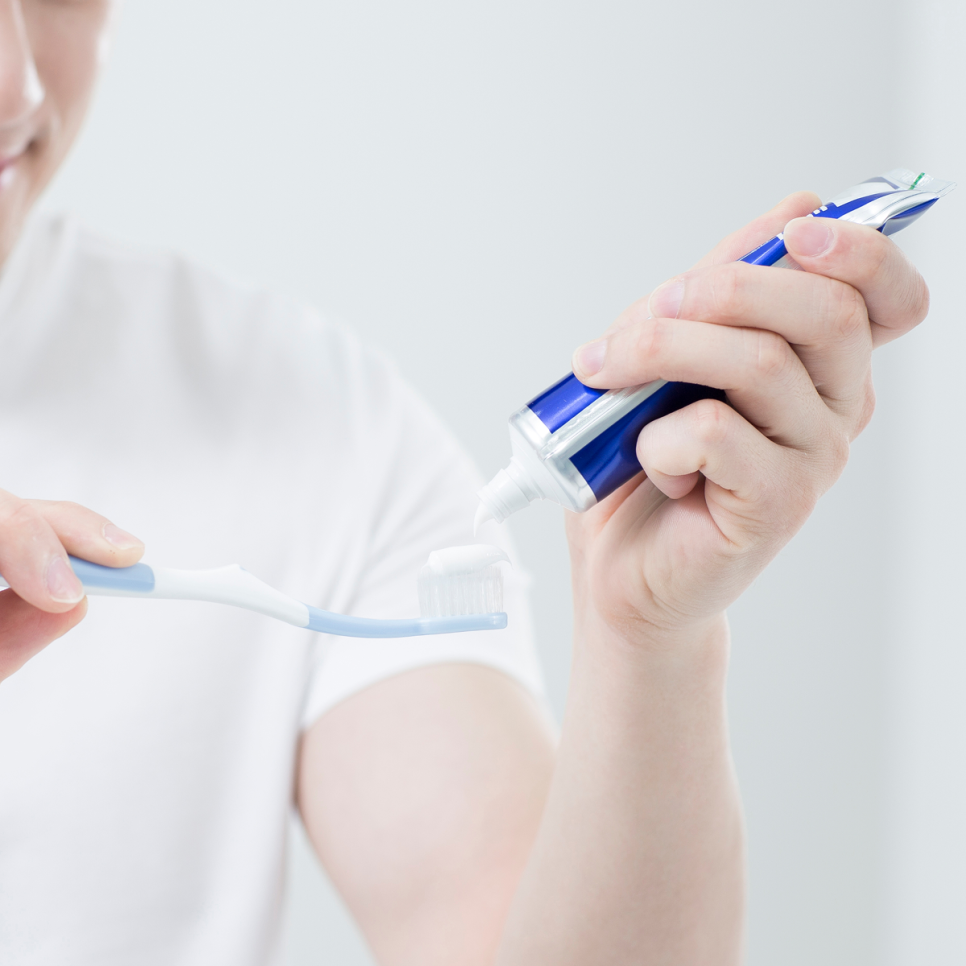
Therefore, when brushing, it is a good idea not to rely only on a regular toothbrush, but to use interdental brushes, floss, and a Waterpik as well.
In particular, the key is to thoroughly remove food debris and bacteria stuck between the implant and the gums, as well as between adjacent teeth.
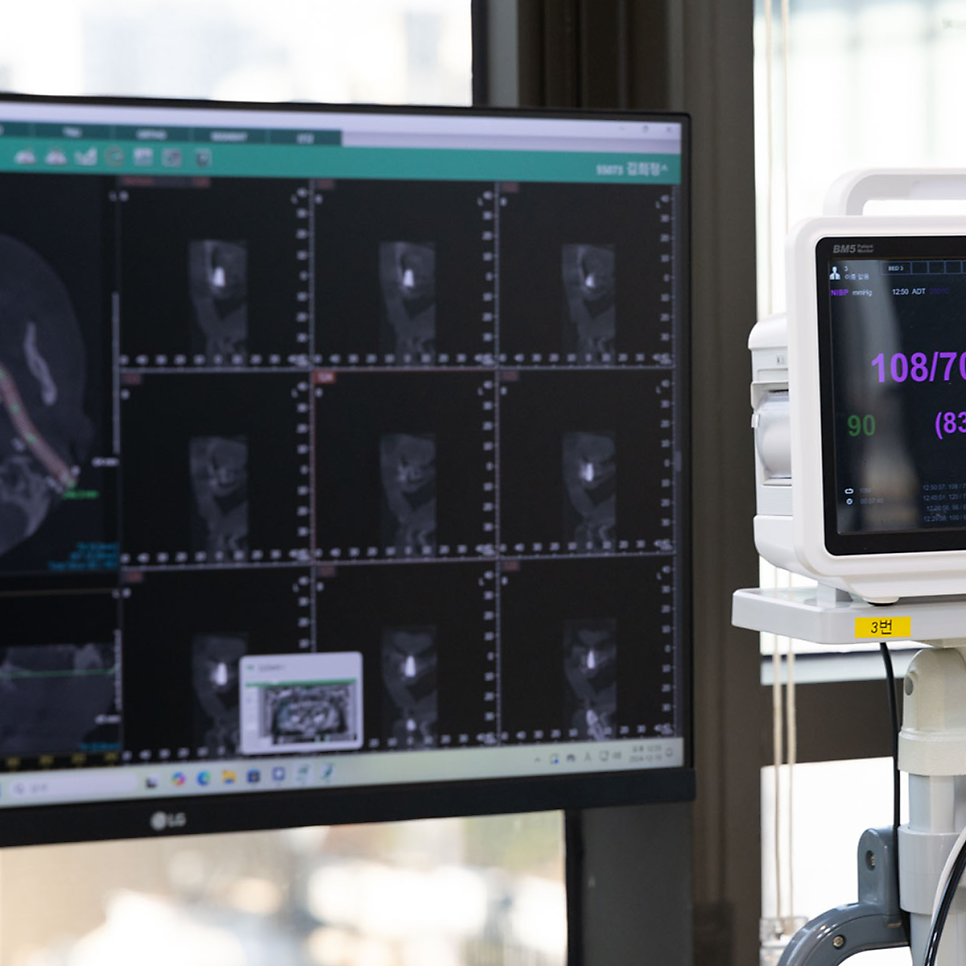
Also, visiting the dental clinic for regular checkups every 3 to 6 months is very important.
Changes in the gum condition or the surrounding jawbone are not easy to see, but if they are detected early through X-rays and other examinations, they may be prevented with simple scaling or surgical treatment.
In the end, implant success depends more on the patient’s own care habits than on the treatment itself.
Today, we looked at misconceptions about implant cavities and the proper way to care for implants.
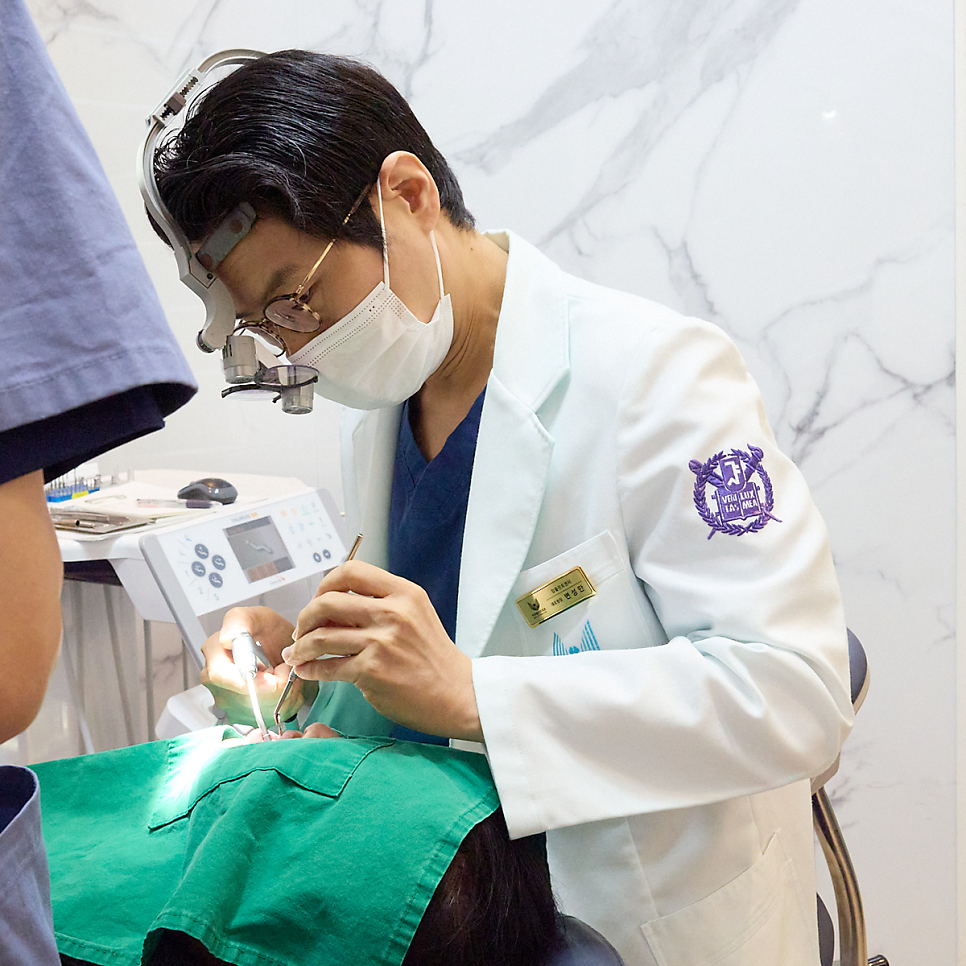
Haru Plant Dental Clinic strives to take responsibility for your oral health to the very end,
even after implant treatment. To help patients visit for checkups without burden,
we offer late-night care on Mondays, Tuesdays, and Thursdays, and weekend care is also available on Saturdays and Sundays.
Find your treatment solution through professional consultation at Haru Plant Dental Clinic.
If you have any questions about implant cavities, please feel free to contact us at any time.
We promise an excellent treatment experience with personalized one-on-one care.
