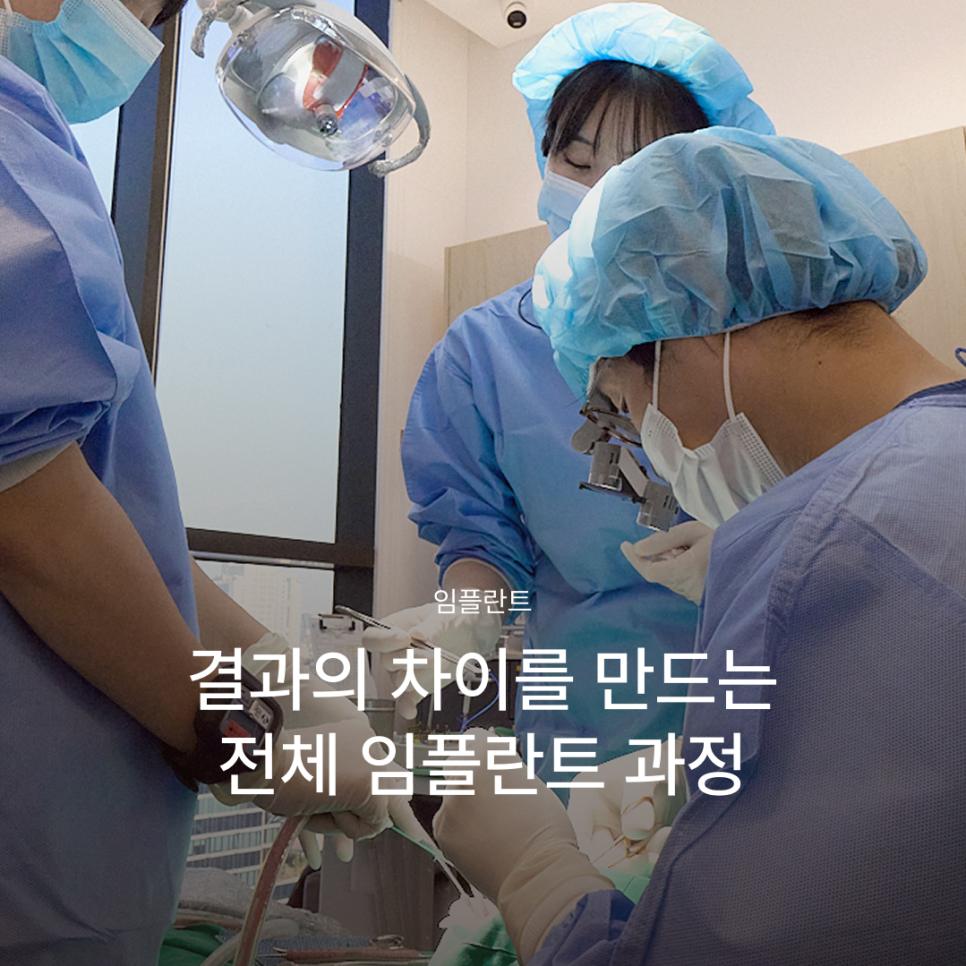
Why the Implant Impression Process Has Changed: The Full Implant Treatment Process at Haru Implant Dental Clinic at Gangnam Station That Makes a Difference in Results
Hello,
This is Haru Implant Dental Clinic, helping you begin each day with a more comfortable routine!
Are you in need of full-arch implant treatment,
or are you currently considering treatment?
Perhaps you are reading this because you are curious about the implant impression process.
Many full-arch implant patients at Haru Implant Dental Clinic tell us that they found it more comfortable that digital scanning was used instead of the conventional impression method during treatment.
Digital scanning with a 3D intraoral scanner and a facial scanner does not cause the foreign-body sensation or gagging that patients may experience during the conventional implant impression process.
It can also precisely scan complex oral structures that are difficult to assess visually or easy to miss even when taking conventional impressions, including the structures of the teeth and gums, the relationship between the upper and lower teeth, and the harmony between the face and teeth. This information is used to establish a more precise treatment plan.
The digital data collected in this way is used throughout the full-arch implant treatment process, from diagnosis and surgical planning to the fabrication of temporary teeth and final prostheses.
Today, we will explain both the 3D digital scanning process that replaces the implant impression process and the stages involved in full-arch implant treatment.
- Diagnosis and Treatment Planning
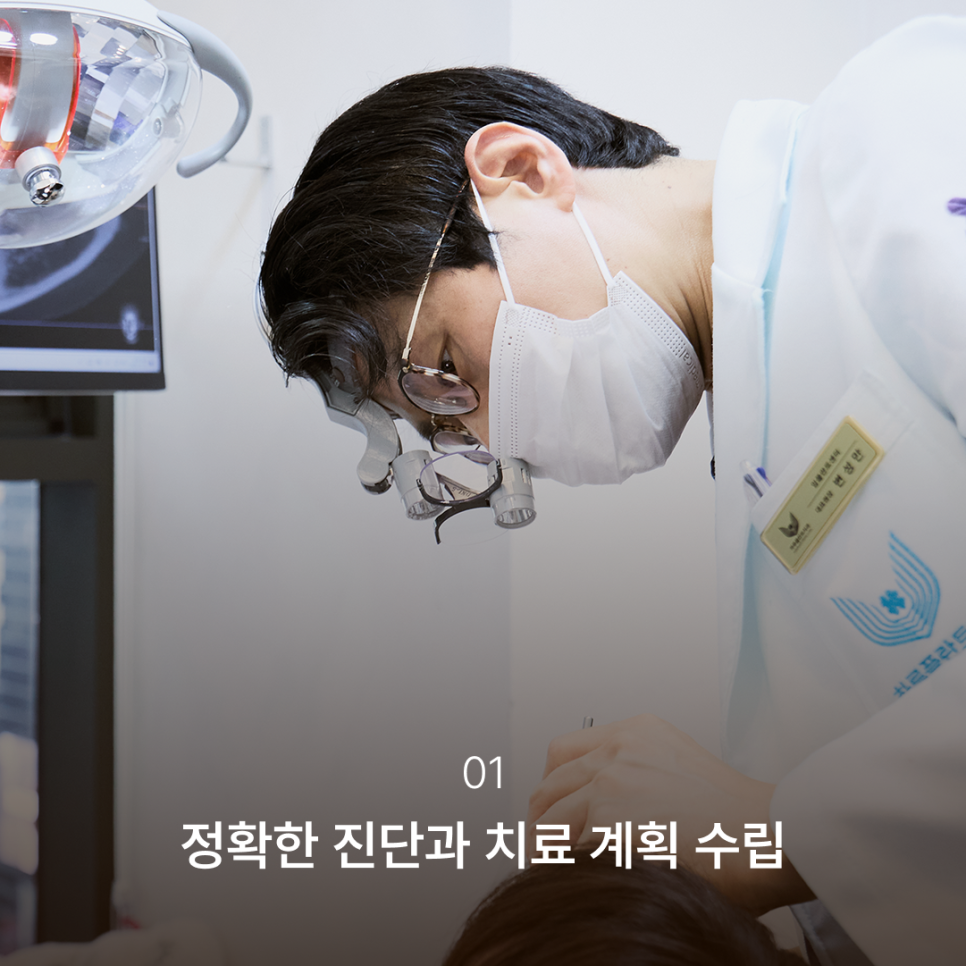
Full-arch implant treatment begins with a precise diagnosis.
First, we assess the patient’s oral condition and treatment needs, then establish an implant treatment plan tailored to their individual condition.
At this stage, we comprehensively evaluate the condition of the alveolar bone, the difficulty of surgery, the surrounding tissues, and overall health. We also review the number and positions of the implants, the type of prosthesis, and the estimated treatment period and cost.
Because the condition of the jawbone and the required prosthetic structure differ from patient to patient, Haru Implant Dental Clinic at Gangnam Station takes care to explain the treatment direction thoroughly from the initial diagnostic stage.
- Preparation Before Treatment
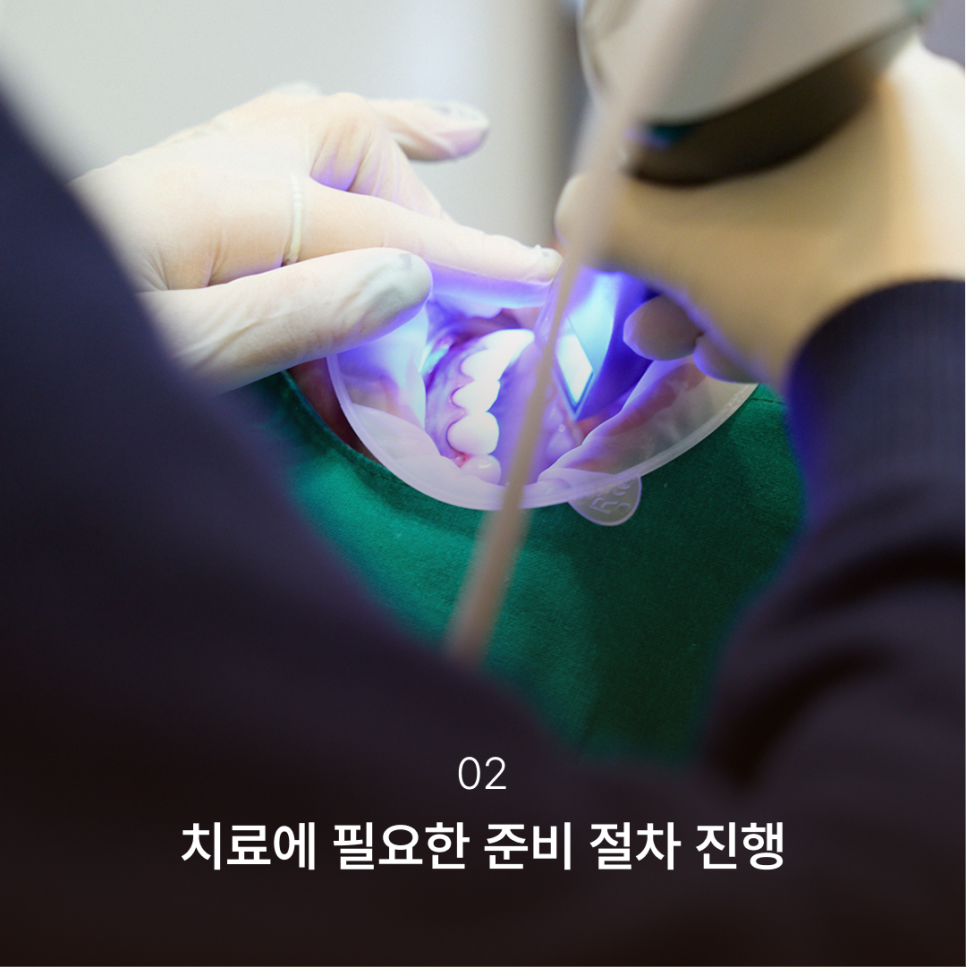
Before treatment, we perform 3D CT imaging, intraoral and extraoral photography, 3D facial scanning, and intraoral digital scanning.
If bone grafting is needed, blood may also be drawn for the procedure.
Full-arch implant treatment requires consideration not only of the condition of the jawbone but also of the alignment of the teeth, occlusion, oral structures, and harmony between the face and teeth. Therefore, obtaining detailed oral data before treatment is important.
Haru Implant Dental Clinic uses a 3D intraoral scanner from the global dental company Dentsply Sirona to capture the patient’s oral structures and tooth alignment. This information is immediately converted into digital data and incorporated into treatment planning and prosthesis fabrication.
The conventional implant impression process required taking impressions of the teeth and gums using plaster and alginate materials and waiting for them to harden.
During this process, patients sometimes experienced discomfort and a foreign-body sensation because sticky material was placed in the mouth. In some cases, the impression had to be retaken because its accuracy was reduced, or the fit of the prosthesis was compromised.
In contrast, a 3D intraoral scanning system quickly scans the teeth and gum structures digitally in three dimensions and clearly captures curved areas and parts that are difficult to see with the naked eye.
- Implant Placement Surgery
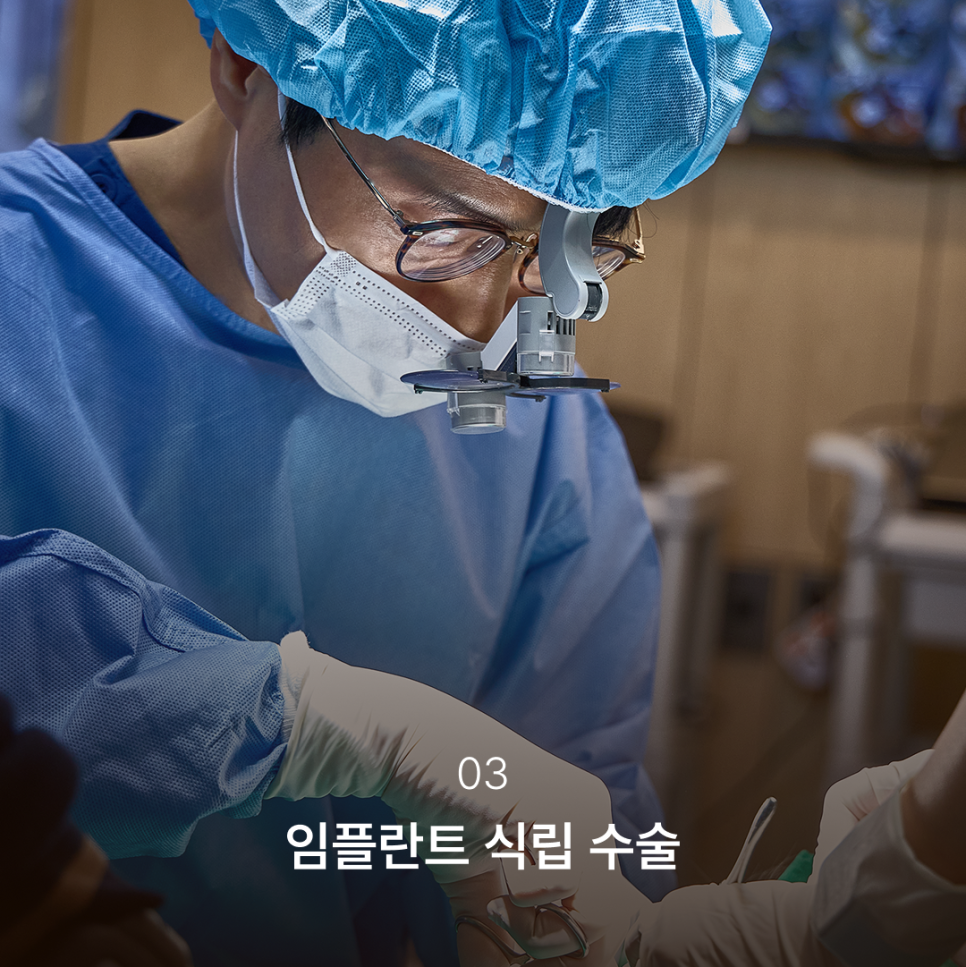
Next, implant placement surgery is performed according to the individualized treatment plan. Implant placement surgery is the procedure of placing implants in the jawbone to replace missing teeth.
If there is not enough jawbone to support the implants, bone grafting may be performed at the same time. Once an implant has undergone stable osseointegration, it gradually bonds firmly with the jawbone and provides a stable foundation for the artificial teeth.
- Selection of Customized Temporary Teeth
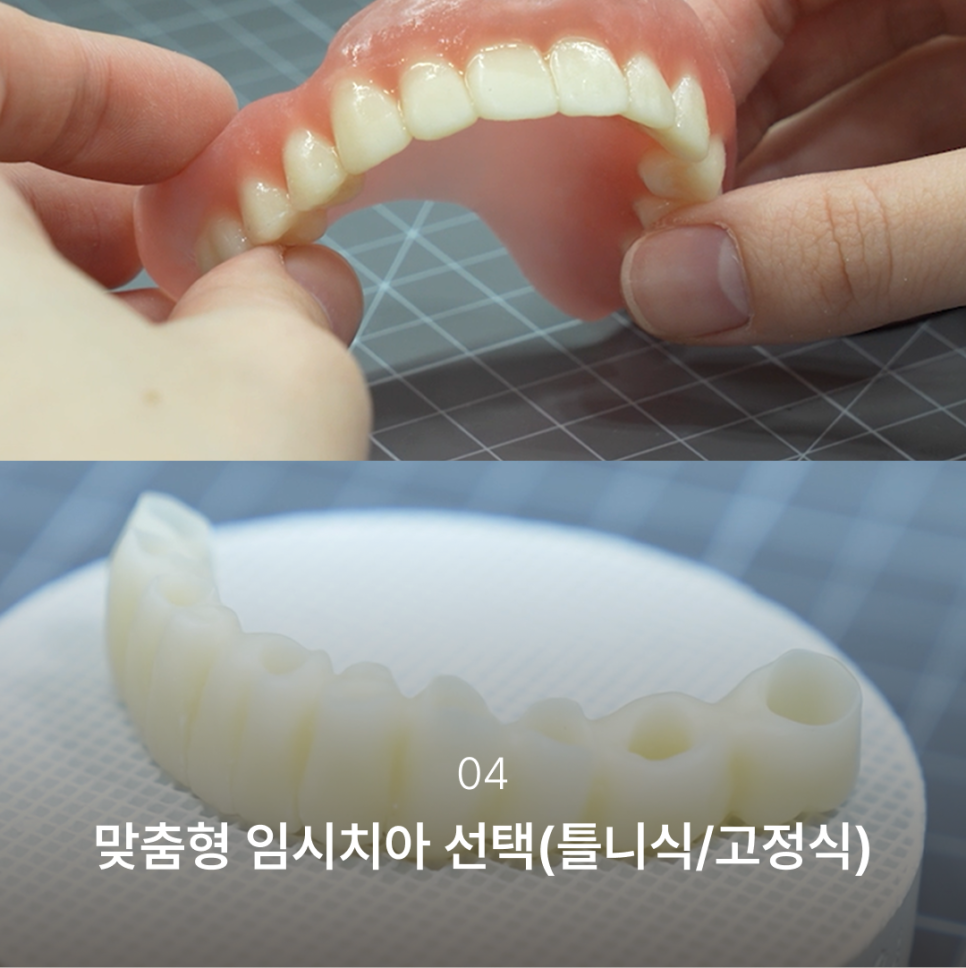
After surgery, temporary teeth to be used until the final prosthesis is completed are selected and fabricated.
A removable denture-type temporary prosthesis may be suitable for some patients, while patients with a sufficient level of bone quality may be able to use a fixed temporary prosthesis.
- Fabrication and Placement of a Simulated Fixed Temporary Prosthesis
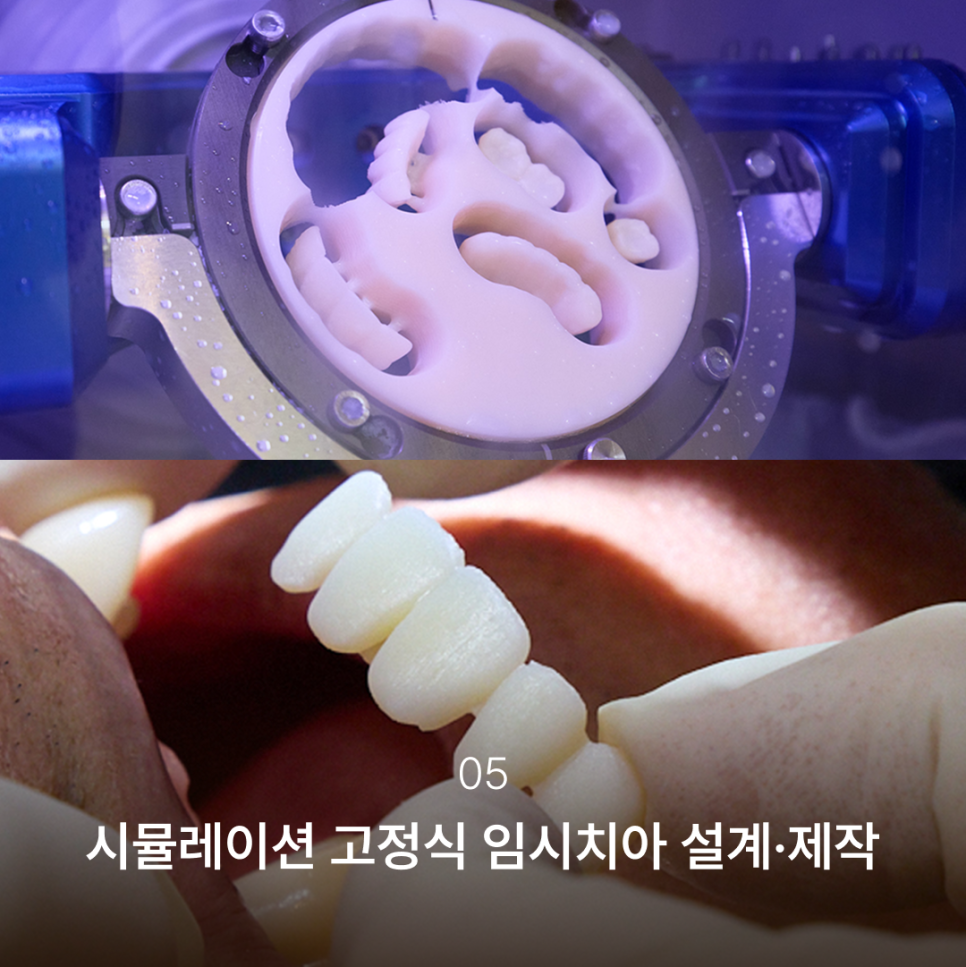
After the use of conventional temporary teeth, a simulated fixed temporary prosthesis is fabricated and placed before the final prosthesis is made.
Haru Implant considers this an essential step for designing and fabricating the final prosthesis best suited to each patient’s condition.
This is because the vertical dimension, occlusion, and left-right symmetry of the artificial teeth are carefully evaluated while the patient wears the simulated temporary teeth, and the results are reflected in the fabrication of the final prosthesis.
Even when patients use denture-type temporary teeth immediately after surgery, Haru Implant Dental Clinic at Gangnam Station does not proceed directly to the final prosthesis. Instead, patients go through the transition to a simulated fixed temporary prosthesis so that the comfort and aesthetics of the artificial teeth can be thoroughly evaluated.
Through this process, we fine-tune the form and function of the final prosthesis and improve the overall quality of full-arch implant treatment.
- Digital 3D Facial Scanning
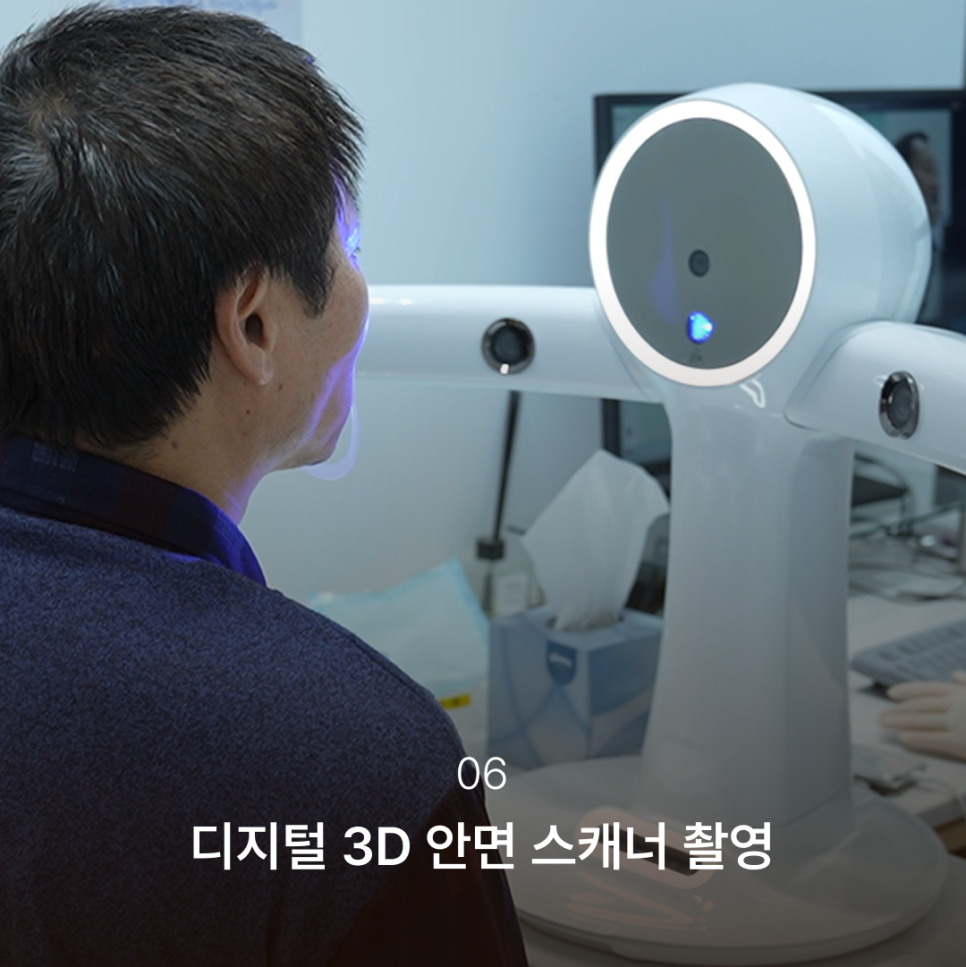
In addition to conventional intraoral scanning, Haru Implant Dental Clinic at Gangnam Station performs 3D facial scanning to convert the structure of the entire face into data.
This is done to design prostheses that not only fit well in the mouth but also blend naturally with the patient’s facial features.
The position of the teeth visible when smiling, the lip line, and the balance of the facial features are assessed together. The captured information is collected as digital data and used in the design of the final prosthesis.
7-8.
Final Prostheses and Customized Custom Abutments Fabricated at the In-House Haru Implant Digital Dental Laboratory
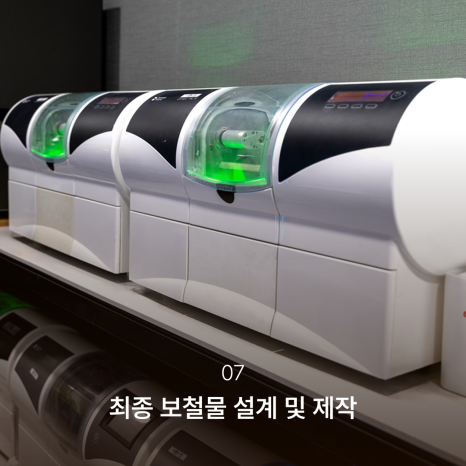
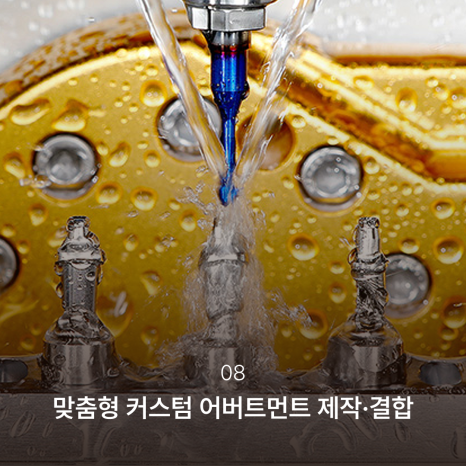
The final prostheses and custom abutments are fabricated at the Haru Implant Digital Dental Laboratory, a specialized, center-scale facility located on the 14th floor of Haru Implant Dental Clinic.
Using advanced digital fabrication systems, including CAD/CAM and an in-house milling system, we design and fabricate customized prostheses that take into account the patient’s oral structures, occlusion, gum line, and harmony between the face and teeth.
The abutments that connect the fixtures placed in the jawbone to the artificial teeth are also custom-fabricated at the in-house laboratory. Abutments are generally often made using prefabricated products, but Haru Implant Dental Clinic custom-fabricates even the abutments on a one-to-one basis to provide more natural and stable implant treatment.
Based on high-specification digital equipment and genuine materials, Haru Implant Dental Clinic aims to produce prostheses both quickly and precisely.
9-10. Final Prosthesis Connection and Follow-Up Care
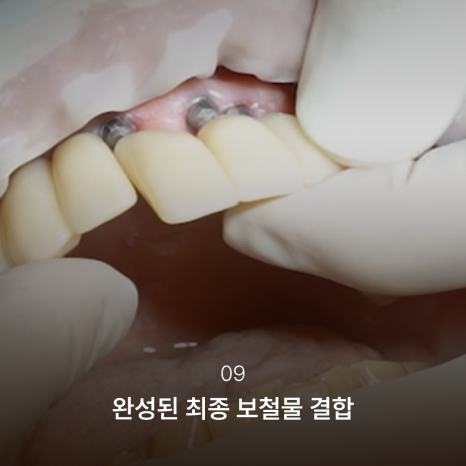
The fabricated prosthesis is carefully adjusted to fit the patient’s oral structures before being placed.
During this process, comfort, occlusal function, and aesthetics are assessed together. Once all necessary adjustments have been completed, the final connection is carried out.
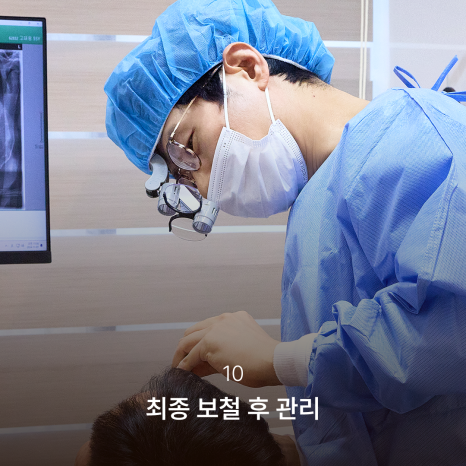
After placement of the final prosthesis is complete, guidance on oral hygiene and maintenance is provided for the long-term use of the implants. We also check the condition of the implants and prostheses through regular examinations.
This concludes our explanation of how the full-arch implant process proceeds, from diagnosis through final prosthesis placement and follow-up care.
Full-arch implant treatment is not completed through any single stage. The details of the entire process—from diagnosis, surgery, and temporary teeth to prosthesis fabrication and follow-up care—can come together to make a difference in treatment outcomes.
If you are researching full-arch implant treatment, please consider not only the number of implants and the cost but also how precisely the stages of care are connected.
For implants, choose Haru Implant Dental Clinic at Gangnam Station.
This post was prepared as medical information/advertising in compliance with Article 56 of the Medical Service Act and the Enforcement Decree of the same Act.
Treatment results may vary from person to person, and side effects such as bleeding or inflammation may occur after treatment. Please discuss the treatment thoroughly with your medical team and confirm the precautions.