Why All-on-X Implants May Be Worth Considering Even If You Have Been Told That Full-Arch Implants Are Difficult
While looking into full-arch implants,
have you ever been told, “There is not enough jawbone,” “The nerve is too close, so you need to go to a university hospital,” or “A significant amount of bone grafting is required”?
If you have encountered a situation like this, you may feel anxious
and uncertain about what to do.
This may be especially true if you have worn dentures for a long time or if many years have passed since you lost your teeth and you are now considering full-arch implants because of the discomfort.
Rather than giving up on treatment
or proceeding with full-arch implants too aggressively,
it is important to check whether there is a way to use the remaining bone to receive treatment safely.
All-on-X implants are a treatment option that may be considered in situations like these.
First, to understand All-on-X implants more accurately,
it is helpful to learn in advance why implant placement can become difficult.
The following are representative cases in which conventional full-arch implant placement is difficult.
When there is not enough jawbone,
implant placement locations are limited

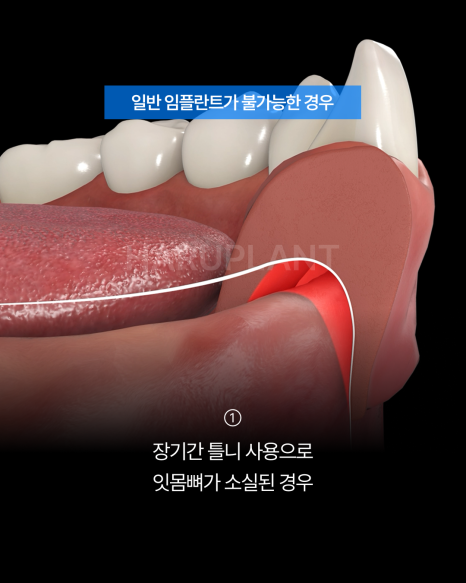
The gum tissue where a tooth has been lost no longer performs its original function of supporting the tooth, and the bone gradually undergoes resorption.
This is particularly likely if you have worn dentures for a long time, as the jawbone may not have received sufficient stimulation, causing the alveolar bone to become thin.
If you are considering implants later in life and significant jawbone resorption has already occurred, it may be difficult to place implants in the weakened foundation.
If the fixtures, which serve as the roots of artificial teeth, are forcefully placed in insufficient jawbone, problems such as implant mobility or loss may occur.
When there is not enough jawbone, bone grafting is generally performed.
However, as mentioned above, if bone loss is severe or sufficient jawbone does not form even after bone grafting, you may be told that treatment is difficult.
In addition, full-arch implant treatment may not be recommended for older patients or those with underlying medical conditions because the burden of surgery may be considerable.
The mandibular nerve and maxillary sinus
must be carefully checked
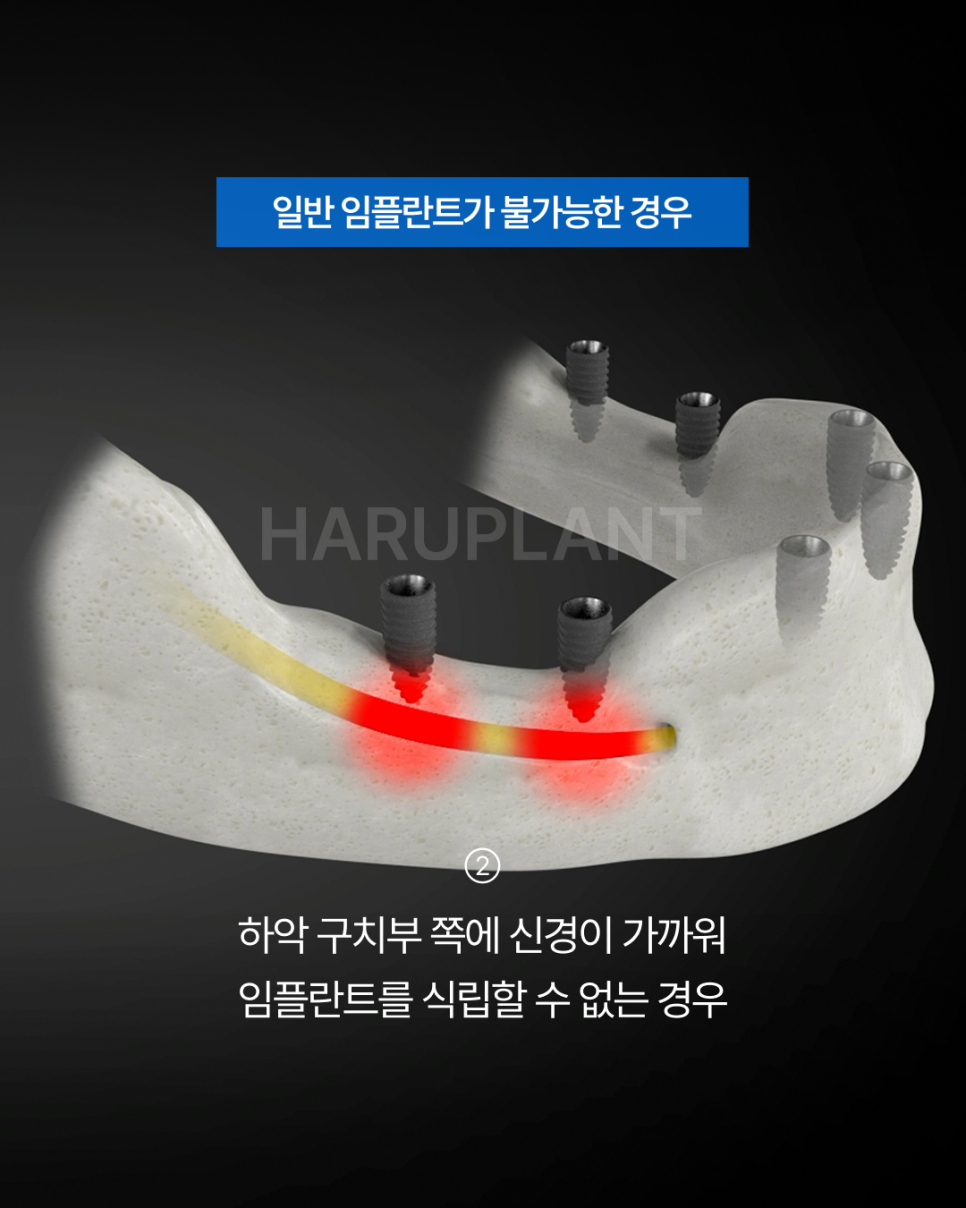
Another situation is when the inferior alveolar nerve is located only a few millimeters from the intended implant placement site.
An important nerve runs through the molar area of the lower jaw.
If the nerve is close to or overlaps the location where an implant must be placed to withstand the load of an artificial tooth, implant placement can also be difficult.
This is more likely to occur when bone loss has limited the height and depth of the jawbone.
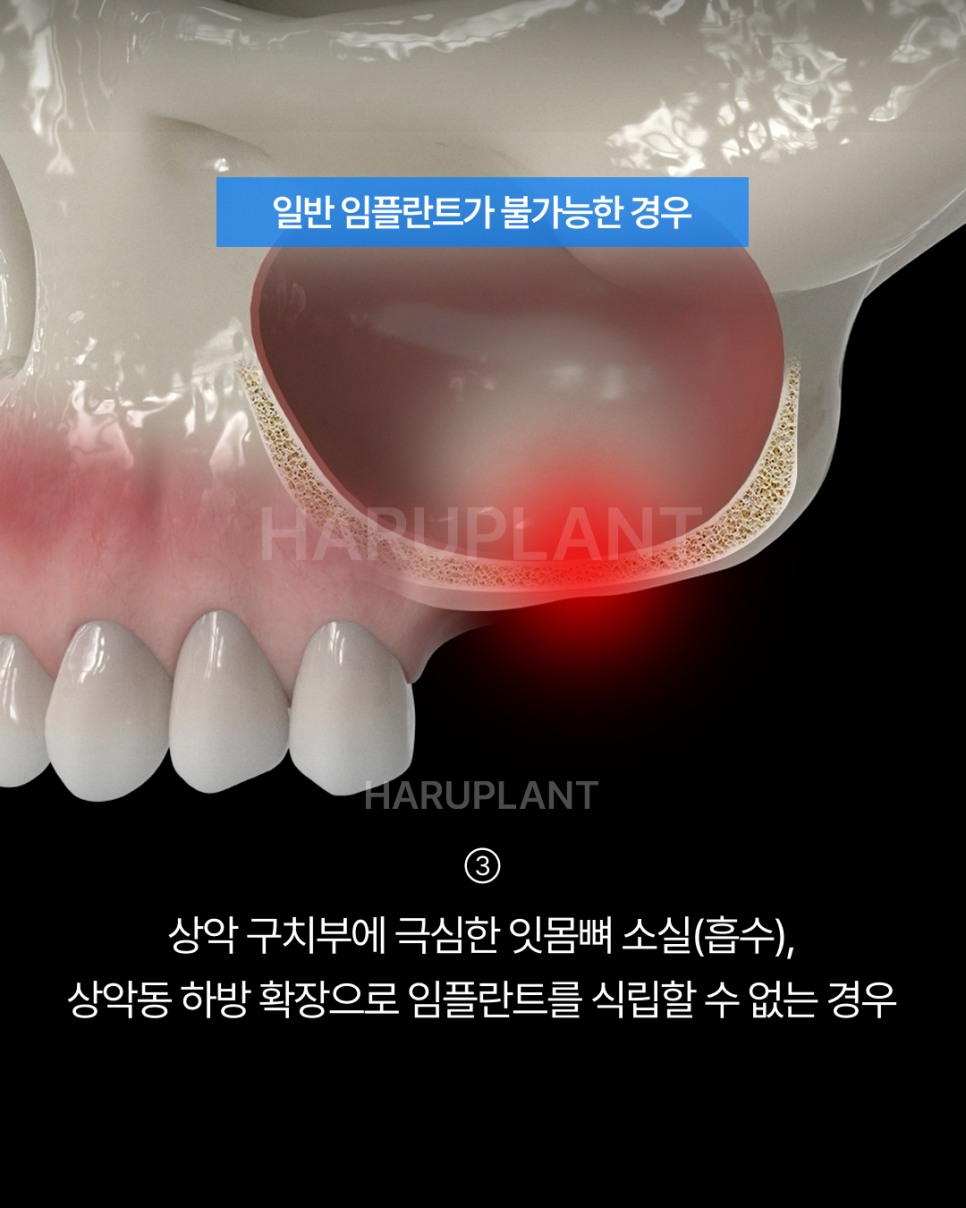
There are also cases in which implant placement in the upper jaw is difficult.
Above the molars, near the nose, is an empty space called the maxillary sinus. The maxillary sinus is an air-filled space. When teeth are lost, the floor of the maxillary sinus gradually descends over time.
This is a major cause of thinning of the alveolar bone.
If implant placement is difficult because of the maxillary sinus,
bone grafting must be performed through a sinus lift procedure.
As in the cases described above, surgery may be burdensome when the area requiring bone grafting is extensive.
The All-on-X approach uses the remaining bone

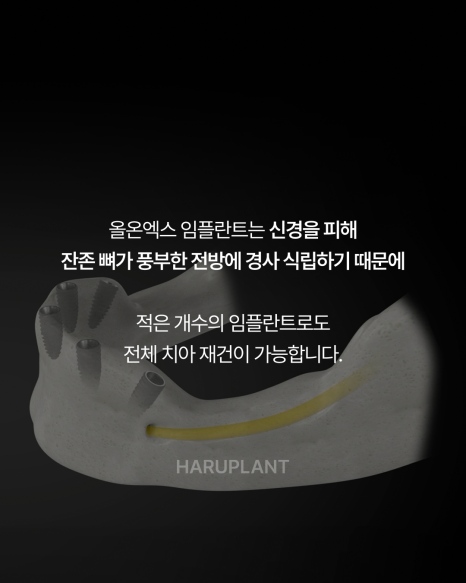
All-on-X implants
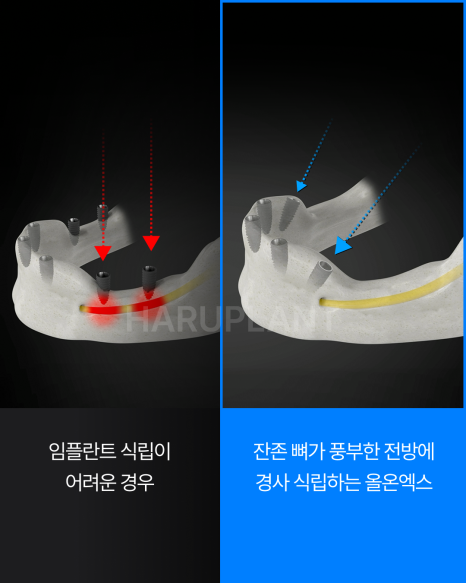
use the relatively abundant bone in the front of the jaw when bone loss is extensive or the burden of surgery is substantial,
restoring the entire dentition with a minimum number of implants.
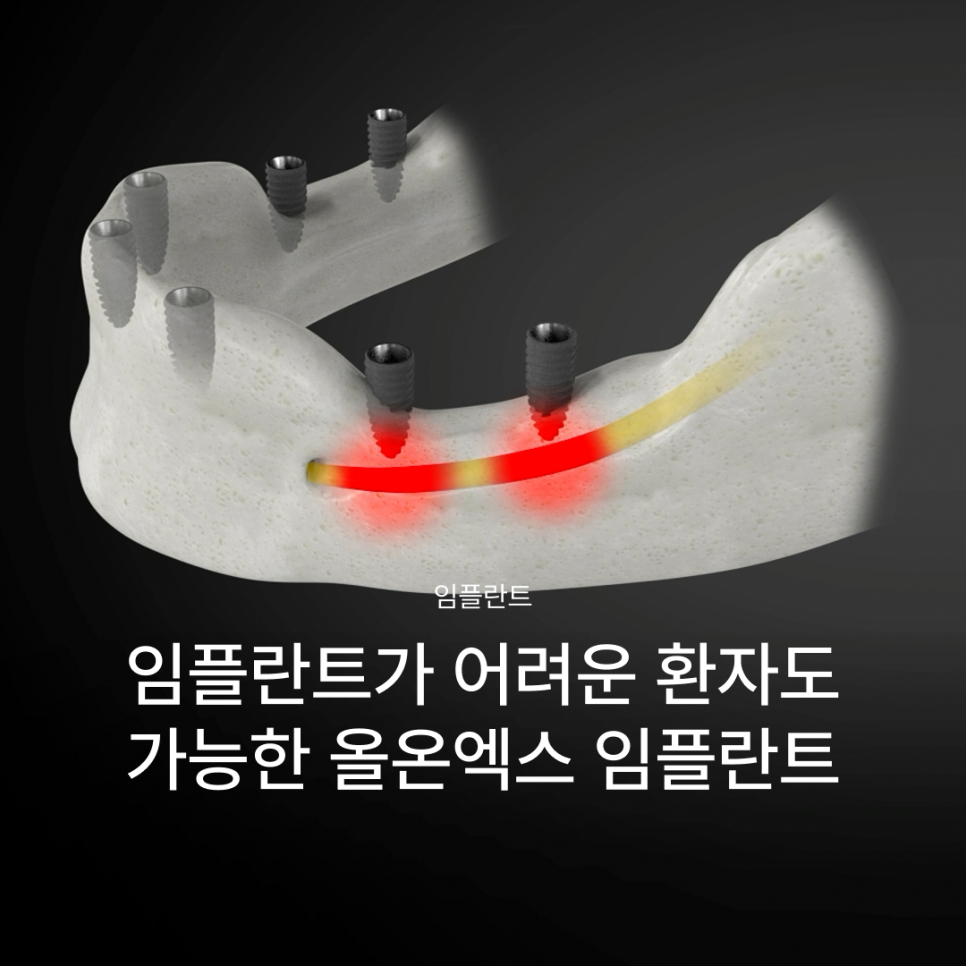
The implants can be placed at an angle toward the front of the jaw, helping avoid the inferior alveolar nerve and the maxillary sinus.
Because this treatment is designed to support a full-arch prosthesis with a relatively small number of implants, it can reduce the need for bone grafting and allow treatment to be tailored to the patient’s condition and circumstances.
The fewer the implants,
the more precise the diagnosis and design must be
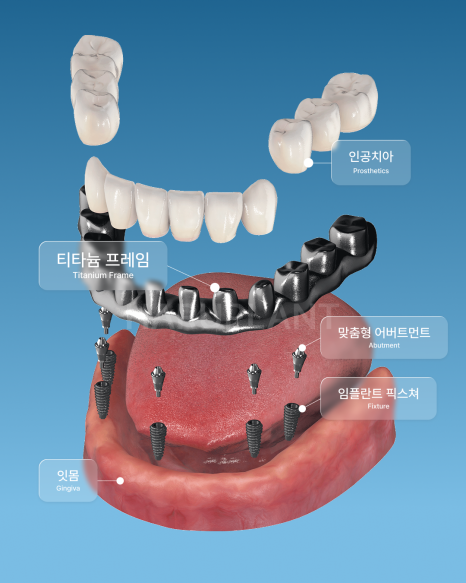
All-on-X implants are an implant treatment method that generally supports the entire dentition with approximately five or six implants.
Compared with full fixed implant treatment, also known as full-arch or full-mouth implants, which is preferred by patients requiring full-case rehabilitation and typically involves placing approximately six to ten implants, this approach uses a relatively small number of implants.
All of the artificial teeth requiring reconstruction are connected to a titanium framework and joined to the implant fixtures.
Therefore, it is necessary to precisely calculate where and at what angle to place the implants, as well as how to design the prosthesis so that it distributes the load appropriately.
All-on-X implants at Haru Implant Dental Clinic
Previous image
Next image
At Haru Implant Dental Clinic,
we do not check only the jawbone and nerve locations during this process.
Because this treatment involves creating an entirely new set of teeth, we also consider the bite, the esthetics of the prostheses, and the proportions of the lips and face, with the aim of planning the most comfortable and stable result for each patient.
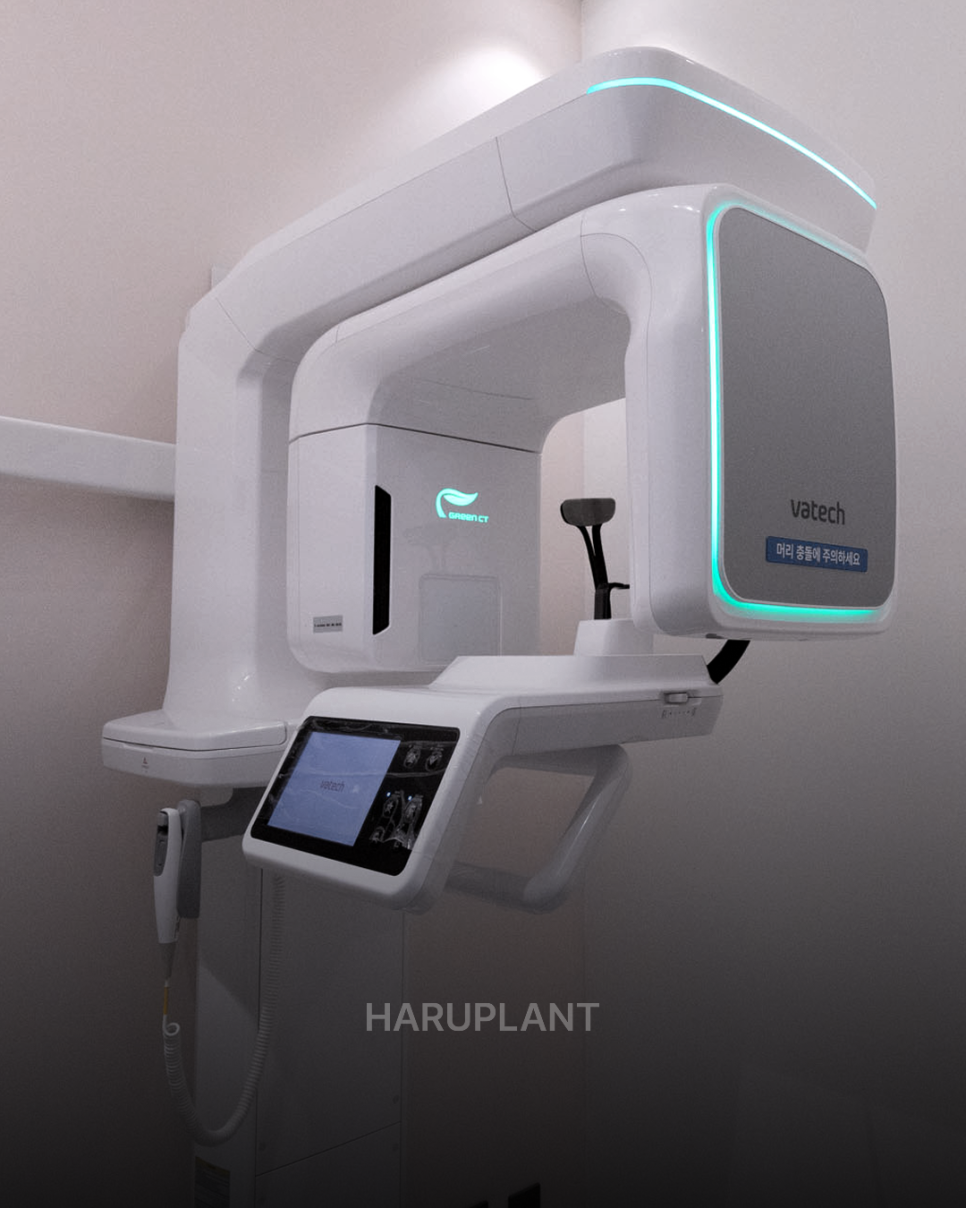
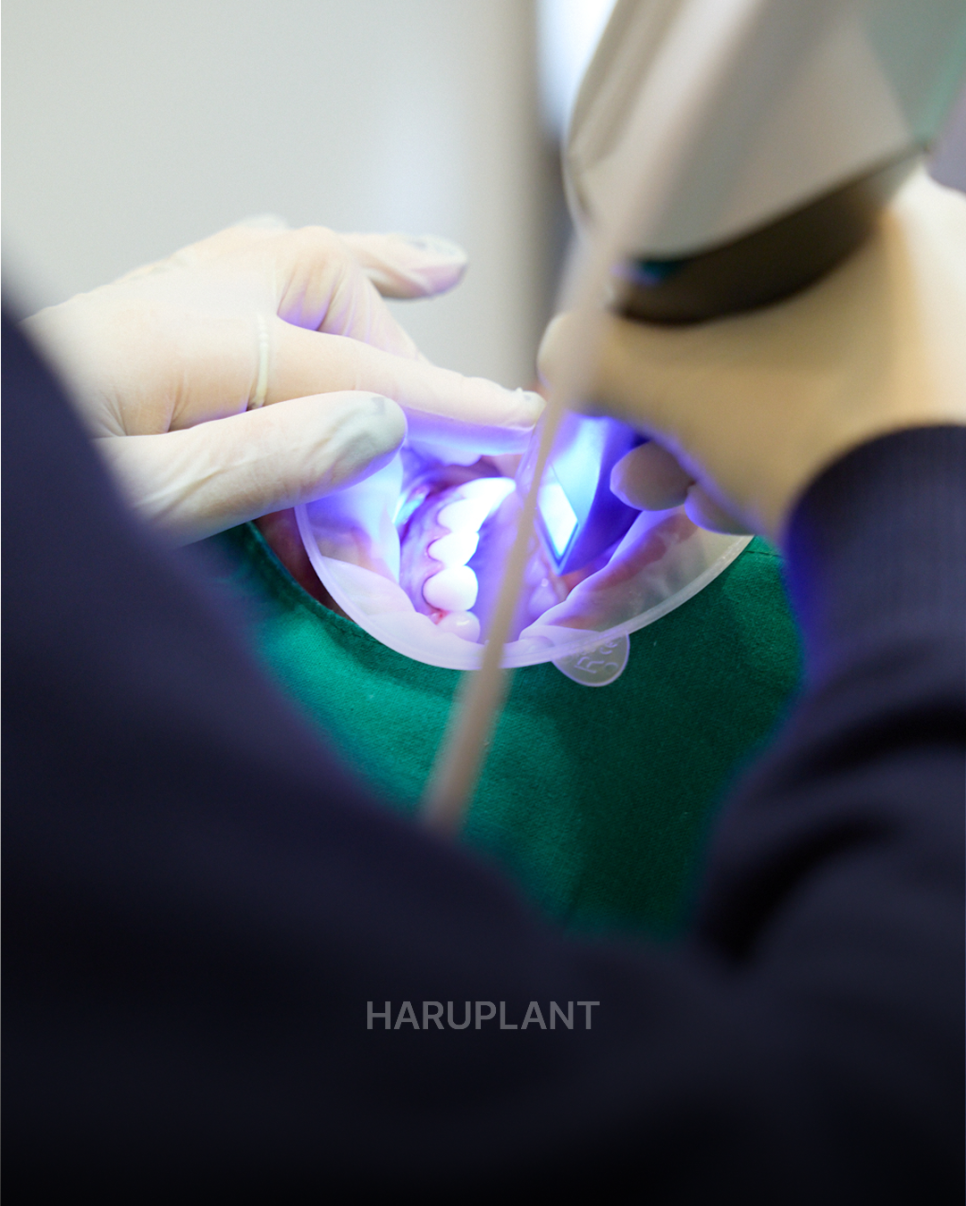
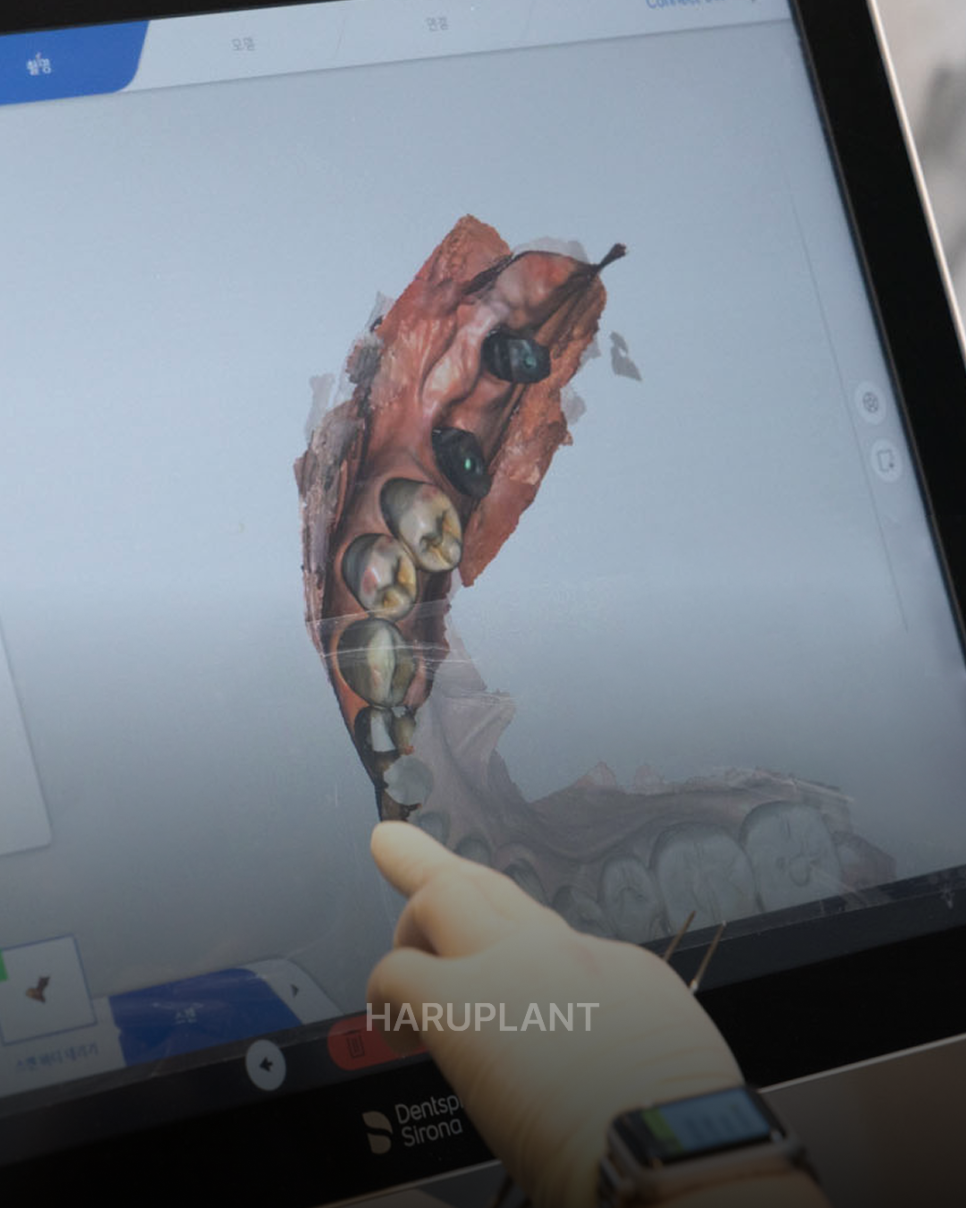
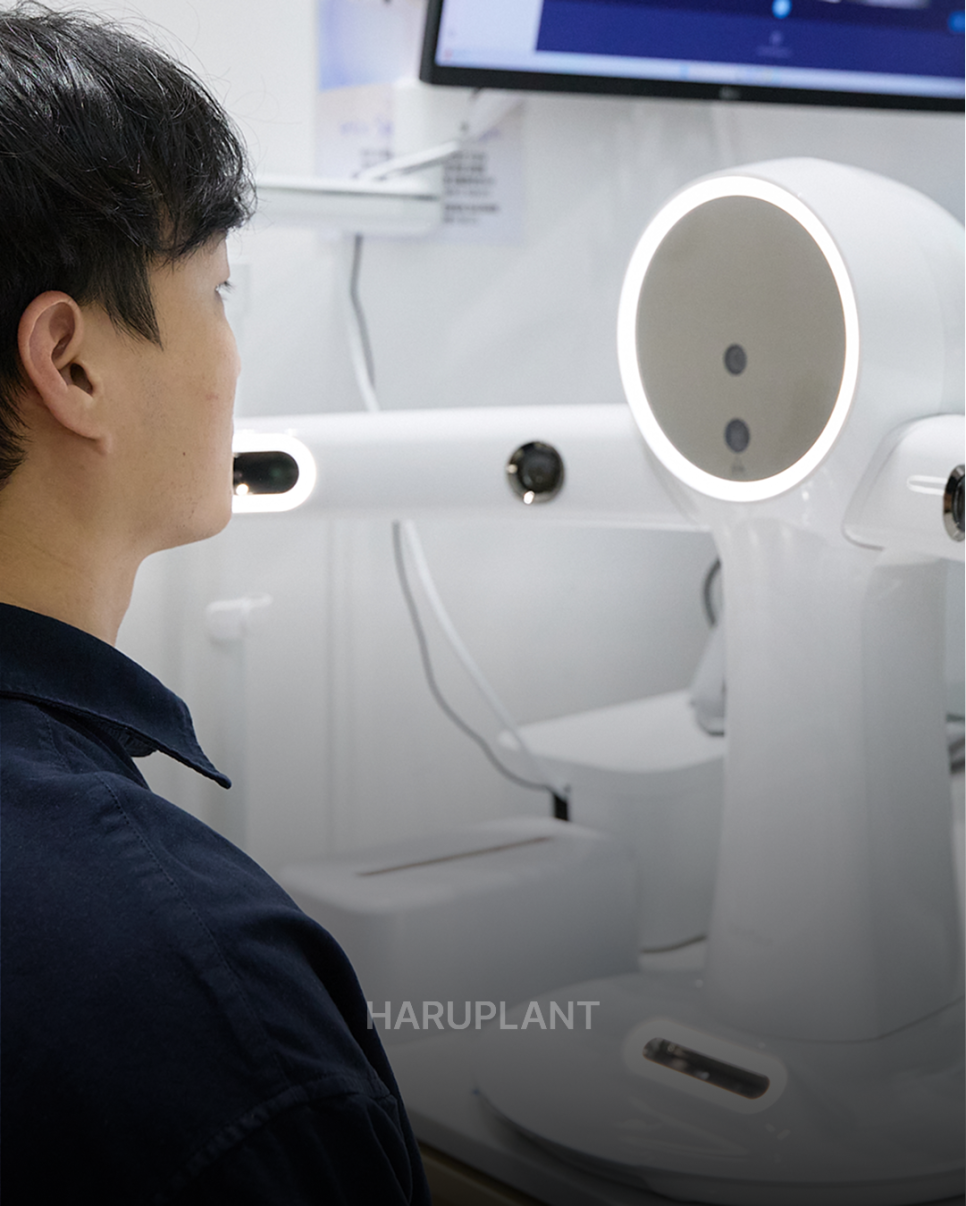
Accordingly, during diagnosis, we carefully examine the amount of jawbone and the locations of the nerves and maxillary sinuses using an advanced 3D CT scan. We also use a 3D intraoral scanner to capture even complex or difficult-to-record oral structures as complete digital data. In addition, a 3D facial scanner is used to create data that takes into account the bite, the facial midline, and the proportions of the overall facial structure.
The organized oral data then leads to a customized fabrication process at the in-house digital dental laboratory. At its professional, center-scale in-house facility, the Haru Implant Digital Dental Laboratory Center, Haru Implant Dental Clinic fabricates temporary teeth and final prostheses, as well as custom abutments and titanium frameworks, according to each patient’s oral data.
Being told that full-arch implants are difficult does not mean that all treatment options have disappeared. Even when there is insufficient bone at the usual implant placement sites or the sites are close to a nerve or the maxillary sinus, it is possible to reassess how the remaining bone can be used.
All-on-X implants are a treatment method that uses areas where bone remains to support a full-arch prosthesis with a small number of implants. Even if you have previously been diagnosed as having difficulty receiving implant treatment, if treatment is necessary, it may be helpful to find out whether All-on-X implants are possible for you.
We hope today’s information was helpful, and we will conclude this post.
For implants, visit Haru Implant Dental Clinic at Gangnam Station.
