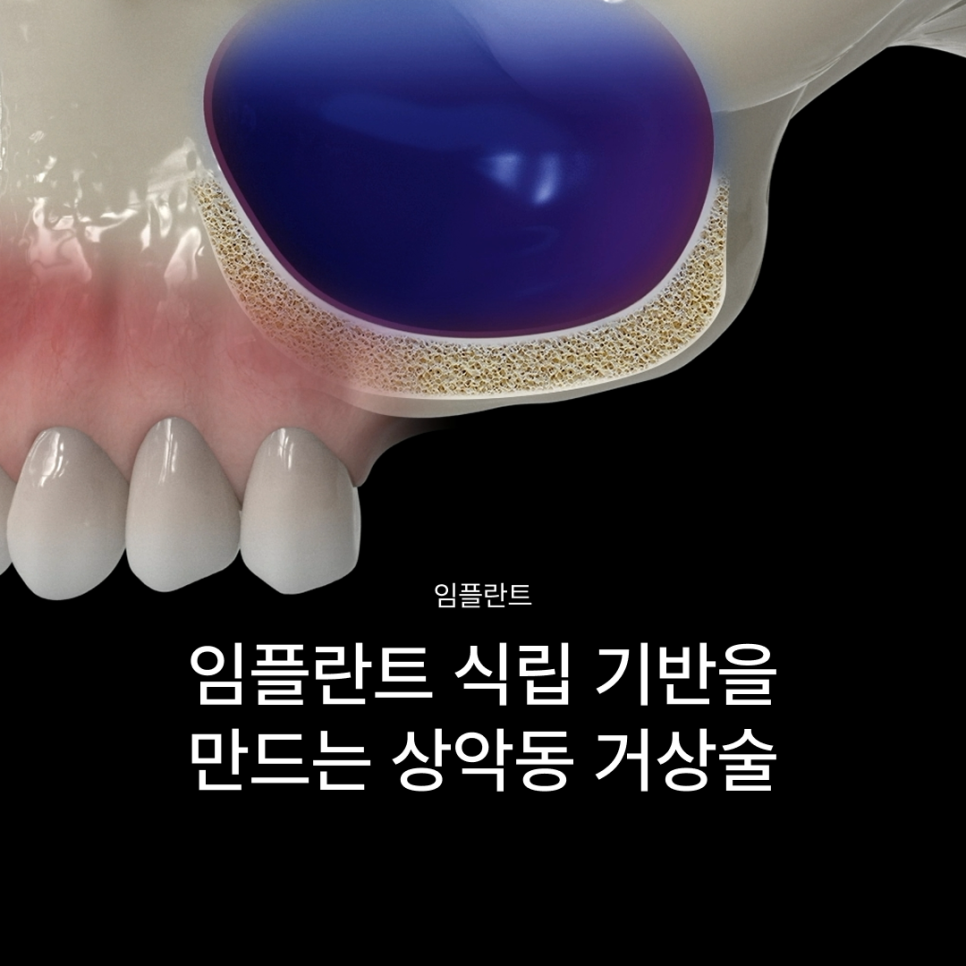
Why Upper Molars Become Complex Implant Cases: Understanding the Meaning and Types of Sinus Lift Surgery
Hello,
This is 하루플란트치과, helping you begin each day with a comfortable routine.
If an upper molar is loose or an implant is needed because of severe tooth decay, you may be told that “sinus lift surgery is necessary.”
Because the term “sinus lift surgery” may be unfamiliar, it can be difficult to immediately understand what kind of treatment it is, even after hearing an explanation of its meaning.
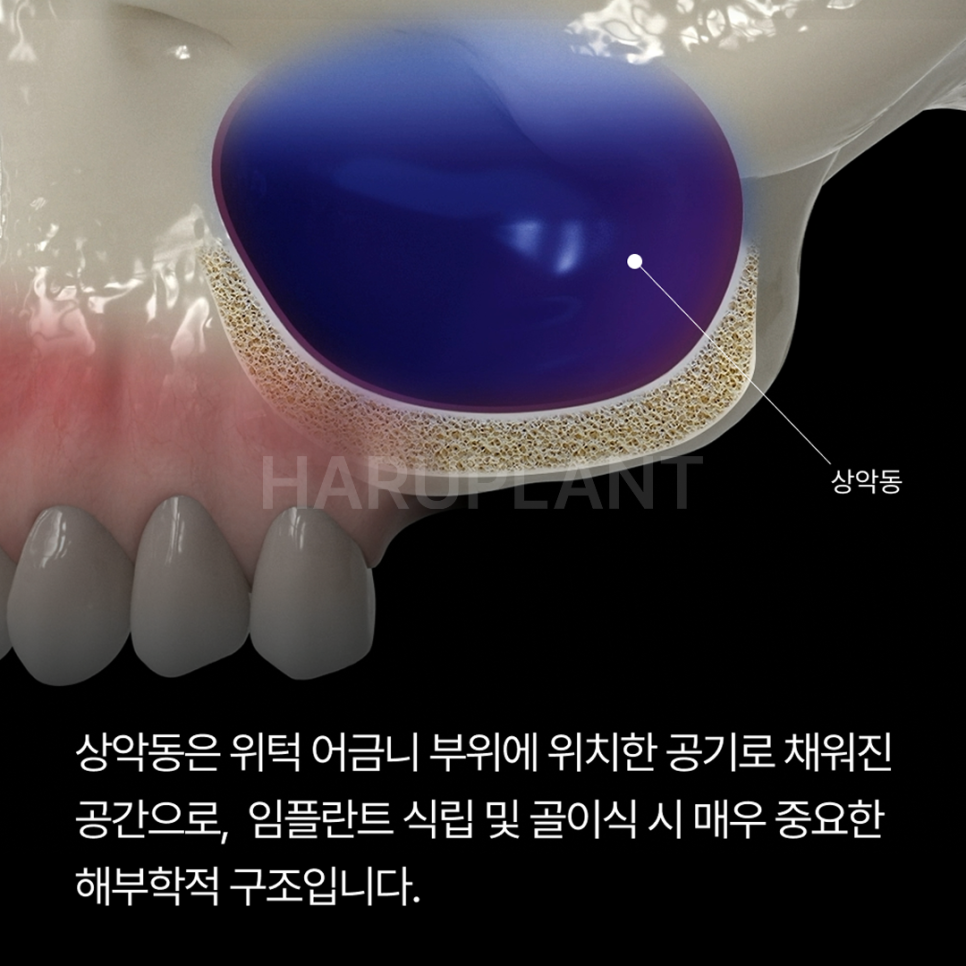
The maxillary sinus is an air-filled space located above the upper molars,
near the side of the nose.
It is the area shown in blue in the image.
Although it is not usually something we notice, the maxillary sinus is located close to the bone where an implant must be placed. Therefore, its structure must be carefully examined when treating upper molars.
The Relationship Between the Meaning of Sinus Lift Surgery and Bone Grafting

The reason bone grafting and sinus lift surgery are often mentioned together during consultations for upper molar implants
is that sufficient bone height must ultimately be secured to stabilize the implant.
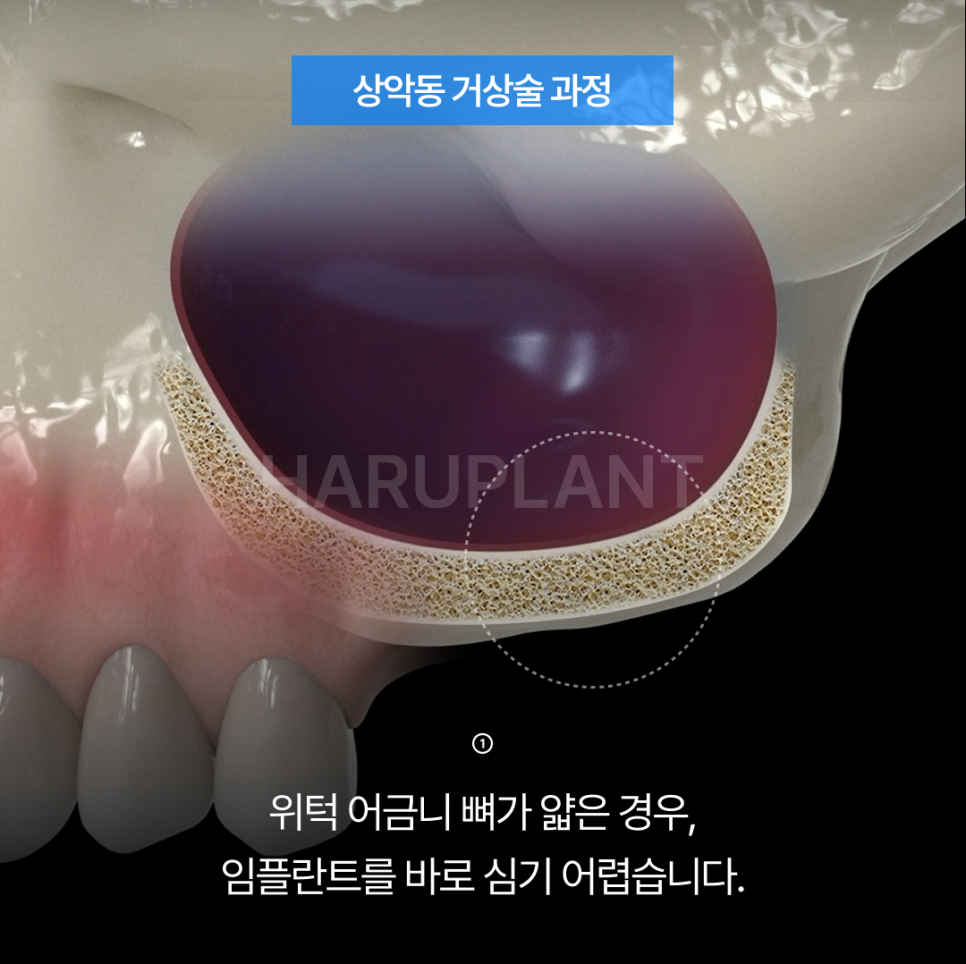
Over time after losing an upper molar, the jawbone in that area may gradually be resorbed. In addition, as the floor of the maxillary sinus located beside the nose gradually descends, there may be even less bone height available for placing an implant in the upper molar area.
If an implant is placed forcefully in this condition, it may be difficult to achieve stable fixation of the fixture, which serves as the root of the artificial tooth.
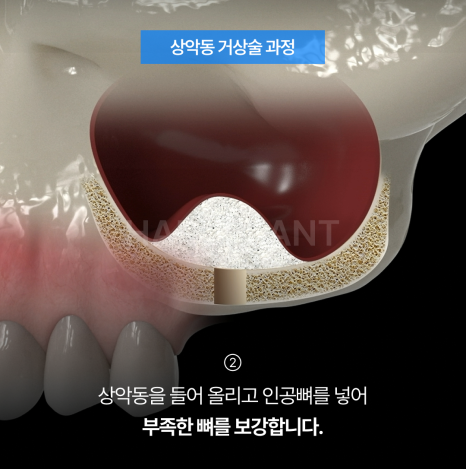
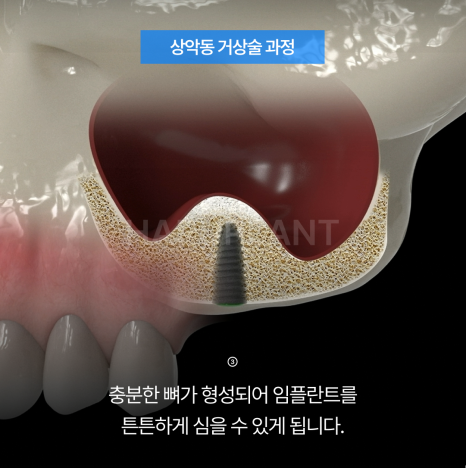
In such cases, it may be necessary to carefully lift the floor of the maxillary sinus and use bone graft material in the space beneath it to create a foundation for securing the implant. In summary, sinus lift surgery can be understood as a procedure that lifts the descended maxillary sinus, creates space beneath it for bone graft material, and establishes a foundation for placing an implant in the upper molar area.
Depending on the amount of remaining bone, the distance from the maxillary sinus, and the extent of bone grafting, the procedure may be classified as a complex implant case.
Types of Sinus Lift Surgery
That Vary Depending on Bone Condition
There is more than one method of performing sinus lift surgery.
In general, the types of sinus lift surgery are divided into two main categories according to how much jawbone remains.
These are the vertical sinus lift and the lateral sinus lift.
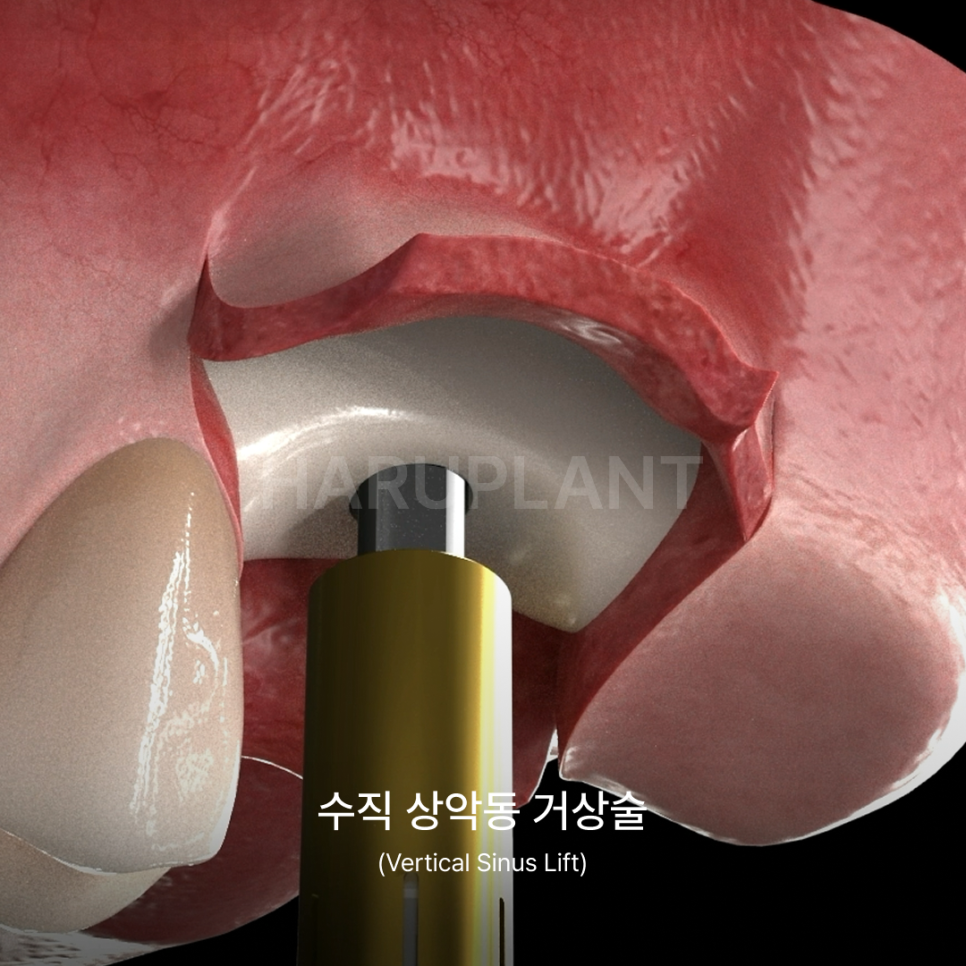
A vertical sinus lift is considered when the height of the alveolar bone is slightly insufficient. The sinus membrane is carefully lifted at the site where the implant will be placed, and the space is filled with bone graft material. This approach may be considered when the incision area is relatively small and bone loss is not extensive.
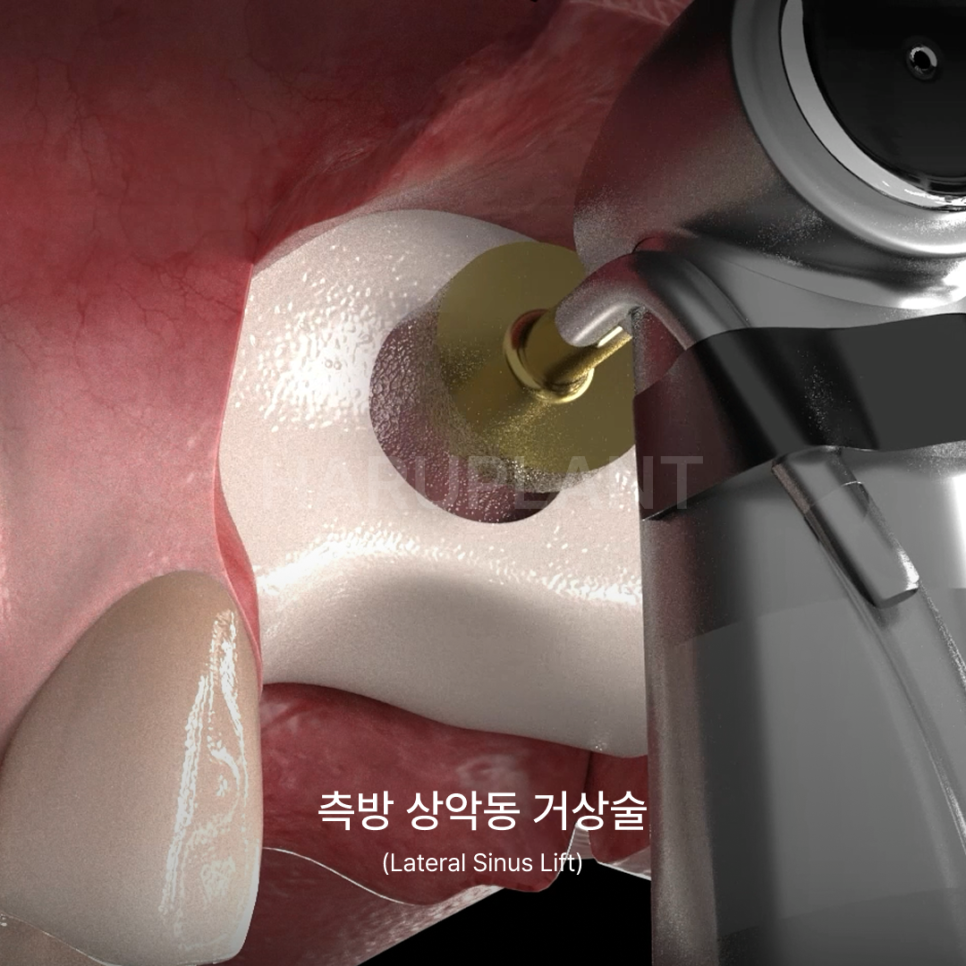
A lateral sinus lift is considered when there is significant bone deficiency or when a large area requires bone grafting. As the name suggests, access is gained from the side of the jawbone, a small window is created in the lateral wall, and the sinus membrane is carefully lifted. Bone graft material is then placed in the space to secure sufficient bone height.
Which of the two types of sinus lift surgery is appropriate is determined after considering the height of the remaining bone, the extent of bone grafting, the implant placement site, and other factors together.
Why Upper Molars Become Complex Implant Cases
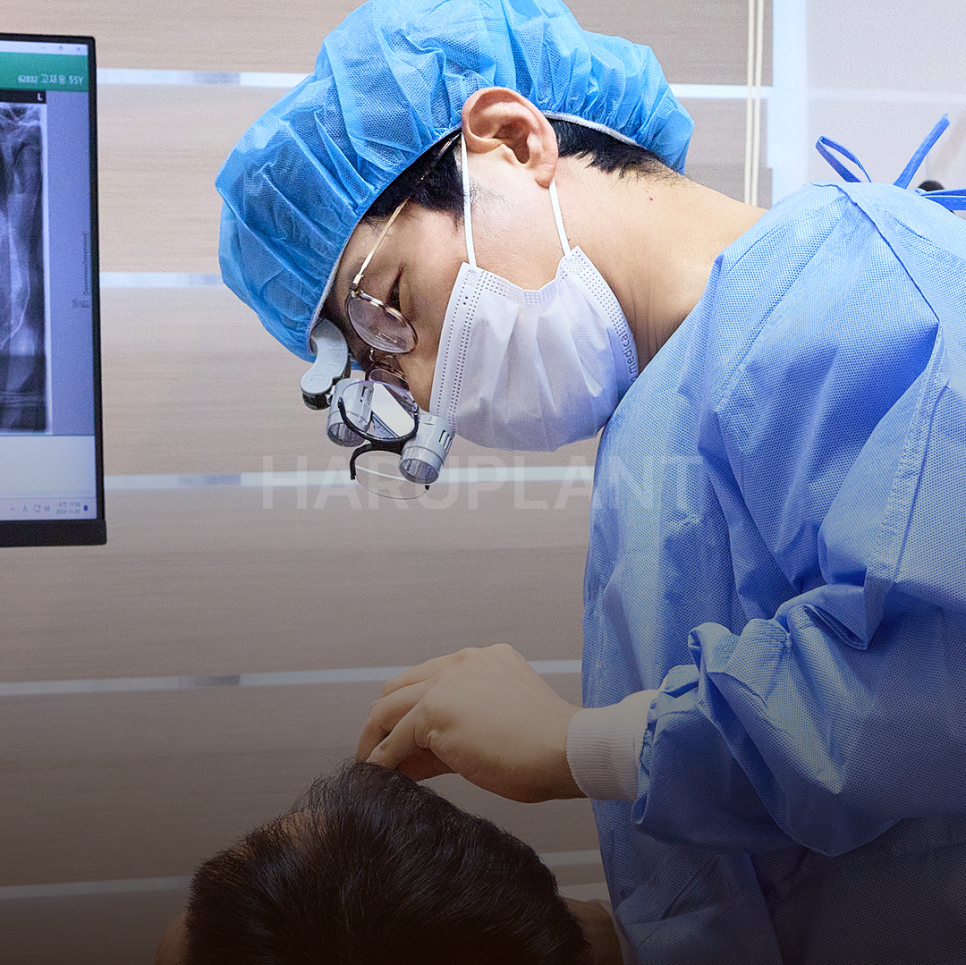
Upper molar implants are classified as complex implant cases for reasons beyond the simple need for sinus lift surgery.
The reduced jawbone after tooth loss, the descending floor of the maxillary sinus, the possibility of damage to the sinus membrane, and the chewing forces exerted on the molar area must all be considered from multiple perspectives.
Therefore, treatment in this area requires more than simply deciding whether bone grafting is needed. The height and width of the bone available for stable implant fixation, the placement angle, and the final prosthetic position must also be planned together so that treatment can be designed to minimize strain during actual use.
하루플란트치과 Examines the Area Three-Dimensionally
Advanced Diagnostic System
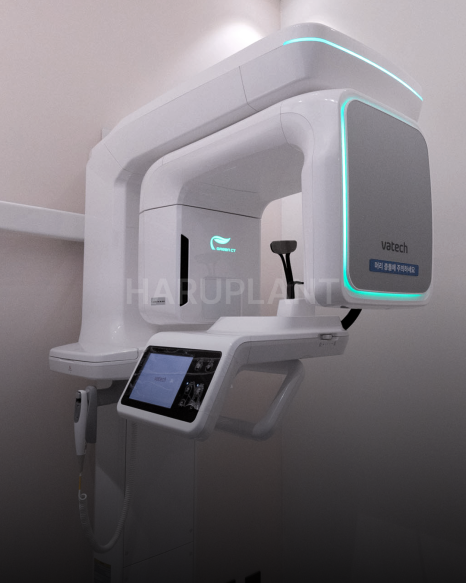
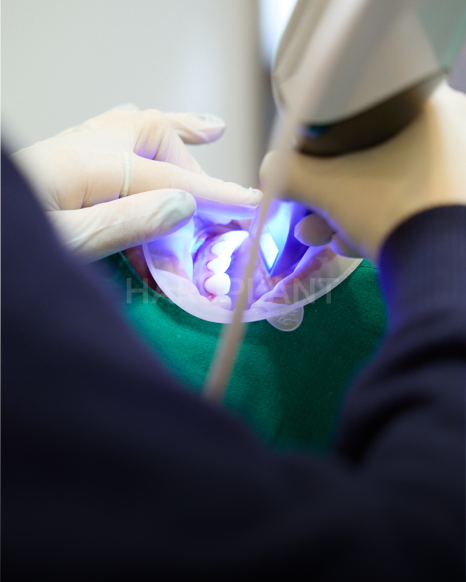
We pay close attention from the diagnostic stage so that sinus lift surgery can proceed as safely as possible.
To thoroughly assess each patient’s oral condition,
we use an advanced dental 3D CT scan to examine the position of the maxillary sinus, the height of the remaining jawbone, and the extent of bone grafting needed in three dimensions. We also use a 3D intraoral scanner to examine the implant placement site and the structure where the prosthesis will come into occlusion.
Understanding the meaning and types of sinus lift surgery helps explain why upper molar implants require more detailed diagnosis.
This is because the necessary type of sinus lift surgery may vary depending on the height of the remaining bone and the condition of the maxillary sinus, even when treating the same upper molar area.
If you are considering an upper molar implant, the first step is to check the current condition of the bone and the position of the maxillary sinus. The more complex the implant case, the more important it is to assess the feasibility of surgery, the extent of bone grafting, and the prosthetic plan during the initial diagnosis.
For implants, visit 하루플란트치과 at Gangnam Station.
