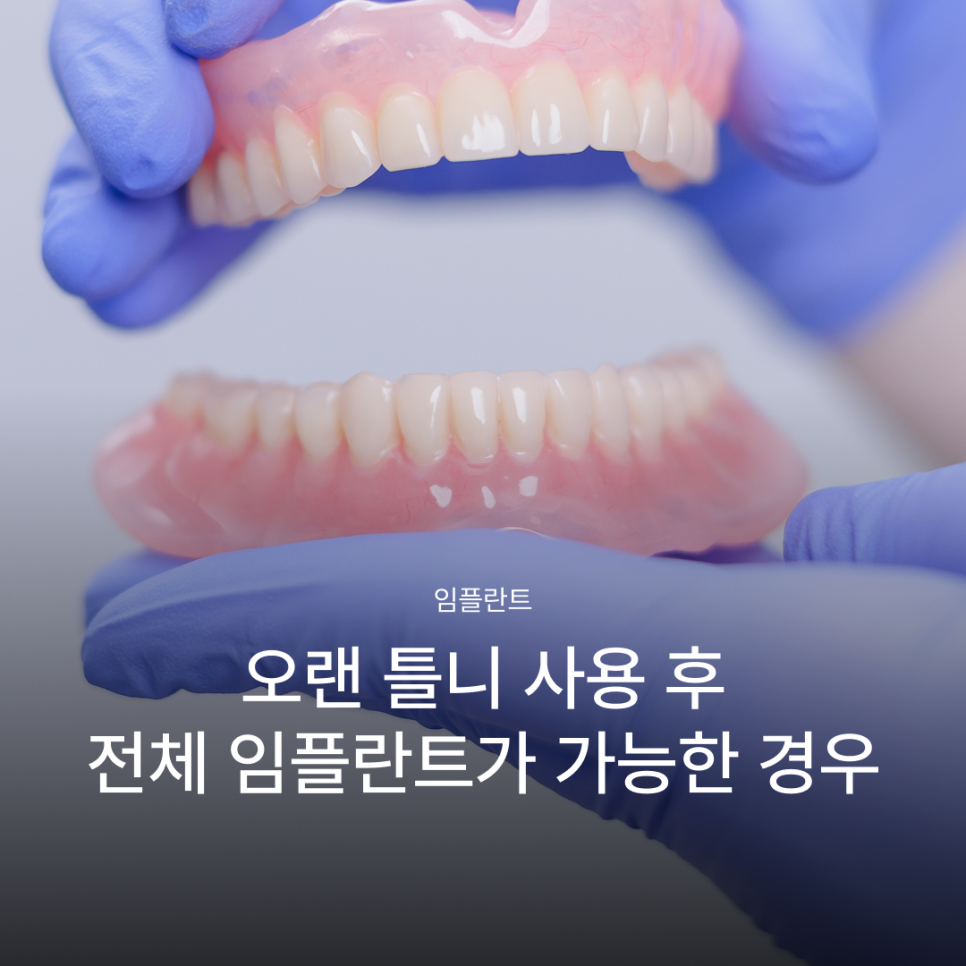
When Full-Arch Implants Are Possible After Long-Term Denture Use: Types of Implants and the Meaning of Full-Arch Implants
Hello.
For a comfortable daily life that begins each day,
this is Haru Plant Dental Clinic.
Many people who have used dentures for a long time visit us after deciding, “Now I think I should get full-arch implants.”
This may be because pain from pressure on the gums, a foreign-body sensation in the mouth, and the discomfort of the dentures moving whenever they chew often recur and worsen over time.
Some of these patients have used dentures for a very long time. In such cases, there is something that should be checked first before considering implant-supported dentures or full-arch implants.
That is the condition of the jawbone, which may have decreased while the teeth were missing.
If dentures have been used for a long time, the jawbone may sometimes have receded to the point that implant treatment is difficult.
In addition, the difficulty and method of treatment may vary depending on the condition of the reduced jawbone.
Some people reading this may be unfamiliar with full-arch implants.
Full-arch implants refer to treatment that restores the function of all the teeth in the upper or lower jaw with implants and prostheses when most of the teeth are missing or the remaining teeth can no longer function properly.
Depending on the condition of the mouth, several types of implants may be considered together, including full fixed-arch implants, implant-supported dentures, and All-on-X implants.
The Jawbone Should Be Checked First After Long-Term Denture Use
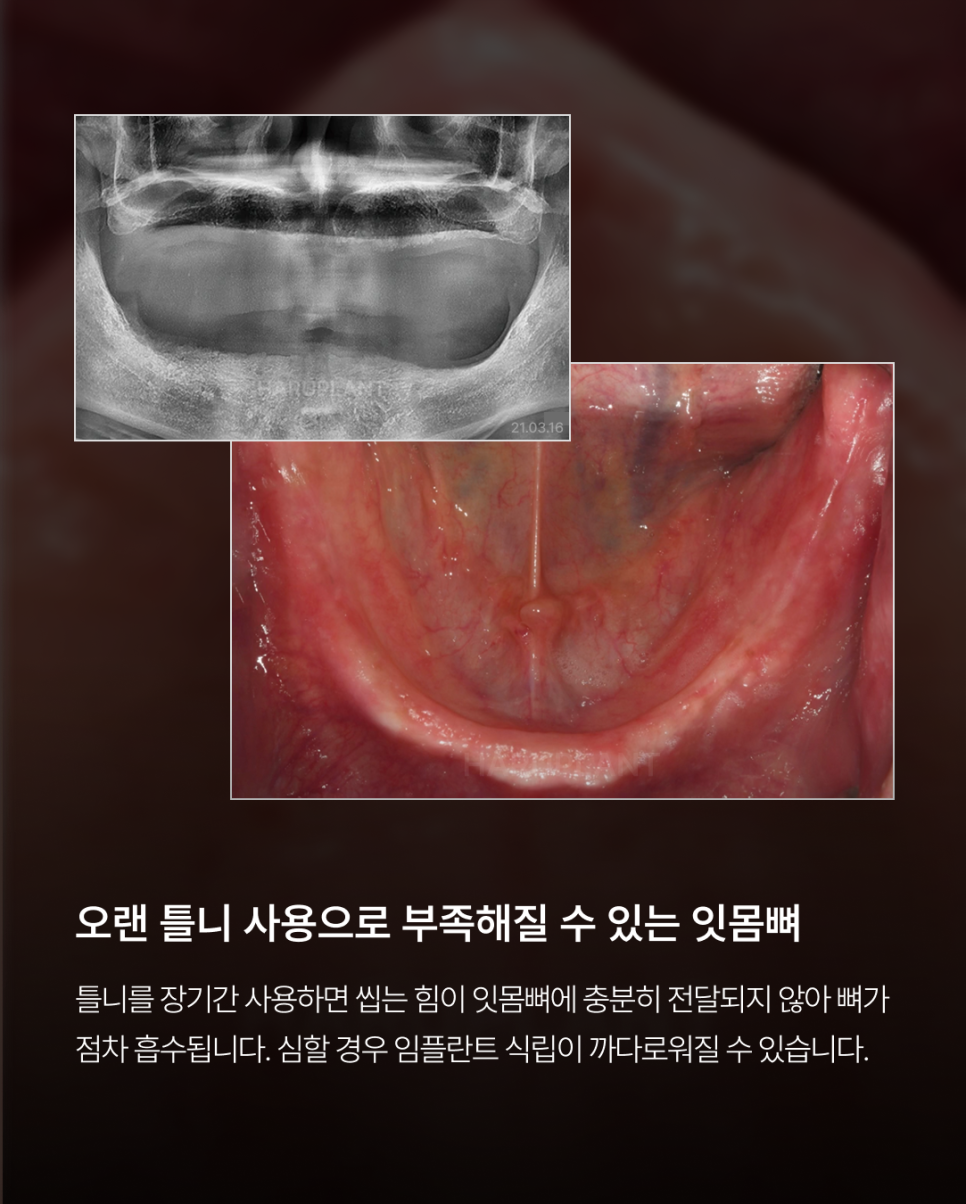
When dentures are used for a long time, chewing forces may not be transmitted sufficiently to the jawbone, causing the alveolar bone—what we commonly call the jawbone—to gradually resorb.
In addition, the shape of the gums may change as the dentures repeatedly press against them.
As a result, the dentures may gradually stop fitting the gums properly and become increasingly loose over time.
When this happens, you may wonder whether implants will be difficult because not much jawbone remains.
For this reason, it is important to determine how much jawbone remains and where implants can be placed.
The less bone available in width and height, the more difficult implant placement may be. However, with accurate diagnosis and clinical expertise, possible treatment plans can still be explored within those limitations.
When Full-Arch Implants Are Possible ①
When Sufficient Jawbone Remains to Support the Implants
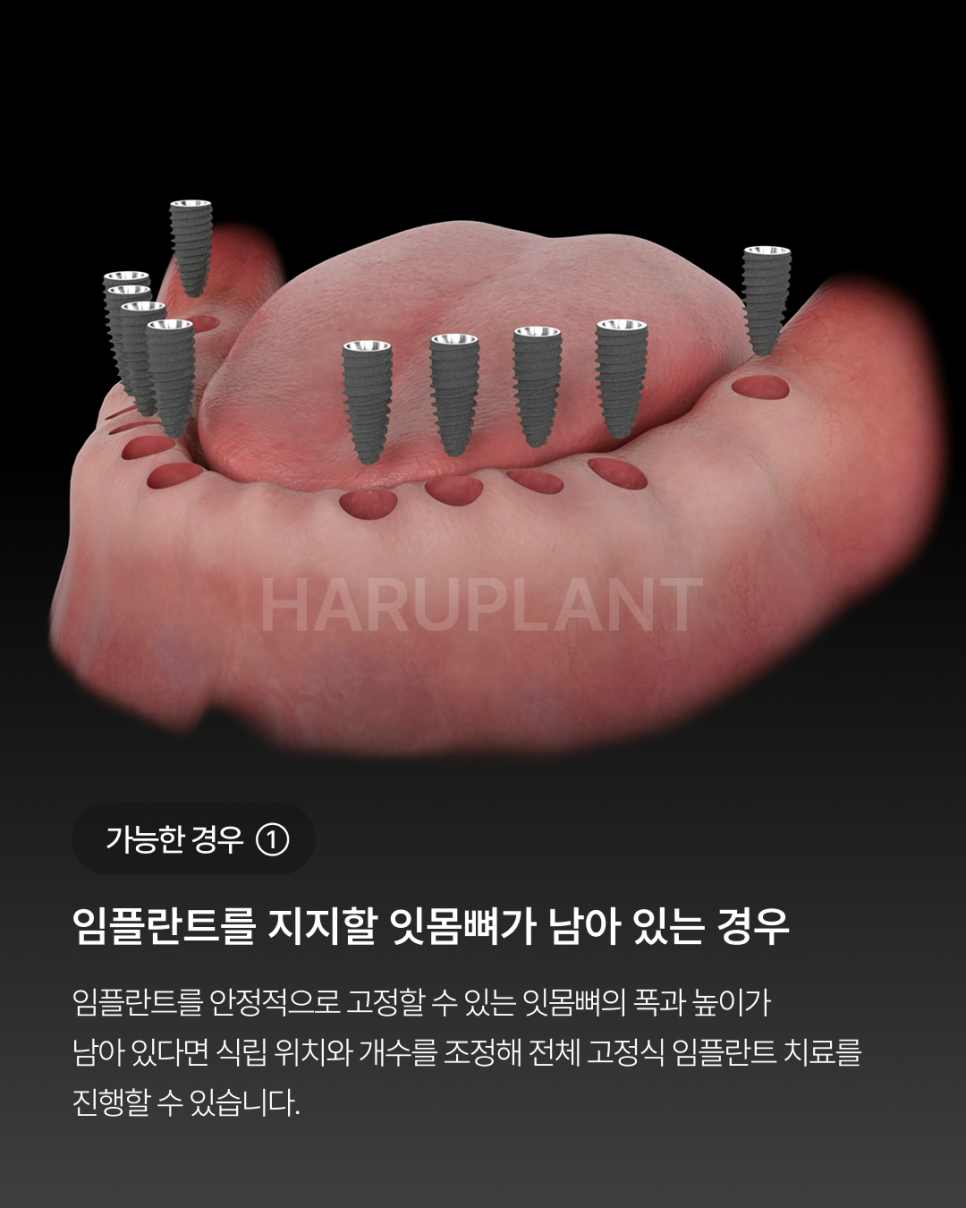
If the width and height of the jawbone are sufficient to secure the implants stably, full fixed-arch implant treatment may be considered.
What is important at this stage is accurately assessing the patient’s gum and jawbone condition for implant placement, including the jawbone and the location of the inferior alveolar nerve.
This is because even with the same gum and jawbone condition, the result may vary depending on how the condition is diagnosed and the treatment is planned.
In such cases, advanced digital diagnostic systems, such as 3D CT and 3D intraoral scanners, which allow the condition of the mouth to be assessed in greater detail, may be helpful.
Implant treatment is not simply a matter of placing as many implants as possible. It must also involve planning where and how many implants should be placed to stably support the full-arch prosthesis.
To explain the meaning of full-arch implants in terms of actual treatment, this approach is closer to redesigning the chewing structure of the entire mouth than to replacing missing teeth one by one.
Therefore, even when sufficient bone remains, it is important to consider the implant positions, prosthetic height, and direction of chewing forces together.
When Full-Arch Implants Are Possible ②
When Insufficient Jawbone Can Be Supplemented
What happens if the diagnosis indicates that the jawbone is insufficient?
Insufficient jawbone does not necessarily mean that full-arch implants are impossible.
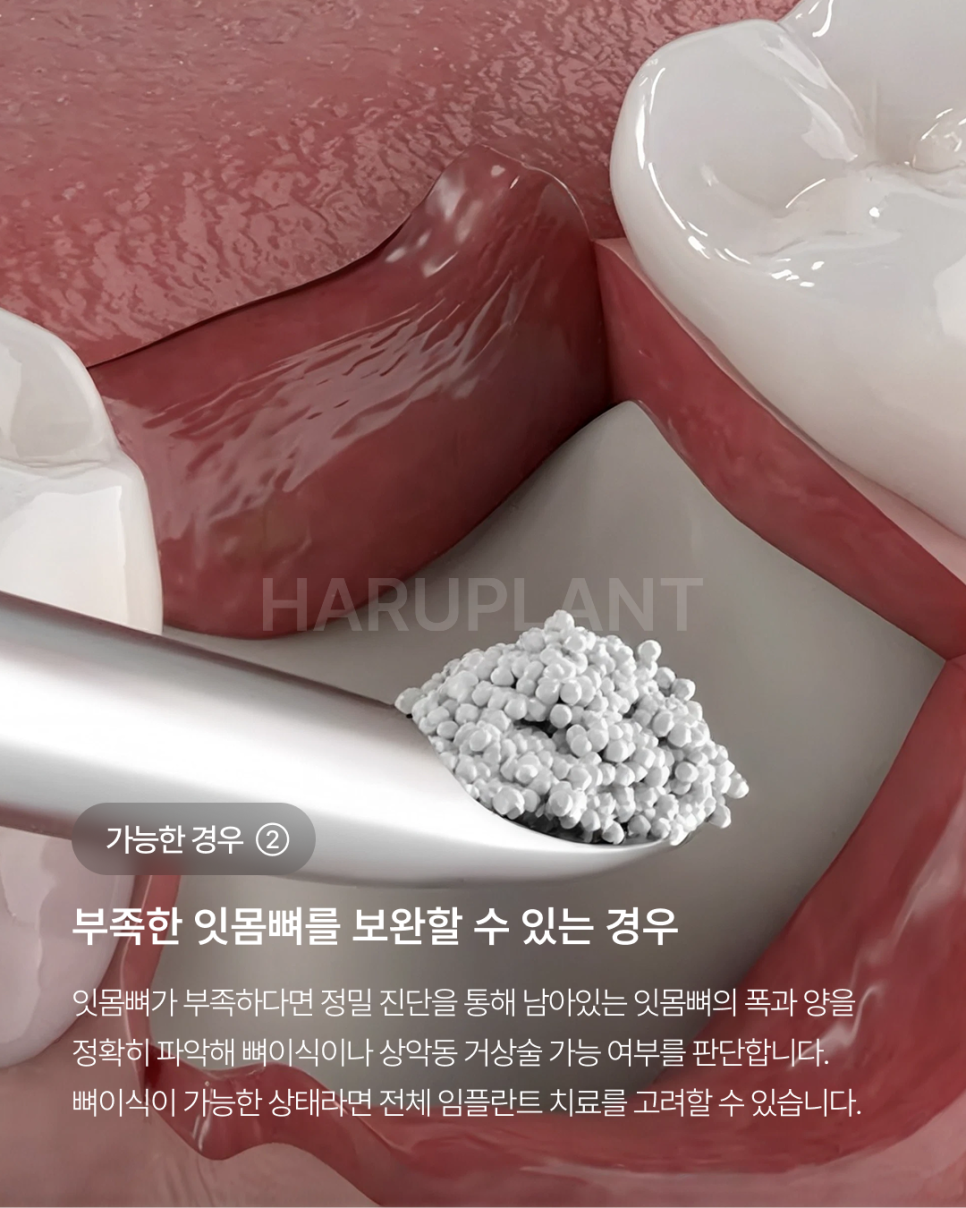
In this case, precise diagnosis, as mentioned above, can be used to accurately assess the width and amount of the remaining jawbone and determine whether it can be supplemented with bone grafting or a sinus lift.
If it is determined that bone grafting can create a foundation to support the implants, implant placement may proceed after the bone-grafting process.
During this process, it is necessary to consider from various perspectives whether full fixed-arch implant treatment is appropriate or whether implant-supported dentures or another treatment method is needed. The type of implant suited to the patient’s needs and condition should also be considered when planning and carrying out treatment.
This is because each patient has different individual circumstances, including the location of the remaining bone, oral structure, and overall health.
When Full-Arch Implants Are Possible ③
When Jawbone Resorption Has Progressed Considerably
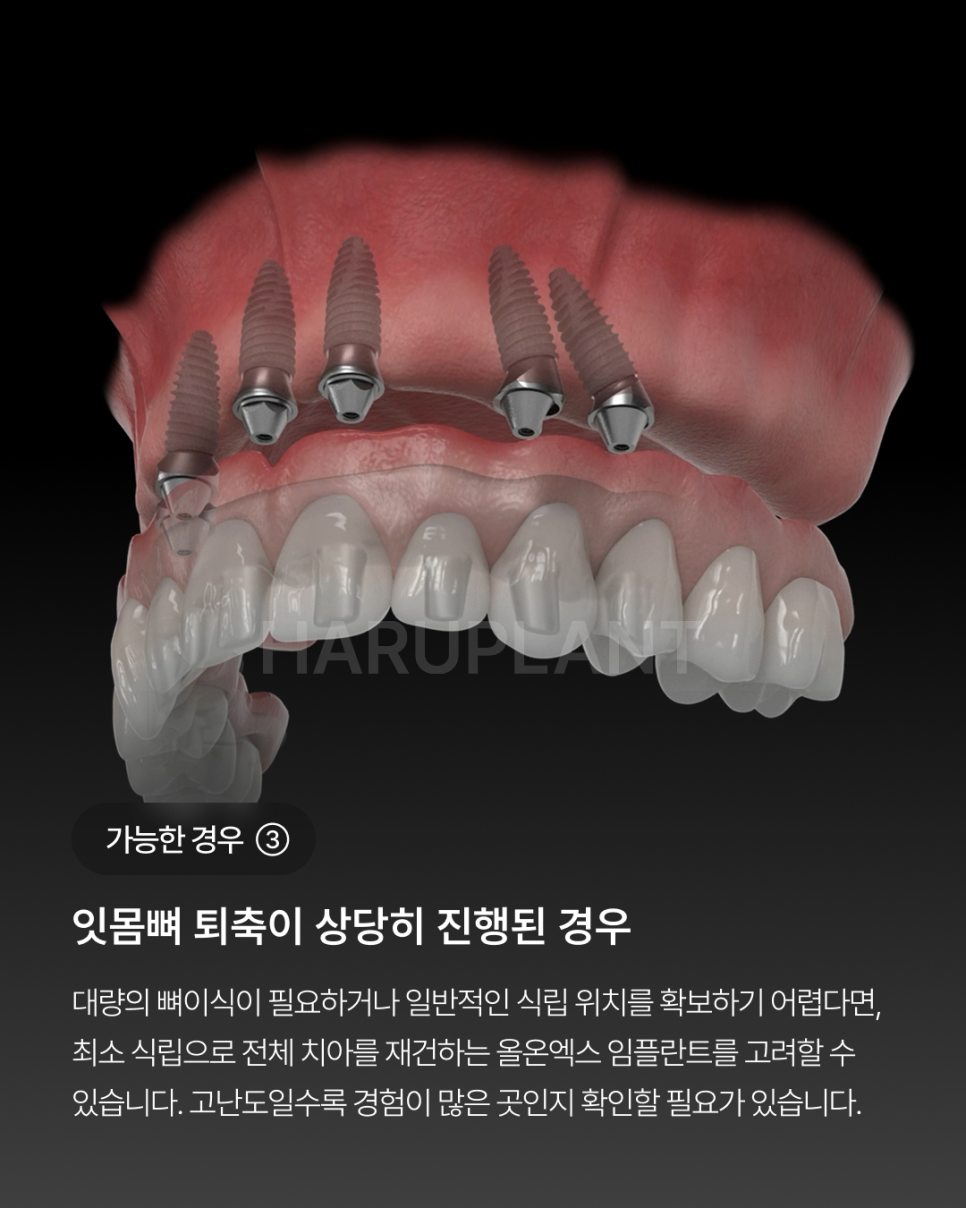
There may be cases in which jawbone resorption has progressed significantly, making it difficult to secure conventional implant placement positions or requiring extensive bone grafting.
In addition, when jawbone resorption is severe, an implant may need to be placed very close to the inferior alveolar nerve, making it difficult to determine a conventional placement direction.
In these situations, extensive bone grafting may feel burdensome, or you may have been told that implant treatment is difficult in some cases.
If this is the case, All-on-X implants, which reconstruct the entire set of teeth using a minimum number of implants, may be one alternative.
All-on-X uses the remaining bone to place a minimum number of implants and support a full-arch prosthesis.
More specifically, after placing the minimum number of implants, a titanium frame and full-arch prosthesis are connected to support all the teeth.
This treatment is sometimes described as combining the advantages of removable dentures with those of implants.
Because All-on-X implants must use limited remaining bone to support the full-arch prosthesis, the placement positions and angles, as well as the prosthetic structure, must be calculated more precisely. It is therefore advisable to confirm whether the clinic has extensive experience with All-on-X and full-arch implants.
As described above, the type of implant—such as implant-supported dentures, All-on-X, or full fixed-arch implants—may vary depending on the condition of the jawbone.
Accurate Diagnosis and Extensive Clinical Expertise for Stable Full-Arch Implants
Even if the jawbone has decreased due to long-term denture use, an appropriate treatment method may be found by accurately assessing the remaining bone and the extent to which it can be supplemented.
The important point is that the patient’s individual oral conditions must be examined three-dimensionally to accurately determine the surgical scope and whether treatment is possible.
Haru Plant Dental Clinic uses various digital diagnostic devices, including a high-specification, low-dose 3D CT, a 3D intraoral scanner, and a 3D facial scanner, to precisely diagnose the condition of the jawbone and implant placement positions. Treatment is designed based on the data obtained.
In addition, based on the clinical experience of Dr. Byun Seong-man, the clinic’s chief director and a graduate of Seoul National University with 27 years of clinical experience, as well as the extensive experience of the medical staff who have handled numerous full-arch implant cases over many years, treatment plans are established by considering each patient’s jawbone condition and overall health together.
If you are considering full-arch implants after long-term denture use, it is advisable to first confirm the condition of your gums and whether treatment suited to the meaning and requirements of full-arch implants is possible.
If necessary, it is also important to compare various types of implants, including implant-supported dentures, and find the treatment plan that is most realistically appropriate for you.
If you are considering full-arch implants after long-term denture use, we hope today’s article has been of some help in determining your treatment options.
For implants, visit Haru Plant Dental Clinic at Gangnam Station.
