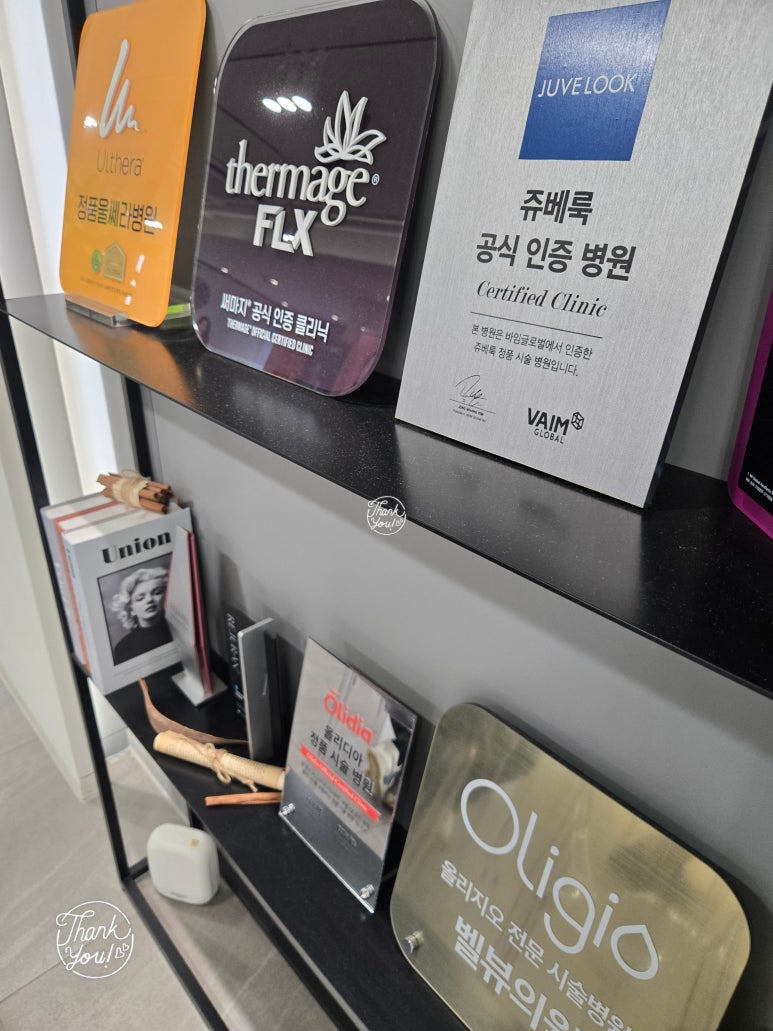
Hello. This is Bellevue Clinic near Gangnam Station, dedicated to creating natural beauty. Many people look into lifting treatments to improve reduced skin elasticity and a weakened facial contour. There are a variety of options, from radiofrequency devices such as Oligio and Thermage, to ultrasound devices such as Ultherapy and Shurink, and laser-based treatments such as Titanium Lifting.
It is natural that lifting results may differ depending on how the device is used. However, even when receiving treatment with the same device and the same number of shots, some people experience noticeable tightening and contour improvement, while others complain that they “could not feel any effect” or that they “developed hollow cheeks instead.” Why does this happen? Is it a problem with the device? That probably isn’t the case. Then…

Could differences in lifting results be due to the doctor’s skill or level of concentration falling short at a certain point? Since doctors are also human, differences in condition may be a possible factor, but skill does not suddenly appear or disappear depending on the person being treated. Then… what remains are individual differences in the patient—specifically, the patient’s “skin thickness” and “the hydration level inside the skin.” Although this is not widely known, these factors also have a considerable impact on lifting results.
If all three factors—the device, the doctor’s treatment technique, and the patient’s skin thickness and hydration status—are “good,” the results can be quite significant. Today, let’s take a detailed look at how these two factors, the patient’s skin thickness and hydration status, affect lifting results, together with the underlying principles.
The Real Reason You Did Not See Lifting Results
Skin Thickness and Hydration That Must Be Checked Before Ultherapy or Oligio
(Bellevue Clinic near Gangnam Station)
1. Types of Lifting Energy and Target Layers
Lifting devices can be broadly classified into three categories according to the energy source they use.
Radiofrequency (RF) Lifting
(Oligio, Thermage, Volnewmer, Tenserma, etc.)
- A radiofrequency current is delivered through the dermis to generate deep heat (Joule heat) at 40–60℃. It immediately contracts lax collagen fibers and stimulates fibroblasts to synthesize new collagen and elastin. It focuses on improving fine lines, reducing the appearance of pores, and increasing skin texture density.
High-Intensity Focused Ultrasound (HIFU) Lifting
(Ultherapy, Shurink, LinearZ, etc.)
- High-intensity focused ultrasound is concentrated at specific depths, such as 1.5 mm, 3.0 mm, and 4.5 mm within the skin, to form thermal coagulation points (TCPs). It strongly contracts the lower dermis and sagging fascial layer (SMAS), making it suitable for physically lifting the facial contour.
Laser Lifting (including Titanium)
- Mult-wavelength laser beams are applied continuously to accumulate heat evenly throughout all layers of the skin. This is advantageous for immediate brightening and refining the facial contour.
The energy from these various lifting devices must pass through the “medium” of skin tissue in order to reach the target point accurately. The properties of this medium are determined by skin thickness and hydration.
2. Variable 1: Skin Thickness (Common to All Lifting Devices)
Skin thickness is an essential indicator that determines “how much energy to deliver and at what depth.” Human skin varies in thickness depending on the area, and individual differences can be substantial even in the same area.
1> Importance in Ultrasound (HIFU) Treatments
-
Patients with very thin skin: If a deep tip (4.5 mm) is used in an area where the dermis and subcutaneous fat layer are thin, the ultrasound energy may excessively heat the fat tissue, potentially causing unwanted hollow cheeks (fat atrophy) or nerve stimulation. Treatment should target the shallower layers mainly with 1.5 mm or 3.0 mm tips.
-
Patients with very thick skin or a large amount of fat: If treatment is performed mainly with shallow tips, the energy may not reach the fascial layer (SMAS), resulting only in swelling without meaningful lifting effects. A 4.5 mm tip should be used to provide firm support to the deeper layer.
2> Importance in Radiofrequency (RF) Treatments
-
Patients with very thin skin: Since energy accumulates quickly in the narrow dermal layer, pain may be felt more intensely and the risk of epidermal burns may increase. Cooling pulses should be adjusted carefully and energy levels should be distributed.
-
Patients with very thick or firm skin: To generate sufficient deep heat through the deeper dermis, an appropriate energy level, adequate contact pressure, and a sufficient number of shots must be secured to induce a collagen regeneration response.
3. Variable 2: Hydration Inside the Skin (Especially Critical for Radiofrequency RF)
Hydration inside the skin determines the “conductivity” through which energy is delivered.
★ The Relationship Between Radiofrequency (RF) and Hydration
Radiofrequency uses frictional heat generated as water molecules and ions vibrate within skin tissue.
▶ Well-hydrated skin: Tissue resistance remains consistent, allowing the RF current to penetrate evenly into the deeper dermis without resistance. Pain is reduced, while the efficiency of collagen contraction and synthesis reaches its highest level.
▶ Internally dry and dehydrated skin: The resistance of the current becomes irregular, causing energy to remain in the epidermis. Deep heat does not rise sufficiently, while only the surface skin becomes hot, causing redness and burning sensations to persist and reducing the expected tightening effect.
★ The Relationship Between Ultrasound (HIFU), Lasers, and Hydration
Ultrasound waves also use water as a medium, so energy dispersion may occur in cases of extreme dryness. In addition, water is essential during the metabolic process in which damaged tissue produces new collagen after treatment.
Therefore, repeatedly undergoing lifting treatments while experiencing chronic internal dryness is a major reason the results may be reduced by half. Internal dryness must be addressed first in order to see lifting results as well!!!!
4. Comparison of Energy Characteristics and Responses to Hydration and Thickness
| Category | Radiofrequency (Oligio·Thermage) | Focused Ultrasound (Ultherapy·Shurink) | Laser (Titanium) |
|---|
| Mechanism of action | Frictional heat from RF current (deep heat) | Focused-ultrasound thermal coagulation points | Heat accumulation from mult—wavelength laser |
| Main targets | Dermis | Fascial layer (SMAS), subcutaneous fat layer | All dermal layers, retaining ligaments |
| Effect of skin thickness | Basis for setting energy level and number of shots | Basis for determining tip depth (1.5/3.0/4.5 mm) | Basis for determining irradiation mode and number of stacks |
| Importance of hydration | Very high (directly involved in heat generation) | High (medium and promotion of post-treatment regeneration) | Moderate to high (skin barrier recovery) |
| Main expected effects | Improvement of fine lines, reduced appearance of pores, increased density | Jawline lifting, improvement of a double chin and sagging | Immediate improvement in elasticity, refined skin tone |
Now, are you wondering how to resolve internal dryness?
Of course.
This is a question that must be asked.
Internal dryness occurs through the combined effects of reduced barrier function, which prevents moisture from evaporating from the epidermis, and insufficient water-retention capacity in the dermis (hyaluronic acid and extracellular matrix). Many people repeatedly spray mist on their faces throughout the day. However, simply moisturizing the epidermis makes it difficult to sufficiently replenish moisture in the dermis, so in-clinic treatments and home care should be combined to improve both the dermis and epidermis. In other words, internal dryness disappears only when moisture is replenished from within. It is not easily improved with cosmetics alone. You can find the answer by observing whether your skin becomes dry when you stop using cosmetics.
1. Treatment-Based Approach (How to Directly Replenish Moisture in the Dermis)
- Non-cross-linked hyaluronic acid (HA) skin boosters (such as aqua injections)
Pure hyaluronic acid with a low molecular weight and no cross-linking is injected directly into the dermis to encourage it to draw in an amount of moisture equivalent to several hundred times its own weight.
- Regenerative skin boosters (Rejuran Healer, PN/PDRN, etc.)
Polynucleotide ingredients derived from salmon help restore the damaged skin barrier and the dermal environment itself, strengthening the skin’s inherent ability to retain moisture.
- Ultrasound care (such as LDM)
High-density ultrasound waves rearrange moisture-delivery proteins (GAGs) within the skin and alleviate inflammation, soothing and strengthening the skin barrier.
2. Improving Home Care and Cleansing Habits (Protecting the Epidermal Barrier)
- Mildly acidic, low-irritation cleansing
Excessive double or triple cleansing and alkaline cleansers that leave the skin feeling overly squeaky can destroy natural moisturizing factors (NMFs) and the lipid barrier, so they should be avoided by people with dry skin.
- Layering barrier-strengthening ingredients
First apply ingredients that attract moisture, such as hyaluronic acid, glycerin, and panthenol. Then form a sealing layer with a cream containing lipid-like ingredients, such as ceramides, cholesterol, and fatty acids, to prevent the moisture from evaporating.
- Stop excessive exfoliation
If you remove flakes caused by dryness with physical scrubs or strong AHAs/BHAs, the barrier can become further damaged and internal dryness can worsen. Never scrub with a washcloth just because your skin is flaking. I recently saw an actual case involving someone who vigorously scrubbed around the mouth in a sauna because the area had turned white, after which redness and inflammation developed.
3. Environmental and Lifestyle Management
Avoid allowing air from an air conditioner or heater to blow directly onto your skin, and it is advisable to maintain indoor humidity at 40–50%.
Most people who frequently drink coffee or alcohol are likely to be dehydrated. Reduce caffeine and alcohol intake, and drink sufficient lukewarm water in small amounts throughout the day to prevent systemic dehydration.
If you have severe internal dryness before a lifting treatment,
first restore the moisture environment inside the dermis
with LDM or a skin booster,
then proceed with radiofrequency or ultrasound treatment
to maximize energy-delivery efficiency
and reduce the risk of thermal damage.
Thin skin can be a reason for reduced lifting results, but we must also remember that insufficient moisture inside the skin (dehydration and internal dryness) is a decisive factor that can greatly increase the risk of thermal damage and burns. These two factors create the risk of thermal damage to the skin in different ways. Let’s summarize once again.
1. Mechanism by Which Insufficient Hydration Causes Thermal Damage (Especially Radiofrequency RF)
RF current flows into the deeper dermis through moisture and electrolytes, generating frictional heat. However, when there is insufficient moisture inside the skin, electrical resistance becomes irregular, preventing the energy from penetrating deeply into the dermis and causing it to remain in the epidermis. As heat remains in the surface skin (epidermis) instead of dispersing and reaching the target dermal layer, the risk of thermal damage such as redness, severe burning sensations, superficial burns, and hyperpigmentation increases sharply.
2. Difference from Problems Caused by Thin Skin
When the skin is thin, the target layer—the dermis or fascial layer—is shallow, so energy accumulates quickly in a narrow area. This increases the risk of significant pain or excessive fat atrophy (hollow cheeks). When the skin lacks moisture, however, the energy itself cannot penetrate into the dermis; instead, it encounters resistance in the epidermis, causing surface overheating and thermal damage.
| Category | Problem with thin skin | Problem with insufficient hydration (internal dryness) |
|---|
| Main mechanism | Rapid heat accumulation in a narrow target layer | Energy remains increasingly concentrated in the epidermis due to increased current resistance |
| Main thermal response/side effects | Severe pain in a narrow layer, excessive fat loss (hollow cheeks) | Surface overheating, persistent redness and burning sensations, epidermal burns |
| Lifting efficiency | Risk of side effects if depth is not properly adjusted | Reduced lifting effects due to insufficient deep heat generation in the dermis |
Ultimately, you must remember that even if your skin is thick, severe internal dryness and dehydration can cause RF current to encounter resistance and seriously damage the surface skin through heat.
Bellevue Clinic’s Diagnostic Process for Greater Satisfaction
Rather than recommending a uniform number of shots, Bellevue Clinic objectively measures each person’s skin conditions and establishes a customized plan.
▶ Detailed imaging analysis with Mark-Vu
: This scientifically assesses not only the condition of the skin surface but also internal dryness (hydration), sebum production, pore size, wrinkle depth, dermal blood vessels, and pigment distribution.
▶ Prior improvement of skin condition
: If skin hydration is significantly reduced, a skin booster containing hyaluronic acid, PDRN, or similar ingredients, or medical hydration care to create a hydrated environment in the dermis, may be combined before RF treatment to improve lifting efficiency.
▶ 1:1 customized design based on thickness
: The amount of fat and dermal thickness in each area are measured and analyzed to individually design the combination and distribution of Oligio and Ultherapy, the number of shots, and the energy intensity.
This treatment may be accompanied by temporary redness, swelling, bruising, or other effects depending on the individual, so sufficient consultation with a medical professional is required.
Please note when coordinating your appointment that every Wednesday is a regular day off. At Bellevue Clinic, where treatments are performed quickly and safely, we hope you will maintain firm, clear skin and a beautiful facial contour throughout August. Thank you very much for visiting Bellevue today~!

“Focused on specialized skin diagnosis”
Bellevue Clinic
With the Mark-Vu skin diagnostic examination, a variety of skin concerns that are difficult to identify with the naked eye—including skin texture, hyperpigmentation, pores, wrinkles, skin tone, dark circles, radiance, redness, melanin, sebum, and acne bacteria—can be checked at once.
Bellevue Clinic scientifically analyzes the skin to determine the treatments needed and strives to provide the most effective and helpful treatments for each patient through kind and detailed consultations.
★ Bellevue Clinic August Promotion ★

★ Bellevue Clinic Appointments and Website/SNS ★


💎 Bellevue Clinic 💎
-
Use of genuine products in the specified quantities
-
Experienced medical professionals with many years of treatment experience
-
Open for consultations on Sundays and public holidays
-
Customized treatments following Mark-Vu skin analysis
🌸 Botox · fillers · thread lifting · lifting · obesity care
🌸 Scars · pores · various pigmentation concerns · acne · hair removal
🌸 Contouring injections · CoreSculpt · NobleShape
HPL · V-OLET injections
🌸 Diet medication prescribed following InBody analysis
🌸 Hair-loss medication and Viagra prescriptions
📱 Treatment inquiries and appointments
02-533-1200
<Consultation Information & Directions>

#Oligio #Thermage #Ultherapy #Shurink #TitaniumLifting #RadiofrequencyLifting #UltrasoundLifting #LiftingLaser #LiftingTreatment #SkinElasticityLifting #InternalDryness #ImprovingInternalDryness #SkinHydration #SkinBarrierStrengthening #SkinBooster #AquaInjection #BellevueClinic #LDMDropletLifting #SkinDiagnosticDevice #MarkVu #LiftingResults #LiftingReview #LiftingSideEffects #HollowCheeksAfterLifting #TreatmentBySkinThickness #FineLineImprovement #PoreTightening #FacialContourRefinement #GangnamStationDermatology #GangnamLifting