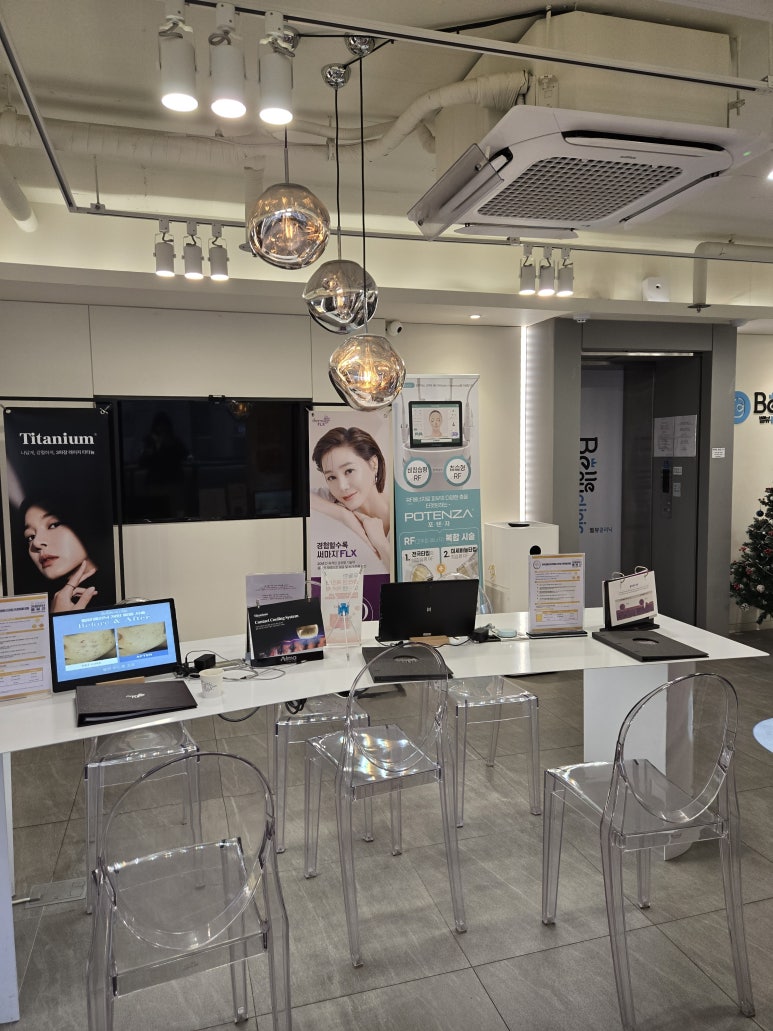
Hello. This is Bellevue Clinic at Gangnam Station, dedicated to delivering natural beauty.
There is a common trap that many people fall into when choosing a dermatology treatment. It is deciding on a procedure based solely on flashy marketing phrases, influencer reviews, or simply a price tag marked “special event price.”
In particular, collagen skin boosters, which are at the center of the recent anti-aging trend, are somewhat different from glow treatments that only add moisture to the surface of the skin. They are biostimulators that inject microscopic particles into the dermal and subcutaneous layers of the skin, encouraging your own cells to synthesize collagen themselves.
This is a substance that remains deep within the skin and reacts there for months to years. Is it really okay to choose it without examining the molecular structure of its ingredients and the standards used to verify its safety?
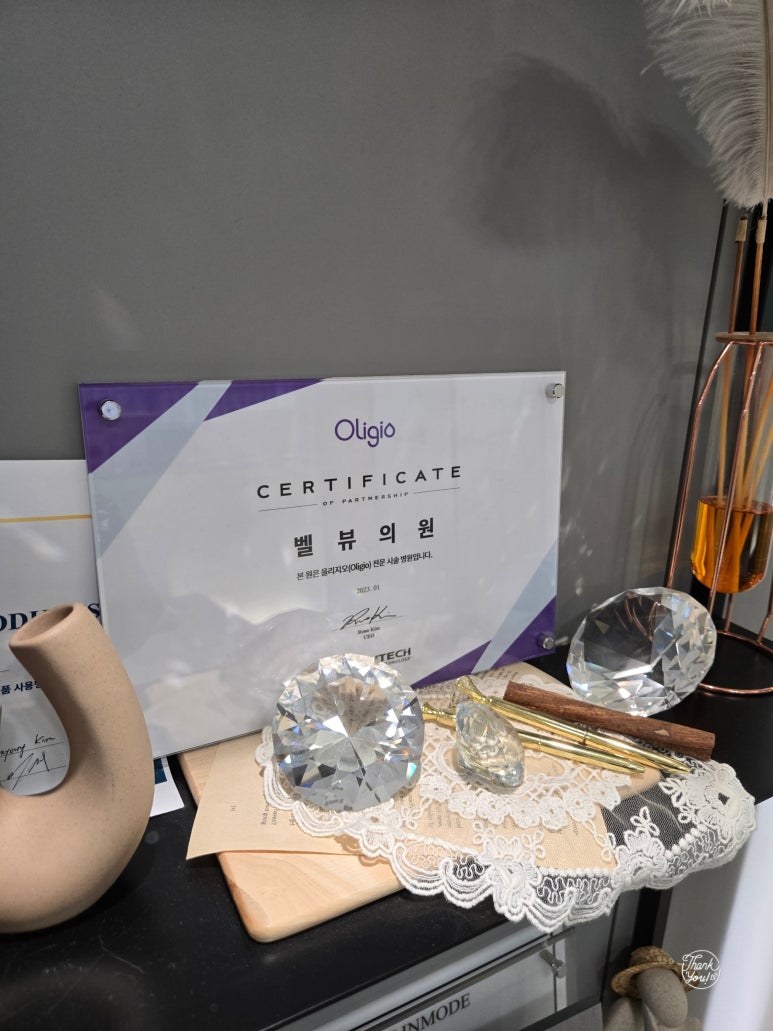
In today’s post, we will explain why Olidia (Olidia), the next-generation autologous collagen booster, selected PLLA (Poly-L-Lactic Acid) as its key ingredient among the many substances available on the market, including PDLLA, PDLA, and PCL. We will also look at why you should check the ingredients before receiving a collagen booster treatment.
“Did you choose it because it was famous or inexpensive?”
Olidia Collagen Booster
The academic reasons for insisting on
‘PLLA’
Bellevue explains.
- The secret of the collagen booster market: even PLA ingredients are not all the same
When people hear about a “collagen injection made from a lactic acid polymer,” many assume that they all work according to a similar principle. However, in biopolymer engineering, differences in stereoisomers can completely determine biocompatibility in the body and the efficiency of collagen synthesis. Academic literature classifies polylactic acid (PLA) into three types.
“PLLA is regarded most suitable as dermal filler, PDLA as unsuitable and PDLLA as suitable but not as efficient and safe as PLLA.”
(PLLA is considered the most suitable ingredient as a dermal filler/biostimulator,
PDLA is unsuitable,
and PDLLA is suitable but has not been demonstrated to be as efficient or
as safe as PLLA.)
Then why has this assessment been made?
① PLLA (Poly-L-Lactic Acid) – The Gold Standard validated worldwide
It has a semi-crystalline structure in which L-lactic acid molecules are arranged regularly. Rather than dissolving and disappearing rapidly in the body, it gradually induces macrophages and fibroblasts while minimizing stimulation of immune cells. With more than 20 years of FDA approval and use in various medical devices, including absorbable surgical sutures and Sculptra, its breakdown pathway in the body—complete elimination as carbon dioxide and water—and its safety record have been validated worldwide. It is considered one of the most stable ingredients for inducing autologous collagen.
② PDLA (Poly-D-Lactic Acid) – Unsuitable for injection into the human body
It has a D-lactic acid structure. Because of the risk of inflammation during tissue reactions in the body and the difficulty of controlling its crystallinity, it is considered unsuitable for injection into human soft tissue.
③ PDLLA (Poly-DL-Lactic Acid) – Faster, but with limitations in durability and efficiency
It has an amorphous structure in which the L and D forms are irregularly mixed. Its particles hydrolyze more quickly in the body, which can make the treatment feel smoother during the initial period after injection. However, because the breakdown occurs too quickly, it is considered significantly less effective than PLLA in terms of the long-term persistence and efficiency of Type 1 collagen production. In addition, compared with PLLA, it is considered to have insufficient long-term clinical data regarding biochemical reactions affecting the surrounding tissue environment during short-term breakdown.
Why Olidia refuses to compromise
and insists on using pure PLLA only.
It is because the substance must not merely be
“convenient to use immediately,”
but rather
“the substance that produces collagen
the most safely and effectively
in the body over time.”
- Why PLLA? ‘Autologous collagen synthesis’ demonstrated by research papers
What happens when PLLA is injected into the skin?
-
Initial hydration and settling: Immediately after injection, moisture and PLLA particles create volume, and the moisture is absorbed within a few days.
-
Immune regulation and fibroblast proliferation: When PLLA microparticles come into contact with macrophages in the body, they deliver continuous, gentle subacute stimulation. This proliferates and activates fibroblasts, the key cells responsible for skin elasticity.
-
Neocollagenesis: The body’s own autologous collagen—mainly Type 1 collagen, which provides firm structural support—and extracellular matrix substances are densely synthesized around the particles.
-
Complete nontoxic breakdown: Over several months, PLLA particles gradually break down into lactic acid monomers. They then pass through the body’s Krebs cycle and are completely eliminated as H_2O (water) and CO_2 (carbon dioxide). Once all the particles have disappeared, only the patient’s own tissue—collagen tissue—remains in their place, helping maintain elasticity over the long term.
- PLLA’s biggest challenge, nodule-related side effects: Olidia addressed it with technology
Although PLLA is academically regarded as highly effective, the one reason many medical professionals and patients hesitated to use it was the possibility of nodules or clumping. Due to their manufacturing process, first-generation PLLA products had sharp, uneven, irregularly shaped fragments.
These sharp particles caused continuous friction with nearby blood vessels or skin tissue, excessively stimulating localized inflammatory reactions. They could also stick together and cause hard clumps, or nodules.
Because Olidia does not apply unnecessary physical shear stress to the tissue at the injection site, it has significantly reduced the risk of nodule formation. During dissolution, the particles do not clump together but disperse evenly, rebuilding a uniform and natural collagen density throughout the skin layers.
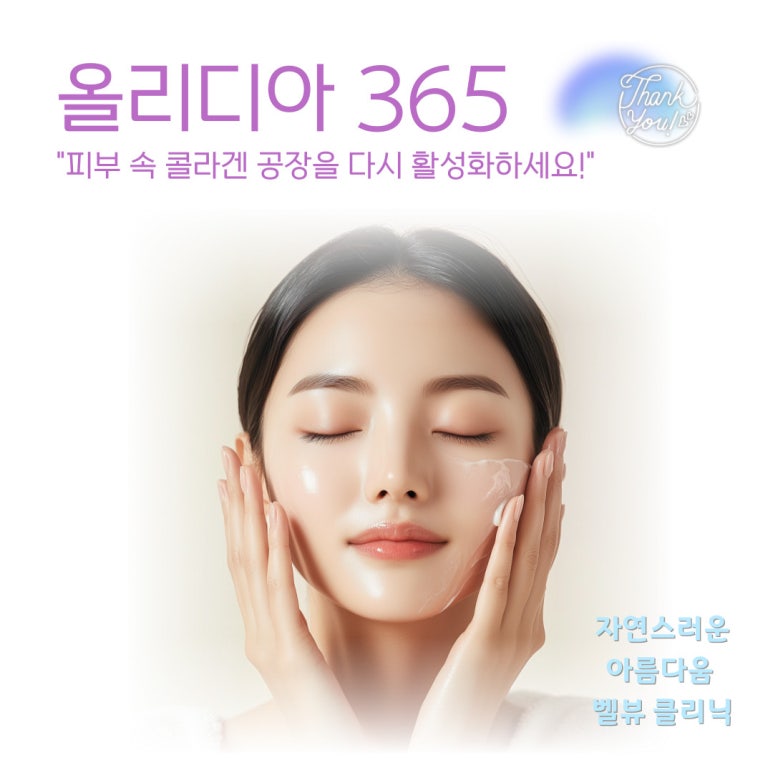
- Olidia 120 & 365
With safe PLLA ingredients and precise particle technology, Olidia has gone one step further by completing two standardized product lines tailored to the treatment area and depth of the skin.
| Category | Olidia 120 | Olidia 365 |
|---|
| PLLA content | 120 mg (skin booster line) | 365 mg (main volume line) |
| Target skin layer | Dermis (upper to middle dermis) | Lower dermis to subcutaneous fat layer |
| Particle characteristics | Lightweight, refined microparticles | High-density particles providing firm support |
| Main indications | Fine lines around the eyes and mouth, pores, skin texture, and elasticity | Restoration of volume in the front cheeks, nasolabial folds, and temples |
For rough skin texture or shallow fine lines, Olidia 120 densely fills the dermal collagen. For deeply sunken nasolabial folds or cheek areas, Olidia 365 restores the deeper support layer. This makes “dual layer-by-layering” possible.
- Carefully examine and choose the ingredients being introduced into your skin
A collagen booster treatment is an advanced medical procedure that, once injected, directly interacts with your skin cells and affects them for months. Our skin is far too precious to entrust to a treatment simply because “it is popular these days,” “it is inexpensive,” or “it is frequently advertised.”

The Gold Standard PLLA ingredient with the strongest safety validation in the body, particle technology that significantly reduces concerns about nodules, and a customized lineup delicately designed for each skin layer—120 and 365. If you want a safe collagen booster that provides natural volume as your own tissue fills out and delivers lasting elasticity, we recommend Olidia. Now, whenever you look for a collagen booster, we hope you will check the “ingredients” first, along with the product name.
This procedure may be accompanied by temporary redness, swelling, bruising, and other effects depending on the individual, so a thorough consultation with a medical professional is necessary.
Please note that the clinic is closed every Wednesday for its regular day off when coordinating your appointment schedule. At Bellevue Clinic, where treatments are performed quickly and safely, take care of firm, clear skin and beautiful contours without losing their definition this August as well. Thank you very much for visiting Bellevue today~!

“Focused on specialized skin analysis”
Bellevue Clinic
With the Mark-Vu skin diagnostic examination, you can check various skin concerns at once, including skin texture, pigmentation, pores, wrinkles, skin tone, dark circles, radiance, redness, melanin, sebum, and acne bacteria that are difficult to identify with the naked eye.
Bellevue Clinic scientifically analyzes the skin, makes a final assessment of the treatments needed when appropriate, and strives to provide the treatments that are most effective and helpful for each patient through kind and detailed consultations.
★Bellevue Clinic August Promotions★

★Bellevue Clinic Appointments and Website/SNS★


💎Bellevue Clinic💎
-
Use of genuine products in the prescribed quantities
-
Experienced medical professionals with many years of treatment experience
-
Medical care available on Sundays and public holidays
-
Customized treatments following Mark-Vu skin analysis
🌸Botox · Fillers · Thread lifting · Lifting · Obesity
🌸Scars · Pores · Various types of pigmentation · Acne · Hair removal
🌸Contour injections · CoreSculpt · NobleShape
HPL · V-Olet injections
🌸Diet medication prescribed after an InBody assessment
🌸Hair-loss medication and Viagra prescriptions
📱Treatment inquiries and appointments
02-533-1200
<Medical Care Information & Directions>