If your belly folds when you sit down,
are you dealing with abdominal elasticity issues?

If the belly fat that naturally folds every time you sit down has been bothering you, it may not be just a simple weight issue. The abdomen is an area where fat tends to accumulate easily, so even small changes can quickly alter the contour. In particular, if repeated lifestyle habits or physical changes build up over time, they can lead to decreased elasticity and changes in the skin’s structure, so it is important to identify the cause early.
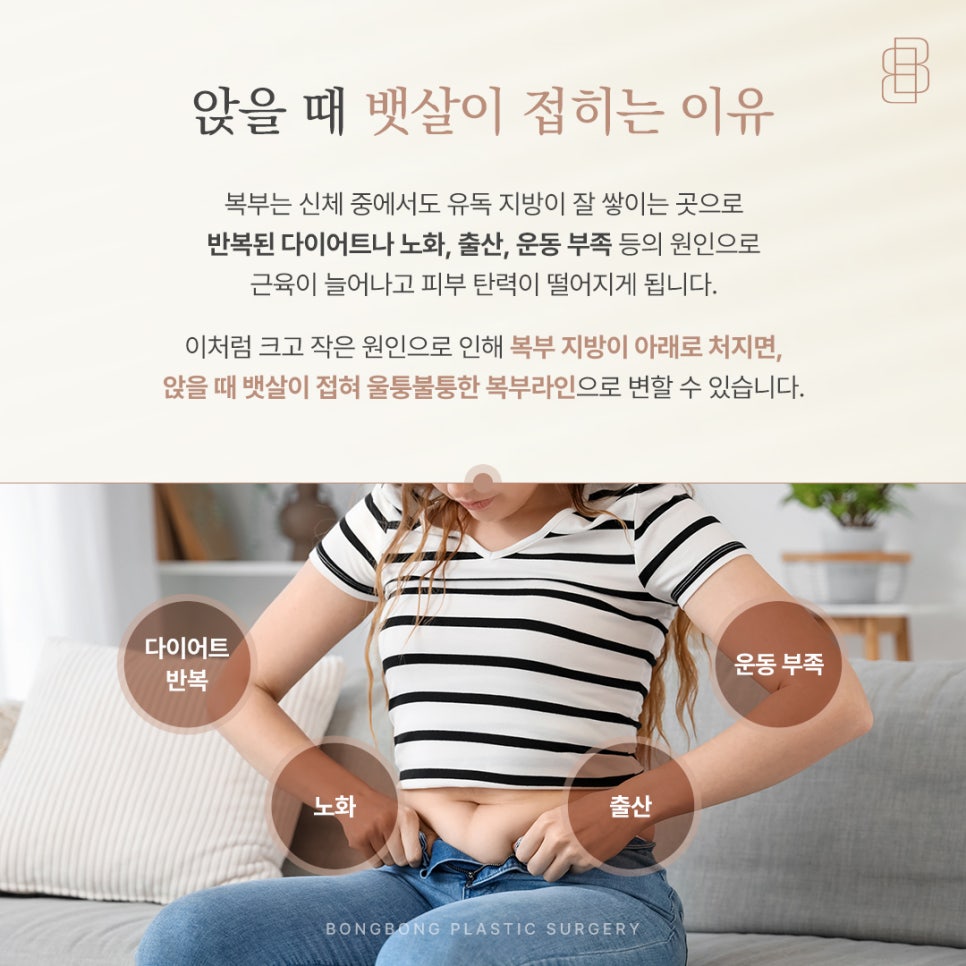
The most common reason belly fat folds when sitting is an increase in fat. However, in addition to a body type that tends to store fat easily, repeated dieting, childbirth, aging, and a lack of exercise can all have a combined effect. If these factors continue, skin elasticity decreases and the strength of the rectus abdominis and surrounding fascia weakens, which can make the belly appear to fold more easily when sitting.
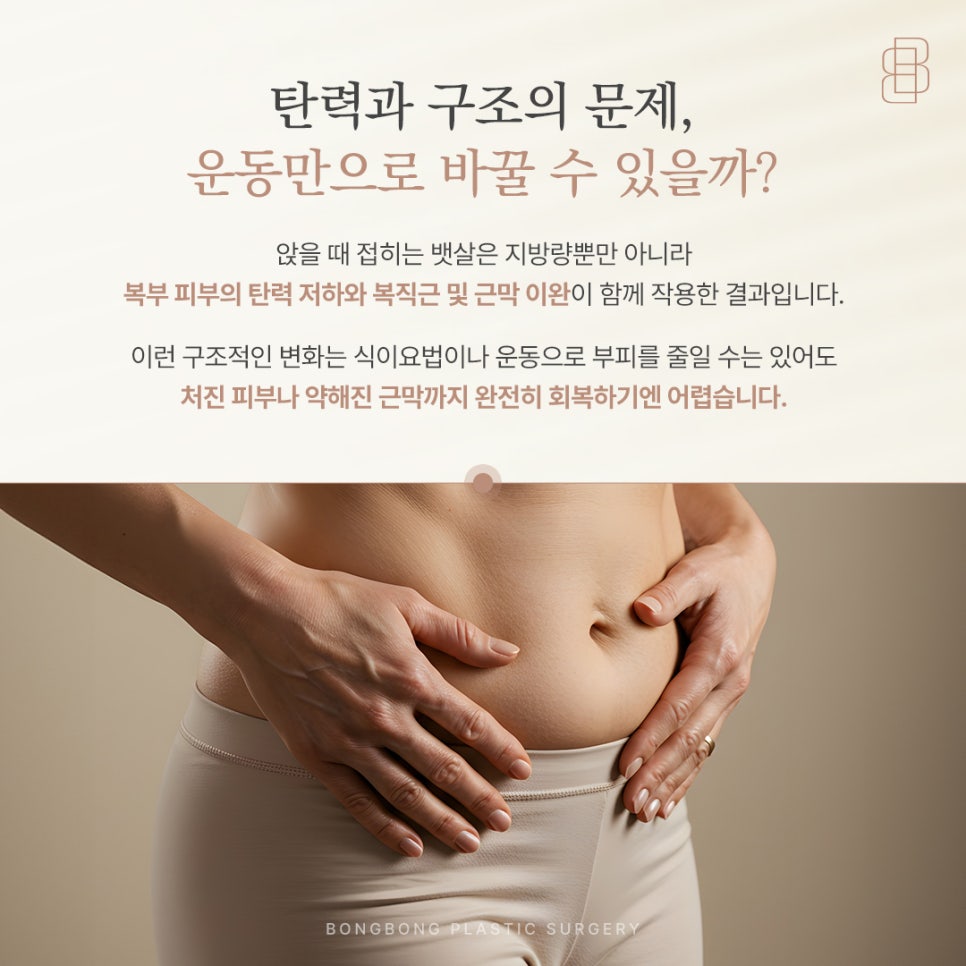
Especially after childbirth, changes in abdominal tissue can become more noticeable. During pregnancy and childbirth, the space between the rectus abdominis muscles may widen, or the skin may stretch, making the shape of the abdomen look different from before. For this reason, even after dieting, many people find that their old smooth abdominal contour does not return. This may be due to structural changes rather than body weight.
Belly fat that folds when sitting can be difficult to fully resolve with exercise alone. Diet control and exercise can help reduce fat, but they have limits when it comes to restoring already stretched skin or weakened fascia. In particular, when laxity in the mid to lower abdomen is severe, the issue of elasticity may be more significant than body fat.

In such situations, one of the methods that may be considered as needed is a procedure or surgical approach to improve the abdominal contour.
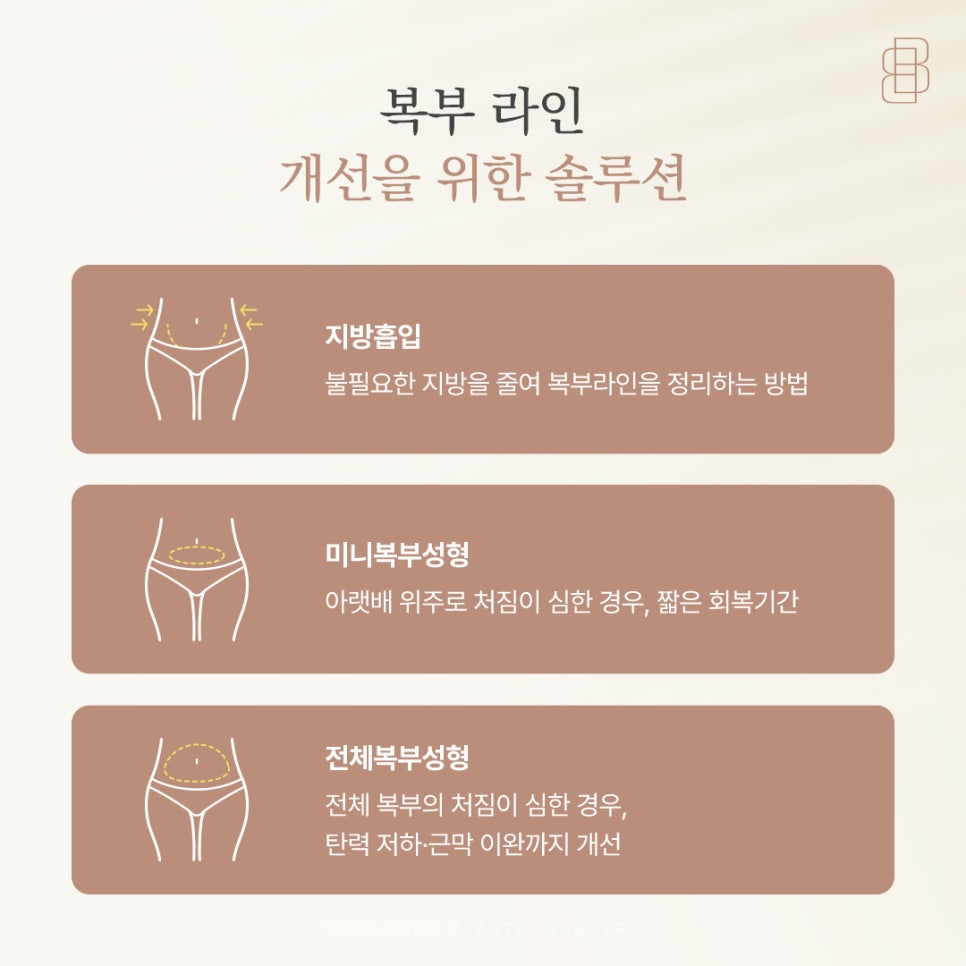
Representatively, these include:
Liposuction: a method that reduces unnecessary fat and refines the abdominal contour
Mini abdominoplasty: for cases where sagging is mainly concentrated in the lower abdomen
Full abdominoplasty: for cases accompanied by decreased elasticity and fascial laxity
Each has a different scope of application.
The cause of abdominal elasticity issues can differ from person to person. Because the approach varies depending on the cause—such as a type with a higher amount of fat, a type with reduced elasticity, or a type with weakened fascia—it is important to determine which type of body shape change you have. Once you understand the cause, you can set a much more accurate direction, from lifestyle management to improvement methods.

If the belly folds every time you sit down and this continues for a long time, it may be helpful to look at changes in the abdominal skin and tissues along with weight issues. After identifying your body shape and skin condition, finding the appropriate direction for improvement may help restore a more natural abdominal contour.