[Bongbong Plastic Surgery]
Can Butt Thread Lifting Restore a Lost, Firm Hip Line?
-
The fundamental causes of reduced elasticity
-
The principle of improving firmness using medical threads
-
A customized plan through individual body-type analysis

Even if you work out hard, you may have had the experience of sighing in front of the mirror because your hip line does not bounce back like it used to.
Especially when wearing tight leggings or jeans, if the skin under the buttocks folds or the volume appears to have dropped, your confidence can go down.
Many people worry about sagging tissue that cannot be fixed with simple weight loss or squats alone.
Today, we will take a closer look at butt thread lifting, which is drawing attention as an alternative that can help restore firmness without major surgery.
- The fundamental causes of reduced elasticity
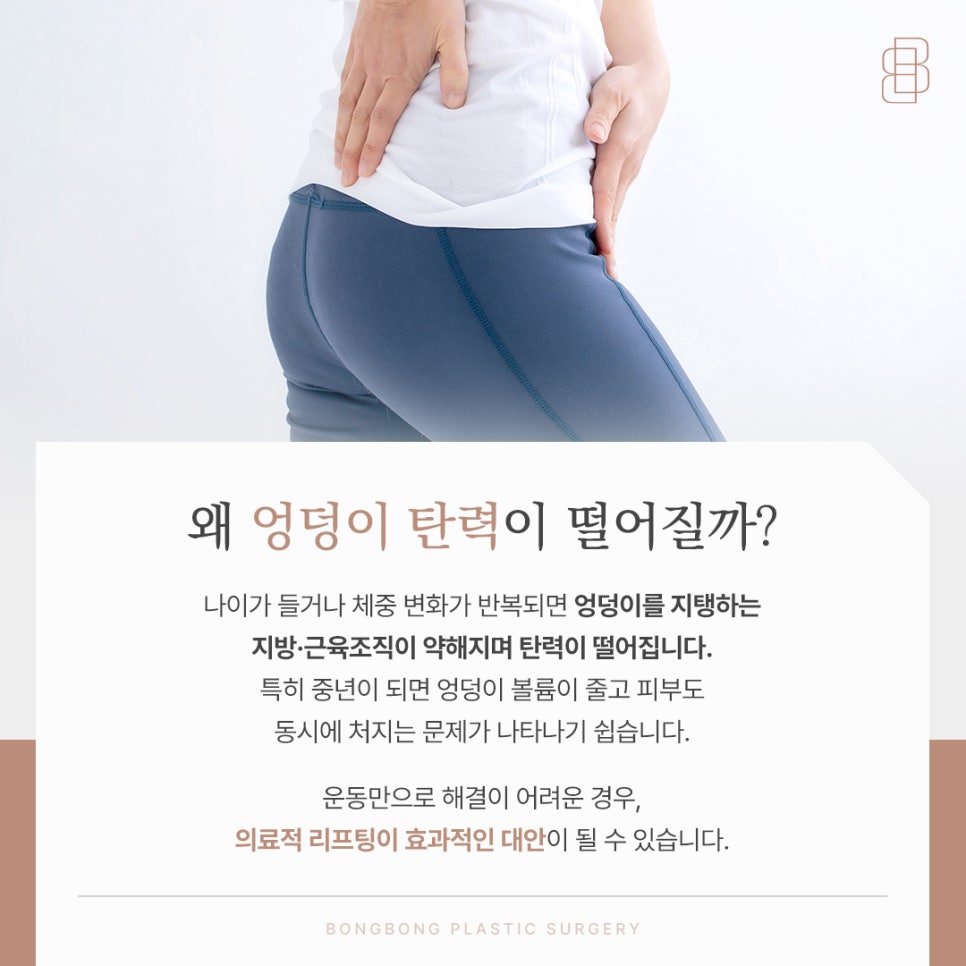
The reason the buttocks sag and their shape changes is not simply a lack of exercise.
As time passes, our bodies naturally age, and the fat and muscle tissues that support the buttocks weaken and, under the influence of gravity, begin to sag downward.
In particular, if you have experienced repeated weight changes or have entered middle age, the upper volume of the buttocks tends to decrease while the skin in the lower area stretches at the same time.
Because these changes are caused by weakened support deep within the skin, exercise that only builds outer muscle may have limits in improving the condition.
If the tissue’s elasticity has already dropped significantly, medical help may be needed to physically lift or support the tissue, and at this stage many people consider a lifting procedure.
- The principle of improving firmness using medical threads
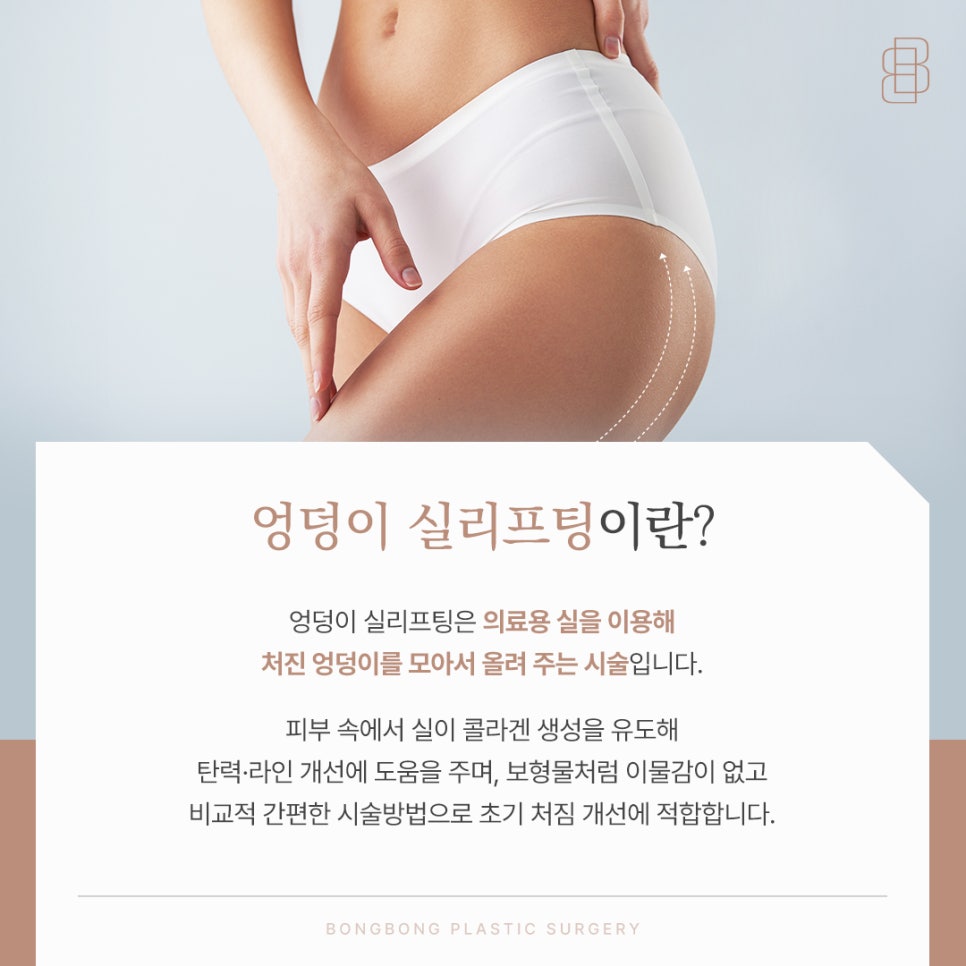
For those who feel burdened by surgery, butt thread lifting is a procedure that literally uses medical threads to physically lift sagging tissue.
The key principle is not simply pulling the outer skin, but inducing collagen production within the skin so that inner firmness is improved as well.
Unlike surgery that inserts implants, this method causes almost no foreign-body sensation and creates a natural feel, as if it were part of your own tissue.
It also has the advantages of a small incision area, less concern about scarring, a relatively short procedure time, and faster recovery.
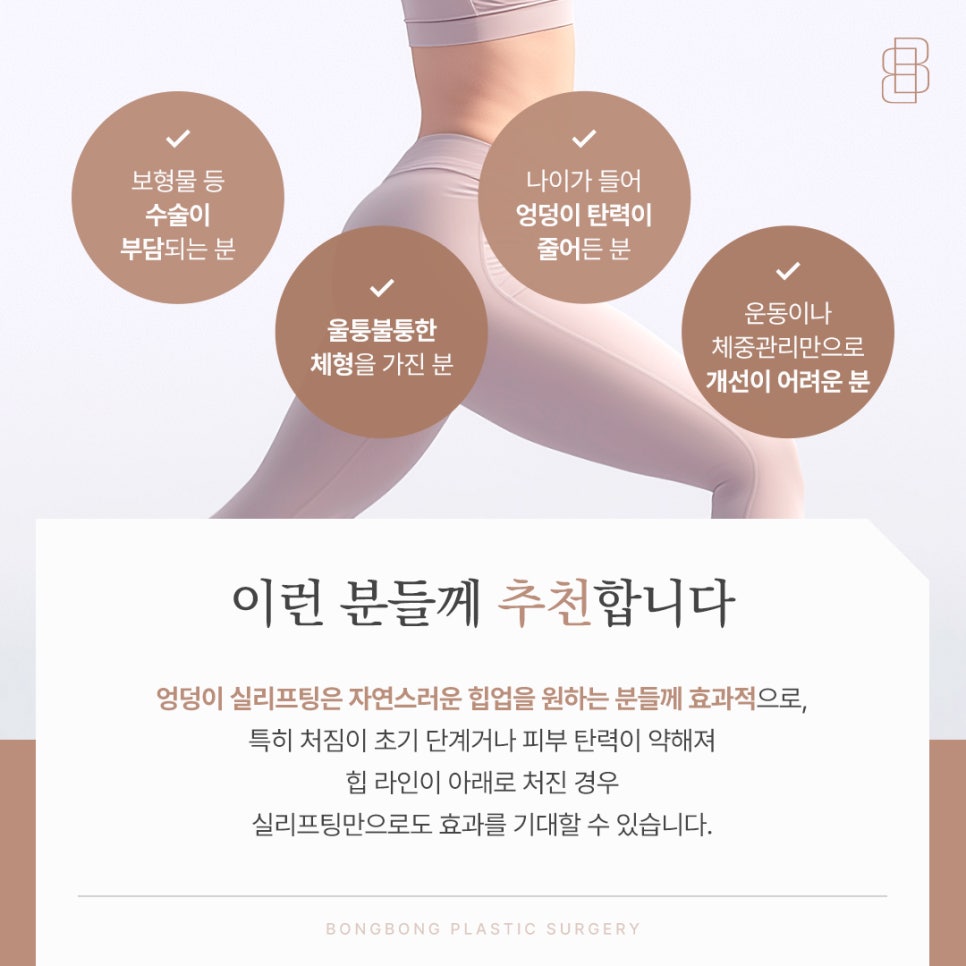
In cases where the skin is thin or sagging has only just begun, or when you want to smooth out a bumpy hip line, butt thread lifting alone can produce a satisfying change in contour.
However, if the sagging is severe or the amount of fat is excessive, the threads may not be strong enough on their own, so diagnosis is essential.
- A customized plan through individual body-type analysis
Methods for improving the hip line should vary depending on each person’s body type.
That is because the degree of sagging in the buttocks, the thickness and elasticity of the skin, and the distribution of fat all differ from person to person.
Simply pulling harder does not necessarily create a beautiful butt shape; on the contrary, it can cause an unnatural dimple effect or make the threads visible.
Therefore, to achieve a satisfying result, it is important to establish a detailed procedure plan through consultation.
Butt thread lifting is an efficient way to quickly restore the hip line, but in some cases, combining it with other procedures such as fat grafting or liposuction may create a synergistic effect.
Figuring out which method is right for you and approaching it without overdoing it is the shortcut to creating a natural-looking back view.

A hip line that has lost firmness can be improved enough through active care rather than simply blaming age.
If you have felt limited by exercise or hesitated because of the burden of surgery, butt thread lifting may be a good alternative that can offer relatively simple and immediate corrective effects.
However, indiscriminate procedures that do not take your body type or skin condition into account should be avoided, and you should make a careful decision after 충분히 discussing it with medical staff who have extensive experience.